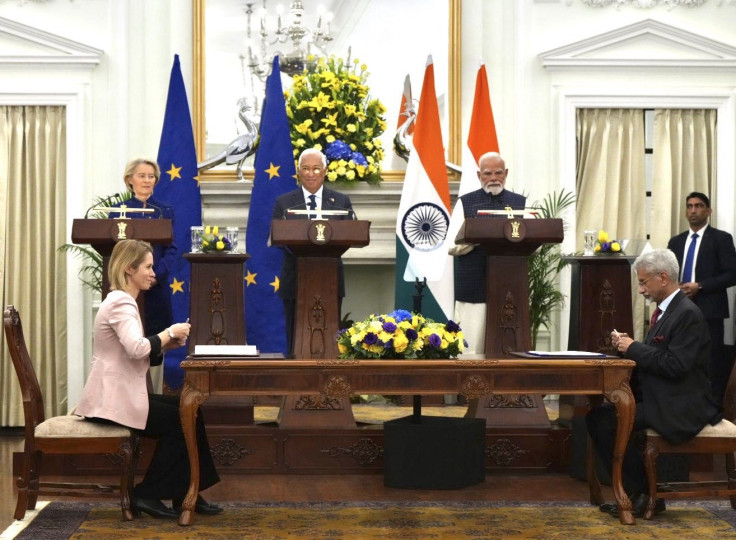
On January 27, 2026, India and the European Union (EU) formally announced the conclusion of negotiations on a comprehensive free trade agreement in New Delhi, marking nearly two decades of talks and drawing significant attention from global markets.
Notably, this major trade agreement, along with several other important trade arrangements announced in early 2026, have been concluded without the United States as a negotiating partner to date.
A Quiet Realignment of Global Trade
In 2025, many key trade discussions, including those involving tariffs and market access, centred on the United States, with Washington actively engaged in negotiations with various partners seeking access to the US market. Historically, US trade leadership played a crucial role in shaping global trade rules through major agreements like North American Free Trade Agreement (NAFTA) / United States-Mexico-Canada Agreement (USMCA) and its leadership in the World Trade Organization (WTO). However, recent developments indicate a diversification of trade partnerships.
'You could see an increasing number of alliances between other countries around the world as we get used to this kind of multifaceted world where economies can't be completely dependent on the US anymore,' said Seema Shah, chief global strategist at Principal Asset Management.
The EU and India Strike the Mother of All Deals
The most prominent trade agreement announced so far in 2026 is the India-EU free trade pact. Under the deal, the EU plans to eliminate or reduce tariffs on about 96.6% of its imports from India, while India intends to cut duties on roughly 99.5% of its imports from the EU over several years, although some sensitive sectors remain protected.
India has been actively pursuing expanded trade ties, and this agreement stands out as a significant bilateral deal in its own right—independent of recent Indian deals. Negotiations between the US and India are ongoing, but no new agreement has yet been reached. Currently, the US applies an average tariff of around 50% on many Indian imports amid unresolved market access issues.
Europe Looks to Latin America
Europe is also trying to revive a long-delayed agreement with Mercosur, a South American trade bloc comprising Argentina, Brazil, Paraguay, and Uruguay. If finalised, the EU-Mercosur deal would create a trading area covering over 700 million people and represent a major intercontinental trade pact.
The agreement aims to lower tariffs on South American agricultural products such as beef and soy, benefiting European importers. It could also expand industrial and services trade on both sides, provided it is ratified. However, in January 2026, the European Parliament voted to refer the deal to the European Court of Justice for a legal opinion on its compatibility with EU treaties, potentially delaying ratification until late 2026 or beyond. The court's review could extend the process by several months or over a year, depending on its schedule and political negotiations.
Canada and China Test the Waters
Although Canada remains closely integrated with the US economy, Ottawa has begun exploring limited trade engagements with China in early 2026. In January, Canada and China agreed to reduce tariffs on Chinese electric vehicles and Canadian canola oil in a targeted tariff-cutting pact aimed at easing trade tensions.
While scope remains limited, these moves indicate a willingness by both nations to engage on selected trade issues after years of strain. The White House expressed concern over the agreement, warning that expanded trade with China could prompt a firm response. President Trump threatened that Canada could face 100% tariffs if it pursued a broader trade deal with China beyond the current scope, though Ottawa publicly downplayed these threats.
Prime Minister Mark Carney reaffirmed that Canada has no plans for a comprehensive free trade agreement with China beyond the current tariff reductions, dismissing broader tariff threats as diplomatic rhetoric.
Potential Impacts on Jobs and Prices
These major trade deals, particularly the India-EU agreement, could have noticeable effects on consumers and workers worldwide. By reducing tariffs and opening new markets, European companies may source goods from India at lower costs, potentially reducing prices for some products in Europe and increasing competition for US exporters.
American businesses excluded from these new trade blocs may face challenges in maintaining market share, which could impact jobs in manufacturing, logistics, and retail. As supply chains adapt, the costs of everyday goods—such as cars, clothing, and electronics—may fluctuate, with industries reliant on exports to Europe or India experiencing additional pressure.
This realignment of global trade is likely to have direct consequences for both workers and consumers alike.