Traditional business wisdom has it that what gets measured gets managed, yet when it comes to the country’s canny SME community, an estimated 55% of firms still have no system in place for measuring energy efficiency. Here are a selection of five low-cost easy wins to help build yourself a greener office.
Lightbulb moments
What could be simpler and more logical than labelling your light switches? Faced with a bank of anonymous-looking switches, it’s all too easy for staff to either plunge colleagues into darkness or turn an unused storeroom into a mini Blackpool merely because they want to find their way to the basement loo. By labelling switches with themed or colour-coded stick-on labels, everyone from the company founder to the new intern becomes familiar with which lights are essential for the smooth-running of the office and which should only be flicked to ‘on’ more rarely. Taking simple steps such as switching off lights when they’re not in use can save businesses over £100 a year, according to E.ON.
While smaller businesses won’t usually need a detailed ‘lighting map’ in order to lessen the confusion, all firms should consider installing occupancy sensors; in the form of simple wall-plate replacements, in cloakrooms and other little-used areas. Many SMEs have reported up to an 80% reduction in lighting use in toilets where such gizmos have been deployed. And while we’re on the subject of illumination, don’t forget to pull open blinds and harness the hormone-enhancing power of daylight to boost your team’s feel-good factor.
Feel the heat
For true green aficionados, true draught-proofing involves everything from serious cavity wall insulation and energy-saving false ceilings to the new generation of smartphone-controlled radiators. But, if you’re a micro business in rented property, that sort of kit may not be practical. Look instead at the more obvious energy wasters – desks in front of radiators, for example, will prevent any heat from circulating properly – and set about doing your own DIY switch around. Install a shelf above any radiator positioned under a window to help throw the heat into the room rather than out into the wide blue yonder and look out for windows opened in heated rooms: a sure sign that your radiators need thermostatic valves fitted.
Try and re-position staff away from any obvious cold or hot zones and cater for individual temperature preferences where you can. Avoid heating unused spaces such as corridors and storerooms; any radiators should be set to minimum in these areas and if you’re lucky enough to have an expensive air conditioning system, don’t try and compete with it by opening all the windows.
Plugging into energy savings
Office equipment is responsible for around a third of business energy consumption, but the rule of thumb tends to be that the initial outlay in buying more up-to-date computers, scanners, printers and photocopiers – rather than a job lot of second-hand machinery – is quickly recouped in terms of their increased power efficiency. Laptops tend to use up to 25% less energy than desktops but, if you don’t want to upgrade right now, at least consider dumping any old-style, power-hungry cathode ray tube (CRT) monitors in favour of LCD monitors, which can use 50% less power.
Remind staff that screensavers don’t actually save any power on their own – many people think they do - and make sure that all other office equipment such as printers, photocopiers, faxes, display TVs and projectors are set to energy saver mode.
If remembering to switch things off overnight and at weekends is an issue for your business, consider adding simple household timers to the bigger pieces of kit. Don’t forget that equipment on standby can continue to use up to 70% of normal power consumption and also bear in mind that even switching a monitor off over tea and lunch breaks will prevent excessive heat build-up in a smaller room.
E.ON has a package of help on their website, which includes energy saving tips and advice for offices to use around their sites to inspire and educate colleagues.
Chow time
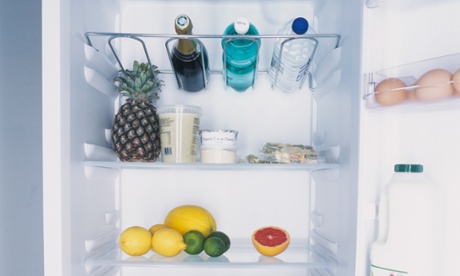
Go and look inside the office fridge and ask yourself some hard questions. If the frost build-up has reached iceberg proportions and if you can’t even remember when its mini icebox last had a cover, it’s time to upgrade to a new energy-saving A++ model. Move the fridge or fridge-freezer away from sunny spots or radiators to prevent it having to work harder to keep your chicken mayo wrap nice and cool and pull it away from walls by at least 10 centimetres to allow the air to circulate properly.
Upgrade to a larger fridge if your staff are packing it too tight and thereby reducing its efficiency, and downsize if all you ever find is a single bottle of water and a neglected pot of yoghurt.
If cold drinks are the only things your colleagues tend to refrigerate, why not switch to a smaller, more energy-efficient drinks chiller instead? Use a thermometer to make sure you aren’t cooling your fridge unnecessarily and adjust temperature settings according to ambient temperature and contents. Oh yes, and before leaving the kitchen, consider replacing your wattage-hungry electrical kettle with a new-fangled instant boiling water dispenser to make extra savings.
Wet, wet, wet
A typical office uses around 50 litres of water per full-time employee each day, according to Thames Water. But with so many water-saving freebies available nowadays, why not fit these clever, money-saving devices to your company’s taps, toilets and showers? An average, unmanaged urinal cistern flushes four times an hour, 24 hours a day and 365 days a year, yet by reducing the flush frequency and preventing flushing when nobody is at work, your business can save up to £597 per year.
A leaking toilet can waste up to 400 litres of water each day, adding an extra £312 on your annual bill, while a single dripping tap – so easy to fix with a new washer - can mean up to 9 litres of waste every day and an extra £47 on your bill. If your business is festooned with plants or outdoor space, harvesting rainwater via a butt may be also be an option.
Content on this page is paid for and produced to a brief agreed with E.ON, sponsor of the Efficiency hub.