As autumn finally takes hold in the UK, the last party conference season before the general election draws to a close. With just under seven months to go until the public head to the voting booths, the main political parties have been outlining their vision for the next parliamentary term.
International development policy announcements rarely make the headlines: understandably less of a concern to voters than issues that directly impacts upon their lives, such as the quality of health services or the cost of transport. However, 2015 is going to be a big year for the sector, as besides the general election, the successor to the Millennium Development Goals will be decided. Whichever party emerges victorious on 8 May will lead the UK’s negotiating team in these final crucial months, and will therefore have a unique opportunity to influence the next 15 years of global development efforts.
So what have we been told of the three main party’s development priorities?
Labour’s Shadow Secretary of State for International Development, Jim Murphy, received a warm welcome from his party following his campaigning efforts in Scotland. He began by focusing on poverty, education, slavery, conflict and corruption, all of which he identifies as being symptoms of global power inequality. He pledged to put human rights at the heart of the Department for International Development (Dfid) to ensure equality of opportunity for all.
Murphy’s biggest commitment, however, was on global health. Driven by enduring poor health across the world and inspired by the UK’s own National Health Service, a Labour government would prioritise putting universal health coverage at the heart of the post-2015 framework. This is a welcome commitment from the Shadow Secretary of State. Poor health is both a cause and effect of poverty, with the World Health Organisation estimating that the burden of malaria alone costs Africa $12bn every year. Poor access to maternal and reproductive health services remains a leading cause of death among women around the globe, and more than three million people die a year from preventable diseases for want of a vaccination.
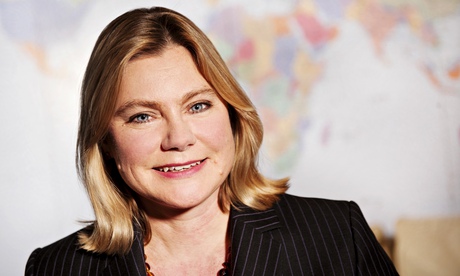
Next to give her speech was the incumbent secretary of state, the Conservative Party’s Justine Greening. In the austerity-driven atmosphere of the last four years the government must be commended for ring-fencing DFID’s budget. Furthermore, her speech should be seen in the context of her audience – a Conservative party containing a large proportion of aid sceptics who would like to see her department merged with the Foreign and Commonwealth Office or abolished altogether.
The Minister began by celebrating the increased value for money in aid spending achieved by the coalition government. She concentrated on the benefit of aid to the developing world to the UK, and emphasising its role as tool of Britain’s foreign policy. She outlined how supporting fragile states is crucial for our own security; how fighting Ebola ensures that it won’t threaten UK citizens; and how helping the economies of the developing world to grow creates stronger trading partners for British companies.
Finally Lynne Featherstone gave her speech to the Liberal Democrat party conference. The coalition government’s Under secretary of state has long campaigned for the rights of women and girls, and therefore focused on the growing UK and international commitment to end female genital mutilation and forced marriage, and extend access to education, health and employment to all women. She also spoke of the Liberal Democrat’s driving value – fairness – which inspires her to seek to empower the most vulnerable, including championing Lesbian, Gay, Bisexual and Transgender rights around the world.
Moving on to future priorities, it is clear that the Liberal Democrats will continue to focus on the vulnerable and excluded. Their approach is epitomised by the phrase ‘Leave No-one Behind’, a term which has gained considerable traction in the debates around the post-2015 development agenda. Finally, the party’s commitment to development is demonstrated by the International Development Bill being sponsored by Liberal Democrat Michael Moore MP. This Bill, which passed its second reading last month, will enshrine in law the UK’s existing commitment to spend 0.7% of gross net income on aid.
As the conference roadshow packs up its things for another year, it is clear that between the three major parties there are different approaches and views towards international development. However, one point that they share in common is a strong commitment to the UK’s leading role in the world for development. Malaria Consortium welcomes this commitment, and hopes that whichever party gains power in 2015, they continue to show leadership as we shape the post-2015 development agenda.
Content on this page is paid for and provided by the Malaria Consortium sponsor of the Guardian Global Development Professional Network.