Christophe Guilluy is right to state that “the rift between the global market’s winners and losers has replaced the right-left split” (News commentary), but he comes nowhere near to giving an effective explanation as to why that might be.
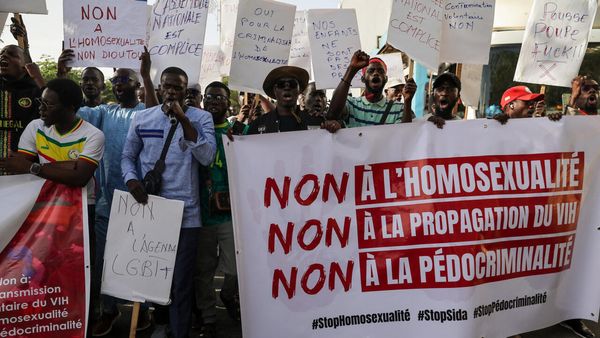
Both the mainstream right and the various strands of social democracy embraced neoliberalism from the 1970s onwards. Faced with the permanent spectre of working-class revolt, they sought to racialise questions of class and turn issues of political economy into issues of culture.
The consequent legitimisation of the far right that this triggered in turn served as a straw man to deter voters from departing from the status quo. We now have that strategy at its end game – with the mainstream having discredited itself by its association with a form of politics that led to the 2008 crash and the far right as an option for those on the sharp end of deindustrialisation.
Neoliberalism was never a blind process – it was a political choice. The removal of questions of class from the political agenda was also a political choice. To suggest that “multiculturalism” causes working-class anxiety, as Guilluy does, is facile. Poverty and unemployment cause the anxiety; politicians then create a relentless climate of demonisation of the “other” to save their own skins. We now have the end result playing itself out.
Nick Moss
London NW10
In the first round of the French presidential election, more than 40% of voters chose candidates at the furthest ends of the political spectrum. However, we may be misleading ourselves to think of various political opinions as a spectrum. It is probably better to think of it as a pie chart, where the extremes meet. There is quite a lot of common ground when ultra-nationalism meets ultra-socialism.
For this reason, far-right Front National’s Marine Le Pen chances of winning against the independent centrist Emmanuel Macron in the runoff on 7 May shouldn’t be underestimated. If she were to win, it would drastically change the dynamics of campaigning in the final four weeks of the British general election on 8 June.
Geoff Naylor
Winchester
I am very surprised that the Observer has fallen into the error of political myopia. To have been accurate, your editorial last week should have been headed: “Already some parties are dodging the crucial issues facing the country.” You spend two-thirds of a page on an excellent analysis of the huge issues facing politicians at this elections, but you deal only with the errors and omissions of Conservative and Labour parties.
Of course, the Liberal Democrats require attention and analysis – and criticism whenever deserved – but it does no service to the urgent need for a more rigorous politics in general to omit any focus on their record and proposals. This is particularly true when we have an election with the central issue being Britain’s future in Europe and the Liberal and, now, Liberal Democrat, parties alone have had a 60-year consistent commitment to our membership of the EU and its predecessors. This commitment is the key to resolving many other issues, on which Liberals are promoting policies prepared in recent years.
The presidential election in France provides a most remarkable example of why you should broaden your analysis. There, we have seen the success from nowhere of a young, progressive, liberal and pro-Europe candidate, not connected to any established party. Who is the equivalent leader in Britain?
Michael Meadowcroft
Leeds