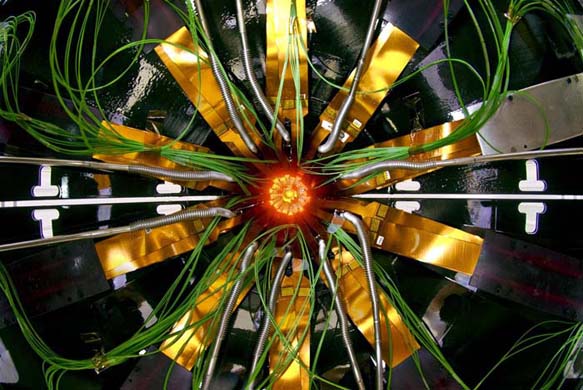
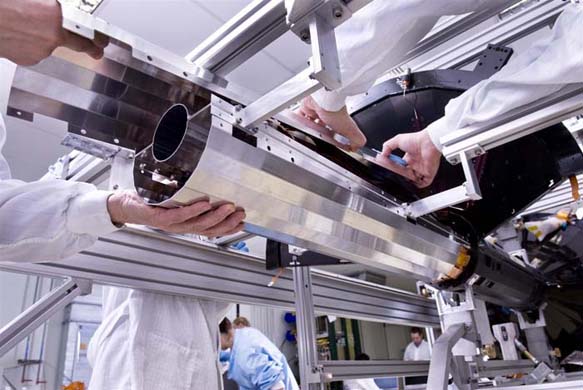
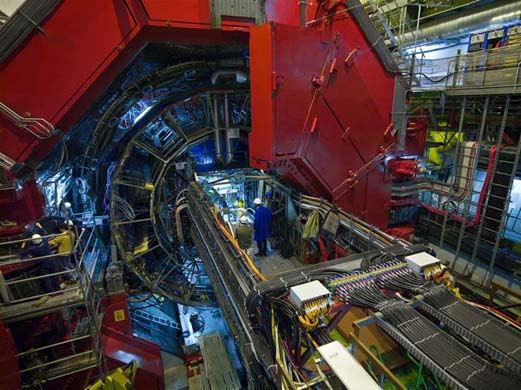
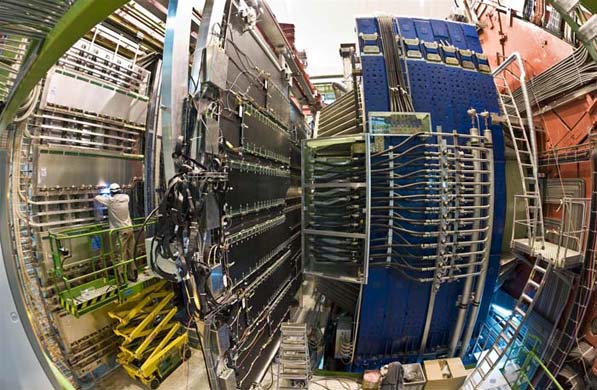
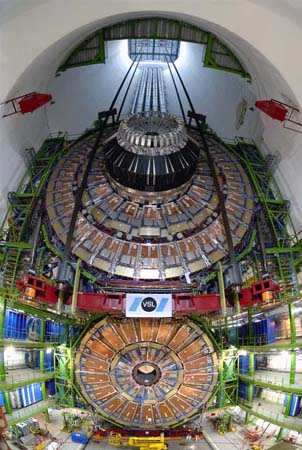
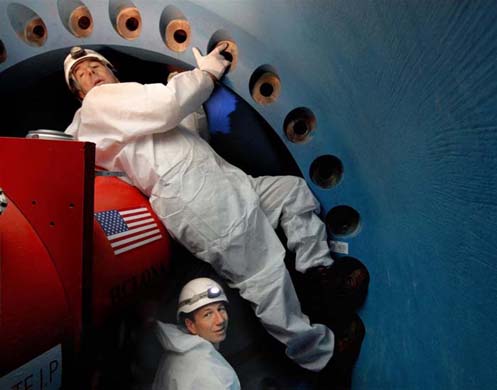
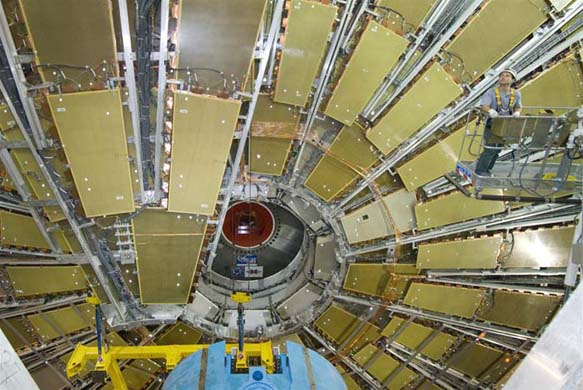
A detector called Alice (A Large Ion Collider Experiment) – one of four giant detectors positioned at intervals around the circular tunnel of the LHCPhotograph: Maximilien Brice/CernTechnicians instal a key component in Alice, which will come into its own when the LHC collides the nuclei of atoms such as gold in order to recreate the first millionth of a second after the big bang Photograph: Maximilien Brice/CernOne of the magnets in the Alice cavernPhotograph: Mona Schweizer /Cern
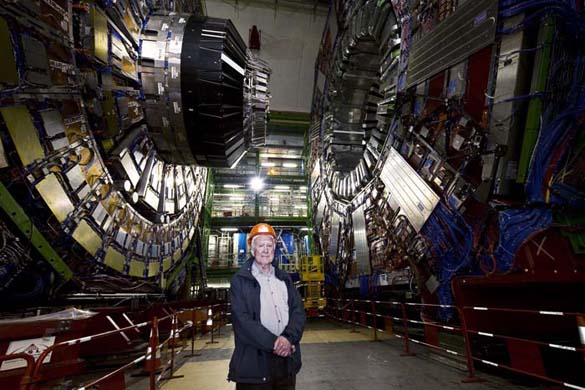
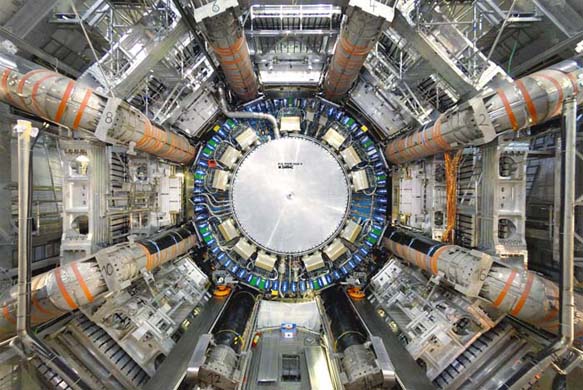
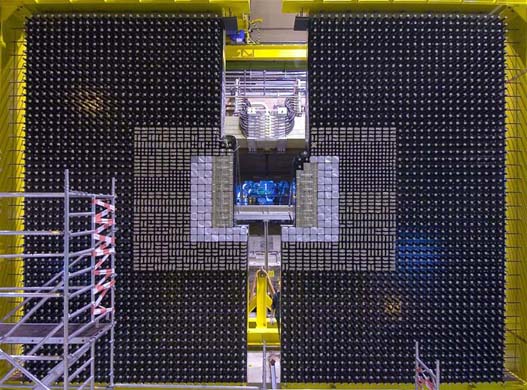
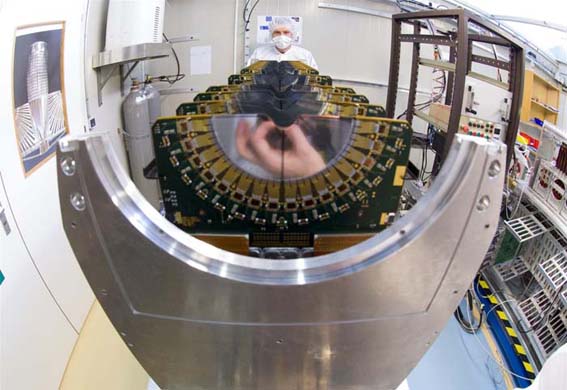
Alice weighs 12,500 tonnesPhotograph: Mona Schweizer /CernCMS – one of the LHC's four giant detectors. The Compact Muon Solenoid is a general-purpose "camera" designed to look for anything and everything that may emerge from collisions between particles in the LHC tunnelPhotograph: Maximilien Brice /CernPeters Higgs and the CMS. The British physicist is in line for a Nobel prize if the LHC finds evidence for the Higgs boson – the fundamental particle he proposed in 1964 which is thought to give everything in the universe its mass. A reluctant celebrity, in interviews Higgs refers to the particle as "the boson named after me" Photograph: Maximilien Brice/CernTechnicians work on a shielding "nose" for the Atlas detectorPhotograph: Claudia Marcelloni /CernAtlas (A Toroidal LHC ApparatuS) is a colossal digital camera designed to take pictures of the 600 million collisions between protons that the LHC is capable of delivering to it every secondPhotograph: Claudia Marcelloni /CernInstallation of the last section of AtlasPhotograph: Claudia Marcelloni /CernOne of the LHC's calorimeters, which will measure the energy of the particles that it absorbs. The instrument's "wall" is more than 6m high and 7m wide and consists of 3,300 blocks of scintillator, fibre optics and leadPhotograph: Maximilien Brice/CernAssembling the LHCb or "Large Hadron Collider beauty" where "beauty" is the bottom quark. The detector is particularly aimed at measuring the interactions of b-hadrons (heavy particles containing a bottom quark)Photograph: Maximilien Brice/Cern
Sign up to read this article
Read news from 100’s of titles, curated specifically for you.