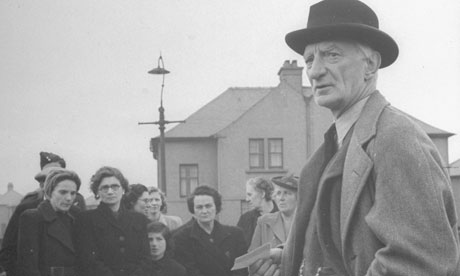
When William Beveridge released his famous blueprint for the welfare state at the end of 1942, his assumptions suggested that the cost burden would reduce over time because welfare spending would progressively reduce need.
As we now know, he was wrong. It wasn't just him; the same mistake was made in most welfare states. The problem wasn't that Beveridge failed to slay his 'five giants' – ignorance, want, squalor, disease and idleness – but that they came back to life in every generation, and had to be slain all over again. Every time at increasing expense.
So what went wrong? This is such an important question that we hardly dare ask it, in case it is taken as a political excuse to wind up the Beveridge experiment altogether – and because the failure of the welfare state to create a sustainable improvement in social welfare threatens to overwhelm public finances.
It is true that Beveridge was in some ways a victim of his own success. The welfare settlement led to longer lives, which sometimes (though not always) led to higher costs. It led to different diseases and to disabled children surviving into adulthood. But these are partial explanations.
The difficulty was that Beveridge's welfare services developed in a direction he never intended: over-professionalised; dismissive and suspicious of the neighbourhood networks which had underpinned people's lives for generations; undermining informal advice and support; allowing the ties of mutual support to atrophy.
Services developed the attitude that high-tech equipment, sophisticated processes and professional knowledge is somehow all that is required to provide help to the grateful, passive multitude. Two generations later, those informal networks of support have been corroded.
The over professionalisation which Beveridge warned against seems to have widened the basic divide in all public services between an exhausted, remote professional class and their clients, who are expected to remain passive and easy to process. This means services are wasting all that knowledge, energy, experience and the ability to support each other. The reciprocal element is missing.
The critique of public services which links rising costs with precisely this waste is known as 'co-production'. It suggests that the reason our current services are so badly equipped to respond to a changing society is that they have overlooked the basic operating system they depend on: the social economy of family and neighbourhood.
Co-production is not a new term (the NHS is formally committed to it) but it has come to represent a new idea. A mechanism that can unleash people's willingness to play a wider, active role in the services they use is beginning to emerge – whether it is in community justice panels or time banks in health services or co-operative nurseries. Or even a slightly different way of approaching professional support in social care, based on more informal solutions, such as those used so successfully in the local area co-ordinators of Middlesborough and Derby.
This is still on a tiny scale compared to what is necessary if we are going to humanise and re-energise our public services. So here is the question: how can we roll out this kind of infrastructure in every public service on a huge scale? Where do you start?
My report for CentreForum suggests that all service contractors, public and private, need to be asked the following questions: How do you plan to rebuild social networks? How do you plan to encourage mutual support among users? And how do you plan to reduce the level of need for your service year by year?
David Boyle is the author of the CentreForum report 'Turbo charging volunteering: co-production and public service reform' and was the government's independent reviewer for the Barriers to Choice Review (2013)
• Want your say? Email us at public.leaders@theguardian.com
Join the Public Leaders Network for more comment, analysis and job opportunities, direct to your inbox. Follow us on twitter via @Guardianpublic