
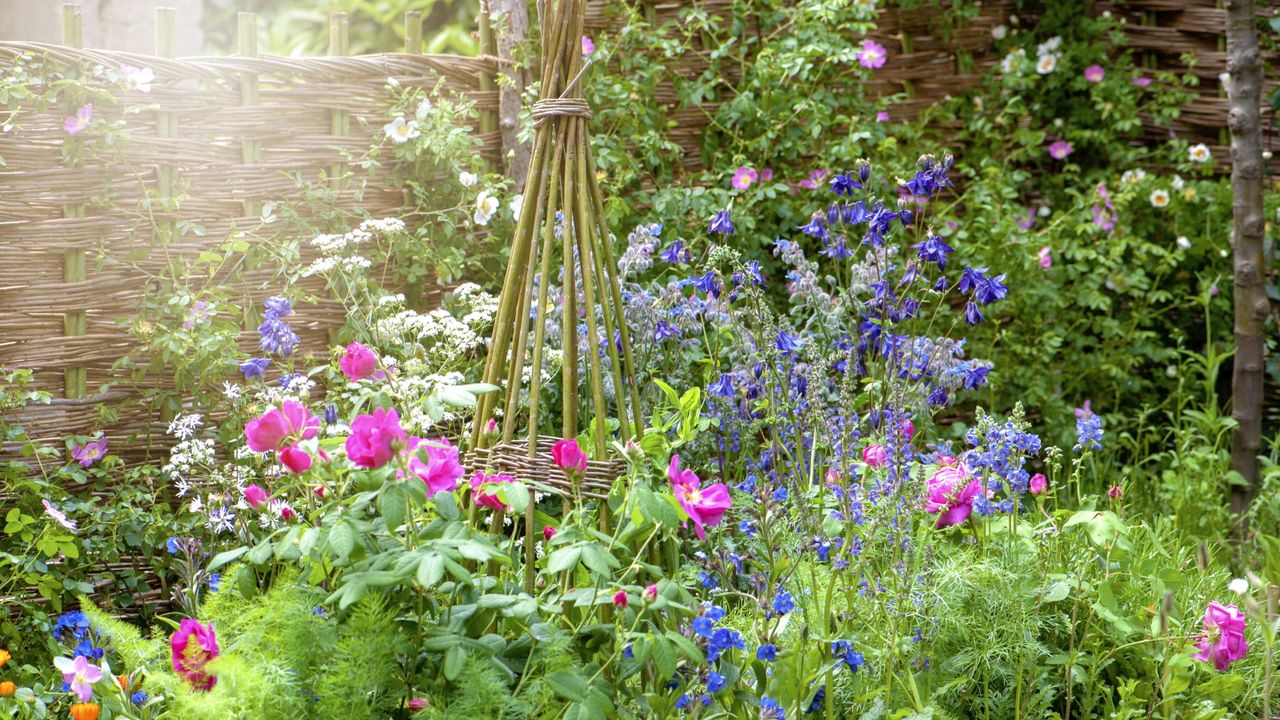
You want your borders to catch the eye for all the right reasons. They should grab attention for beautiful displays of flowers, not because of messy, flopping plants. One of the best ways to garner lots of compliments is to use natural supports for tall perennials.
Supports are essential to avoid drooping or flopping, especially after rainfall or when plants are laden with weighty blooms. The best natural supports for tall perennials can be made of twigs, bamboo, hazel, or willow. Whether supporting individual plants or clumps of perennials, they offer an artistic visual to borders and blend in when the plants are in full pomp.
Over my years working in historic gardens in the UK, I built natural plant supports in varying shapes and sizes. From large teepees to small domes, the following sustainable plant support ideas are perfect for bringing a cottage garden-inspired feel to your borders and beautifully displaying your taller perennial plants.
1. Branchy Prunings
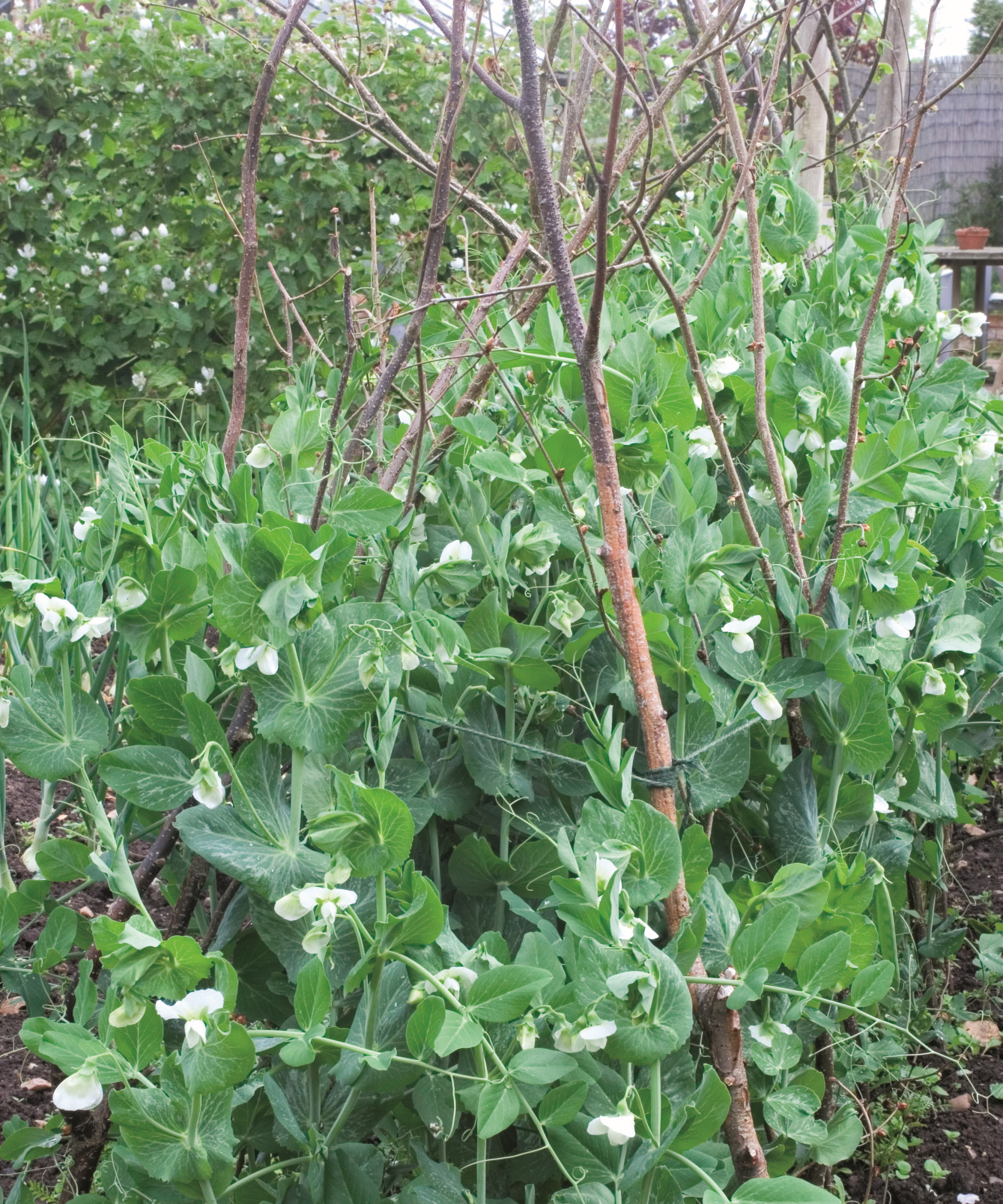
Twigs and sticks from pruning shrubs offer a traditional, sustainable gardening technique for supporting perennials. Also sometimes called pea sticks, this technique is often seen in cottage garden borders and was something I used in cut flower borders to keep plants upright. It creates a natural support frame to stop perennial plants from flopping.
‘Brushy prunings work well because they disappear into the growth and look more natural than metal cages in a mixed border,’ claims Jessica Mercer, Horticulturist at Plant Addicts. This is a good point to consider when planning your borders, as the best plant supports keep perennials upright but blend in and get hidden by foliage as the plants develop.
You can use this technique to support larger varieties of sedum, shasta daisies, salvia, asters, phlox, or yarrow.
Knowing when to support perennials is important, so get the prunings in place in early spring. Place the pruning into the ground around the plants in a circle, bend the tops towards each other, and gently twist some of the tips together.
2. Bamboo Canes
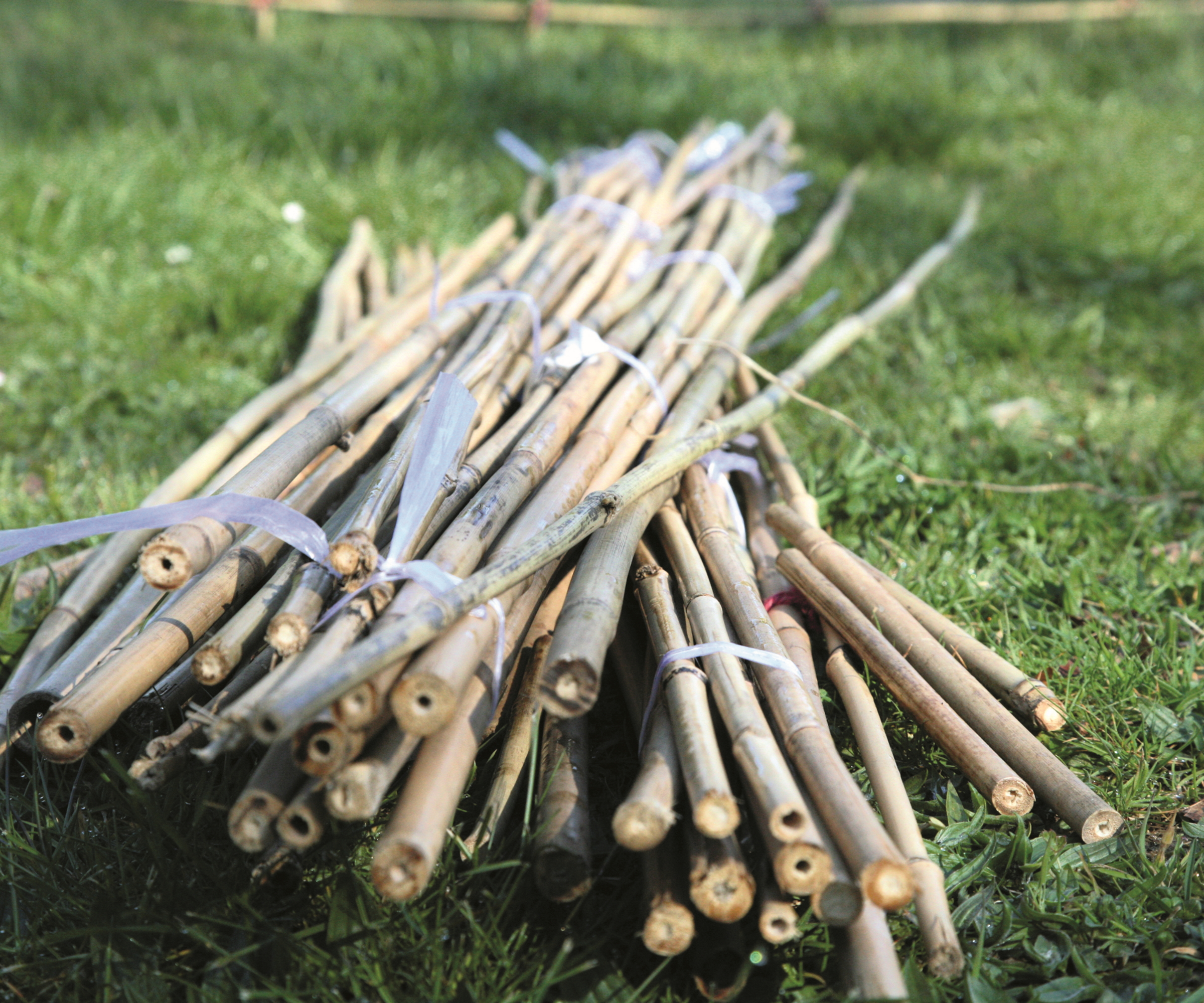
Bamboo stakes are a common item that gardeners often accumulate in sheds. Thankfully, there are lots of uses for these canes, including different potential methods for supporting perennials, as well as classic uses such as stakes for growing tomatoes.
Firstly, you can use bamboo canes as an individual plant support. ‘Bamboo stakes are both functional and visually appealing,’ says Halina Shamshur, resident botany expert at Plantum. ‘Bamboo is lightweight yet strong and works well for individual plants.’
The tall stems or flower spikes of delphiniums, foxgloves, perennial sunflowers, and verbascum can be kept upright by being secured to a single bamboo cane. Use twine or soft ties (such as these velcro soft plant ties at Amazon) to attach the plant to the stake.
An alternative is to use more than one bamboo cane. As Jessica Mercer explains: ‘For plants that need broader support, a simple ring of bamboo stakes and twine is great for phlox, asters, and other clump-forming perennials that tend to open or lean after rain.’
You can get a six-pack of 48-inch bamboo plant stakes at Lowe’s to create a circle around perennials in your borders.
3. Hazel Poles
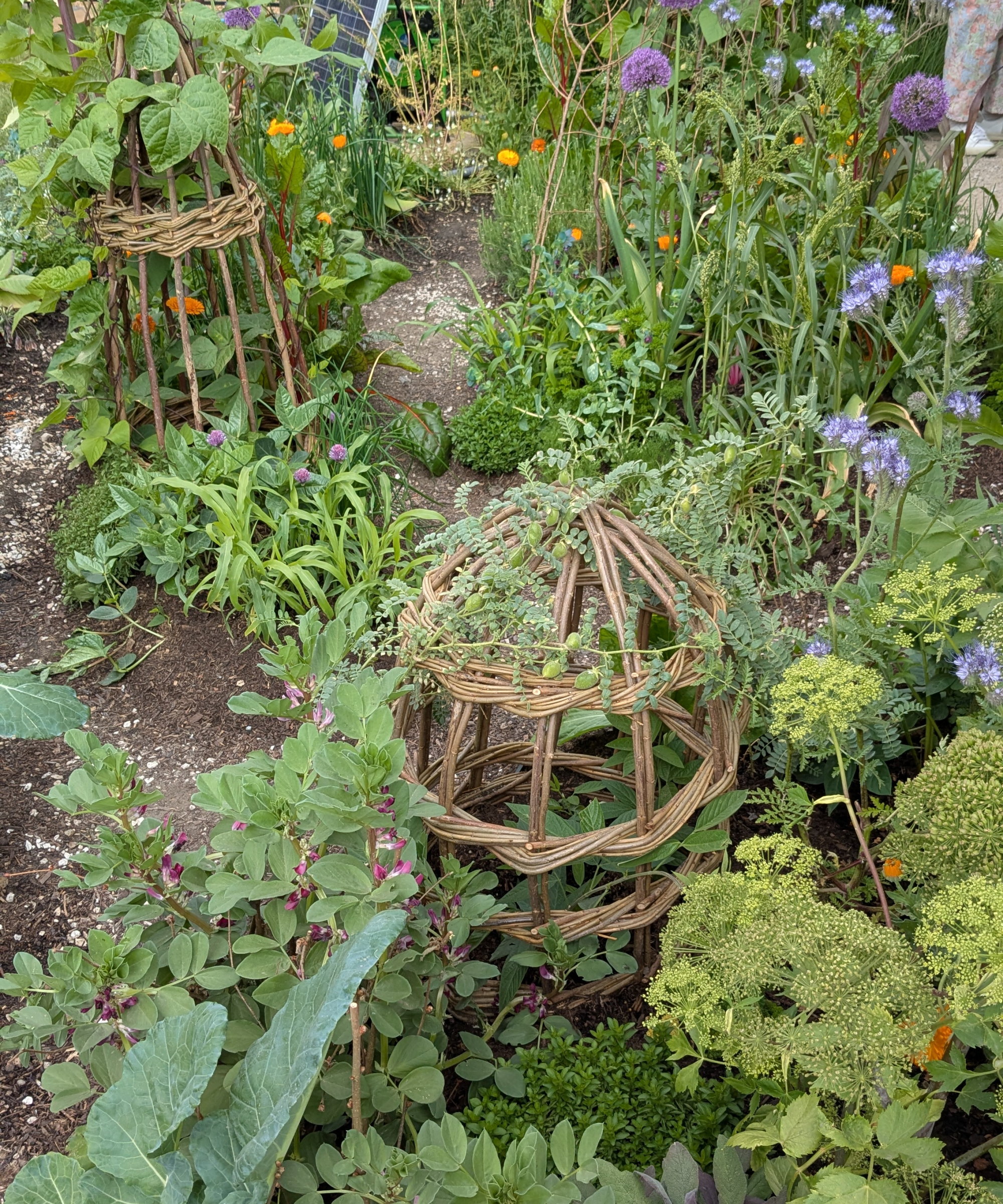
Hazel makes a great material for natural supports for tall perennials, as it is strong and flexible. It can be used to build arches, domes, teepees, or obelisks. When I worked in historic gardens in the UK, we used coppiced hazel to build plant supports in flower borders each year.
To build hazel plant supports, you can be creative. A few straighter, longer rods can be pushed into the ground and tied together to create teepees, with a few whippier stems woven in to turn this into an obelisk.
To create a domed cage, flexible stems can be arched over the top of perennials and thinner pieces woven in and out for horizontal support.
These beautiful, natural structures bring elegance and sophistication to flower beds, and will seamlessly blend in with the perennials as they grow.
You can make hazel supports for herbaceous perennials like delphiniums, peonies, asters, and salvias. But hazel is also ideal for climbing plants like sweet peas and clematis, or climbing vegetables such as beans.
4. Willow Rods
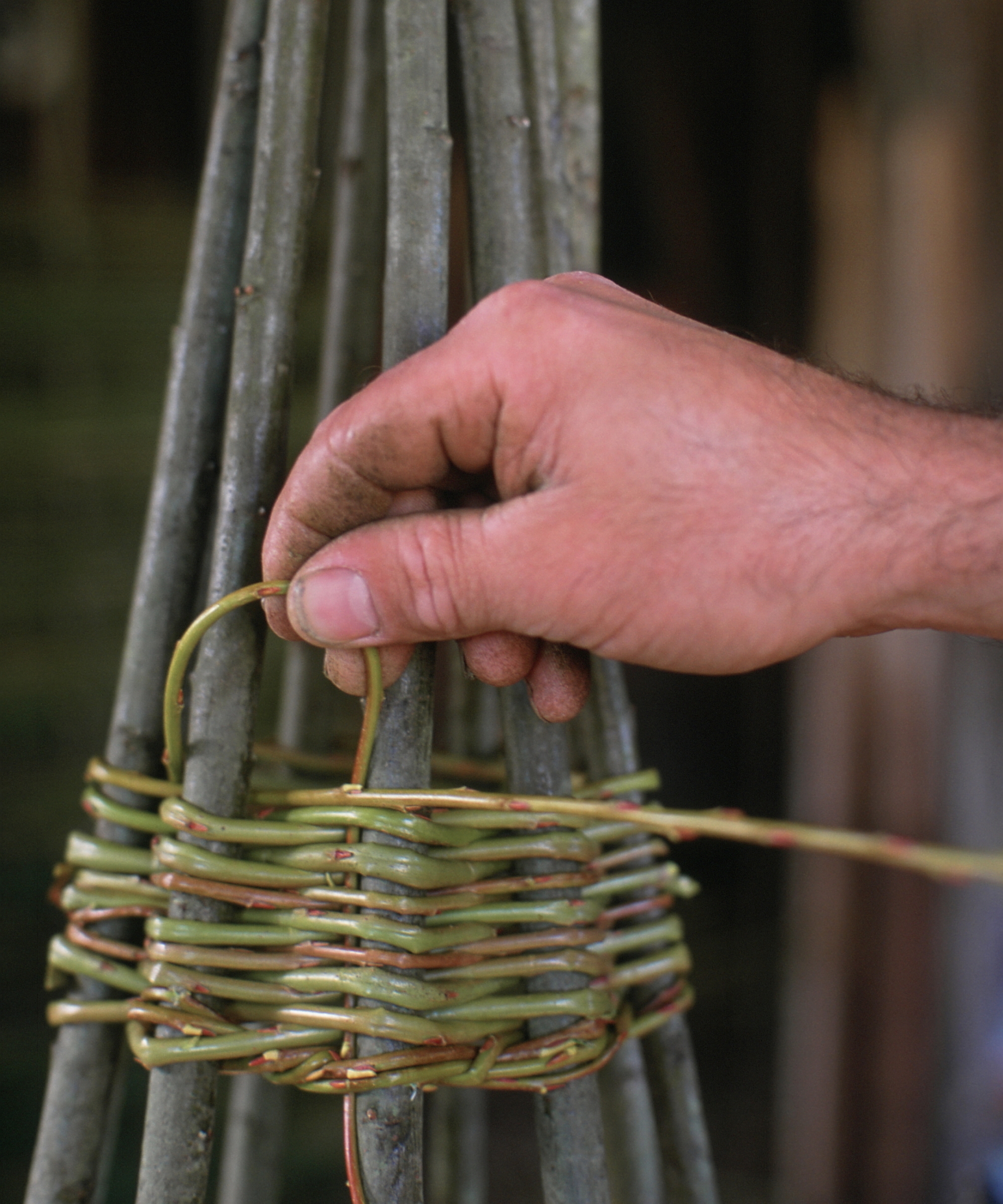
If you have willow on your property, it is another tree you can coppice to take advantage of the fast-growing stems they produce. Just like with hazel, you can do many different creative things with willow rods.
‘Willow rods work well and are easy to install,’ claims Halina Shamshur. ‘They’re flexible, can be shaped as needed, and are strong and durable.’
Willow rods can be lashed together to make a wigwam for tall perennials, or converted into an artistic obelisk for the border by weaving smaller, flexible stems around the structure for horizontal support and strength.
You can also use willow to create a DIY cage for growing peonies (you can get metal peony cages at Amazon). The flexibility of young willow stems allows them to be woven together into a circle. With some canes added through the center and three or four more for legs, it can be an attractive, natural support to prevent delicate peony stems from flopping.
Freshly cut willow stems are likely to root when inserted in the soil. You can dry out the stems to prevent this, or use willow only as temporary structures and remove them at the end of every season.
If you don’t have access to willow, you can buy rods to use. Such as these three-foot willow branches for weaving at Amazon
Shop Plant Supports:
This willow trellis can be attached to a wall for climbers or used to create an attractive circular plant support around perennials in your borders.
This 60'' H X 37.8'' W X 37.8'' D obelisk is made from sustainably-sourced FSC-certified cedar wood and will add drama and height to any herbaceous border.
These U-shaped bamboo hoops are 48 inches tall and can be placed in flower beds or containers to support perennial plants
When it comes to climbing plants, Halina Shamshur from Plantum recommends natural wooden lattice panels as ‘the best choice’ for a wall trellis.
She adds: ‘They’re typically made from pine or spruce and are the most common and affordable option. Larch panels are more durable but also more expensive.’
Whether you choose a square, rectangular, or triangle-shaped trellis, using them for vertical gardening opens up many possibilities for growing flowers, fruit, or vegetables up your walls.
If you love inspiring garden ideas, outdoor advice, and the latest news, why not sign up for our newsletter and get the latest features delivered straight to your inbox?