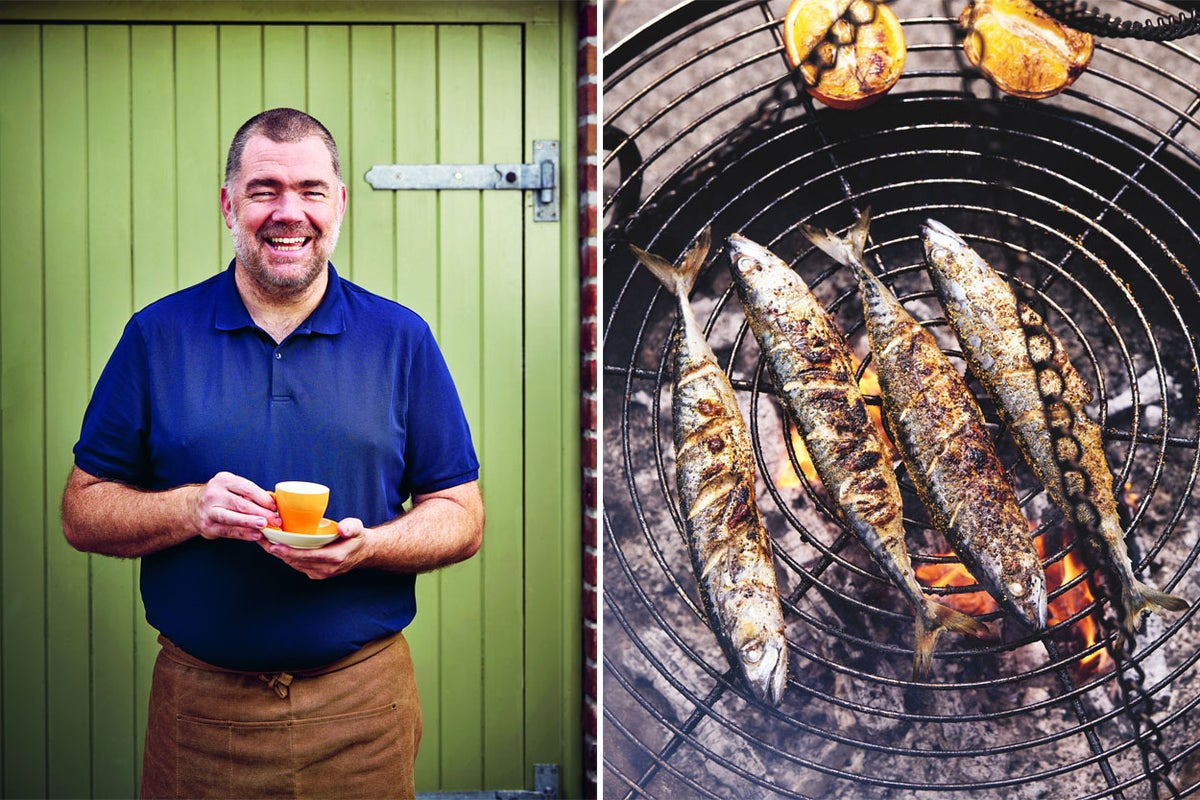
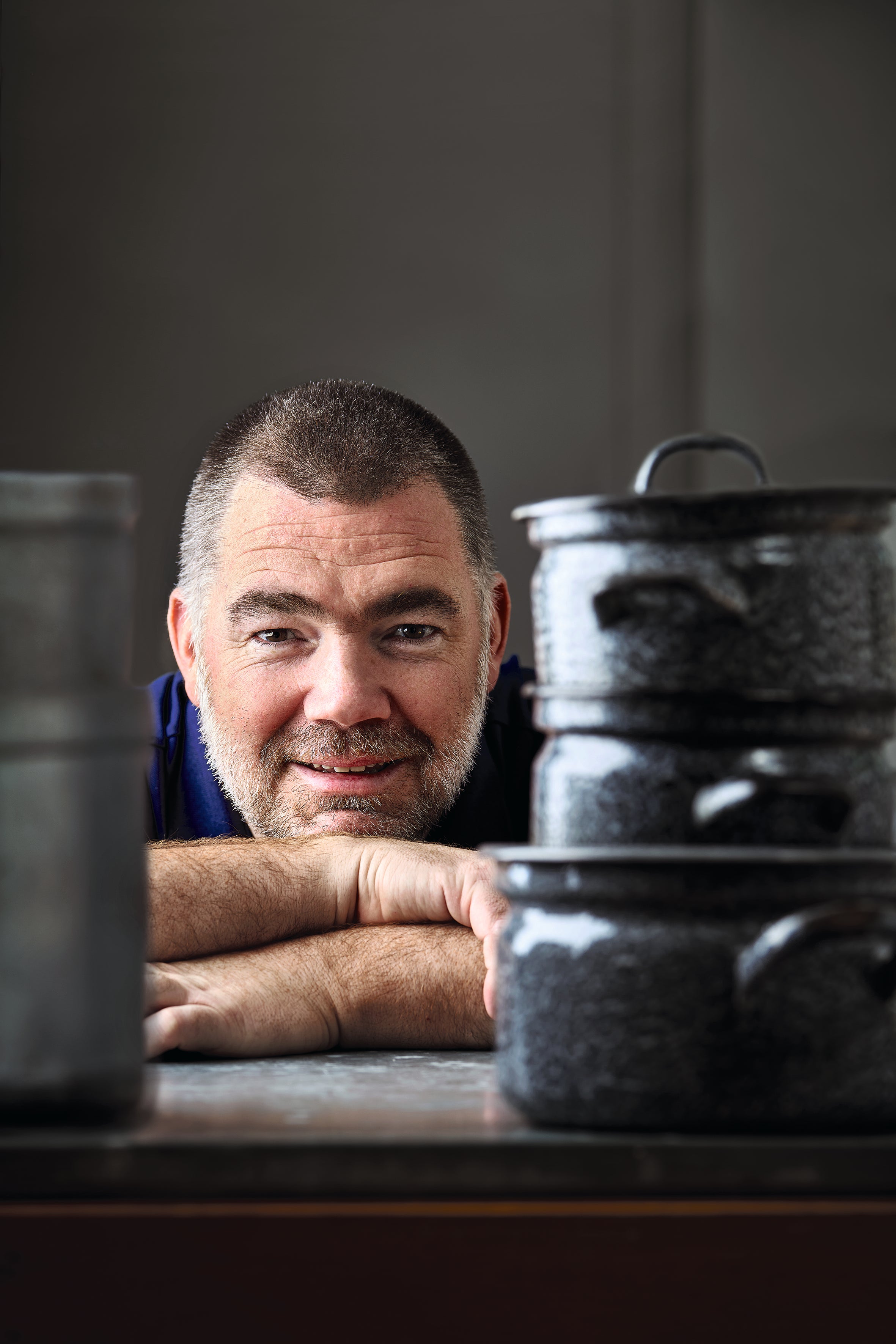
Nathan Outlaw is on a “one-man chef mission” to get us all to eat more seafood.
“What people sometimes don’t realise is [that] it is a convenience food,” says the chef, who runs Michelin-star restaurant Outlaw’s Fish Kitchen in Port Isaac, Cornwall. “If you’ve got a good supply of it, it cooks so quickly – three or four minutes – and you can have your meal ready.”
The 48-year-old has seen big changes in the popularity of fish since opening his first restaurant in 2003 – The Black Pig in Rock, which held a Michelin star – before opening his flagship eatery, Restaurant Nathan Outlaw, Port Isaac, which held two Michelin stars for 10 years.
“When I first started cooking as a chef, it had been salmon, cod, maybe some tuna steak, there wasn’t really much being eaten,” he says. “Now we’re lucky, people will try anything.
“It’s no different if you’re cooking it at home yourself, it’s about building confidence, I think.”
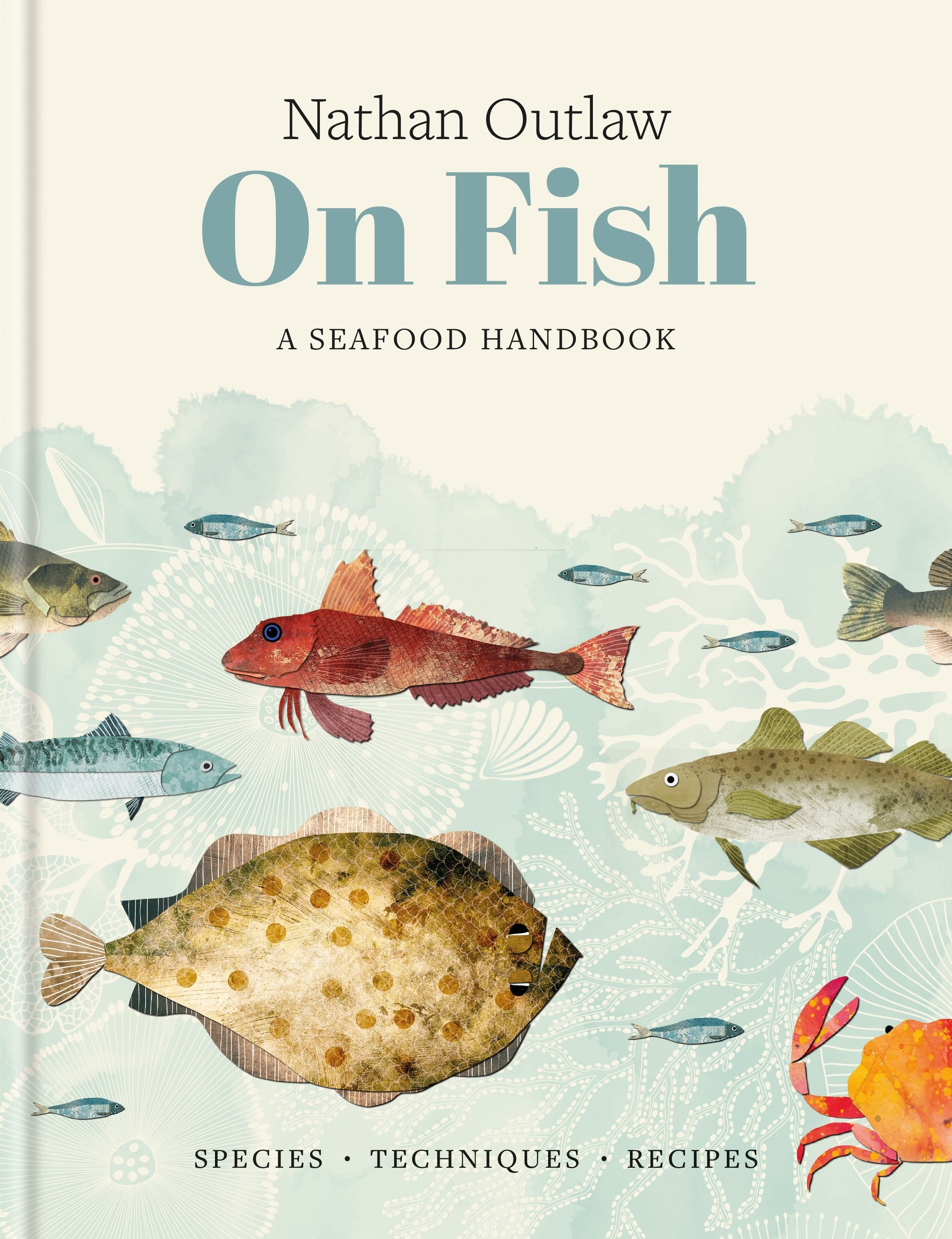
Outlaw has now released his seventh cookbook, Nathan Outlaw On Fish, which he says is a “personal handbook”, including all his thoughts about seafood since he began building up his own repertoire of dishes on the restaurant scene.
His number-one tip for expert fish cookery is leaving it to the last minute.
“The biggest thing I can say at home to be successful with cooking fish is to make sure, before you cook your fish, you have everything else ready. If you’ve got some potatoes, or a sauce, or salad, get everything ready – even get everybody sat down at the table – before you start cooking your fish. Because once it’s there, it’s ready to be served.”
Outlaw hasn’t included any cod in the book because he “decided to sort of take a stand”, despite the fact he loves it as an ingredient. “It’s just not available in the right way anymore for me to use,” he notes.
“Here in Cornwall, it’s purely on the basis of overfishing and changing the natural habitat, that there isn’t much cod anymore. Therefore, the cod all moves much more north – Norway, Iceland – where there are plentiful stocks and they are managed well. So if you were going to buy cod and you wanted to eat it with a clear conscience, you’d buy that.”
So which seafood is sustainable – and delicious – right now?
Gurnard
If you like cod, gurnard is a great alternative, says Outlaw. “Gurnard is an excellent fish because it’s got its own character. It’s got lovely, flaky fillets. It’s got a nice touch of oiliness, but it’s really good, meaty fish as well. So it’s a very good all-rounder.
“It’s not super-expensive, and it is quite versatile,” he adds. “It can take spice, it can take a light, simple grilling, you can steam it, and you can even make a soup. I make a wonderful soup using gurnard [topped with gurnard fritters and green olive tapenade]. “Or try it in a curry with pineapple chutney.”
Red mullet
“Red mullet is really, really good at the moment,” he says. “A lot of people think gurnard and red mullet are similar because they’re red, but they’re actually very different in how they taste and how they cook.”
Top a homemade mushroom soup with a piece of spiced pan-fried red mullet, he recommends.
Brill
“Brill is a fantastic alternative to turbot,” Outlaw says, “actually, I prefer brill.”
“A lot of people love turbot and say it’s the ‘King of the Sea’, but for me, brill is a fantastic fish, particularly if you cure it and eat it raw, which is not something you usually associate with a flat fish. It’s got a really lovely texture, and it’s beautiful [when] steamed.
“Personally, I love things raw, or I like them steamed. That’s my two favourite techniques. It shows off the quality and the individual characters of different species.”
Lobster
Soon, “We’ll start getting the first lobsters”, says Outlaw. “A lot of people see lobster [and think] we can’t afford that, but you’d be surprised, because lobsters give you two dishes.”
He suggests using all the shells to make “a wonderful sauce or soup”, and then “obviously the meat, where you can make a lobster cocktail.”
“At the right time of year, lobsters are really well-priced – sometimes they can be as good value as something like seabass.”
Megrim sole
Also known as Cornish sole, Outlaw says megrim sole is “really, really good” and an alternative to lemon sole. “There’s quite a bit around, there’ll be more as we go into May and June, that’s when it starts to kick off.”
Outlaw’s recipes include baked megrim sole on fennel with orange and gochujang butter, and deep-fried megrim sole with a chilli and seed dressing.
Bass
“Bass is great when the season opens,” he says, “The season actually closes in the UK from January to March. So, the first of April it starts, and then you get really good line-caught bass, and I think it’s a beautiful one to try – you might not have tried it before.”
“Grey mullet is a really good alternative if you like bass, and it’s a little bit cheaper. There is a lovely meatiness to it that can stand up to big flavours.”
Monkfish
“Monkfish is one of my favourite [types of] fish and I think that’s great for the summer, for barbecues, because you can marinate it nicely in something, and then that’s really good on a barbecue. People always [say] barbecuing fish is quite difficult. But monkfish, if you’re cooking it on the bone, is very forgiving.
“People worry about it being overcooked – you can’t really overcook it. I mean, you can, but it takes some doing! It’s really meaty, it likes to be helped along with lots of flavour. So don’t be afraid with chilli or spices, it just seems to go so well with the texture.”
He recommends monkfish with a harissa or satay sauce, or peppered rub (like a peppered steak). “Season the whole monkfish tail, and then grill that. And that’s really delicious as well.” Or give it an Asian twist with a sticky sweet and sour sauce.
Hake
Hake may be “one of the most fearsome and ugly-looking fish in the sea”, Outlaw writes, but it’s delicious and unique.
“Our hake boats in the UK, especially the Cornish hake boats, are probably some of the most sustainable in the world,” he says. “So that’s a really, really good fish to eat.
“It’s also not a very bony fish, so it’s a good one for people who are a bit worried about things like that. It makes a good cod alternative.”
It’s tasty cooked inside paper with mussels, beer, bacon and leeks.
Oysters
“Oysters, obviously, are a farmed seafood,” he notes, “but they’re farmed in a way which is naturally farmed.”
Culturally, we aren’t used to buying oysters to take home, but Outlaw says there’s nothing to worry about.
“Oysters are a bit of a challenge for people, unless you are used to opening oysters, but there’s nothing wrong with getting a fishmonger to open them for you. If you’re able to consume them straight away [after bringing them home], they’re not going to harm you in any way.”
Steam oysters with a ginger beurre blanc or deep-fry them in a seeded crumb with barbecue sauce.
Tinned fish
“Tinned fish is incredible,” Outlaw says, “what you actually get from the tins, I honestly believe is sometimes better than fresh, because you can sometimes buy fresh fish that’s just been hanging around too long.
“If there is a company buying it in small quantities, in season, respecting it, then preserving it in tins”, that’s what to look for.
He recommends frying anchovies until crispy, making a chilli sauce and serving it with salad. Or putting tinned cuttlefish in ink through risotto rice, which he made the other day – “It was so delicious – it took me 25 minutes”.
Hake and mussels in a bag
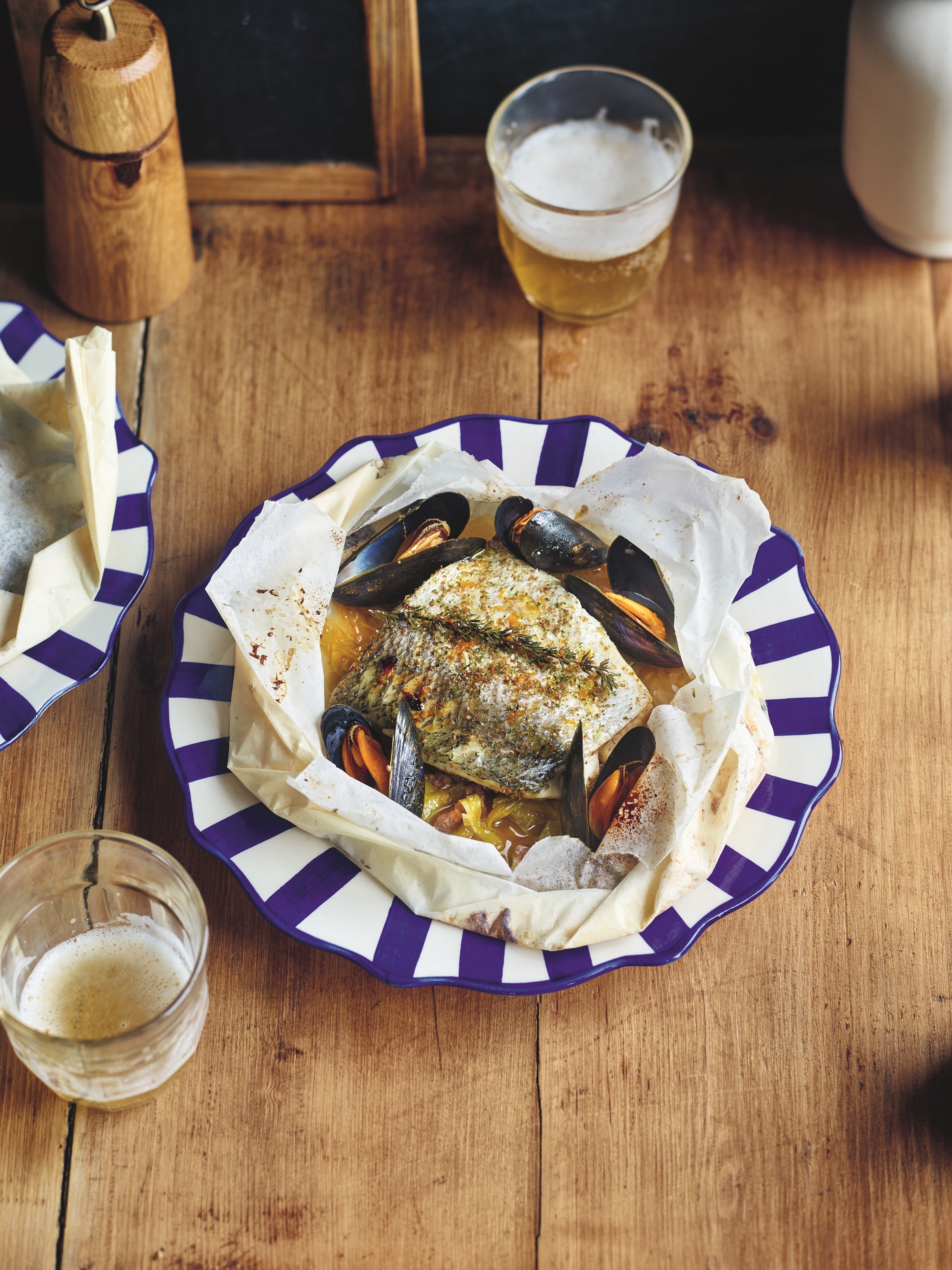
“Cooking in paper is nothing new, but I think it’s a super-simple way of serving fillets of fish,” says Outlaw.
“It’s a very gentle way of cooking more delicate species. This recipes marries fish and shellfish with beer, which – I suppose – sounds a bit strange, but trust me, it works so well.
“I use a wheat beer because it is not too bitter but has a touch of acidity and freshness that works beautifully with the fish. I like to serve this with a bowl of chips.”
Serves: 4
Ingredients:
4 x 150g skin-on hake portions
2 tsp coriander seeds, ground
20 live mussels, cleaned and beards removed
4 sprigs of thyme
Zest of 2 oranges
8 tbsp wheat beer
Sea salt and freshly ground black pepper
For the leeks and bacon:
100g unsalted butter
Olive oil
8 slices smoked streaky bacon, finely sliced
2 leeks, washed and shredded
2 garlic cloves, finely chopped
150ml wheat beer
Method:
1. To cook the leeks, heat a large pan over a medium heat and add the butter and a drizzle of oil. When the butter is bubbling, add the bacon and cook for five minutes, stirring occasionally. When the bacon has started to brown, add the leeks and cook for another five minutes. Season with salt and pepper. Now add the garlic and cook for one minute, then pour in the beer. Cook for about five minutes until the beer has reduced, then remove from the heat and leave to cool.
2. Preheat the oven to 200C fan (425F), gas mark 7.
3. On a clean work surface, lay out four large sheets of baking parchment (roughly 30 x 30-centimetres). Divide the leek and bacon mix into four equal portions and arrange over one half of each sheet of parchment. Season the hake portions with salt, pepper and ground coriander seeds and place on top of the leeks together with five mussels in each parcel, a sprig of thyme and an equal share of the orange zest. Fold over the paper and crimp the edges so they are firmly sealed, leaving you with four parcels. Leave a small opening to allow you to pour two tablespoons of beer into each parcel. Seal the hole up by folding it down tightly. If the quality of the paper isn’t great, you may need to use two sheets for each parcel or add a layer of foil on the outside. The aim is that the moisture inside doesn’t escape – this is really important!
4. Place the hake parcels onto a baking tray or two and bake in the oven for 15 minutes. When the cooking time is up, remove the parcels and serve immediately. Allow whoever is eating to open their own parcel – that’s the magic and the drama!
BBQ’d whole mackerel
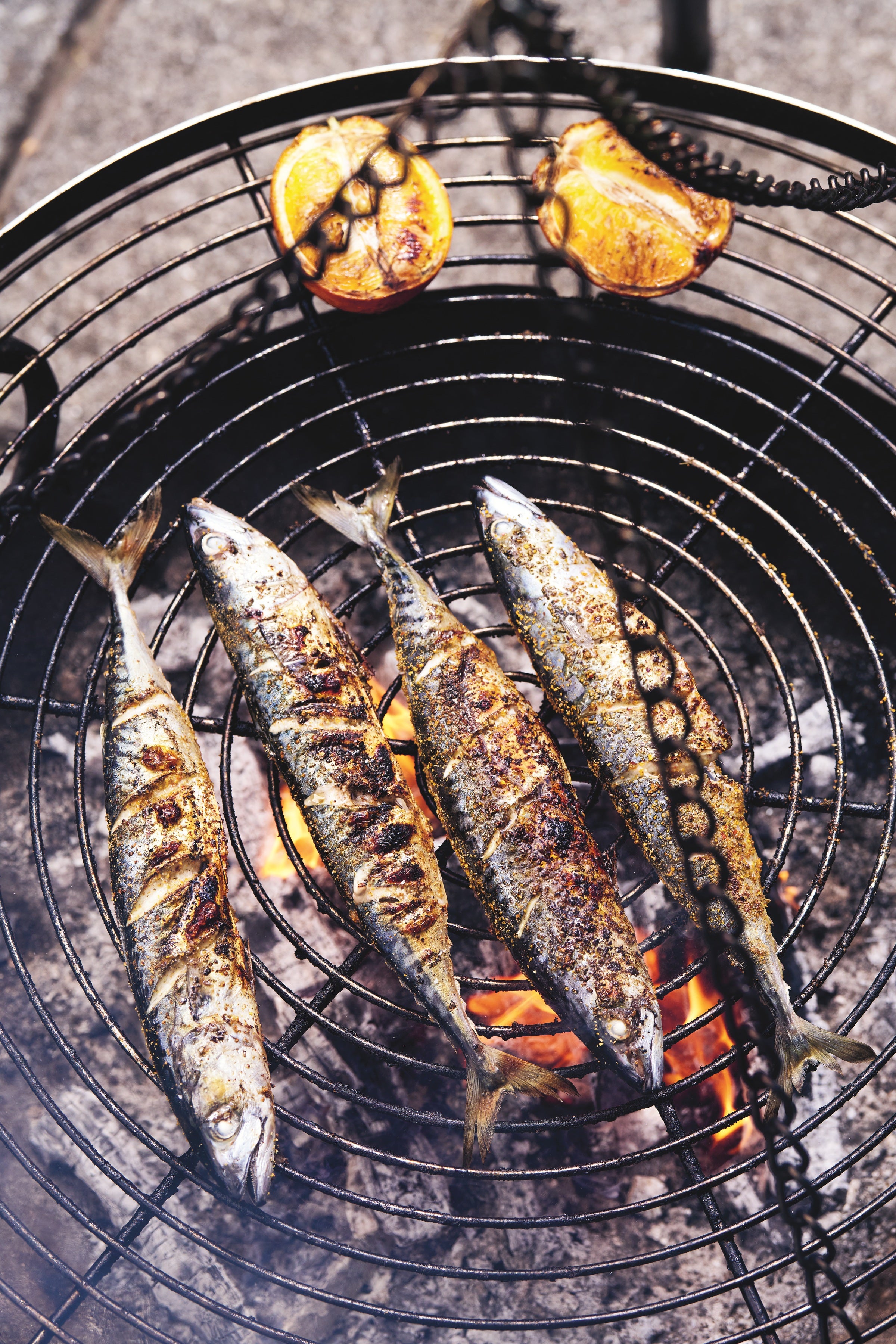
“I am often asked, ‘What is your favourite cooked fish dish to eat?’ Well, barbecued mackerel is the one for me,” says Outlaw.
“There’s something about the smell, texture, crisp bits and the smoke from the coals and wood that makes me very happy. This recipe is my very favourite way to eat it, and I love the smoked chilli sauce here that’s served with it.”
Serves: 4
Ingredients:
4 large mackerel, gutted
For the rub:
2 tsp chilli flakes
1 tbsp fennel seeds
1 tsp black peppercorns
Zest of 2 oranges
1 tsp sea salt
1 tsp chopped thyme leaves
For the smoked chilli sauce:
A drizzle of olive oil
1 shallot, chopped
3 garlic cloves, chopped
2 smoked chillies, chopped
2 thyme sprigs, leaves picked and chopped
1 tbsp fennel seeds
Zest of 1 orange
50g soft dark brown sugar
75ml red wine vinegar
100ml freshly squeezed orange juice
200g good-quality canned plum tomatoes
Sea salt and freshly ground black pepper
To serve:
16 asparagus spears, trimmed
12 spring onions, trimmed
2 small oranges, halved
Method:
1. To prepare the rub, toast the spices in a dry pan over a medium heat for a minute or so until fragrant and starting to crackle. Add the orange zest, salt and thyme and heat for 30 seconds. Grind in a mortar and pestle or spice grinder until fine, then leave to cool.
2. Slash the skin of the mackerel three to four times on each side and place the fish on a tray. Sprinkle all over with the spice mixture, rubbing it into the slashes. Leave to marinate in the refrigerator for one hour.
3. To make the chilli sauce, heat a frying pan over a medium heat and add the olive oil. When hot, add the shallot, garlic and chillies and sweat for three minutes. Stir in the thyme, fennel seeds and orange zest and cook for another minute. Add the sugar and wine vinegar and stir until the sugar has dissolved, then bubble and reduce until syrupy. Add the orange juice and tomatoes. Bring to a simmer and bubble until the liquid has reduced by half again. Taste, then season with salt and pepper, as required.
4. Tip the contents of the pan into a food processor and blitz for three minutes. Strain the sauce through a fine sieve into a bowl and leave to cool.
5. Light your barbecue one hour before you plan on eating.
6. When the coals are white hot, place the mackerel on the barbecue rack and cook for three minutes on one side, then carefully turn the fish over and cook on the other side for three minutes. (Alternatively, you can cook the mackerel under a hot grill.) Grill the asparagus, spring onions and orange halves until golden.
7. Carefully lift the fish onto a serving platter, using a big fish slice (not tongs – mackerel is too delicate for those). Serve immediately, with the chilli sauce, asparagus, spring onions and orange halves on the side.
Steamed brill
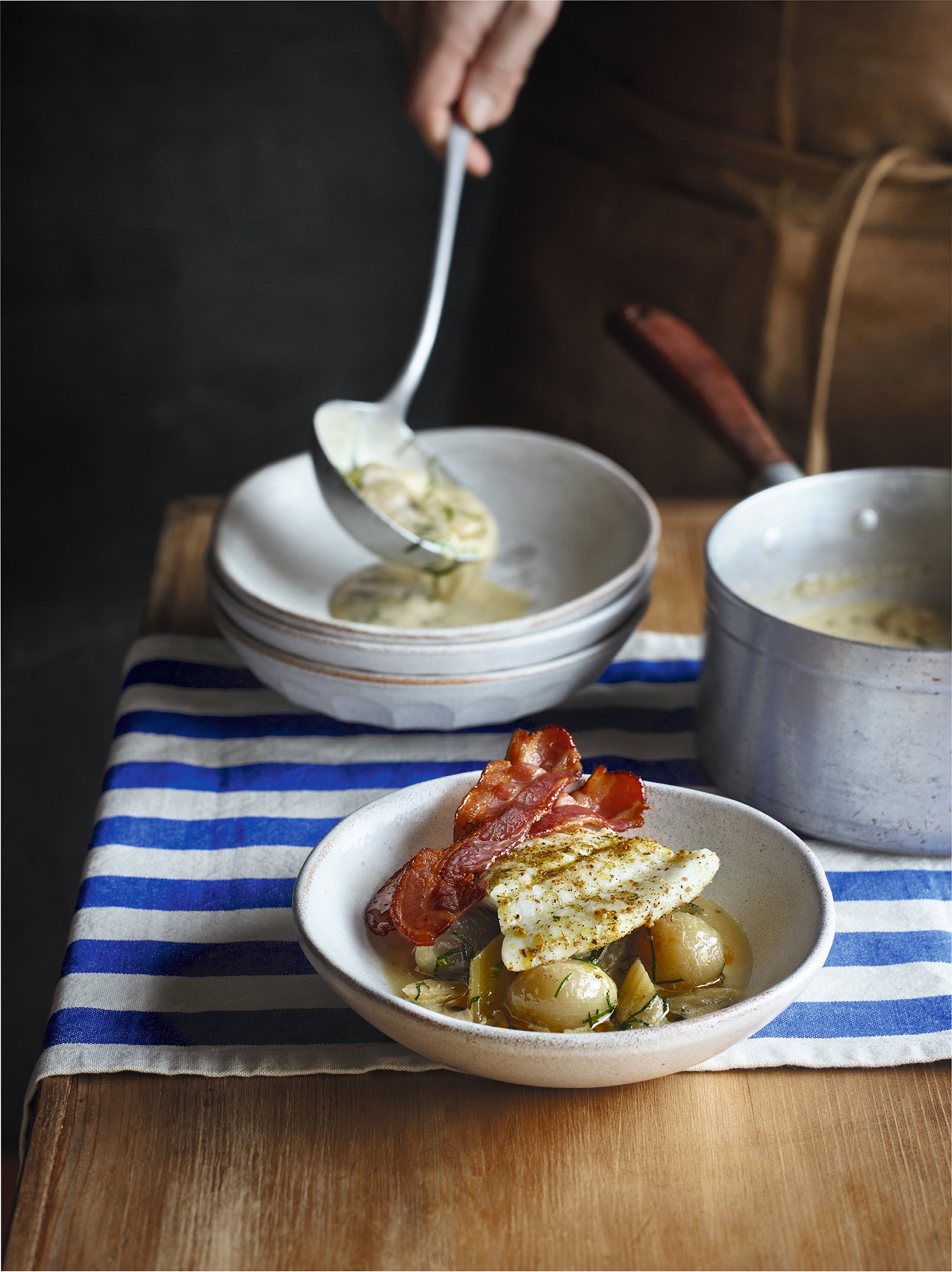
“A filleted portion of brill from a good-sized fish, lightly steamed, is a comforting and pleasurable delight,” says Outlaw.
“Brill is such a delicate species that harsher techniques of cooking tend to dry out the edges of the fish. In this recipe, I’ve paired the fish with a subtle fennel salt that brings out its character.
“Beneath the fish pools a fresh, but rich, stew of peas, bolstered with cider and clotted cream. A wonderful, delicate plate of food, I hope you’ll agree!”
Serves: 4
Ingredients:
2 tsp fennel seeds
2 tsp sea salt
8 slices of smoked streaky bacon or pancetta
2kg brill, filleted and portioned into 4 x 120g portions
2 tbsp olive oil
A drizzle of extra virgin rapeseed oil, to finish
For the pea, shallot and cider stew:
50g unsalted butter
2 tbsp rapeseed oil
12 shallots, peeled and left whole
200ml dry cider
1 sprig of rosemary, finely chopped
300ml fish stock
200g fresh peas, podded
100g clotted cream (ideally Cornish, of course!)
1 tbsp chopped mint leaves
1 tbsp chopped flat-leaf parsley leaves
Sea salt and freshly ground black pepper, to taste
Method:
1. To make the stew, heat the butter and oil in a medium saucepan over a medium heat. When the butter is bubbling, add the shallots and gently let them colour all over, stirring occasionally, for 15-20 minutes. Don’t cook them too quickly – if they start to colour fast, reduce the heat. Once the shallots are well coloured, add the cider and rosemary and increase the heat to allow the cider to reduce quickly. When the cider has reduced by three-quarters, pour in the fish stock and simmer until reduced by half. Add the peas and simmer for a further 20 minutes.
2. Meanwhile, set up a large bamboo steamer or switch on your steamer oven. Crush the fennel seeds and sea salt together in a mortar and pestle and set aside. Cook the bacon until crispy under a hot grill or in a frying pan and set aside.
3. Season the brill with two teaspoons of the fennel seed salt and drizzle with the olive oil. Place the fish on a sheet of baking parchment and steam for four to five minutes.
4. While the fish is cooking, add the clotted cream to the stew. Bring to a simmer and whisk it in, then add the chopped herbs. Taste and add salt and pepper as you like.
5. To finish, ladle the stew into bowls. Peel the skin away from the brill and sprinkle the flesh with one teaspoon of the fennel seed salt. Place the fish on top of each portion of stew and add two slices of crispy bacon to each bowl. Drizzle a little extra virgin rapeseed oil over the fish and serve. I would serve this with either new or mashed potatoes.
‘Nathan Outlaw On Fish: A Seafood Handbook’ by Nathan Outlaw (Kyle Books, £30).
Readers compare ‘stodgy’ UK school food with France and Spain
10 ideas to inspire beach decor style
Starbucks reveals summer menu return date and new items
‘I’m a much nicer person now’: Brin Pirathapan on life after MasterChef
Social media is ruining cooking – but there’s a solution
From Japanese ‘swicy’ to Mexican smoke – how to cook like a flavour tourist