The Berlin Wall has now been down for as long as it stood dividing its city, with 10,316 days having elapsed since the barrier was pulled down by the German capital’s inhabitants.
The guarded concrete wall was a flashpoint between East and West throughout the Cold War and stood for over 28 years. As of Monday 5 February it has now been reduced to rubble for the same amount of time.
Light snow fell on the remaining sections of the wall at the weekend ahead of the deadline. Its ruins are now partially used as an open-air art gallery – reputably the longest in the world – a featuring murals to freedom.
At the weekend Berlin’s local newspaper Berliner Zeitung ran a picture of the city from the air at night on its front page, with the headline “10316 days one city”. The old divide between east and west is famously still visible at night from the air because of the slightly different streetlights used in each former section.
“These days are special days and this edition of the Berlin Zeitung is also special. On February 5, this coming Monday, the Wall is gone as long as it stood,” the paper said in a front page editorial to mark the anniversary.
The wall was first erected in 1961 and supposed to prevent the escape and defections of East Germans into West Berlin, an enclave of West Germany deep inside the eastern bloc.
The wall fell after an apparently bungled 9 November press conference by Günter Schabowski, an East German communist official who said people could cross the wall “immediately” – leading to huge crowds to gather at its border crossing points.
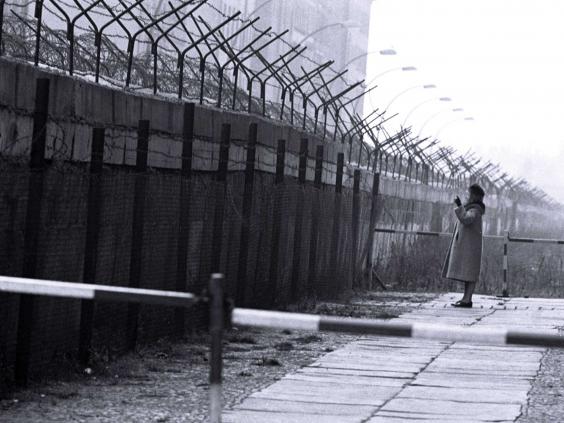
After hours of confrontation confused guards opened the gates rather than use lethal force on the assembled throng, and east and west Germans met.
Monday’s date was an opportunity for those who remembered the fall of the wall to share their memories of it.
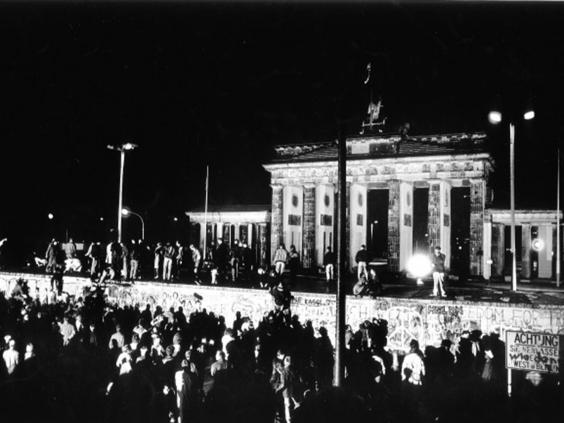
“While of course most life-altering for East Germans it was also very exciting for Westerners to be able to explore East Germany,” Henning Dekant, a software engineer who now lives in Canada told The Independent via social media.
“I got a speeding ticket but had no East German cash. The cop was completely at a loss but would not accept Western cash, which was much more valuable.
“So he wrote me a note that demand that I would transfer the money for the ticket to the East German central bank. Shortly after this bank and its state was no more. I still have the note.”
Glenn Moore, a sports journalist who for a long time ran The Independent’s football coverage, said: “I remember the night it came down. Working on the sports desk at The Telegraph and the first edition arrived with it on the cover. One of the few times I wished I reported news rather than sport.”
Around 5,000 people are estimated to have attempted escaped over the wall while it stood, with between 100 and 200 people killed in the process. Today, crossings that people formerly risked their lives to bridge are busy routes for commuters, clubbers, and tourists going about their business.