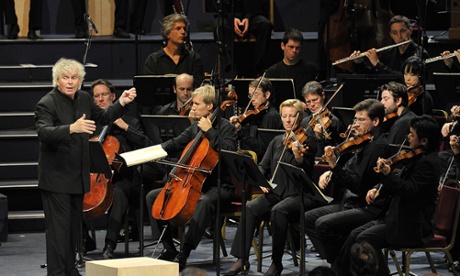
The 124 members of the Berlin Philharmonic are meeting today at a secret location in the city to elect their next artistic director, the conductor who will succeed Simon Rattle when he steps down from the role in 2018.
Details of how the ballot for what is still one of the most prestigious jobs in music is organised are sparse. In theory, apparently, any player can vote for any conductor in the first round, though in practice the orchestra is presented with a list of possibles, and rounds of voting then continue, papal-style, until one candidate emerges with a clear majority. Even if the musicians come up with a clear preference today, though, it’s unlikely the decision will be made public very quickly, and there’s no guarantee either that whomever they chose will necessarily accept the nomination – the days when all the Berlin Philharmonic had to do was snap its collective fingers and any conductor in the world would come running have gone.
When Rattle was chosen 16 years ago, the election boiled down to a straight contest between him and Daniel Barenboim. This time, however, the possibilities seem much less clear cut. Since Tom Service enumerated the most likely candidates here a couple of months ago, a number of the leading contenders have apparently ruled themselves out of the contest. Both Barenboim and Riccardo Chailly have plenty on their plates with their existing opera and orchestral commitments, and have fine relationships with the Berlin Phil as guest conductors anyway, while it can’t have been a coincidence that Mariss Jansons chose the weekend before the election to announce that he was extending his contract with the Bavarian Radio Symphony in Munich to 2021. Two outsiders, Gustavo Dudamel and Yannick Nézet-Séguin, have distanced themselves from the speculation too.
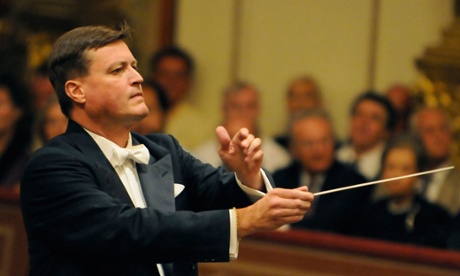
Christian Thielemann remains a frontrunner, though the narrowness of his repertory and his sometimes dubious political pronouncements mean that his appointment would not be straightforward. His unswerving commitment to the Bayreuth festival might also present scheduling difficulties for the Berlin Phil’s summer tours, too.
Andris Nelsons is still the other leading contender. His initial contract with the Boston Symphony is due to end in 2018, and there are rumours that things are not quite turning out there as he expected. If the Berlin Phil opts for youth – if he took over in 2018, Nelsons would still not be 40 – he is the obvious, standout choice.
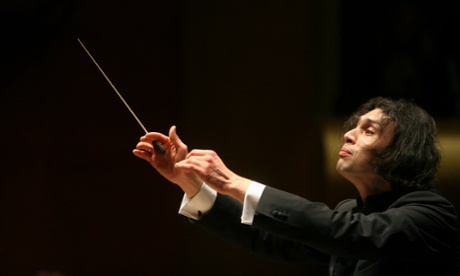
But it’s still by no means just a head-to-head contest between Thielemann and Nelsons, and other names have come into the frame over the last few weeks, particularly that of Kirill Petrenko, music director at the Bavarian State Opera, while Vladimir Jurowski, who must rank among the top 10 conductors in the world today but was not initially thought to be in the running (he has only conducted the Berlin Philharmonic once) has been increasingly mentioned as the election has gotten nearer.
In the end, though, it’s all speculation, and even those who have ruled themselves out might be persuaded to change their minds if the offer were sufficiently attractive. While it’s unlikely that Berlin will come up with an appointment as unexpected as the Royal Concertgebouw Orchestra’s choice last year of Daniele Gatti, it could still take us by surprise.