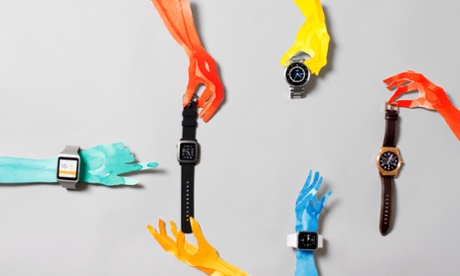
According to our Global Connected Commerce survey 2015, across the developed world, 17% of web users aged 18 to 64 already own a wearable device. Most of those will be fitness trackers of some kind, but nevertheless a habit is quietly forming: people are getting used to wearing technology and are becoming more comfortable with the data it captures about them.
Just as the smartphone became compelling when the iPhone arrived with its App Store, so wearables may be just a move or two away from a major breakthrough. This isn’t just about our lust for new devices, although, on average, people now use five each, up from 2.7 in 2014. Instead, it’s about the lure of irresistibly convenient services, powered by our personal data and enabled by those devices.
Some 62% of smartphone users, for instance, are now prepared to use their phones to pay in-store, while 21% have already done so. Airlines, meanwhile, increasingly allow us to check in via mobile and download our boarding pass straight to a smartphone. Perhaps the killer app for the smartwatch will be an indispensable wrist-mounted digital personal assistant, in the tradition of Tony Stark’s JARVIS in the Iron Man movies. Suddenly, legions of us will instantly wonder what we ever did without such a thing.
One way or the other, as connected devices offer new, genuinely useful experiences, our old objections – to change, to privacy and data concerns, to looking foolish in possession of a silly new gadget – start to fall away. People may be cautious about the misuse or unwelcome commodification of their data, but our research tells us that they also have a strong desire for personalised e-commerce services that take account of their tastes, effortlessly serving up interesting and unexpected options. In our survey, 62% of respondents said they bought more and/or more often when met with tailored retail experiences, and 75% of people log in when they visit e-commerce websites in order to benefit from a personal service.
Wearable devices slot into this fast-changing world in a unique role, because they monitor our lives in ways nothing else can. If it’s frictionless personalisation we want, then the more data we give, the more we get back. In this scenario, a device that knows what you eat, what you buy, where you’ve been and what ads you have looked at becomes a necessary link in a beneficial chain.
Such a concept will terrify some, but it will excite many others. An entire generation of millennials shares few of its parents’ hang-ups over privacy, techno-fear or over-sharing. Many of the older generation may balk at the perceived pernicious social effects of Facebook, but 91% of people surveyed used a social network in the past 30 days, 28% of whom bought an item directly from a social media platform in the same period.
For better or worse, commerce, even the in-store kind, is increasingly digital, more social and exponentially more personalised. Whether Apple cracks it or someone else gets there first, the chances are that plenty of us will be wearing a little piece of that future soon enough.
Jim Herbert is managing partner at DigitasLBi Commerce,
The agency’s What’s Next in Connected Commerce event takes place on 4 June
This advertisement feature is brought to you by the Marketing Agencies Association, sponsors of the Guardian Media Network’s Agencies hub