As legend tells it, the first audiences to watch Luis Buñuel and Salvador Dalí’s surrealist silent film Un Chien Andalou were struck numb with horror. There were stories of punters fainting in their seats, of women miscarrying, and multiple complaints being made to the police – usually in response to Un Chien Andalou’s most famous shot, of a woman’s eye (really, through a bit of editing trickery, the eye of a calf) being cleanly sliced in two by a blade. This was in 1929, at Paris’s Studio des Ursulines cinema. Nearly 100 years later, reactions likely won’t be as dramatic. You’d hope, anyway. But chances are that a handful of people will still reach for their sick bags – such is the timeless power of Buñuel and Dalí’s disconcerting magic.
That shot in question is among a host of clips showcased in Kinaesthesia, an enthralling, dreamy romp through the annals of silent film, and in particular silent films that plunged their viewers – and often their characters – into the human subconscious. We witness the endless staircases to nowhere in Fernand Léger’s Ballet mécanique (1924), the nonsense horse race of Hou Yao’s Romance of the Western Chamber (1927), and the mad, billowing curtains of Maya Deren’s Meshes of the Afternoon (1943), along with countless more.
“There’s a whole tradition of directors who’ve used dreamscapes in their films, and it hasn’t stopped,” explains Kinaesthesia’s director Gerald Fox. “But there’s no question that this was the birth of it. These were incredibly inventive young filmmakers making early experimental films. They all wanted to put in a dream sequence so they could really play with the form and have fun with it.”
Today, he adds, greater emphasis typically seems placed on character and script than the sheer visual cake-eating of the silent era. “David Lynch didn’t do this, Michel Gondry – there are people,” he says. “But it’s rare now to see a film where the form really contributes enormously to its greatness.” He laughs. “I don’t want to sound pretentious, but often you see a praised film and think, ‘yes, absolutely – but it’s quite boring filmmaking, isn’t it?’”
The Serbian filmmaker and artist Slavko Vorkapich roughly described kinaesthesia, in a cinematic sense, as “a means to organise shots in a way that permits the viewer to experience in his body a unique and aesthetic melody and orchestration”. It’s the closest thing to reality-bound REM, I suppose, where down is up, up is down, and the viewer is set blissfully adrift into the unknown.
“I would question whether there was ever a period of such utter creativity in cinema as there was in the 1920s,” Fox says. “The 1960s had the French New Wave, and the 1970s saw America make all of these incredible films, of course. But there is something about the sheer excitement of the form and what you could do with it in the 1920s that I don’t think we’ve ever bested. It’s partly to do with the confines of silent film, so you were freer in some ways. And then when sound came in, it took a long time for filmmaking to be truly original again. Sound brought it back to narrative. There was less of an impulse to say, ‘let’s just forget about plot, let’s just be creative’.”
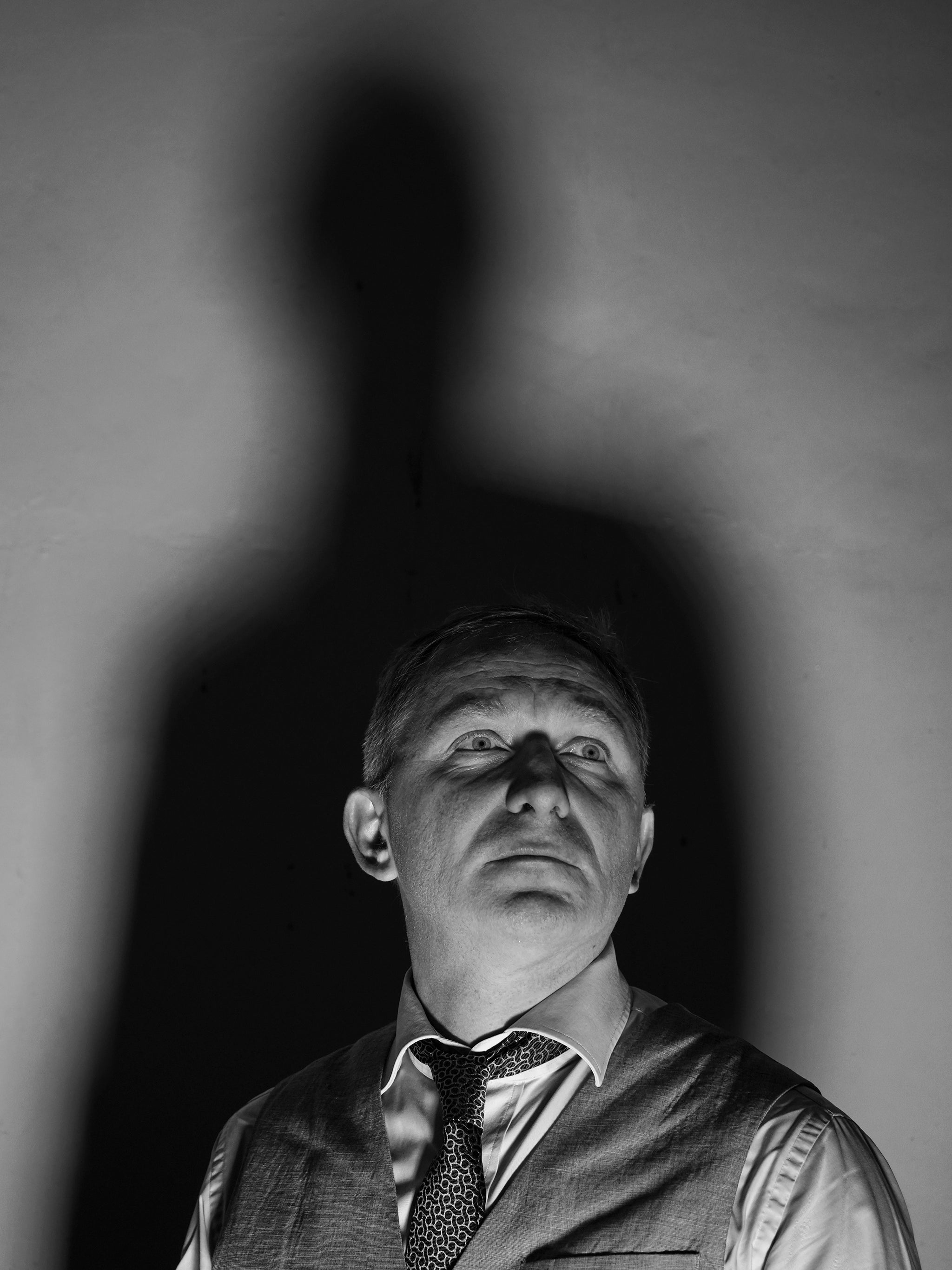
Kinaesthesia is based around an essay on dreams in silent film by the late film historian and Harvard professor Vlada Petrić, who is brought to life on screen by actor Goran Kostić, and photographed stumbling through swirling leaves and wading through foggy water. Like the films he discusses, it’s a bit of a trip. And Fox hopes it convinces young audiences to look back in time, too – that beyond the crackle of the film print or the occasional sliver of goofiness, there is unbridled ingenuity here that has never quite lost its thrill.
‘Kinaesthesia’ premieres at London’s BFI Southbank on Friday 17 April, alongside a weekend of films handpicked by Gerald Fox showcasing dreams in silent cinema. Tickets are available here