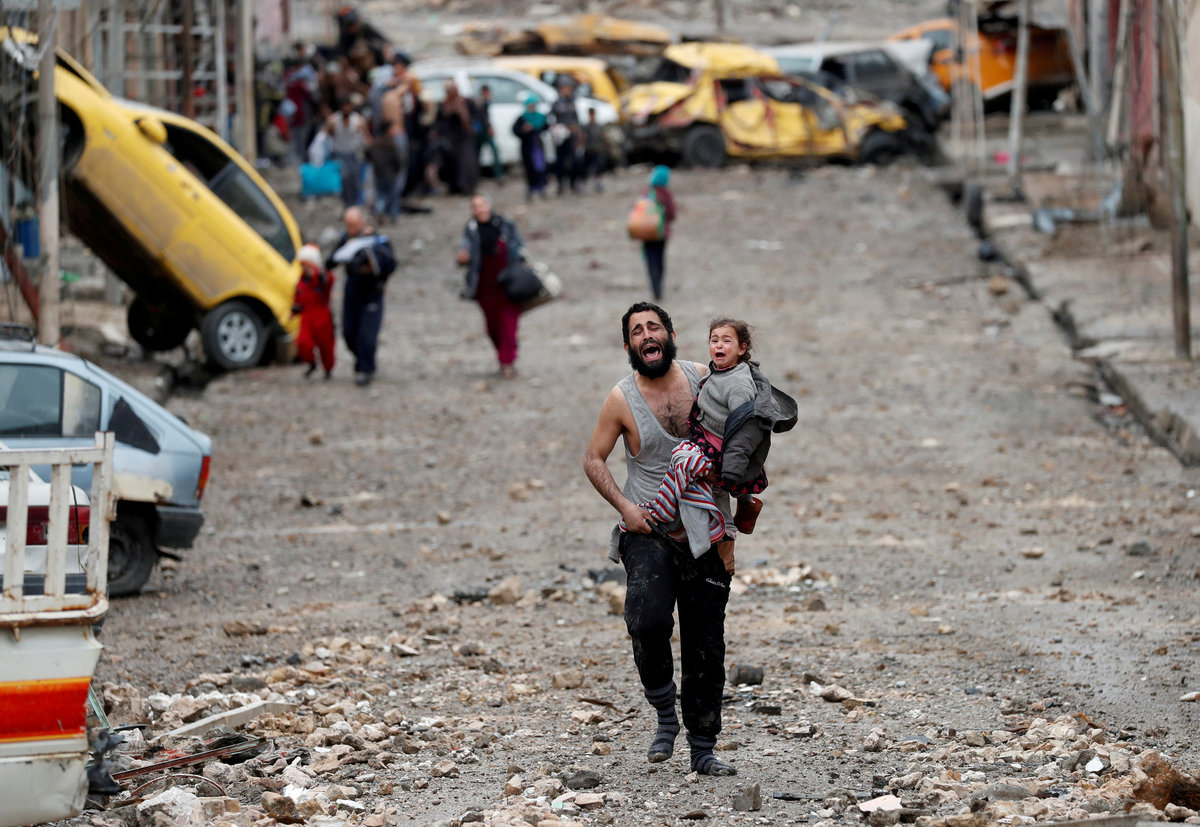
A man cries as he carries his daughter while walking from an Islamic State-controlled part of Mosul towards Iraqi special forces soldiers during a battle in Mosul, Iraq, March 4, 2017. Goran Tomasevic: "Both screaming in terror, a father and the young daughter he cradled in his arm fled through the rubble-strewn streets of Wadi Hajar, transformed in a flash into a battleground between Islamic State fighters and Iraqi special forces. They and their neighbours - some wearing rubber sandals, some barefoot - were running from an IS counter-attack in this part of Mosul, dodging gunfire as the militants closed in. When they reached the special forces lines, males were ordered to lift their shirts to prove they weren't suicide bombers. Some had to take off their clothes or show their belts, though not those carrying children. The father was so beside himself, so panicked. It was obvious because he had a short shirt on and was carrying a child that he wasn't Islamic State." REUTERS/Goran Tomasevic/File Photo
(Reuters) - It was an awkward coalition riven by political and sectarian differences, facing an elusive, fanatical enemy dug into an urban maze of narrow streets and alleyways. So, could Iraq's government really deliver on its vow to vanquish Islamic State?
In the end, the army, Shi'ite Muslim paramilitaries and Kurdish Peshmerga fighters mustered rare unity to end Islamic State's reign of terror in Iraq's second city Mosul, seat of the ultra-hardline Sunni insurgents' "caliphate".
Baghdad's victory in July 2017 after nine months of fighting was the coup de grace for the caliphate and came three years after a jihadist juggernaut seized one third of Iraq.
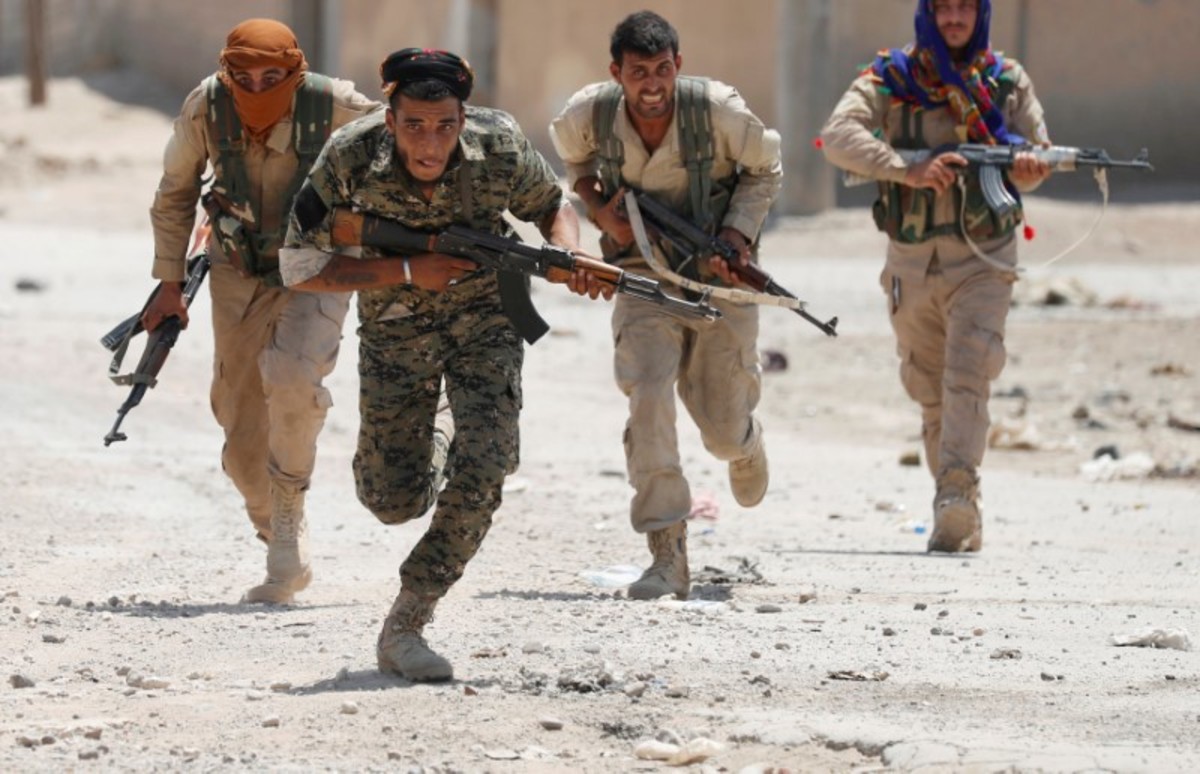
Kurdish fighters from the People's Protection Units (YPG) run across a street in Raqqa, Syria, July 3, 2017. Goran Tomasevic: "They were members of Kurdish YPG militia. They were running across the street because ISIS fighters' positions were nearby. I shot the picture in a last day of my assignment. I was lucky to have that picture as YPG fighters were giving very restricted access to media." REUTERS/ Goran Tomasevic/File Photo
But even with supportive U.S. air strikes, Baghdad's triumph came at a devastating cost for the once-vibrant, multicultural city in northern Iraq and the surrounding region.
When Islamic State militants first arrived in Mosul in June 2014 after sweeping aside crumbling Iraqi army units, many Mosul residents initially welcomed them.
The militants were Sunni Muslims, like many in Mosul who had accused the forces of then-Shi'ite Prime Minister Nuri al-Maliki of widespread sectarian abuses.
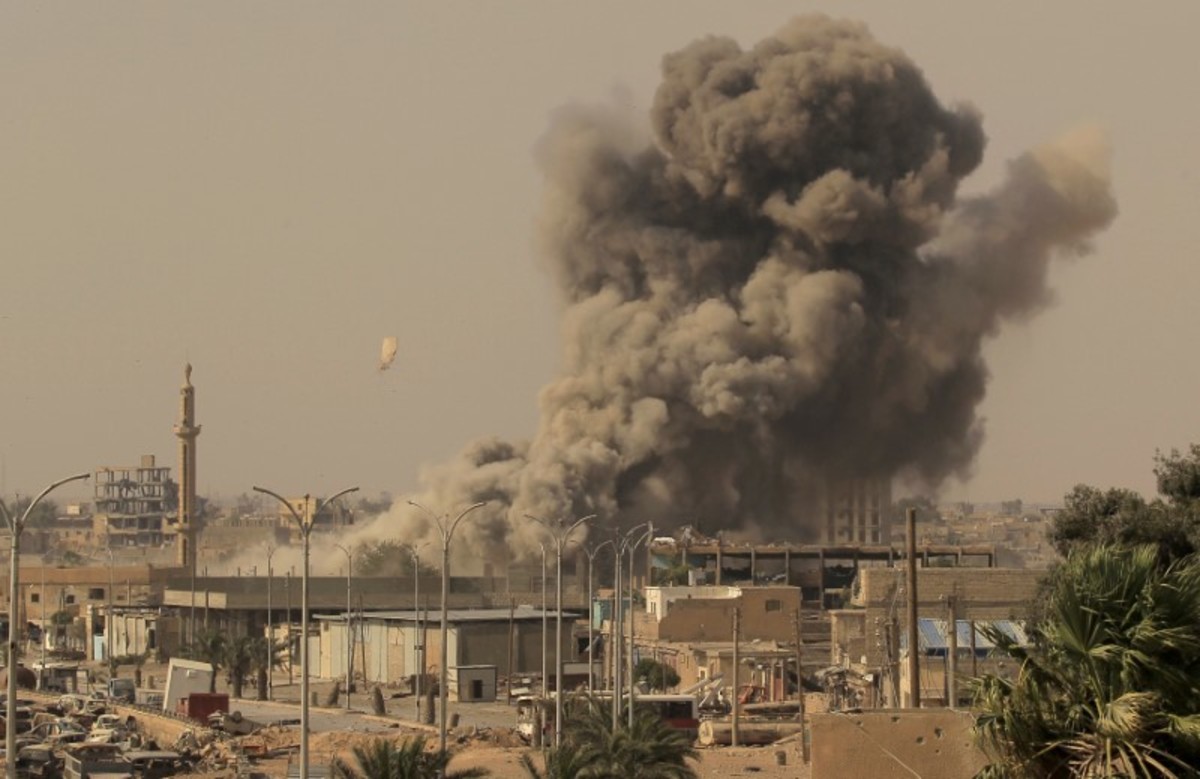
Smoke rises after an air strike during fighting between members of the Syrian Democratic Forces and Islamic State militants in Raqqa, Syria, August 15, 2017. Zohra Bensemra: "Access to the frontline of the battle for Raqqa in Syria was more limited than during the battle for Mosul in Iraq. RaqqaÕs battle was different also from Mosul's because we saw very few civilians who managed to escape. We didnÕt have daily access. We were often posted in buildings used as a command base or observation point. From there we could photograph troop movements and smoke after air strikes. On this day, we were refused permission to go to the frontline. They said it was too dangerous and there was no armoured car. Even so, we decided to wait with the hope of advancing towards the combat zone. We were sitting with SDF members when we learned from one of the officers that there was going to be an air strike. To our surprise, the target building was close-by." REUTERS/Zohra Bensemra/File Photo
Islamic State consequently presented itself as Mosul's saviour. But as jihadists brandishing AK-47 assault rifles began imposing an Islamist doctrine even more brutal and mediaeval than al Qaeda, its popularity soon faded.
Maliki's successor, Haider al-Abadi, had long been seen as an ineffective leader who could not make tough decisions.
However, a U.S.-backed campaign against IS in Mosul offered Abadi a chance to emerge as a steely statesman capable of taking on a group that had terrorised a sprawling city with beheadings in public squares while staging deadly attacks in the West.
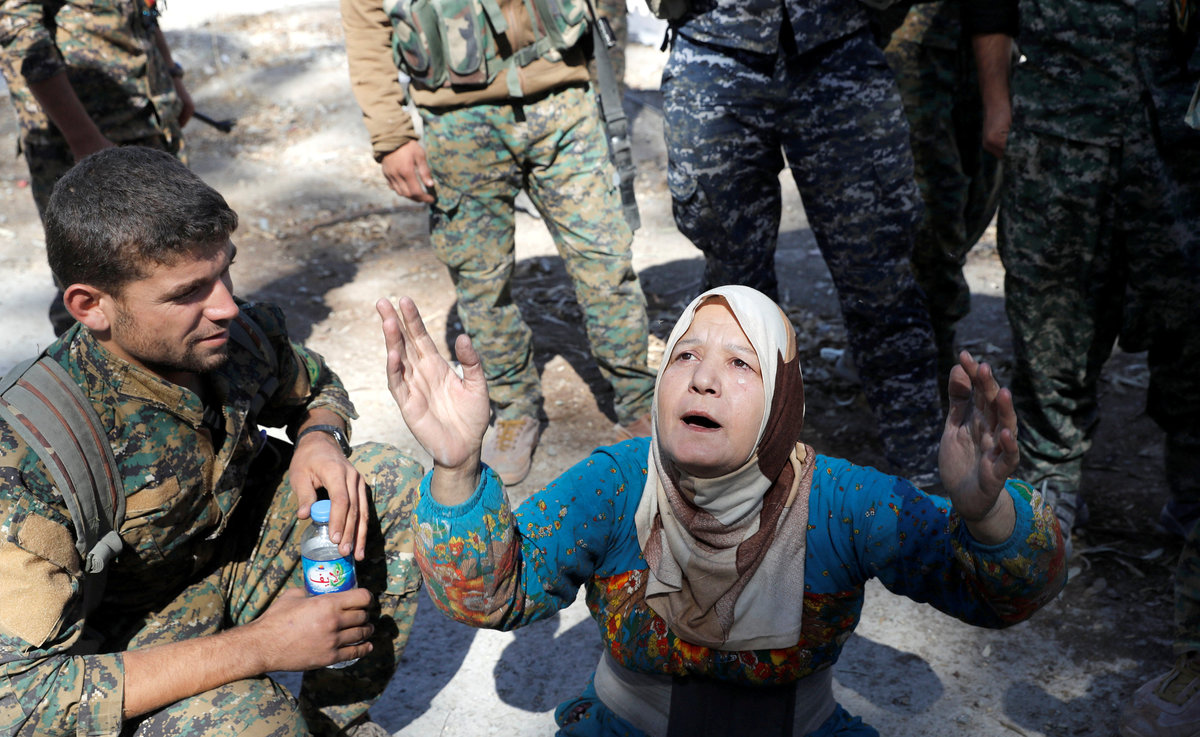
A civilian prays after she was rescued by fighters of Syrian Democratic Forces from the stadium after Raqqa was liberated from the Islamic State militants in Raqqa, Syria, October 17, 2017. Erik De Castro: "The day Raqqa was liberated I arrived at the frontline and noticed there were no more plumes of smokes from air strikes and no more sounds of gunfire. I took pictures of dozens of Syrian Democratic Forces as they marched towards the stadium which was Islamic State fighters' last stand. The atmosphere was euphoric, especially when fighters were cheering while sitting on top of armoured vehicles and a tank parading around the infamous roundabout of Dawwar al-Naim where the Islamic State militants used to execute people and hang their heads. I then noticed SDF Fighters running towards the far end of the stadium and followed them. I took pictures of an elderly woman being carried by the fighters. They gave her water and food, the woman said she was hiding in the rubble of a house beside the stadium during the fighting and air strikes. She also said other members of her families, two daughters and a son did not survive. After being rescued, she was crying along a sidewalk and praying." REUTERS/Erik De Castro/File Photo
REIGN OF TERROR
Just smoking one cigarette, an act IS saw as anti-Islamic, earned you dozens of lashes. Children were used as informers. Women in minority communities were turned into sex slaves.
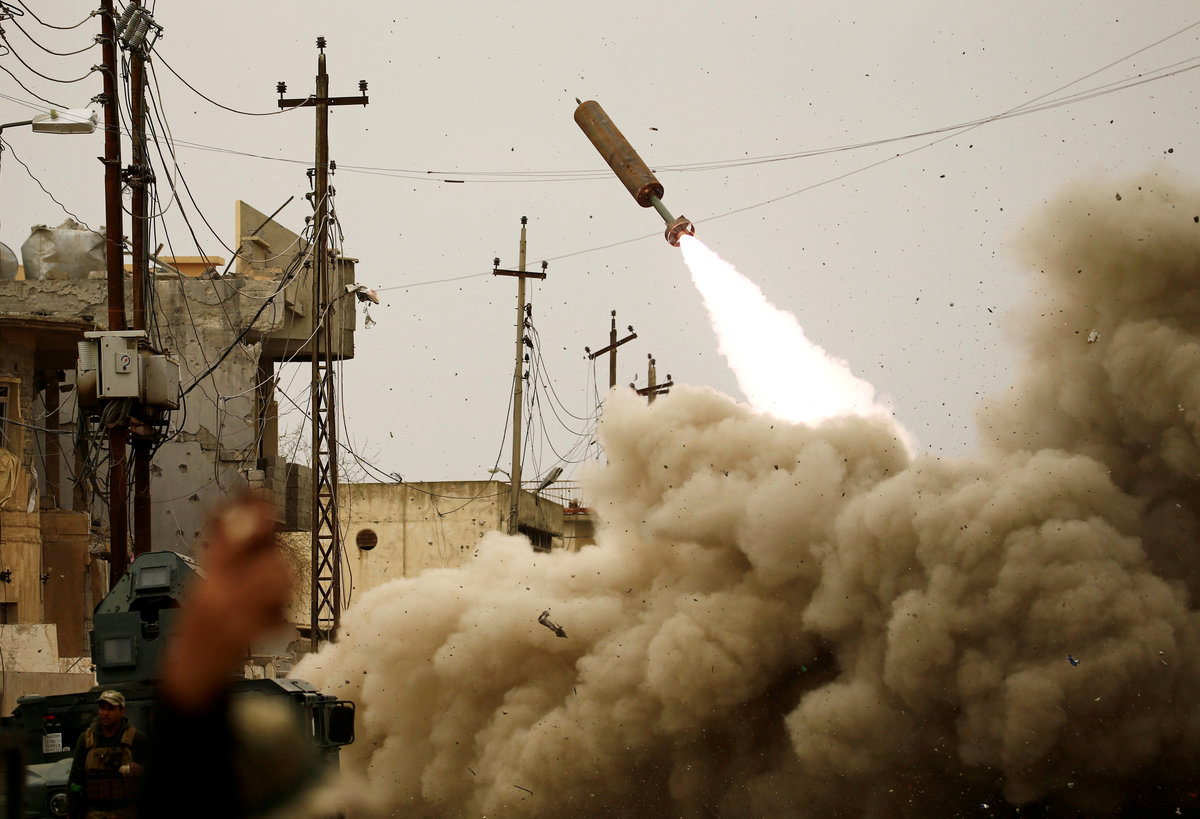
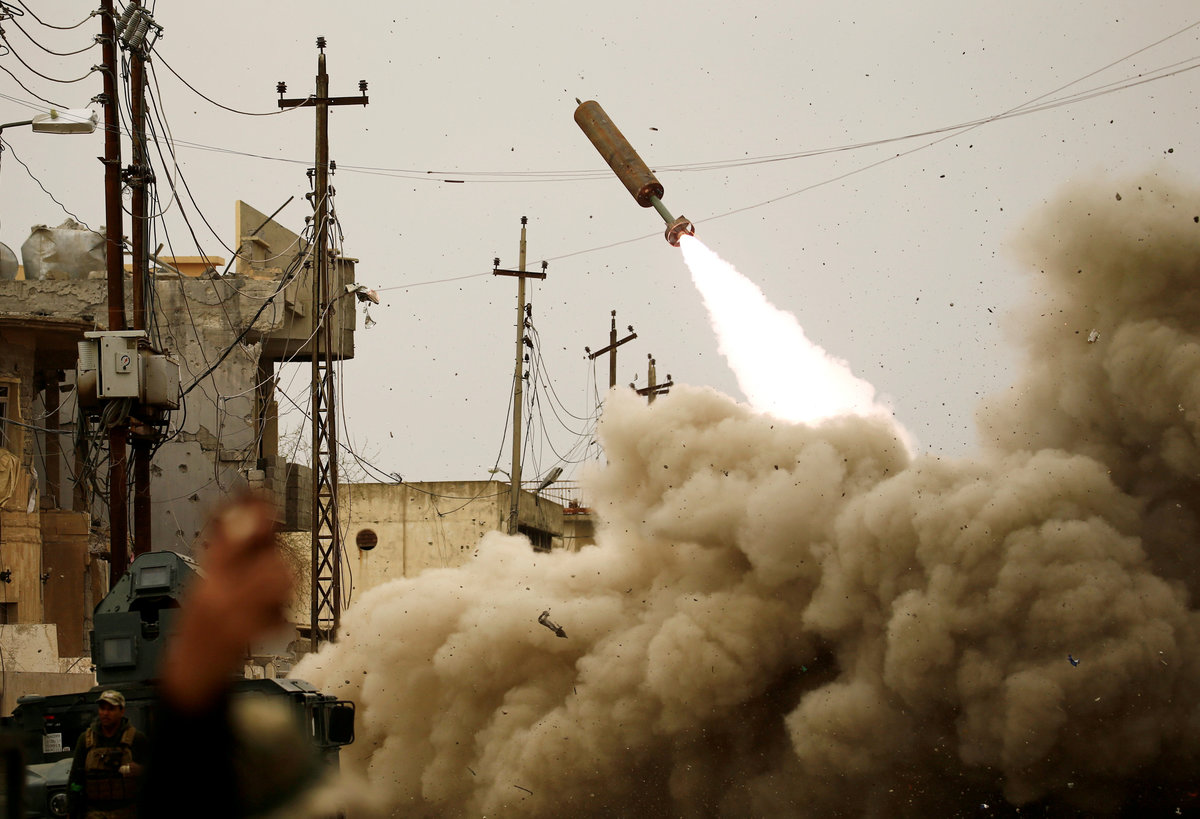
Iraqi rapid response members fire a missile against Islamic State militants during a battle with the militants in Mosul, Iraq, March 11, 2017. Thaier Al-Sudani: "This attack came in the middle of a battle when Iraqi forces were trying to recapture the regional government compound from Islamic State. I was taking pictures of clashes at Mosul's antiquities museum when we spotted an Islamic State drone in the air above us. We dropped to the ground for fear of being attacked by a rocket. I cut my hand and we returned to the car to treat it. When we got there, I saw Iraqi forces firing rockets nearby at an IS target beyond our field of vision, so I resumed taking photographs. I thought this photo was a strong one that expressed the terrible violence of battle. It is another world covering wars compared with news conferences. There is 100 percent danger, and the internet we need to transmit pictures is poor or non-existent." REUTERS/Thaier Al-Sudani/File Photo
But taking back Mosul was never going to be easy.
Long before the first shot was fired, Abadi and his advisers and military commanders had to tread cautiously, taking into account sectarian and ethnic sensitivities that could splinter the united front he urgently needed to establish.
Iraqi and Kurdish intelligence agencies had recruited informers inside Mosul, from ex-soldiers and army officers to taxi drivers, who would face instant execution if caught.
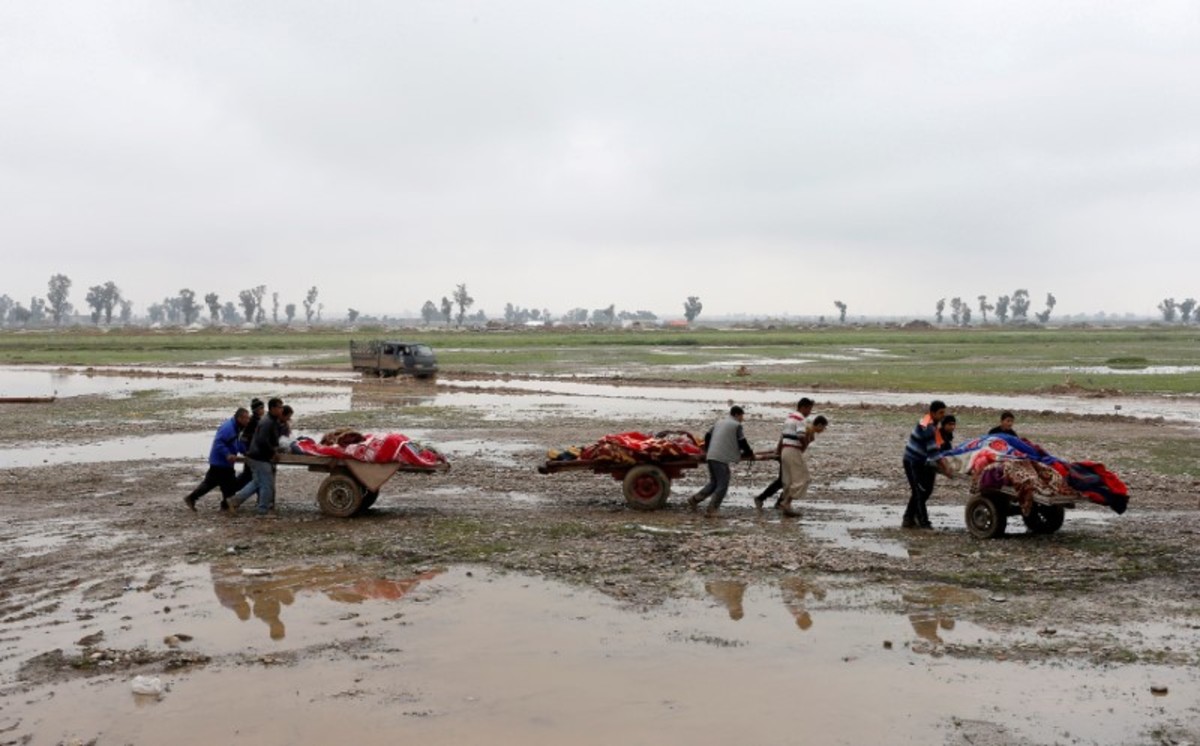
Relatives carry the bodies of civilians killed in air strike, during a battle between Iraqi forces and Islamic State militants, in Mosul, Iraq, March 17, 2017. Youssef Boudlal: "Early that morning I was following some displaced Iraqi people from different areas in Mosul fleeing their homes during clashes between Iraqi forces and Islamic State militants in the city of Mosul. I saw a few people transporting their belongings on trolleys. I thought it was just food and a few clothes, but the closer they got the more the smell was unbearable and I discovered that they were carrying the bodies of civilians who were killed a few days ago in air strikes." REUTERS/Youssef Boudlal/File Photo
Even if an alliance of convenience was struck, glossing over sectarian splits, Mosul itself posed formidable physical obstacles.
Key districts consisted of ancient little streets and alleyways inaccessible to tanks and armoured vehicles, and they were so densely populated that U.S.-led coalition air strikes risked heavy civilian casualties.
So, street by street, house by house, fighting was unavoidable.
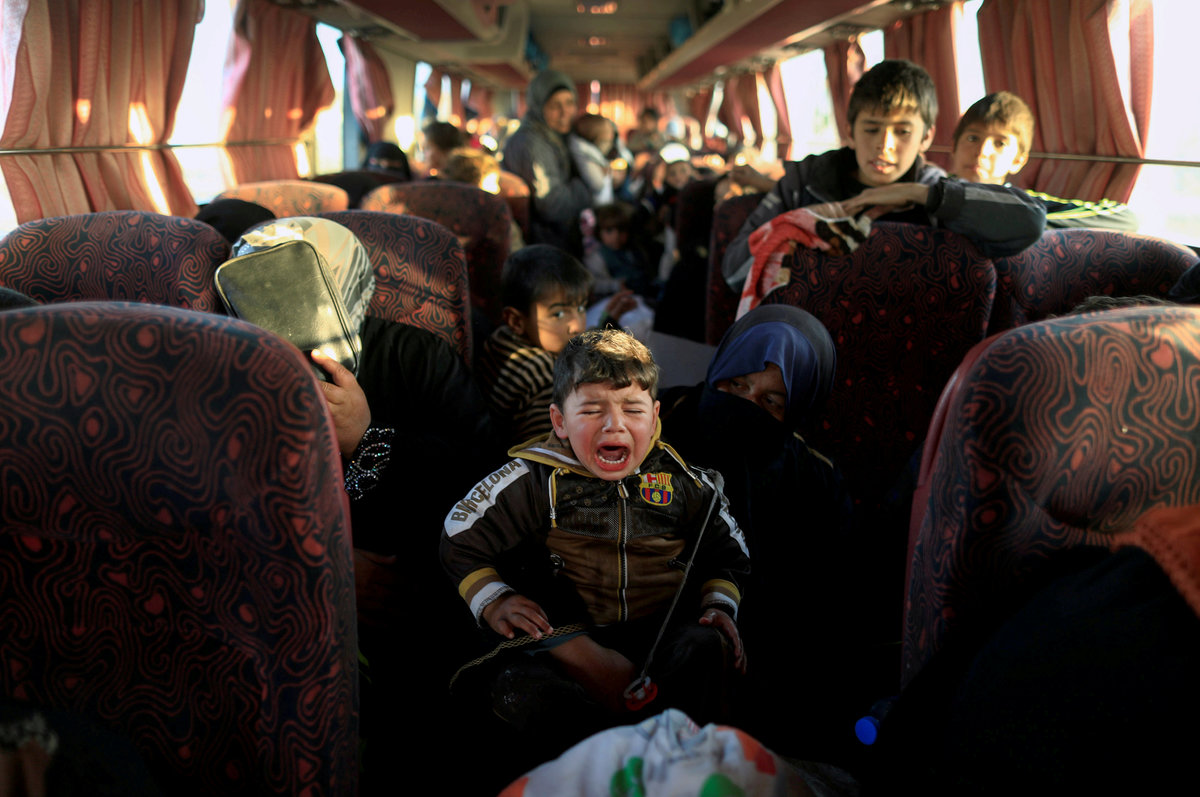
A boy who just fled a village controlled by Islamic State fighters cries as he sits with his family on a bus before heading to the camp at Hammam Ali south of Mosul, Iraq, February 22, 2017. Zohra Bensemra: "As the battle between Iraqi forces and Islamic State fighters to liberate the west of Mosul became increasingly ferocious, the flows of civilians fleeing their city intensified day after day. Refugee camps were filling up quickly. The child was crying because he was exhausted and hungry. He sat with other displaced civilians in one of three buses that were transporting them to a camp. But the Federal Police brigade in charge of sheltering them were struggling to find places in the camps. They had made checks but all of them were full. I took this picture at sunset. I fear the displaced families were still far from the end of their ordeal." REUTERS/Zohra Bensemra/File Photo
Such challenges first popped up in Mosul's hinterland as Kurdish forces slowly advanced against fierce IS resistance.
In one village, a single IS sniper hunkered down in a house held up hundreds of Kurdish fighters, the U.S. special forces advising them and 40 of their vehicles. Eventually, his rifle went silent after three air strikes on the house.
As pro-government forces inched forward, the United Nations warned of a possible humanitarian disaster and expressed fear that jihadists could seize civilians for use as human shields, and gun down anyone trying to escape.
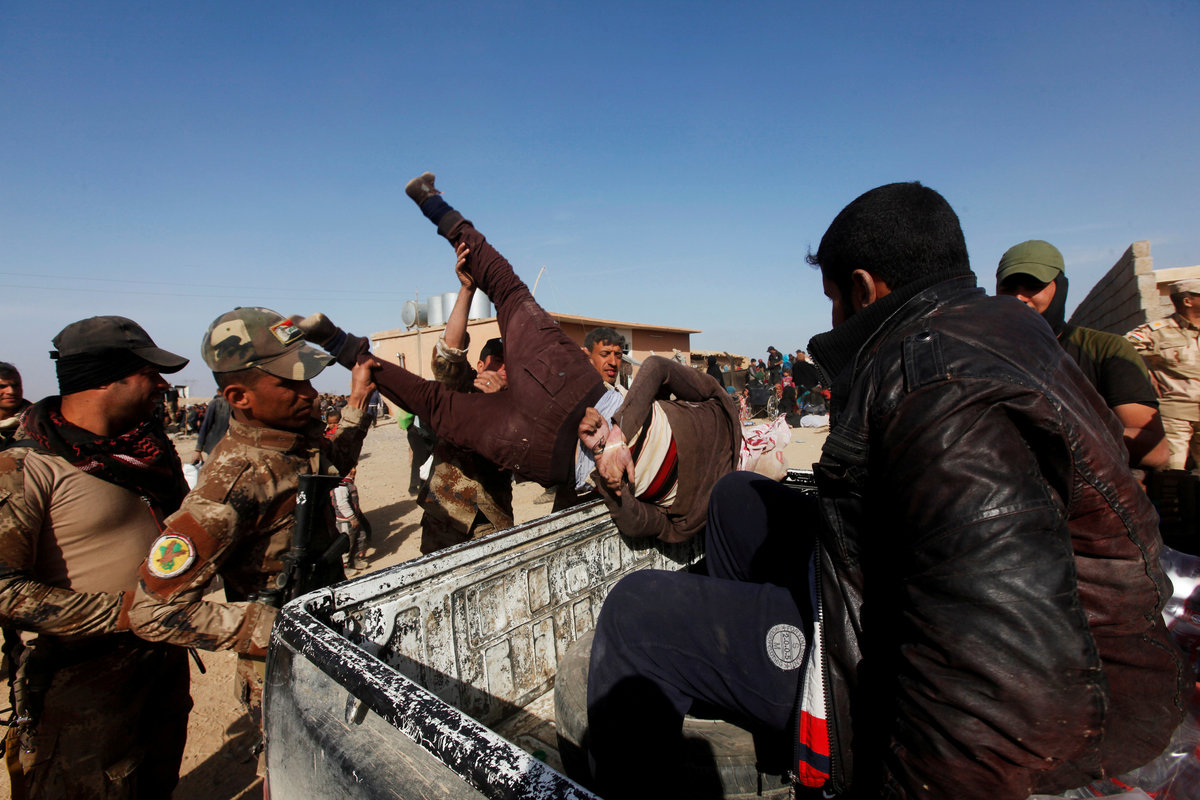
Iraqi Special Operations Forces arrest a person suspected of belonging to Islamic State militants in western Mosul, Iraq, February 26, 2017. Alaa Al-Marjani: "I spotted four suspected Islamic State militants picked out of a group of displaced people by Iraqi soldiers. The suspects had been identified by civilians working with the security forces and wearing masks to protect themselves from possible reprisal by IS. The suspects including the man in this picture were then tossed into the bed of a pickup truck. My picture was significant for our story because it helped illustrate how some militants had secreted themselves among fleeing civilians in hopes of evading capture. Some of them trimmed their bushy beards and changed their clothes in efforts to blend in. I had been covering developments on another front when I saw on social media that a large group of refugees was heading to this location. Not much was happening where I was so I changed cars and headed to the refugee gathering point. The way the suspects were being treated was abnormal so I felt it was very important to document this in pictures. After I took this picture, a military intelligence officer tried to seize my camera and send me away. I was working together with a Reuters correspondent and security adviser, so the officer eventually desisted and allowed me to take further photos. It can be difficult controlling your feelings when taking pictures right at the scene of gunfire and explosions. There is a lot of human suffering, but also a lot of competition with other agencies to get the best photograph in the shortest period of time. My camera is very modern but internet access needed to file our pictures is difficult because most communications towers in the region are down." REUTERS/Alaa Al-Marjani/File Photo
IS fighters – both Iraqis and foreigners - were experts at carrying out suicide bombings and assembling homemade bombs. Many houses were booby-trapped. Iraqi military commanders had to factor these lurking perils into their gameplan.
In interviews, IS insurgents shed light on what Iraqi forces were up against. They were quite open about their ideology and what they were willing to do to transform the Middle East.
One man said he had used rape as a weapon of war against more than 200 women from Iraqi minorities, and had killed 500 people.
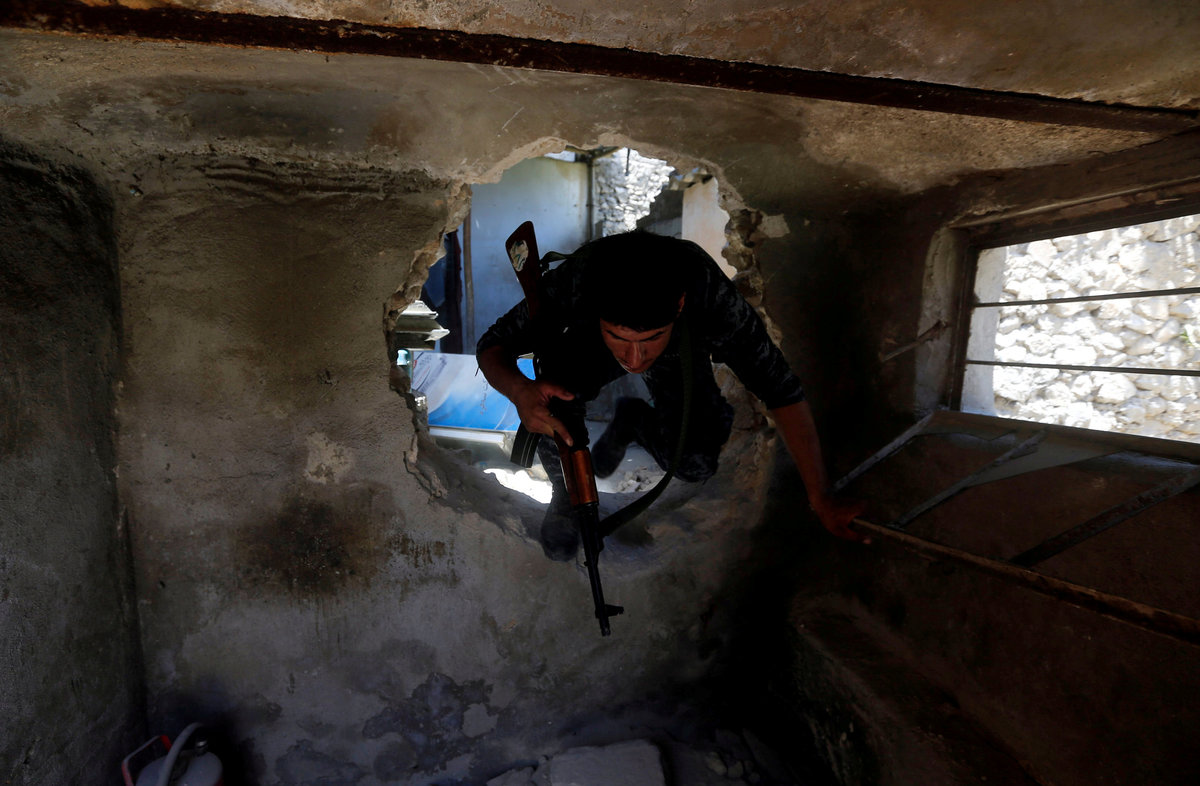
A member of Iraqi Federal Police crosses from one house to another through a hole in the wall at the frontline in the Old City of Mosul, Iraq, June 27, 2017. Alaa Al-Marjani: "We were on a media tour guided by the Iraqi Federal Police forces in the old city of Mosul. We got out of vehicles and started walking. The forces were advancing rapidly through holes they had made in the walls of buildings to avoid being targeted by Islamic State fire. I was happy that I got access to get my pictures and return safe." REUTERS/Alaa Al-Marjani/File Photo
DEADLY OBSTACLE COURSE
After months of gruelling fighting, Iraqi forces finally attained the outskirts of Mosul, but any celebrations were premature. Bombs littered dusty roads. Car bombs were exploding.
Iraqi rapid response members fire a missile against Islamic State militants during a battle with the militants in Mosul, Iraq, March 11, 2017. Thaier Al-Sudani: "This attack came in the middle of a battle when Iraqi forces were trying to recapture the regional government compound from Islamic State. I was taking pictures of clashes at Mosul's antiquities museum when we spotted an Islamic State drone in the air above us. We dropped to the ground for fear of being attacked by a rocket. I cut my hand and we returned to the car to treat it. When we got there, I saw Iraqi forces firing rockets nearby at an IS target beyond our field of vision, so I resumed taking photographs. I thought this photo was a strong one that expressed the terrible violence of battle. It is another world covering wars compared with news conferences. There is 100 percent danger, and the internet we need to transmit pictures is poor or non-existent." REUTERS/Thaier Al-Sudani/File Photo
A Mosul resident explained that his child no longer flinched as explosions shook his street because many people, including the young, had grown numb to the daily bloodshed.
Each side resorted to desperate measures to gain an edge.
In north Mosul, people walked by fly-infested, bloated corpses of militants who had been left on roadsides for two weeks. Iraqi soldiers explained that the stinking bodies had been left there to send a clear message to residents - don't join IS or you will suffer the same fate.
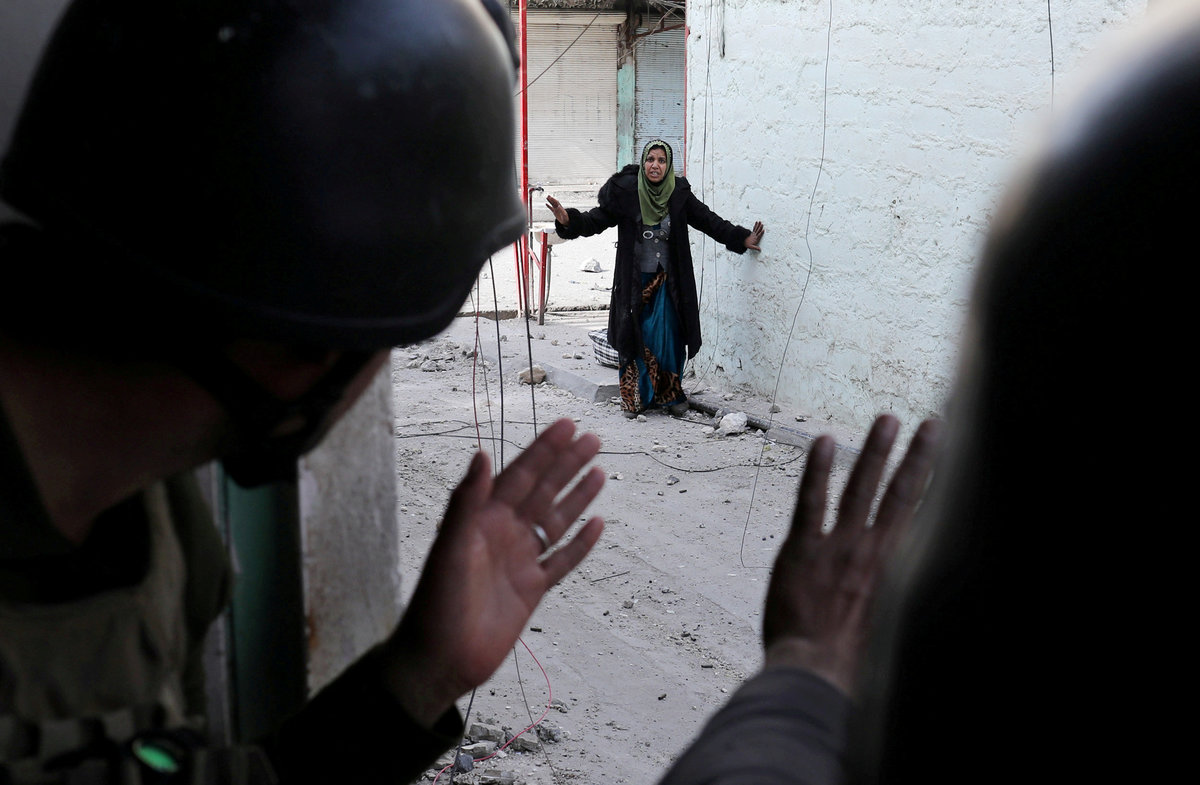
A woman gestures as she approaches Iraqi Special Forces soldiers during a battle in Mosul, Iraq, March 1, 2017. Goran Tomasevic: "The woman was accused of helping ISIS. An Iraqi Special Forces soldier told me he saw the woman carrying an RPG across the street and giving it to ISIS fighters. When she came close to Iraqi Special Forces soldiers they were worried that she might have suicide vest. She was escorted later to an Iraqi Army field command centre." REUTERS/Goran Tomasevic/File Photo
Caught in the middle were civilians who had suffered under the IS reign of terror for three years and were now wondering if they would survive a relentless battle to "liberate" them.
Parents waited patiently after weeks of fighting for a largely unknowable right moment to make a dash for Iraqi government lines, clutching their children, risking a run-in with jihadists from places as far away as Chechnya.
As much of east and west Mosul was pulverised by coalition air strikes or IS truck and car bombs, the city was reduced to row after row of collapsed or gutted housing.
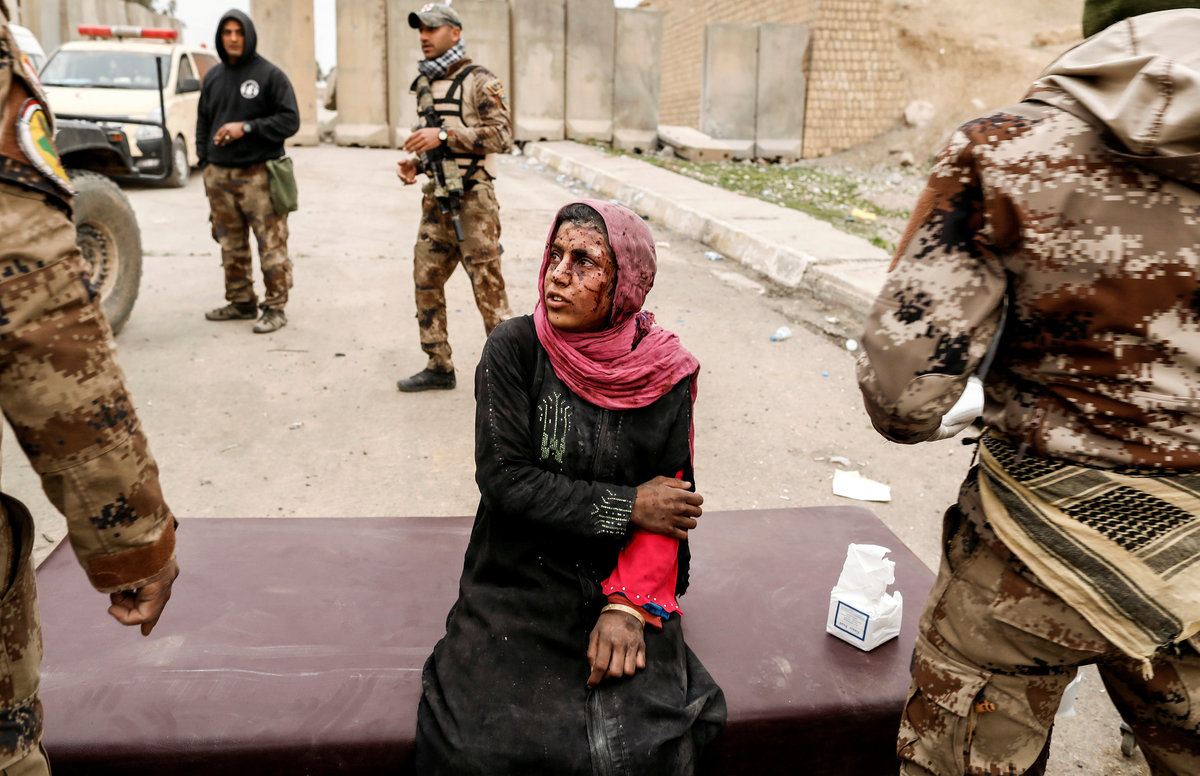
A woman injured in a mortar attack is treated by medics in a field clinic as Iraqi forces battle with Islamic State militants, in western Mosul, Iraq, March 2, 2017. Zohra Bensemra: "The Reuters team was waiting at an Iraqi special forces checkpoint on the outskirts of western Mosul for permission toÊgo to their command base to cover the frontline. It was a field clinic run by foreign volunteers. It seemed calm. It was still early. We were talking to one of the foreign medics when suddenly a special forces Humvee came at speed towards the checkpoint. It was four injured civilians - two women, a man and a boy. They seemed in shock. The woman could not answer my questions. She seemed lost in thought. I smiled to comfort her and help her understand she was safe. A soldier told us they were hit by mortar fire as they fled fighting between Iraqi forces and Islamic State fighters." REUTERS/Zohra Bensemra/File Photo
In the end, IS suffered its most decisive defeat and watched their self-proclaimed caliphate evaporate in Iraq, then in Syria as Kurdish-led forces retook Raqqa, IS's urban stronghold there.
FUTURE CHALLENGES
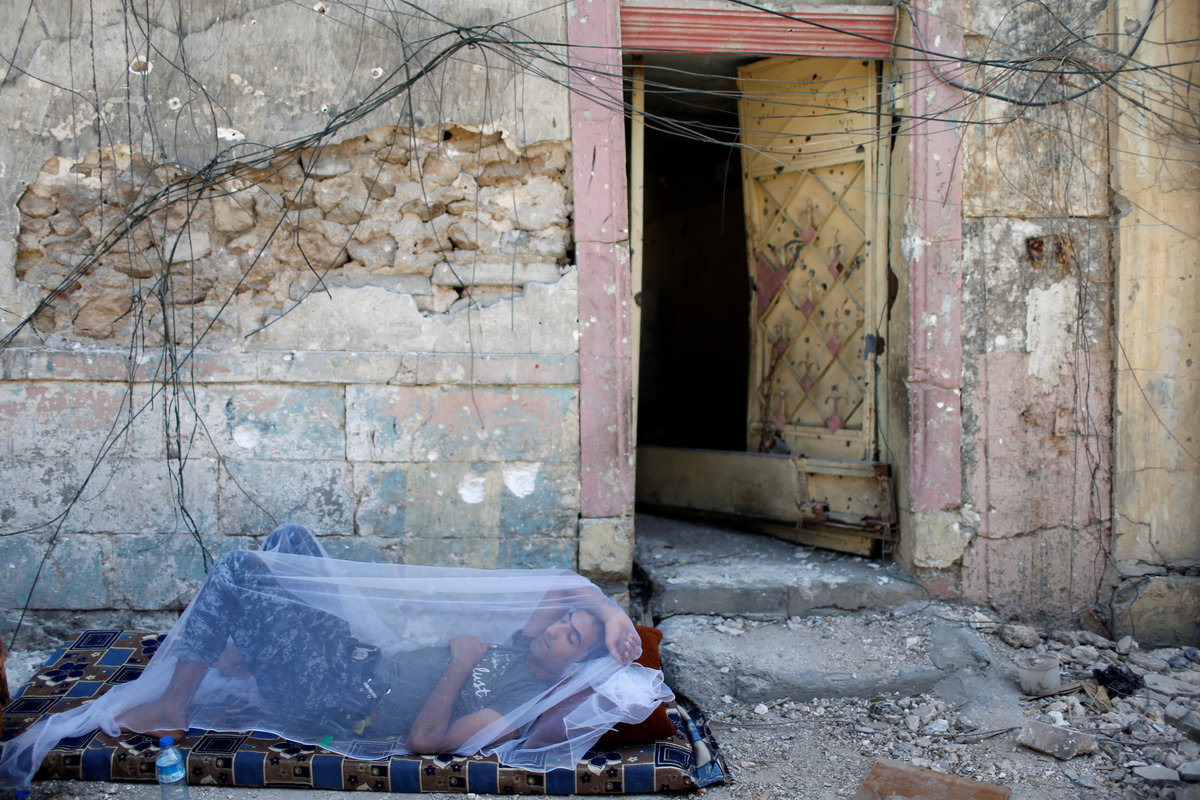
A member of the Iraqi Federal Police rests at the frontline in the Old City of Mosul, Iraq, June 28, 2017. Ahmed Jadallah: "I left Erbil early in the morning bound for Mosul with our multimedia team and security adviser in an armoured car. After an almost three-hour drive, passing many Kurdish Peshmerga and Iraqi military checkpoints, we crossed the Tigris river and reached the headquarters of the Iraqi Federal Police in western Mosul. An hour later a Federal Police convoy escorted us to the frontline in the Old City. There, while covering a battle between Federal Police and Islamic State, I passed the soldier in the photograph. He was taking a rest in a temporarily more sheltered spot and draped himself with a net to keep away clouds of insects that had been attracted by dead bodies and raw sewage nearby. The picture shows the rough conditions of the frontline where there is no decent place to sleep while the fighting carries on. Just one mistake of walking down a street in the wrong direction could have landed me in the deadly hands of Islamic State. The most important thing is to stay out of sight of Islamic State snipers and drones. Of all the wars I have covered in various countries, Mosul has been the worst." REUTERS/Ahmed Jadallah/File Photo
But those victories will be followed by tough questions about the future of both Iraq and Syria.
Preserving the shaky understanding forged between the different communities in the run-up to the Mosul campaign will be essential to saving Iraq as a state in the future.
It did not take long for the Mosul coalition to fray.
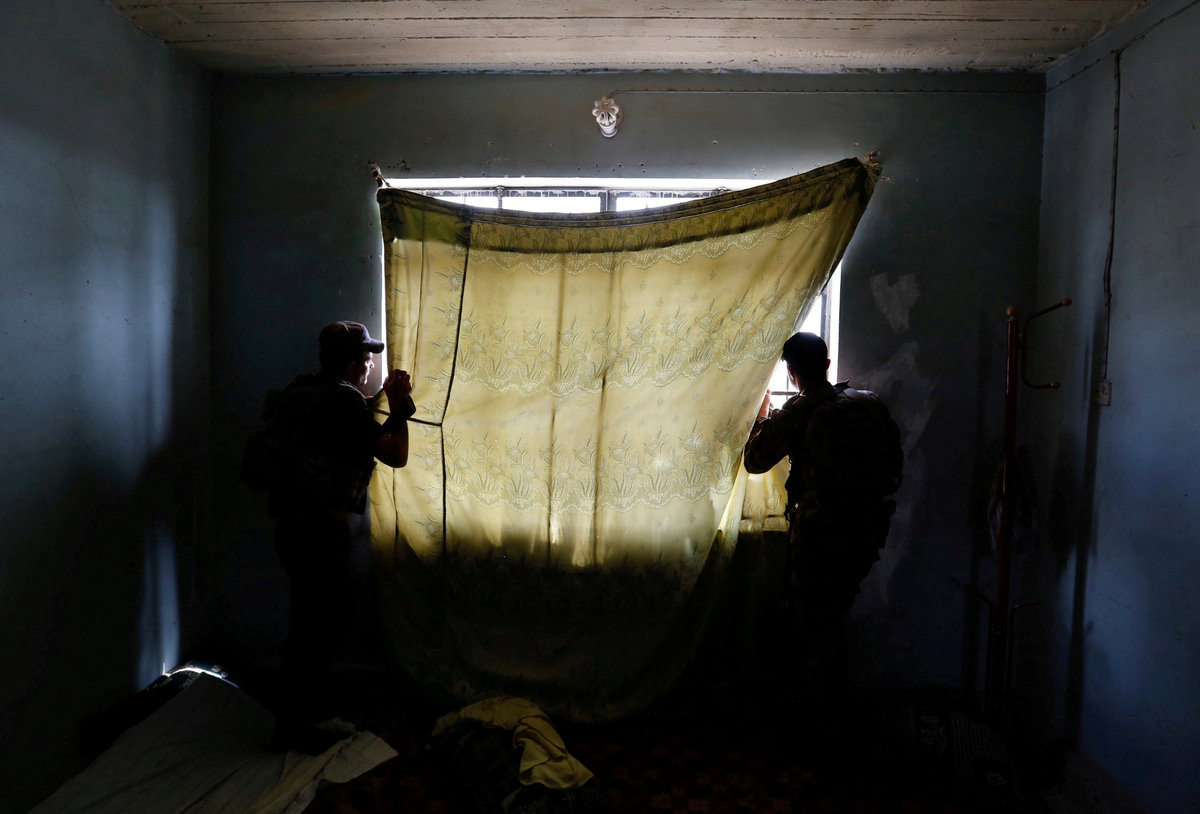
Members of the Iraqi Counter Terrorism Service (CTS) forces look at the positions of Islamic State militants during clashes in western Mosul, Iraq, May 15, 2017. Danish Siddiqui: "In May, I was accompanying a senior commander of Counter Terrorism Service, an elite Iraqi security force trained by the U.S., during the battle to take control of Western Mosul. We arrived at a small house on the frontline after walking through holes in the walls between homes. Islamic State snipers were firing a few hundred meters away. The people who once lived there departed quickly, leaving clothes and toys scattered across the floor. The next inhabitants left hollow shell casings. The CTS had taken over the house a day ago. The curtain was a bed sheet. They stood behind it to identify enemy snipers and watch one of their own. It's a quiet picture that tells of even the most uneventful of moments on the front, when nothing may happen, and everything is possible." REUTERS/Danish Siddiqui/File photo
In October, Iraqi forces dislodged Kurdish Peshmerga fighters from the oil city of Kirkuk and other disputed areas and Baghdad imposed curbed air travel to and from the semi-autonomous Kurdistan region in retaliation for a Kurdish independence referendum held in northern Iraq in September.
The battle for Raqqa, which became IS's operational base in Syria, had a different feel to it as U.S.-backed Kurds and Arabs in the Syrian Democratic Forces (SDF) tightened their siege.
The fighting seemed slower and more measured, step by step along abandoned streets where journalists were given access.
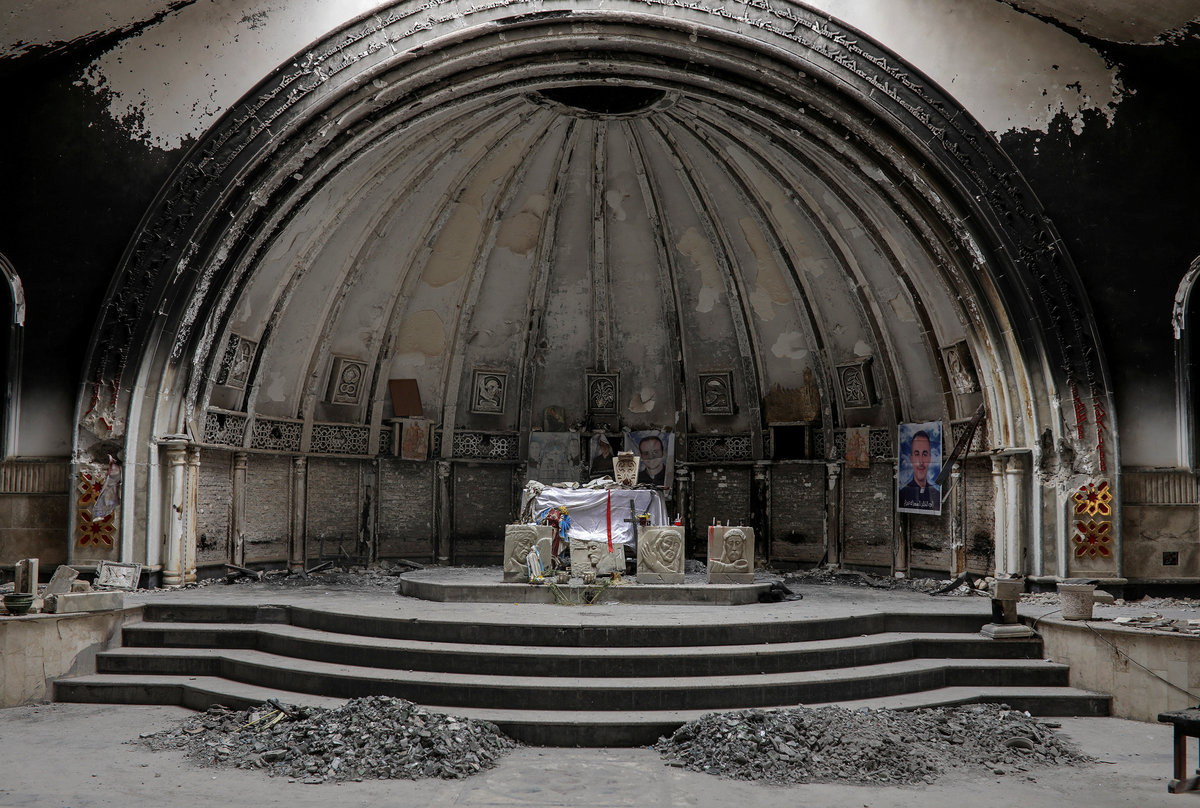
An altar of a damaged church is seen in the town of Qaraqosh, south of Mosul, Iraq, April 11, 2017. Marko Djurica: "In April 2017 I was on an assignment in Iraq, covering the battle between Iraqi forces and Islamic State fighters. Every day the Reuters team would go to the frontline from Erbil to west Mosul where the fights were going on. Each day on the road we would pass the small town of Qaraqosh. Once home for about 50,000 mostly Iraqi Christians, now it was completely empty, a ghost town. Iraqi forces kicked out Islamic State fighters but citizens were still afraid to go back to their homes. The town once had 12 churches with one more than 1000 years old. Now all were destroyed or badly ruined. Burnt-out altar of a church was one of the images I took that made me very sad." REUTERS/Marko Djurica/File Photo
In the weeks before Raqqa's fall in October, young female SDF fighters faced off against hardened militants and suffered losses. But that did not curb their enthusiasm and some said they would eventually like to join Kurdish PKK militants in Turkey and help advance their 33-year-old insurgency there.
The victors in Iraq and Syria now face new challenges as they rebuild cities shattered by the showdown with IS.
After IS's defeat in Raqqa, Raqqa residents formed a council to run the city but they had no budget when it was first set up, just residents streaming into their tin, run-down headquarters demanding everything from instant jobs to getting their damaged farmland back.
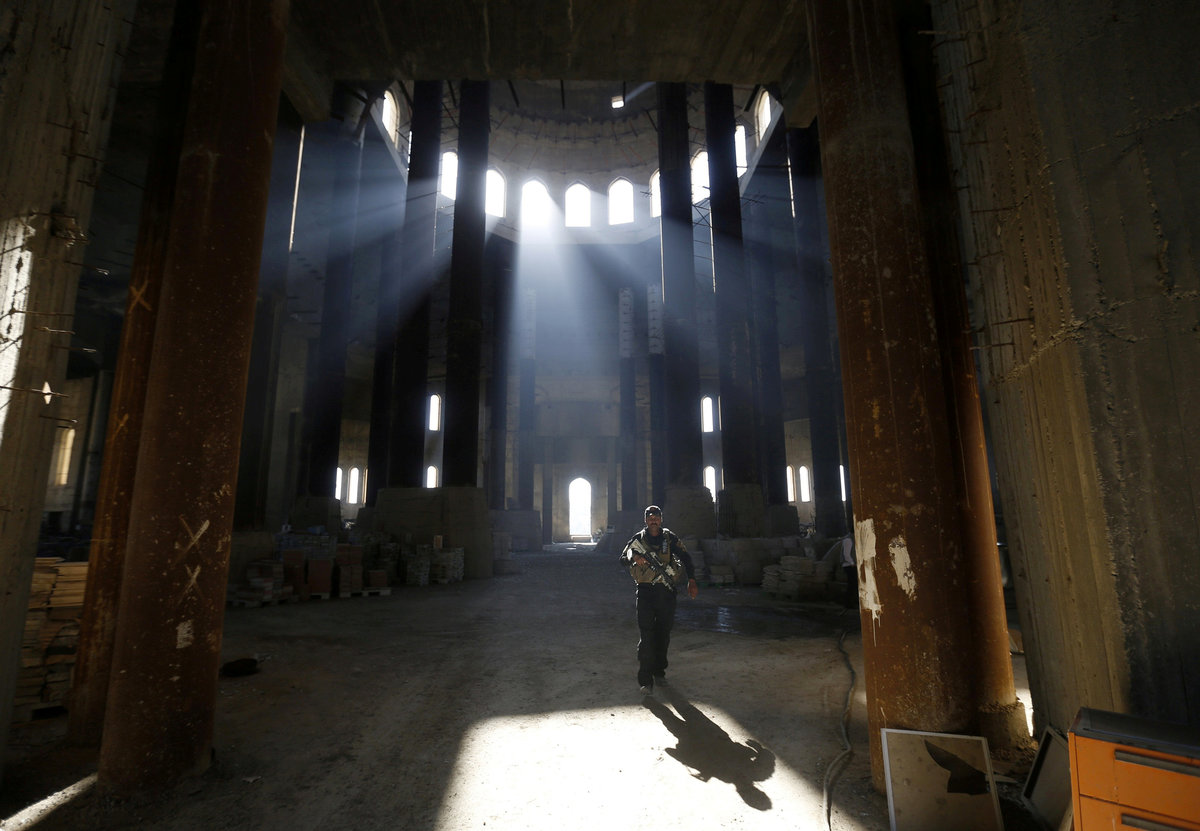
Iraqi Special Operations Forces (ISOF) gather during an operation to clear the al-Zirai district of Islamic State militants in Mosul, Iraq, January 19, 2017. Muhammad Hamed: "In this picture, we were on a tour with the head of the Rapid Response Unit General Al Assadi when the soldiers decided to walk into a damaged mosque. The area we were in was only recently liberated. I was in the same mosque the day before and the Federal Police had shot down an Islamic State drone carrying explosive just outside. At first I was hesitant to go deep into the mosque, as I worried that some explosives may be left behind. But when I saw the lights coming in through the broken windows and after getting okay from my security advisor I decided to go in for the picture." REUTERS/Muhammad Hamed/File Photo
Syrian Kurdish fighters were inspired by the ideas of Abdullah Ocalan, head of the PKK militants who has been imprisoned in Turkey for almost 20 years.
Turkey views the political rise of Syria's Kurds as a threat to its national security and is fiercely opposed to the idea of Kurdish autonomy on its doorstep.
The Kurdish groups who led the fight against Islamic State in its former capital Raqqa must now navigate a complex peace to avoid ethnic tension with the city's Arab majority and to secure critical U.S. aid.
So, life for Raqqa's victors will remain fraught with risk.
For the photo essay on battle against Islamic State, click - http://reut.rs/2A2Fnhy
(Reporting by Michael Georgy; editing by Mark Heinrich)
Sign up to read this article
Read news from 100’s of titles, curated specifically for you.