
Despite being scaled down by the pandemic this year, the Cannes film market is still the world’s premier springboard for the movies. FRANCE 24 toured the market booths and spoke to Italian-Iraqi director Haider Rashid about his migrant thriller “Europa”.
Netflix may be persona non grata on the Cannes Film Festival’s famous red carpet, but the streaming giant and its fellow digital upstarts are dominating the equally important film market – to the relief of many indie producers.
The likes of Netflix and Amazon have done much of the buying this year, breathing life into an otherwise sleepy market crippled by the coronavirus pandemic. In one headline-grabber, Netflix struck a multi-million dollar deal to secure world rights to “Curs>r”, a horror film about a cursed computer game. It also snatched up world rights, outside of France, for “The Stronghold” (Bac Nord), a Marseille-based cop thriller that premiered at the festival this week.
The streamers’ growing clout is an alarming trend for fans of the theatrical experience. But for indie producers who make up much of Cannes’ Marché du film, streaming has been a lifeline throughout the pandemic, putting much-needed money into projects that would otherwise never get made.
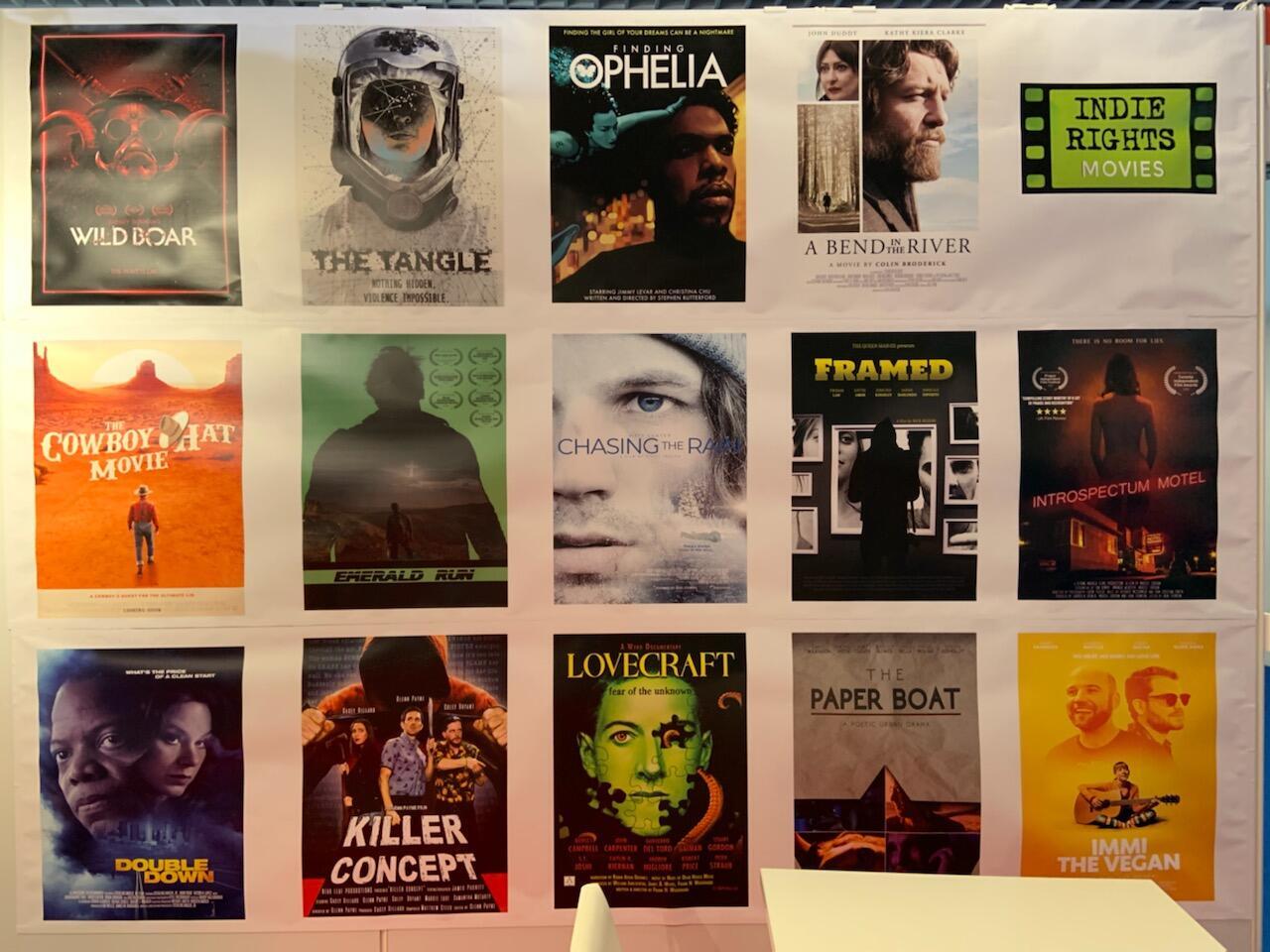
A walk through the market is always a welcome break from the packed screenings and red carpet circus. This is where one hears about the latest casting announcements and exciting new projects. It’s also a chance for low-budget productions with wacky plots and titles to enjoy plenty of exposure – though sadly there is still no sign of a seventh instalment in the “Sharknado” saga, the wildly successful shark-infested tornado franchise starring Ian Ziering, which has come to define the “so bad it’s good” trope.
For talent scouts, the film market is also the go-to place to find new prospects – like British-Libyan actor Adam Ali, the protagonist of Haider Rashid’s migrant thriller “Europa”, which premiered to hearty applause at the Directors’ Fortnight on Wednesday.
The plight of migrants aiming for Fortress Europe has taken a backseat in Cannes this year, perhaps sidelined by other topical subjects like the climate emergency. Mounting anti-immigrant sentiment made an ugly appearance in Nanni Moretti’s “Three Floors”, but there has been no equivalent of Mati Diop’s Senegal-based “Atlantique”, which took the Grand Prix in 2019, or the politically charged line-up seen in 2017.
That year, Kornel Mundruczo’s competition entry “Jupiter’s Moon” featured a breathtaking opening scene in which desperate migrants raced across woodland with trigger-happy border guards at their heels. Four years on, Rashid has set his entire film in a forest, tailing his protagonist – Iraqi migrant Kamal – with a handheld camera as he runs, leaps, crawls and scurries up trees in a frantic race for survival.
“Go back, no Europa!” hisses a Bulgarian border guard as he pins Kamal to the ground in the film’s heart-stopping prologue. The young Iraqi eventually manages to escape into the woods, where an even more sinister threat awaits in the form of heavily armed vigilantes who track and gun down migrants like wild animals. As the film’s opening titles point out, this is all based on frighteningly real events.
“Europa” is the latest migrant-themed work by Rashid, whose father was forced to flee Saddam Hussein’s Iraq in the late ‘70s. The Florence-based director sat down for an interview with FRANCE 24 ahead of the film’s premiere.
Was it important for you to portray the plight of migrants as a fight for survival?
I wanted to make a film that was a bit shocking – and what’s more shocking than someone trying to survive? The situation on the Balkan route [a migratory path into Europe via Turkey] is really down to that, it’s a matter of life or death. People are being treated like cattle. This problem isn’t getting much coverage. There’s been reports in the media, but there’s always a distance, a filter. I felt a fiction film could go deeper. And we wanted to capture the horror of all this by moving into the thriller genre.
How did you research your film?
I wrote the first draft based on documents and reports by UNHCR [the UN Refugee Agency], Amnesty International and all the main human rights organisations. Then we went to Bulgaria and started researching on the ground. We met a human rights lawyer, who told us that our script was really a soft version of what’s happening on the ground. She told us about the corruption, the collaboration between traffickers and border police; how migrants are treated like cash machines.
When we shot the opening scene, we looked for people who might have taken the route before. We found some people staying in reception centres close to Florence. They were kind enough to come and work as extras on the set. We have a behind-the-scenes interview with one of them who told us, “What I am seeing here is exactly what I experienced on the route."
Your film makes its point with earnestness and urgency. Is it inspired by personal experience?
My father had to leave Iraq in 1978 because of the regime. But I never considered myself unsafe. I always considered myself Italian, with an Italian passport, and that nothing could ever happen to me. But in recent years I’ve been thinking this assumption is not necessarily true. When you see the rise of hatred and xenophobia in Italy and Europe in recent years, it’s really shocking. No one can tell me for certain that nothing is going to happen to me or to others.
The film came out of fear, of anger, of disgust at what is happening politically. Even leftwing politicians start to speak in that same language, because the public has shifted so much that they feel they need to use the same language. I’m in a privileged position, and yet still I get racist comments, subtle but real. So I always think, if this happens to me, then what happens to someone who is not in my position?
How did you come to choose Adam Ali for the lead role?
We tried several actors and none felt right. Then one day a friend who was here in Cannes [in 2019] sent me a trailer for a short film and I saw Adam. From the first frame I thought it was an interesting face, like a face from silent movies. If you make a film without dialogue you need something like that. He’s British but of Libyan origin, so we had that common thing of trying to understand our place in the world. We shot the film in a sequence and I feel you see the role growing on him as we go along.

The abundance of Italian films here in Cannes has fuelled talk of a resurgence in Italian cinema. How much support did your film enjoy back home?
The Tuscan film commission was very supportive and I was amazed to see that the [Italian culture] ministry gave us money to make this film. It’s hard to finance a film like this, because on paper there’s no dialogue, there’s nothing. It’s just one guy in a forest. Some people got it, others didn’t.
>> At Cannes Film Festival too, Italy is every bit the winner
There is a resurgence in Italian film, and it’s happening throughout the country. We’re seeing regional diversity, now we need to go a step further. There is a very high percentage of children of immigrant background who are still not represented. It’s easy to put a Black or Asian actor in front of the camera, but it’s not about that. It’s about who’s writing about them and how. The representation of immigrants and their children in Italy is disastrous.