SUNDAY
Portsmouth The Tour is heading south to the Pyrenees, and so am I, beginning with an overnight ferry that has at least as many bikes as cars on it, as tour groups head for France on a variety of two-wheeled exotica: titanium, carbon fibre, vintage and retro steel, the full gamut of high-end manufacturers. As Chris Froome cements his hold on the yellow jersey in the team time trial in Brittany, it is another reminder that Britain’s cycling boom is a massive, tangible, phenomenon.
MONDAY
Livarot A brief stop-off in the Norman village where a stage started three days ago. As if it doesn’t want to let go of its biggest day since Liberation in 1944, the barriers and road-closure signs remain in place on the roads through the hills of the Pays d’Auge, so too the vast car park and notices proclaiming that this is une ville étape, alongside the posters for boules tournaments and church jumble sales. In the 31 years since I first visited, the Tour has passed through twice, started here once, two riders from the local club have ridden La Grande Boucle, and one, François Lemarchand, is now part of the Tour’s management. Such are the connections that keep the great buckle firmly tied to its home country.
TUESDAY
La Pierre Saint-Martin At Planet Tour, deja vu. It could be 2013, as l’Equipe reports breathlessly on the unhappy vibes around Chris Froome and Team Sky after the Kenyan-born Briton’s stage win gives him a strong option on overall victory. The paper is keen to correct the impression given in some British newspapers that photographers outside Sky’s hotel in Pau were stationed to spy on the team; in fact they have travelled from the finish in the team’s bus to shoot a feature on… team buses.
WEDNESDAY
Cauterets A stage finish with resonance for British fans as this is where Robert Millar won in 1989, but also for Italians. This was the finish on 18 July 1995, the day that Olympic champion Fabio Casartelli died on the descent of the Col du Portet d’Aspet, early in the stage - he will be remembered as the race tackles the climb on Sunday - and the organisers failed to convey the news to the stage winner Richard Virenque, whose joy as others grieved was incongruous, to say the least.
THURSDAY
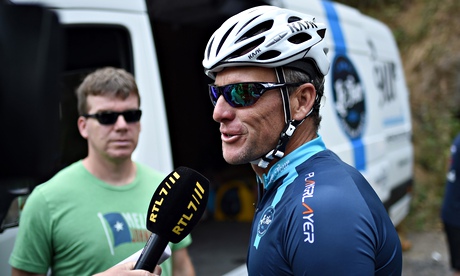
Plateau de Beille Cycling is an all-weather sport but the Tour de France only works in fair weather, as anyone who witnessed the deluge at this ski station finish would testify. The meadow car parks turn into a muddy morass, the electrics fizzle in the streams of rainwater, and there is universal shivering as the temperature drops 15 degrees in as many minutes, accompanied by hail. The apocalyptic weather is, no doubt, a sign from above to mark the return of cycling’s Great Satan – Lance Armstrong – to French soil, where he is riding on the route of two stages of the race 24 hours ahead of the peloton in aid of charity. It also sends a message to the hundreds of camper vans that follow the Tour: choose your parking space carefully lest your wheels be buried in sand from torrential run-off.
FRIDAY
Rodez La canicule, heat close on 40 degrees, hits the race. The riders finish with jerseys encrusted with salt after pleading for water at their team cars. So many domestiques have to drop back on bottle duty that the chase behind the day’s escape is disrupted, and they come close to staying away to the finish.
SATURDAY
Mende For the second day in the last three an escape of more than 20 riders - more than a 10th of the field - goes clear early on. These massive moves have become more common in recent years and reflect two things: on transition stages such as this, the battle to win a stage is more desperate than ever. And perhaps, a more level playing field in the era of the biological passport means more riders are physically able to hunt such stages.