Ukip has precious little to say about the arts. Indeed, judging by its manifesto, it wants to replace theatres with pubs (ones you can smoke in) and galleries with tourist centres celebrating British heritage. Rule Britannia, and all that. What we used to call the mainstream parties talk about the creative industries and the importance of creativity in general – which is generally made to feel like an attribute of the entrepreneurial spirit and thus is folded into the whole capitalist ethos. Only the Greens specifically say they will raise arts funding, by £500m. In an age of austerity and utilitarianism, the arts are an easy target, the low-hanging fruit of those scouring public finances for cuts.
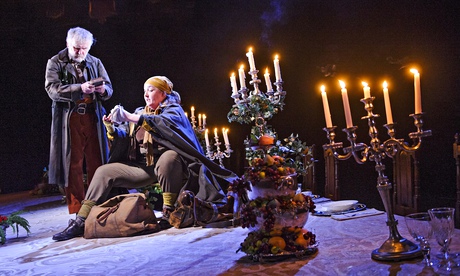
So why the arts? Because as politics becomes ever more homogenised and defensive – as indicated by the present election – the arts should be one of the places to challenge the idea that our political and financial masters have a monopoly on what counts as established reality. As I sat watching Caryl Churchill’s fine Light Shining in Buckinghamshire at the National Theatre last week, I realised how much the politics of 1649 were so much more interesting and expansive than the dreary fare of 2015. It reminded me of something we used to call vision, a sense that the world could be otherwise, that our political assumptions can always be turned upside down. That used to be the role of religion. It widened the lens and stimulated the political imagination to consider broader social perspectives. But in a secular age, that responsibility now resides primarily with the arts.
My friend Assi Dayan died exactly a year ago, on 1 May 2014. He was a troubled actor and filmmaker, whose deep resources of existential honesty produced some of the most critical films of Israeli cinema, launching broadsides against unthinking loyalty – loyalty to the sort of militarism that his father, the famously eye-patched Moshe Dayan, had done so much to inculcate into Israeli culture. When Moshe saw Assi’s first collection of poems, he dismissed them as kishkush (nonsense) – the standard reaction of the right to any sort of expression that refuses the parameters of accepted discourse. Last week, on Israeli independence day, I showed one of his films, Life According to Agfa, at the JW3 Jewish cultural centre in north London. A member of the audience was angry I had chosen this day, of all days, to show a film in which Israeli soldiers murder fellow Jews in a Tel Aviv bar. My argument back was that self-criticism can be another, sometimes deeper, form of loyalty, an attempt to hold something you love to a higher standard.
Which is why the arts, unless they become mere entertainment and propaganda, should often elicit just this sort of reaction. Like the prophets of the Hebrew scriptures, the best theatre should risk being pelted with rotten tomatoes. For the primary vocation of the prophets was not to predict the future but to tell a wider (and often unpopular) truth about the present. But in this way the arts revivify the possibilities of human experience, and suggest that our familiar patterns of political expression may have a dark side that we refuse to acknowledge.
The irony is that Agfa – that is, film, or now video – is partly responsible for this. Our politicians hunker down in front of the cameras, terrified to say anything that may fall outside the safety of accepted parameters. For as well as being a medium for critical thinking, “Agfa” can just as easily encourage a stultifying one-dimensionality. And it is the job of the arts proper to disrupt this. Which is why it is so convenient for mainstream politicians to divert its funding into pubs or heritage or “the creative industries” – as a result of which arts organisations which require substantial funding can easily become playthings of the wealthy donors that support them. And so the boundaries of our (political) imagination contract further, to the detriment of us all.