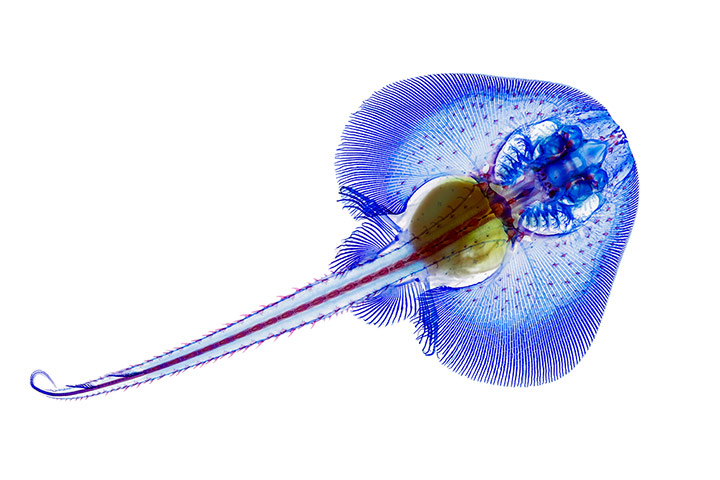
It is often said that beauty is only skin deep, but these images go a long way to prove otherwise. You could be forgiven for thinking that these stunning images were x-rays, but look closer and you will realise there is something more interesting going on Photograph: Adam Summers/Incognito Features
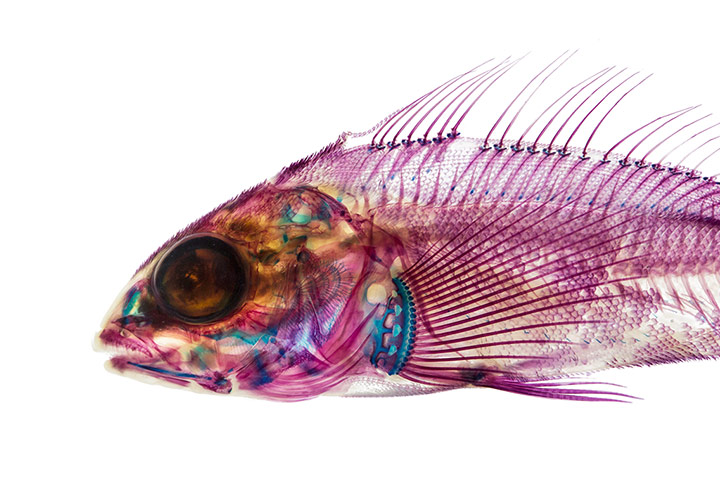

Using a process developed decades ago, biologist and photographer Adam Summers from the University of Washington in Seattle has been able to reveal the intricate architecture of some of the oceans’ inhabitants Photograph: Adam Summers/Incognito Features
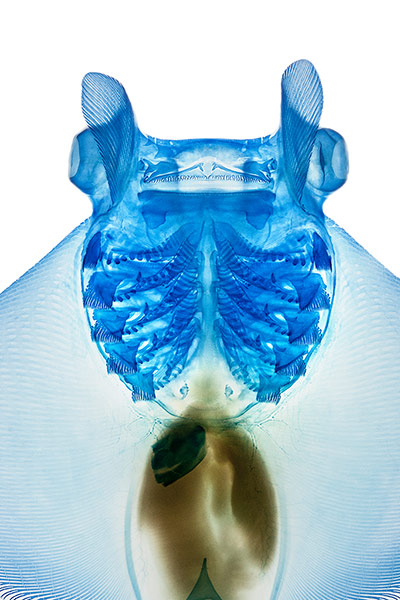
Summers obtains his aquatic subjects from several sources including scientific collections which have resulted in incidental mortality Photograph: Adam Summers/Incognito Features
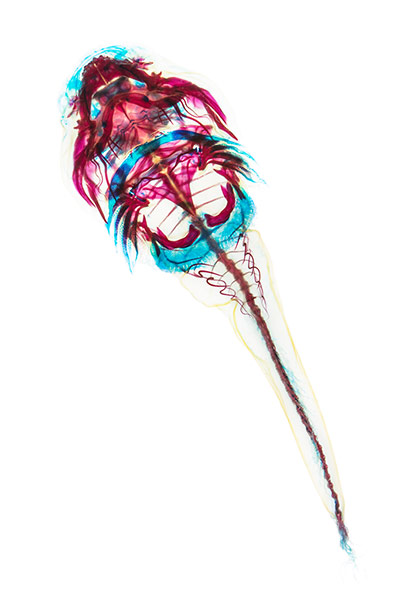
The clever chemistry used involves submerging the dead animal in the enzyme trypsin, which digests all the flesh while leaving the collagen in the skin and connective tissues intact. It is then treated with hydrogen peroxide to dissolve the dark pigments, and finally dipped into a bath of glycerin which makes the collagen appear invisible. This reveals the elaborate stained skeletal structures, with bone rendered red by the dye Alizarin Red S, and cartilage blue by Alcian blue Photograph: Adam Summers/Incognito Features
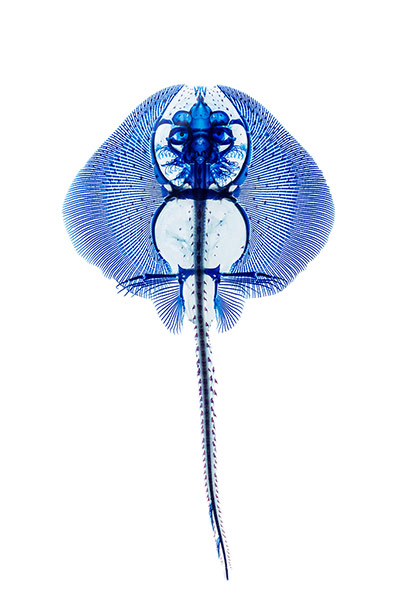
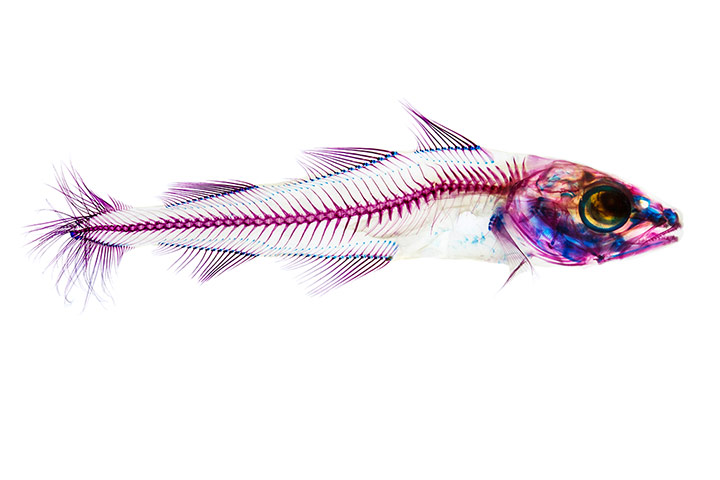
Adam Summers: 'This technique is effective only on specimens that are less than about 1cm in thickness, and takes much longer for thick specimens than thin. A small fish might take three days to process while a larger animal could take several months' Photograph: Adam Summers/Incognito Features
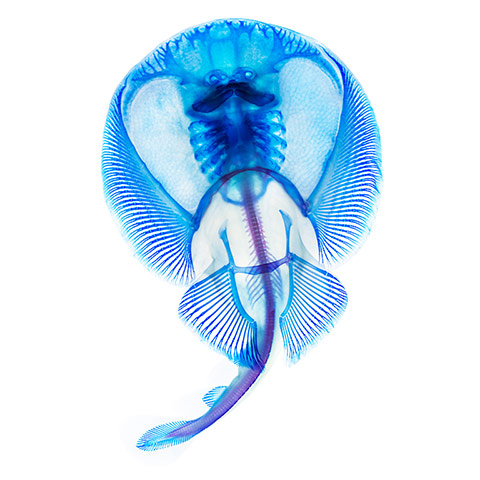
The glycerine-encased specimen is then posed on a colour corrected LED light table and left for several hours to set Photograph: Adam Summers/Incognito Features
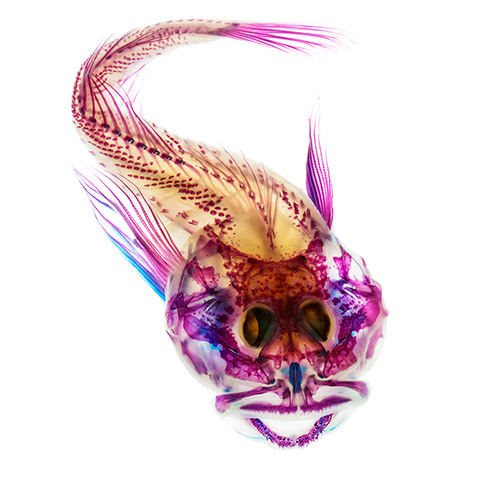
Summers uses a tripod-mounted Canon 5D Mark III camera fitted with a 100mm Macro lens Photograph: Adam Summers/Incognito Features
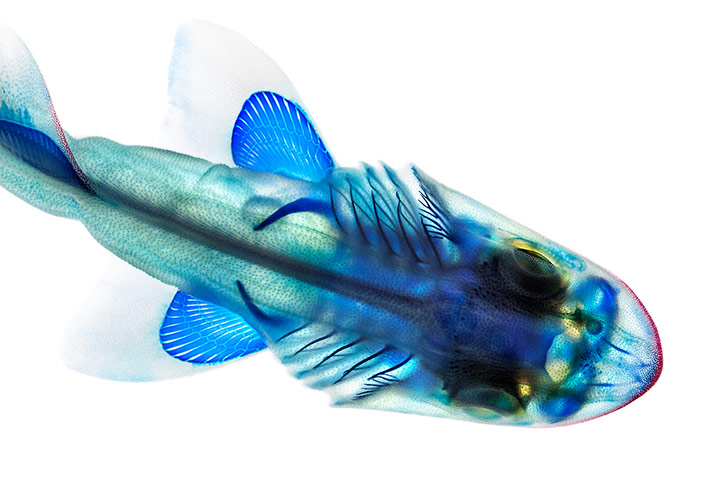
However, these images are not purely for aesthetic value. 'Each of them have their own reason as to why we were interested in looking at the skeleton' said Summers Photograph: Adam Summers/Incognito Features
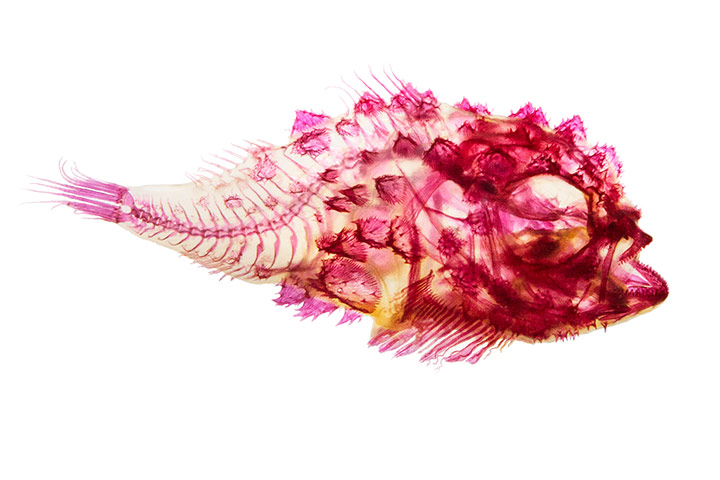
Adam Summers: 'Every one of those specimens is part of one project or another which I’ve worked on. For example, there’s a spiny lumpsucker there; that is a fish which attaches to surfaces with a sucker on its belly, and we were interested in the mechanics of that sucker, so we needed to visualise the bony skeleton which supports the sucker' Photograph: Adam Summers/Incognito Features
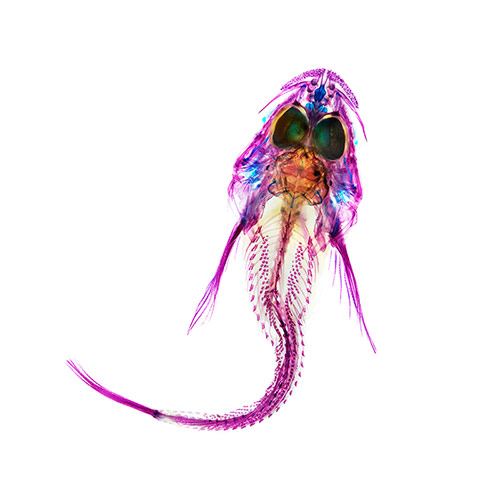
Incidentally, Summers was the scientific consultant on the Disney/Pixar movie Finding Nemo Photograph: Adam Summers/Incognito Features
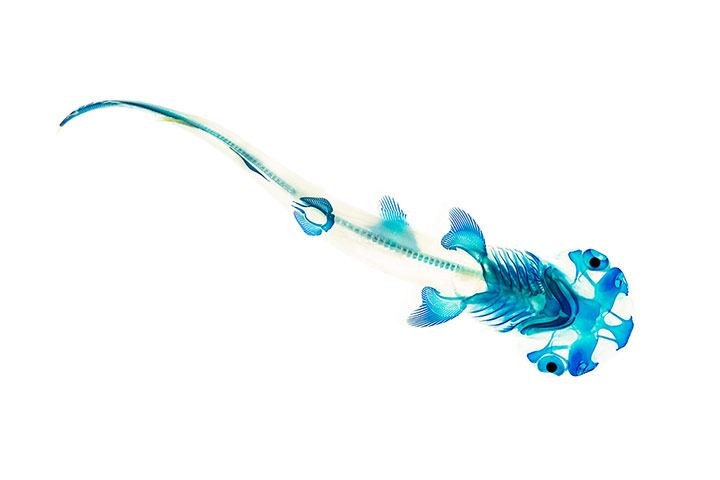
Displayed in the exhibition Cleared: the Art of Science showing at the Seattle Aquarium, Summers’ photographs appear alongside poems by Sierra Nelson. 'It was a very natural thing when I was asked to produce this show to see if Sierra would be willing to write poems inspired by these pieces. Any keen observer of the natural world employs the same tools that a poet employs' Photograph: Adam Summers/Incognito Features
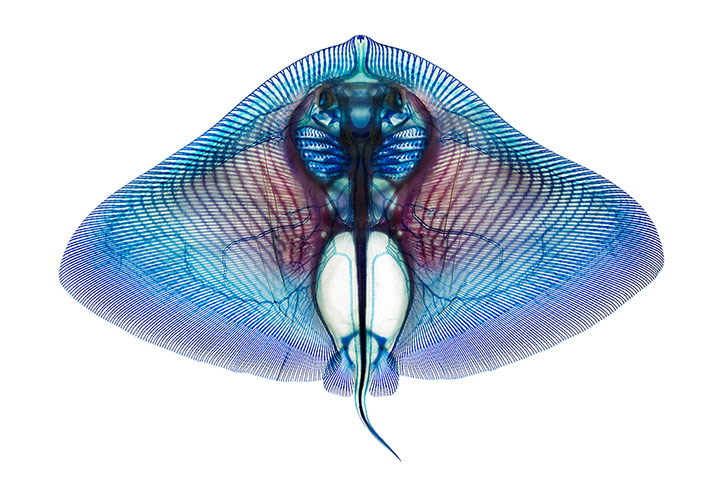
Why do you call me a butterfly?
Do they cruise and feel
above and below
the pressure waves
of the moving world?
Do they hear the electric-twitch
of heartbeat, muscle flinch, from all
the live swimmers around them?
Do they wiggle out live from their mother
to find a fish and make a tiny sting?
Do they swim under fishes,
flip over to smile,
then wrap powerful wings
to hug and to eat them? Photograph: Adam Summers/Incognito Features