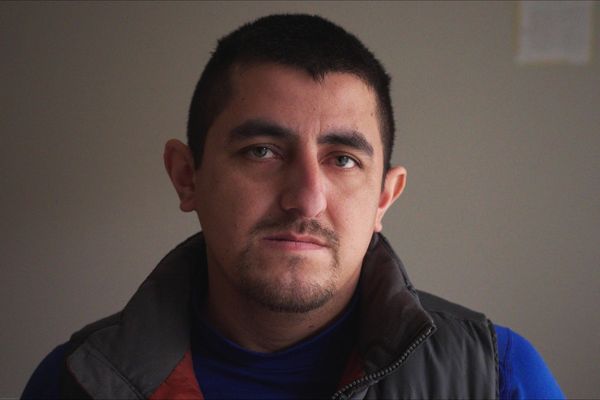
"Face of the campus killer," blared the headline in the Guardian on Wednesday. Beneath it a frontal image of Cho Seung-Hui's head, cropped across his forehead. The next day, the Daily Mail's front page regales us with Cho's eyes behind spectacles, in an image that is so pixelated as to show nothing precisely. The caption advertises the inside story: "REVEALED: Inside the warped mind of the campus killer."
On February 1 2000, after the conviction of Dr Harold Shipman, the Guardian had already adopted the Mail's strategy. Shipman's bespectacled eyes, hugely magnified, stretched across the front page. The caption quoting the judge's words: "calculated and cold-blooded". Inside, Elizabeth Cook, the court artist, sketched Shipman, head bowed between two police officers.
What are we meant to do with these images? The implication is that if we look deeply enough into the eyes of Cho and Shipman, they allows us to discern what is glibly called "evil". They rely on the ancient idea that the eyes are the "mirror of the soul", and that we can read someone's deepest personality traits from their face. Although Shipman's aged victims saw him as a benign, bearded family doctor, we now expect to see signs of his malignity.
The tradition of western portraiture is founded on the assumption of what I have called the "physiognomic imperative". Physiognomics was the ancient science, first comprehensively outlined in a treatise attributed to Aristotle, that purported to read the "signs" of the face in the context of the human constitution of the four humours - sanguine, phlegmatic, choleric and melancholic.
Portrait galleries around the world parade the faces of the great and good in our national pantheons on the implicit assumption that their virtues shine forth from the features. We automatically expect our news media to show mug shots of the famous and notorious, as though these too will reveal deeper characteristics.
There is clearly a fundamental instinct at work here. Our extremely elaborate neurological systems for the recognition of faces and expression are subject to separate mental processes. They serve our need to recognise friend or foe (actual or potential) rapidly and decisively - and to identify a potentially fruitful mate.
The idea that we need an accurate record of the facial features of someone in whom we are interested is a specifically western assumption, however widely diffused it now is. There is no tradition of veridical portraiture in most cultures, with the incomplete exceptions of China and Japan, where the register of likeness was not as "photographic" as it has been in the west.
But given the contrivances of paintings and photographs - can we ever deduce anything about a person from their features?