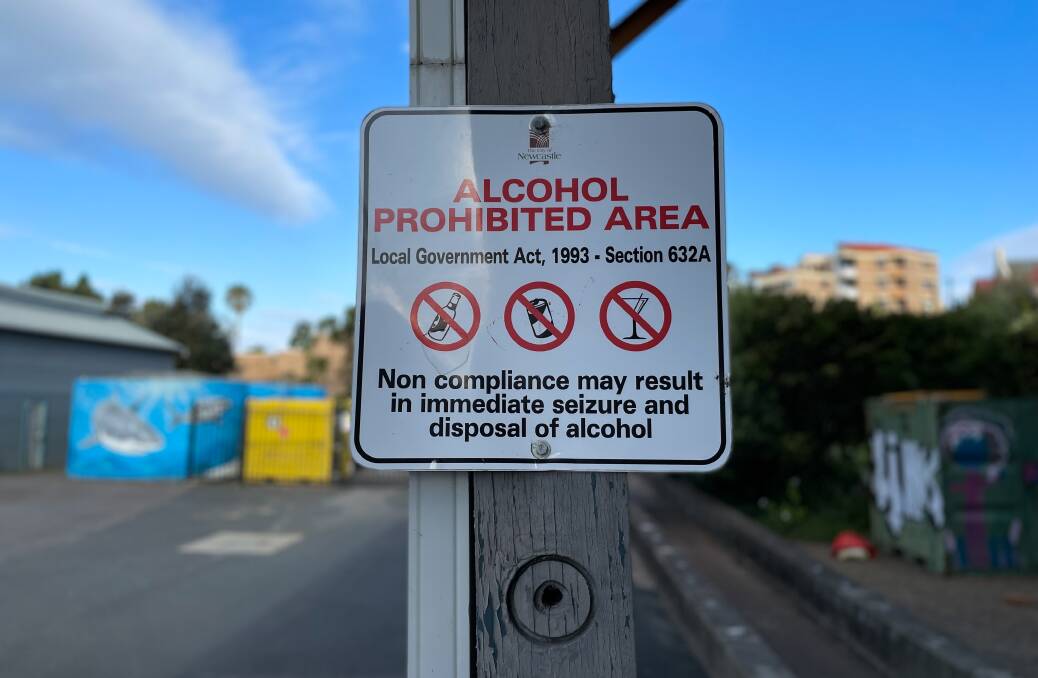
Newcastle council plans to make broad precincts, rather than individual streets, alcohol free zones.
Under a draft alcohol regulated areas plan on exhibition until November 26, scores of streets not currently subject to alcohol restrictions will become alcohol free zones.
Rather than just key streets in the city centre like Hunter and King Street being alcohol free zones, much of the city between Newcastle West and East will become an alcohol free zone.
Similar precincts would be established across Cooks Hill and part of Bar Beach; the southern end of Stockton; across Hamilton and in Hamilton South; part of Mayfield; and in Wallsend.
The draft plan is a statutory requirement and updates a 2015 version. Councillors endorsed the plan for exhibition at the October ordinary meeting without discussion.
The council engaged a consultant to review the 2015 plan earlier this year. They made multiple recommendations, including shifting to a "precinct approach" for alcohol free zones.
There are currently about 170 alcohol free zones and 37 alcohol prohibited areas in the LGA. AFZs are used to regulate the consumption of alcohol on public streets, while APAs are typically used to regulate consumption within public spaces like parks.
One of the consultant's reports says there is "general public confusion about where and when AFZs and APAs apply", which leads to a "complicated" perception of the network. Signs are also inadequate and outdated.
They found AFZs/APAs "have not been proven to effectively reduce the number of recorded alcohol related anti-social behaviour and serious alcohol related crimes", but they "nonetheless provide several social and community safety benefits which are of value when implemented as part of a broader strategy to manage irresponsible alcohol consumption in public spaces".
The city's beaches and skateparks will be APAs under the plan, while other public spaces like Bar Beach hill, will transition to APAs but have consumption prohibited between 8pm and 8am, to promote picnicking.