Ants carrying oak galls study : What looked like nothing more than scattered BB-sized specks under a fallen log in a backyard ended up opening a scientific mystery.
Eight-year-old Hugo Deans first noticed them near an ant nest and assumed they were seeds. They were not. They were oak galls, small plant-made structures formed when certain wasps trigger oak trees to build protective chambers around their larvae, as per a report.
That simple moment later helped researchers from Penn State and SUNY Buffalo State uncover an interaction between ants, plants, and wasps that had not been clearly documented before, as per an Eco News report.
When ants and oak galls crossed paths
Oak galls are often overlooked. They appear on oak leaves in late summer and fall, each one holding a developing wasp larva inside a plant-built enclosure.
Hugo’s father, Andrew Deans, a professor of entomology at Penn State, immediately recognized them as galls. But what stood out was their location, clustered near ants.
Hugo asked the question that became central to the study, “Why would they do that?” as quoted by Eco News.
READ ALSO: This NASA rover Perseverance just logged 26.2 miles on Mars. What it found could be even bigger
Ant behavior that resembled seed dispersal
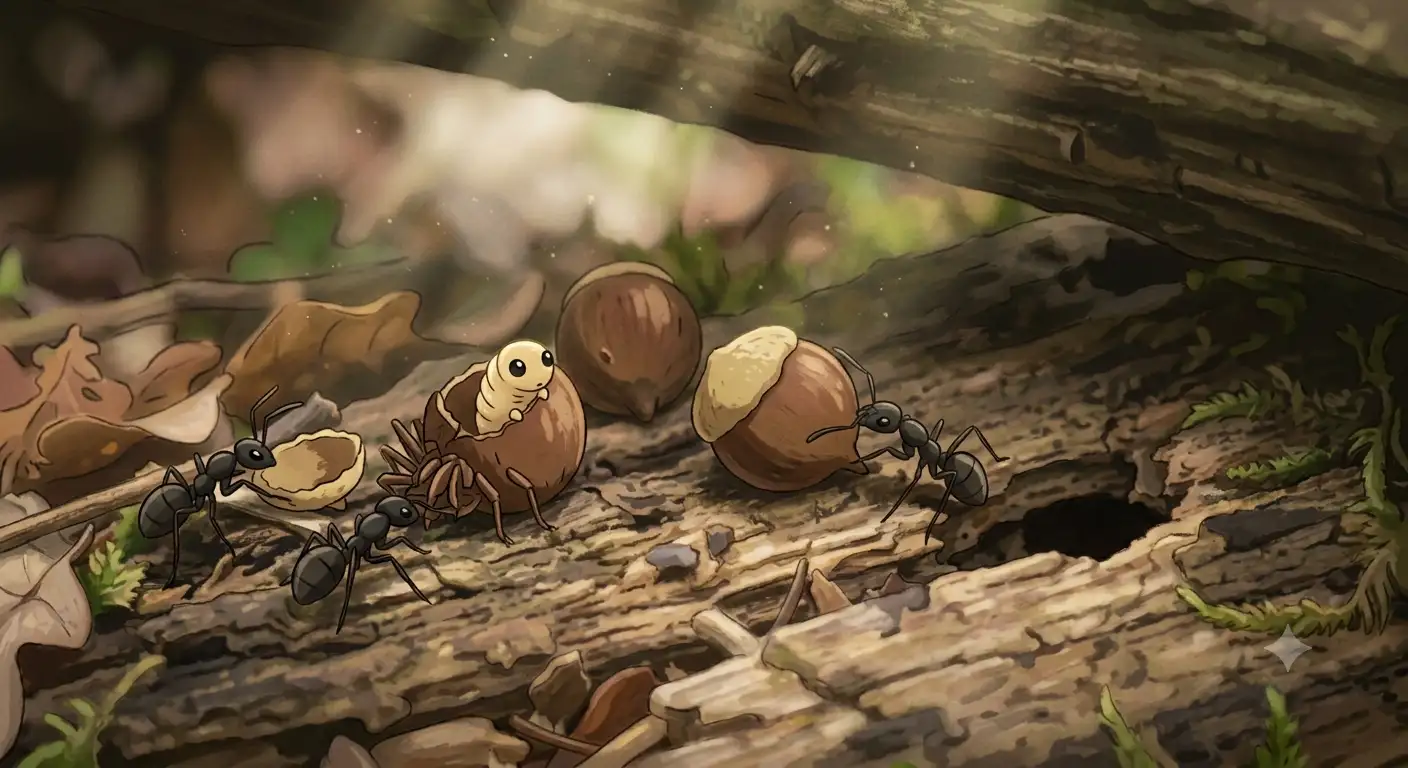
Researchers observed ants carrying oak galls into their nests. They removed a small outer cap and left the inner chamber intact, where the wasp larva remains.
This behavior closely resembles myrmecochory, a well-known process where ants disperse seeds. In that process, plants offer ants a fatty food reward attached to seeds, and ants carry them away, consume the reward, and leave the seed in a safer place.
The oak gall discovery suggests a similar pattern may exist between wasps, oak trees, and ants.
The “kapéllo” that changes ant behavior
The researchers studied galls made by two wasp species: Kokkocynips rileyi and Kokkocynips decidua. These galls have a fleshy cap the team named “kapéllo,” as per the Eco News report.
In ant nests, the kapéllo was removed and eaten, while the gall body was left behind. That detail is important. It suggests the cap is what attracts ants, while the inner gall and the wasp larva inside remain unaffected.
Experiments that tested ant choices
Field experiments showed ants removed oak galls and bloodroot seeds at similar rates, meaning the galls were as appealing as known ant-dispersed seeds.
In controlled tests, ants were given different options: whole galls, galls without caps, caps alone, and galls without edible caps. They consistently preferred anything with the kapéllo present.
Chemical analysis found fatty acids in kapéllos similar to those in seed food structures, helping explain the ants’ response, as per the Eco News report.
Why this matters in the forest
What looks like small foraging behavior may actually influence how materials and organisms move through forest floors.
A gall is not just a plant bump. An ant carrying one is not just collecting debris. These interactions, repeated across vast forests where oak galls are common, suggest a quiet system of movement happening beneath everyday woodland scenes.
FAQs
What did the child discover?He noticed small BB-like objects near an ant nest that turned out to be oak galls.
How is this similar to seed dispersal?
It resembles myrmecochory, where ants carry seeds with food attachments.