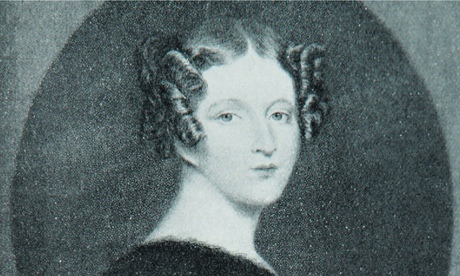
At the age of 15, Catherine Tylney, known as the “Wiltshire heiress”, became England’s richest woman. Beautiful, clever and accomplished, she was courted by noblemen eager to get their hands on her vast fortune. She inherited 23,000 acres of land, several stately homes and an annual income of £40,000. One of her estates was a magnificent Palladian mansion in Essex, Wanstead House, where she was determined to set up home and begin a family. But first she needed to find a husband.
The most famous of her suitors was the Duke of Clarence. In order to pursue her, he abandoned his long-term mistress, the talented comic actress Dora Jordan, who had borne him 10 illegitimate children. As Geraldine Roberts writes, had Catherine consented to the match “she would have become queen of England and her children would have ascended the throne”. Instead, she fell for the charms of William Wellesley-Pole, an Anglo-Irish nobleman, and the nephew of the Duke of Wellington. It was a decision she would regret for the rest of her short life.
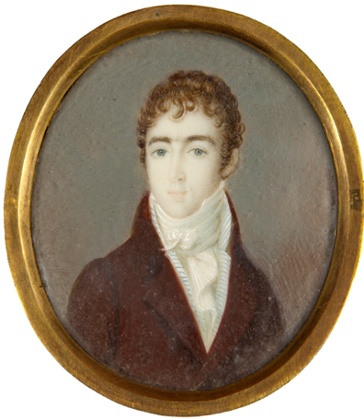
Pole was a keen horseman, a dandy, and a friend of Beau Brummell and Lord Byron. He brought to the marriage raffish good looks, charm in abundance and heavy debts. Catherine did not listen to the warnings of her friends and family. Even Pole’s family warned her against him. She knew that he had a reputation for being wild and reckless, a drinker and a womaniser, but she married for love. Her family, however, insisted upon a marriage settlement, a “pre-nuptial” arrangement which would prevent him from squandering her vast fortune.
The satirical press had a field day with the union. They dubbed William “Long-Pole” in reference to his reportedly large manhood, drawing cartoons of him with a long pole between his legs. Catherine was depicted between her rival suitors with her hand stretching towards Pole’s long pole.
The wedding day was a lavish affair in which the bride wore a fabulous gown of white satin, which cost 700 guineas, and travelled to the church in a new yellow carriage drawn by four Arabian grey horses. When she arrived she was disappointed to find that William had forgotten to buy the ring: a portent of things to come.
It wasn’t long before William accumulated debts and was forced into exile to escape his creditors. Catherine and her three small children followed him to France. By now there were strains in the marriage. William had continued to have affairs, one of which resulted in an illegitimate child. Catherine bankrolled both mother and child. In Naples, William began a passionate and tempestuous affair with his (married) first cousin, Helena Bligh (said by some to be his illegitimate daughter). He moved her into the household where Catherine was expected to endure them flirting together openly. Helena would sit in the chair next to William and put her foot between his legs, while his wife was forced to look on. When Helena found herself pregnant she took laudanum to induce an abortion.
As the relationship progressed, William and Helena became increasingly vicious towards Catherine. Incensed by her dignified silence and her refusal to acknowledge the affair, they decided to turn her beloved children against her. William encouraged his two sons to drink alcohol: they had their first hangovers when they were eight and 10 respectively. He suggested that they should spend time in the stables with his grooms, where they picked up obscene language, and he told them they should bed women “young and old, at your full pleasure”. When Catherine remonstrated and tried to control the feral children, they sided with their father. She died young, with the press claiming that she had suffered a broken heart as a result of William’s cruelty.
Catherine got her revenge. She fought a custody battle from beyond the grave. The case challenged the legal system, which gave all rights to the father. William was declared an unfit parent and the children made wards of court. Family law was changed for ever.
Geraldine Roberts’s research in The Angel and the Cad is far-ranging. She has scoured the archives and truly found a story worth the telling. But some things rankle. She casts Catherine as a feisty Elizabeth Bennet, though it’s a stretch of anyone’s imagination to believe that Jane Austen’s spirited heroine would capitulate to the demands of a tyrant and a bully (as her confrontation with the powerful Lady Catherine de Bourgh attests).
Roberts calls this a “rags to riches” story, even though Catherine was born into exceptional wealth. She also has a tendency to fabricate thoughts and feelings for her characters, without evidence: sentences such as “Imagine poor Catherine’s predicament” or “He wanted his marriage to work” do not belong to a work of serious research. She often slides into cliche: “There were three of them in this marriage”; “The sparkle had faded from the marriage”; “Celebrity can be lonely, never knowing who to trust”; “Money is often a cause for argument between couples.” No, really?
There are moments where Roberts seems confused as to whether she’s writing a novel or a biography. With a story as shocking and fascinating as this, she would have done better to avoid the melodramatic language. A pared-back narrative would have been far more effective. But it’s a first book, and a great story.
The Angel and the Cad is published by Macmillan (£20). Click here to buy it for £16