
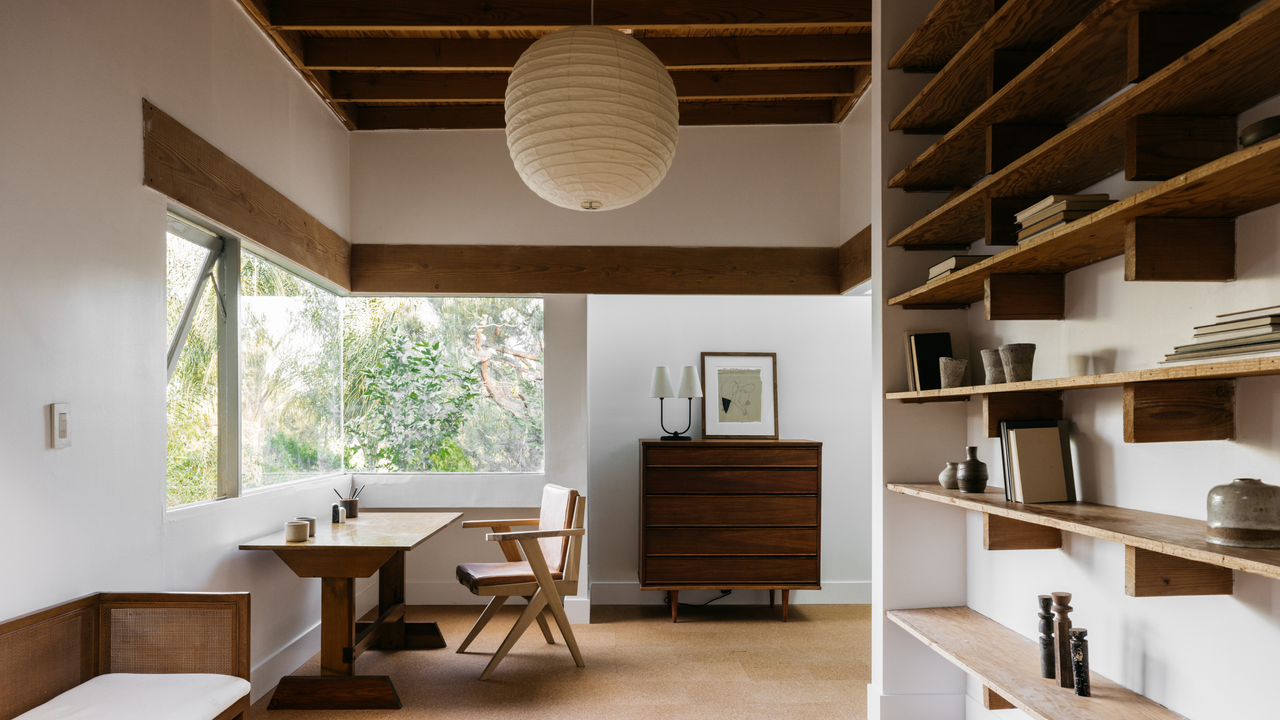
70-some years after Isamu Noguchi made his formative visit to Gifu, Japan – where he fell in love with, and ultimately riffed upon, the town’s mulberry bark paper and bamboo lanterns – it’s hard not to imagine him cringing post mortem at the flood of flimsy, dorm-room knockoffs that hit the market in the late 2010s. Akari, they were not.
Fortunately, the current paper lighting trend revival is treating the medium with a little more reverence. This new wave feels truer to the spirit of the original 16th-century forms (and a clear step up from first-apartment fare).
As Joelle Kutner and Jesse Rudolph, co-founders of Los Angeles–based Ome Dezin, observe, these designers ‘treat paper lighting with the same respect they would give stone or wood’ – a mindset that pushes the lighting idea forward, but keeps Noguchi’s reference point very much alive.
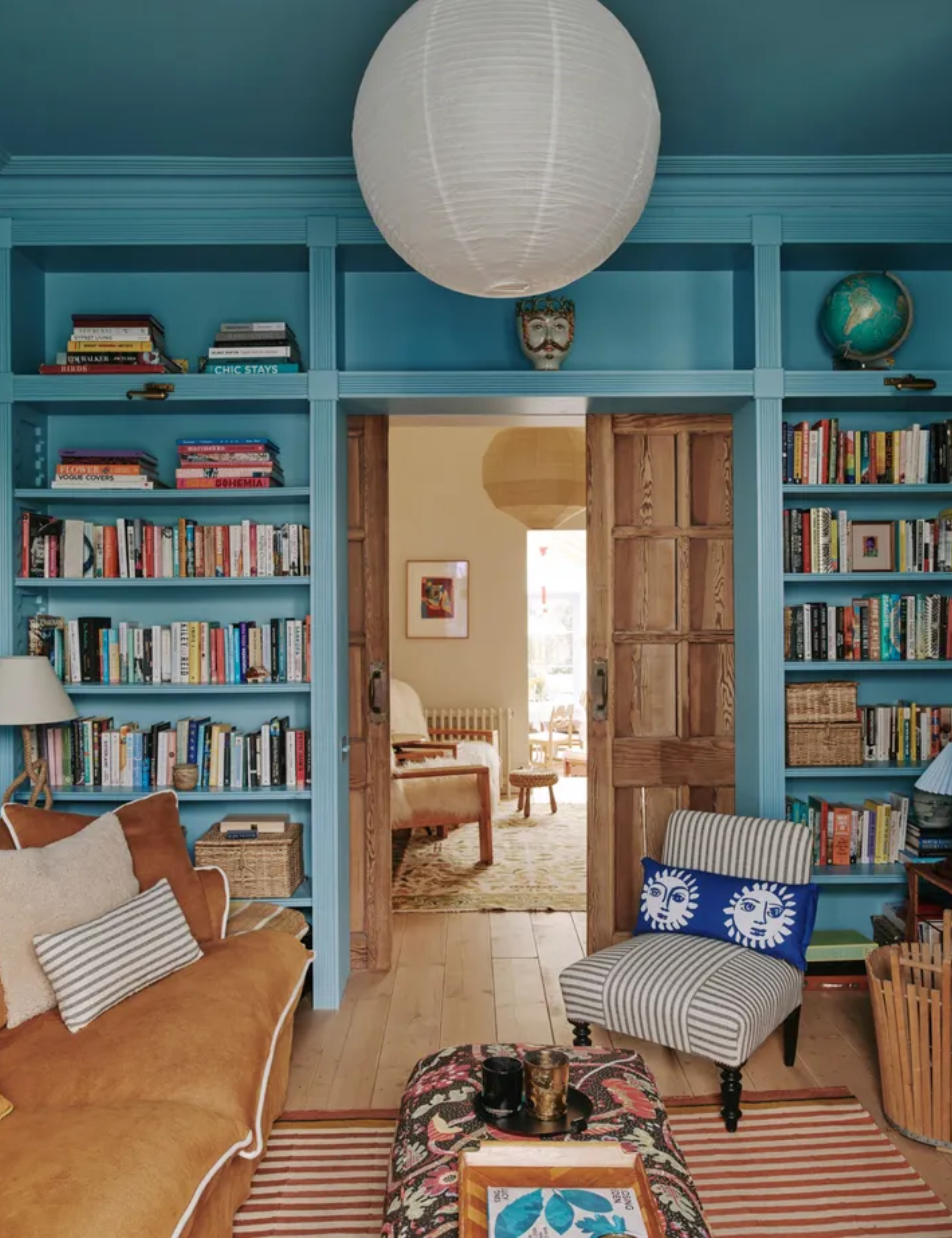
‘We see a lot of our clients wanting their home to feel softer and more cozy,’ explain the co-founders, who used one of these paper lights to crown the office area of their Cerro Gordo project in Echo Park. 'These pieces are being placed in more considered spaces, alongside richer materials, which allows their simplicity to feel intentional rather than temporary,’ they continue – a sentiment that extends beyond this single project and into the broader interior design shift toward raw, spectacle-averse materials.
‘Paper lanterns are great because there is also a big range in size, price, and shape, so really anyone is able to have one in their space,' add Joelle and Jesse, pointing to this design trend's refreshingly democratic appeal.
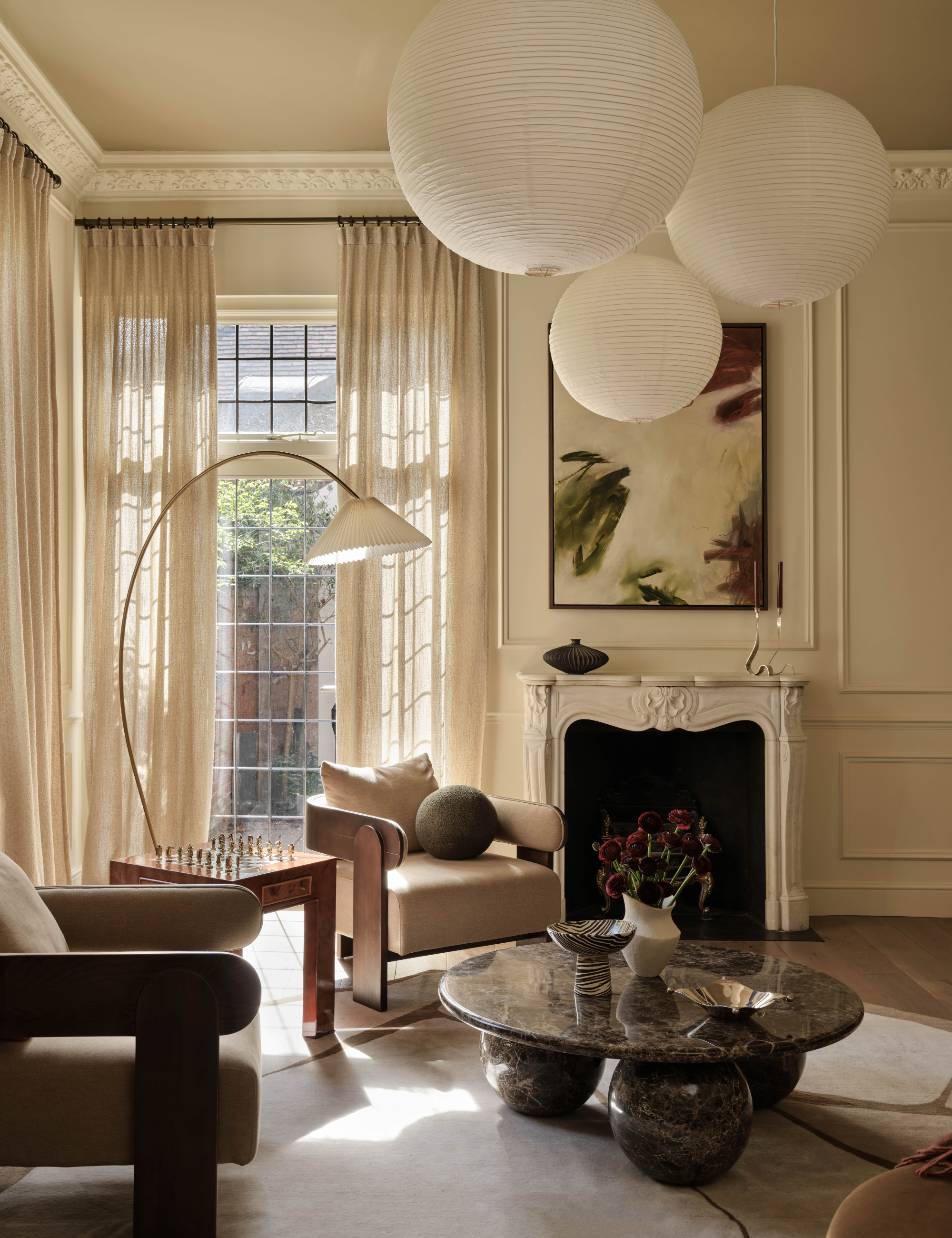
And since the duo mentioned size, it's worth noting that paper lights placed on the floor – especially grouped in a multi-height cluster – allow for a loose rein on styling. But once you take things overhead, proportion matters.
‘When choosing a paper lantern, scale is key,’ explains Megan Schlabaugh of Megan Lynn Interiors. ‘A helpful rule of thumb is to add the length and width of the room in feet – that total becomes the fixture’s diameter in inches (for example, a 10-by-12-foot room calls for a 22-inch lantern).'
'If you’ll be walking beneath it,' Megan continues, 'make sure the fixture hangs at least seven feet above the floor. Over a dining table or island, aim for one-half to two-thirds the width of the surface below,' she advises.
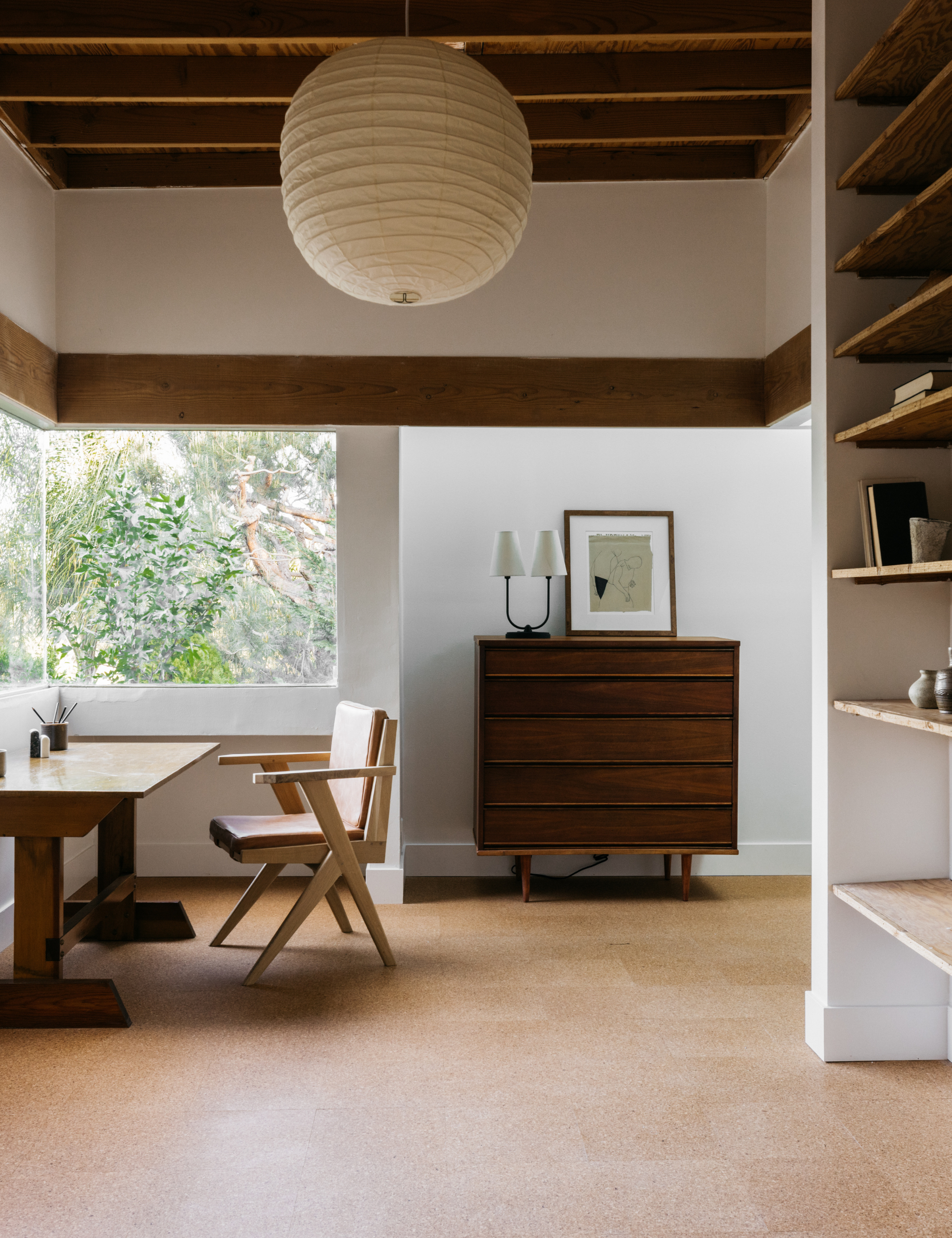
Still, don’t stress the logistics. According to Michelle Accetta, founder and principal designer of Michelle Accetta Home, the impulse to micromanage runs counter to the spirit of this revival. Softly diffused, non-centralized light has a calming effect on the nervous system, ideal for unwinding at the end of the day and supporting circadian rhythms. ‘These paper lights are a great option to support wellness in this sense,’ she says.
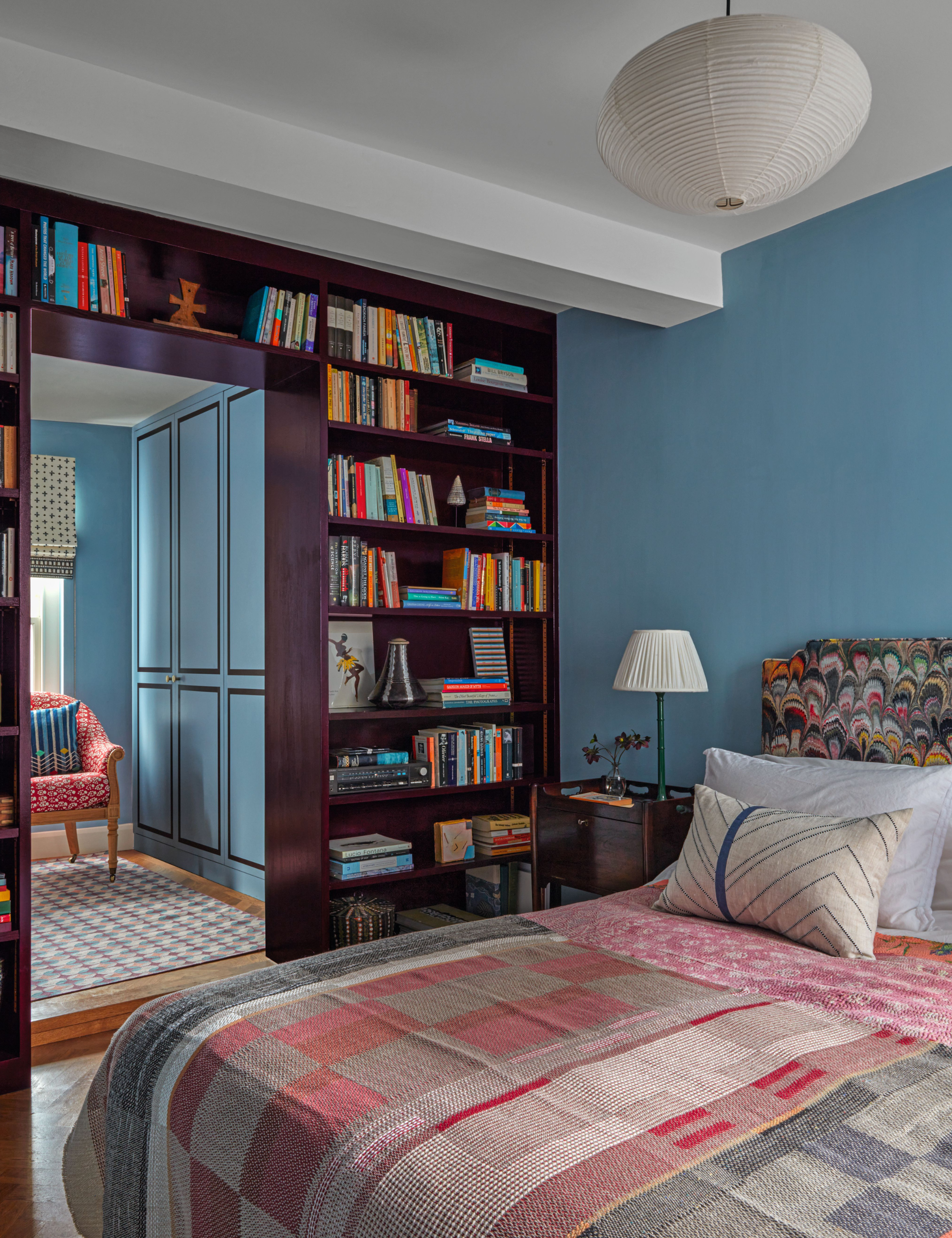
Indeed, lighting in recent years has gotten more gorgeous, but often unforgiving. ‘Paper lanterns offer a softness that many interiors have been missing,’ say Joelle Kutner and Jesse Rudolph of Ome Dezin, noting their gentler relationship to light, texture, and atmosphere. At its most romantic, the effect muses an era of mid-century and modernist interiors, 'where light was treated as part of an experience, not just a utility.’
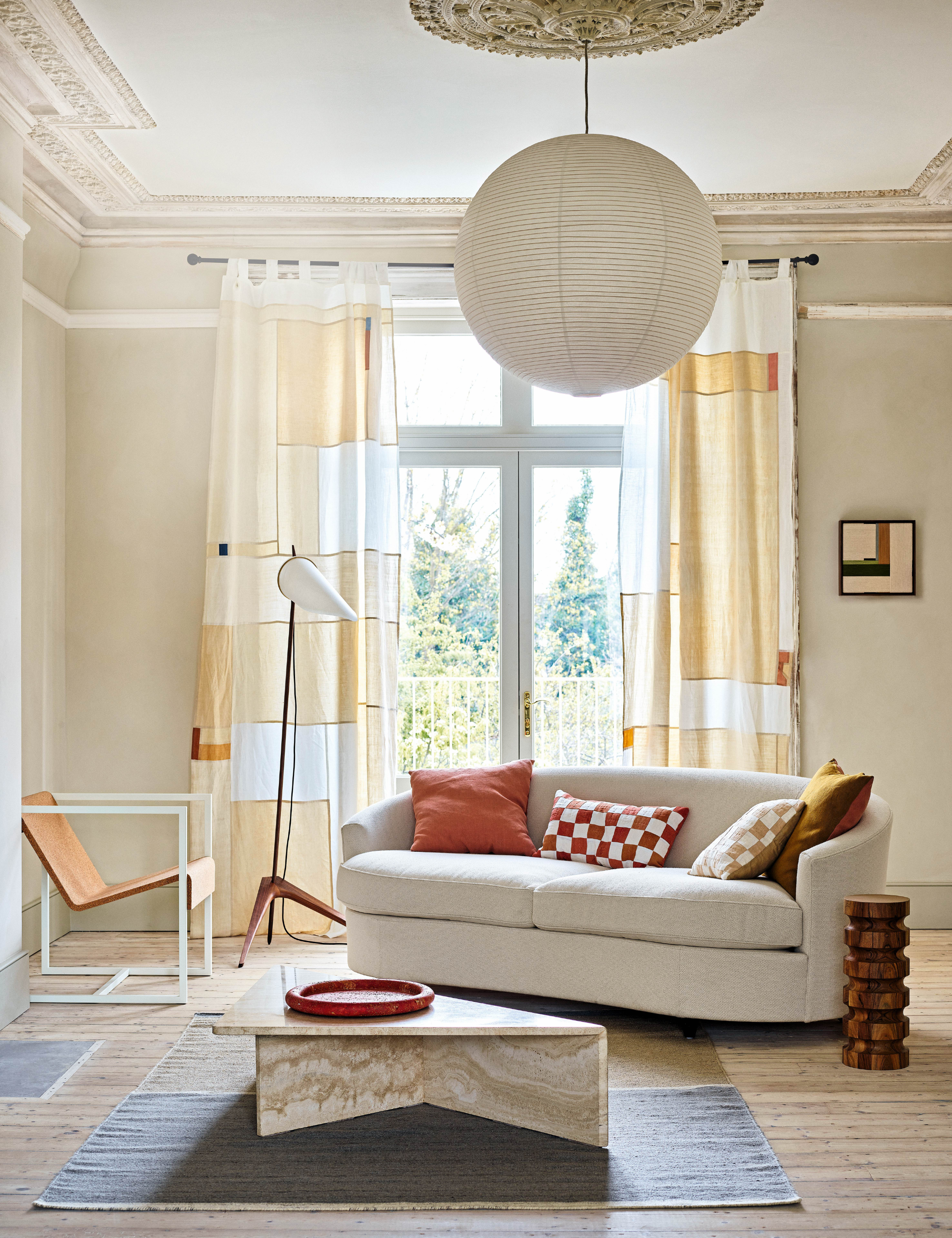
Isamu Noguchi once wrote, ‘All that you require to start a home are a room, a tatami [traditional Japanese flooring mat], and Akari.’ At long last, this new class of paper lights delivers the kind of soothing, scene-completing sensibility he dreamt of.
Shop Chic Paper Lighting
It’s a fan favorite for a reason. IKEA’s Gullsudare Pendant Lamp Shade doesn't do too much, because it doesn't need to. That exaggerated scale pulls the eye upward, giving smaller rooms the illusion of a little more grandeur.
‘As interiors move away from industrial finishes and lighting, paper lanterns bring warmth and softness back into the conversation,’ says Megan Schlabaugh, who counts HAY’s rice paper shades among her favorite budget-friendly buys.
Those avant-garde paper lanterns we oogle can fortunately be found for a song at H&M Home. Their rice-paper riffs turn sculptural squiggles into an art-forward moment for awkward corners.
‘This design really pushes the envelope through exaggerated shape,’ note Ome Dezin’s Joelle Kutner and Jesse Rudolph, with the Cocoon Lamp serving as a grade-A example. Its lines add more than enough dimension to hold their own in a dining room.
Add a warm, ambient glow as you burn the midnight oil with this best-selling West Elm table lamp, which we love for a bedroom or study. Thanks to its soft disposition, it plays well layered with other non-primary light sources, like floor lamps.
Kravitz Design – conceived by the Lenny Kravitz himself – brings a rock-and-roll edge to the category with CB2, pairing fragile paper with hand-welded polished stainless steel.
The paper light renaissance proves that the best lighting ideas tend to arrive with some history attached. In 2026, that conversation naturally extends to the candle sconce, too.