While we're lucky enough to be able to enjoy foods from many different cultures on a daily basis, there are a number of unusual delicacies out there that many may not have yet tried, let alone heard of.
Language learning app Babbel has collated a list of the most fascinating dishes from around Europe with details on how to pronounce them.
Some, such as haggis, may sound familiar for those living in the UK.
However, others, such as blodplättar, a dish made of blood pancakes that's served in Finland, Sweden and Norway, and smalahove (sheep's head) that Norwegians eat around Christmas may not ring a bell.
Want to test your culinary expertise? Here's how to pronounce some of the most unusual dishes from around Europe:
Blodplättar
Blodplättar, the aforementioned ‘blood pancakes’, are made from whipped pig or reindeer blood and are also known as veriohukainen, verilätty or verilettu in Finnish.
The unconventional pancakes are pronounced 'blued-plettar'.
Andouillette
Pronounced ‘ahn-doo-yet’, this is a French sausage that’s usually made from pork, intestines, onions, pepper, wine and seasoning, that can be served hot or cold.
The dish reportedly has a very distinctive smell and is rarely made outside of France.
Casu marzu
This Sardinian sheep's milk cheese has a very soft texture and contains live maggots.
While those who are less familiar with the Italian language may feel inclined to enunciate the ‘z’, in Italy the cheese would be pronounced as ‘ca-soo mar-tsoo’.
The cheese has been deemed illegal by the European Union's food hygiene and health regulations.
Smalahove
An EU directive banned this Norwegian dish from being served with an adult sheep's head, allowing only a lamb's head, following the 'mad cow disease' epidemic of the late 1990s.
This measure was put in place to avoid the spread of scrapie, a degenerative disease that affects sheep and goats.
The somewhat unorthodox delicacy is pronounced ‘small-a-ho-vay’.
Cibreo sauce
This meaty sauce, made from chicken livers and cockerel's comb and wattles, is a particular favourite among Italians during winter.
It's pronounced 'chib-ree-oh' and can supposedly make for a very hearty stew.
Mlíčí
If you're not a fan of fish, then this dish will definitely not appeal to you.
Pronounced 'mli-chee', this dish consists of fried carp semen.
Finanziera
This sauce, pronounced 'fi-nan-tsier-a', is made from a variety of ingredients, including combs and wattles, veal brains and bull testicles.
It's traditionally served in Italy.
Surströmming
This fishy dish, which is made in Scandinavia and consists of fermented Baltic Sea herring, is eaten on the third Thursday of August.
Pronounced 'soo-shtrumming', it has an extremely potent smell.
Smalec
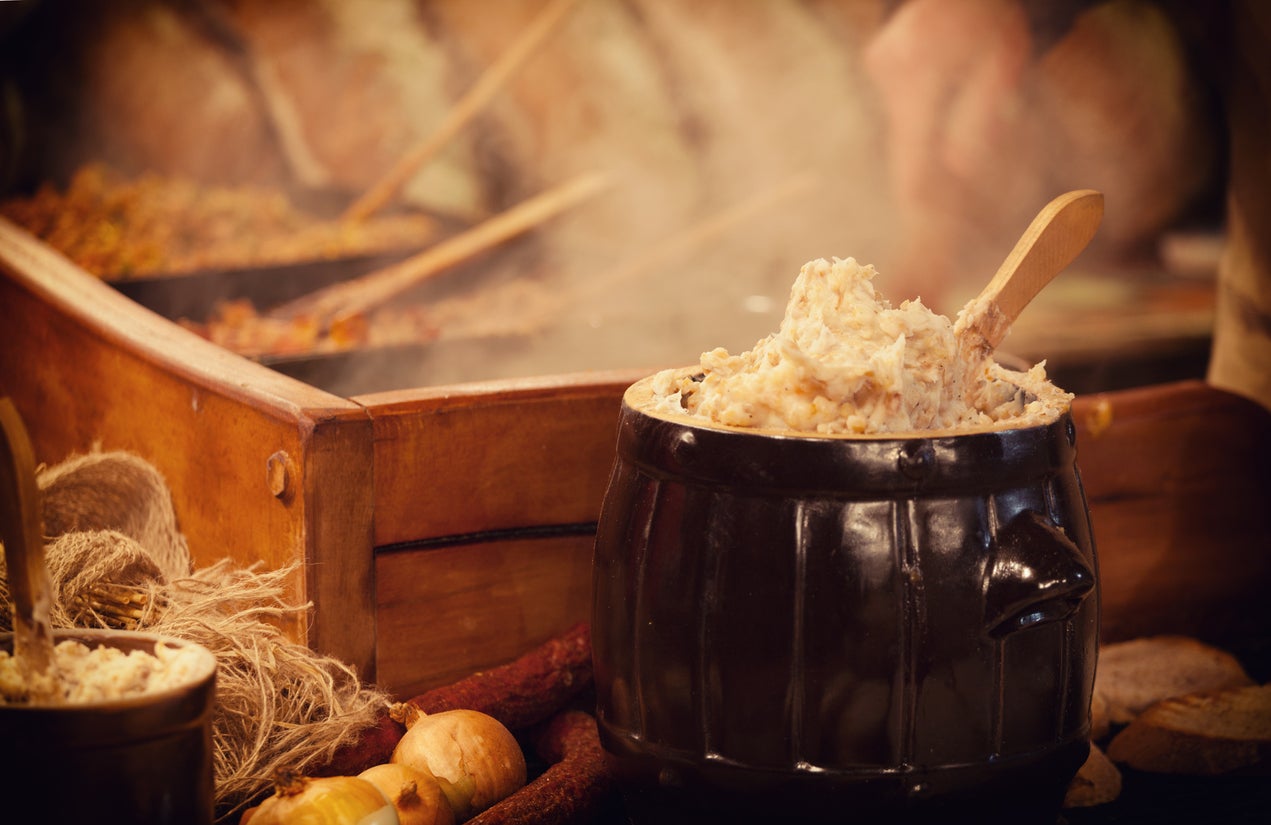
This Polish lard, pronounced 'sma-letz' is made from pig and smothered all over bread.
Smalec can be made from any part of a pig, as long as it has an adequate amount of adipose tissue.