
Ranking Formula 1 drivers across generations is an exercise almost designed to start an argument. Cars, calendars, safety standards and levels of competition have changed enormously since the world championship began, making direct comparisons between eras inherently imperfect.
To see where a consensus might emerge, 10 motorsport journalists from Motorsport, Autosport and Yahoo Sports each submitted their rankings of the 25 greatest F1 drivers of all time. A first-place vote earned 25 points, with 24 for second and so on, down to one point for 25th. The totals from all 10 ballots determined the final ranking.
The agreement was remarkably strong in some places and dramatically different in others. At the very top, it produced something else entirely: a dead heat for No. 1.
Here is how the final top 25 shook out.
25. Jenson Button
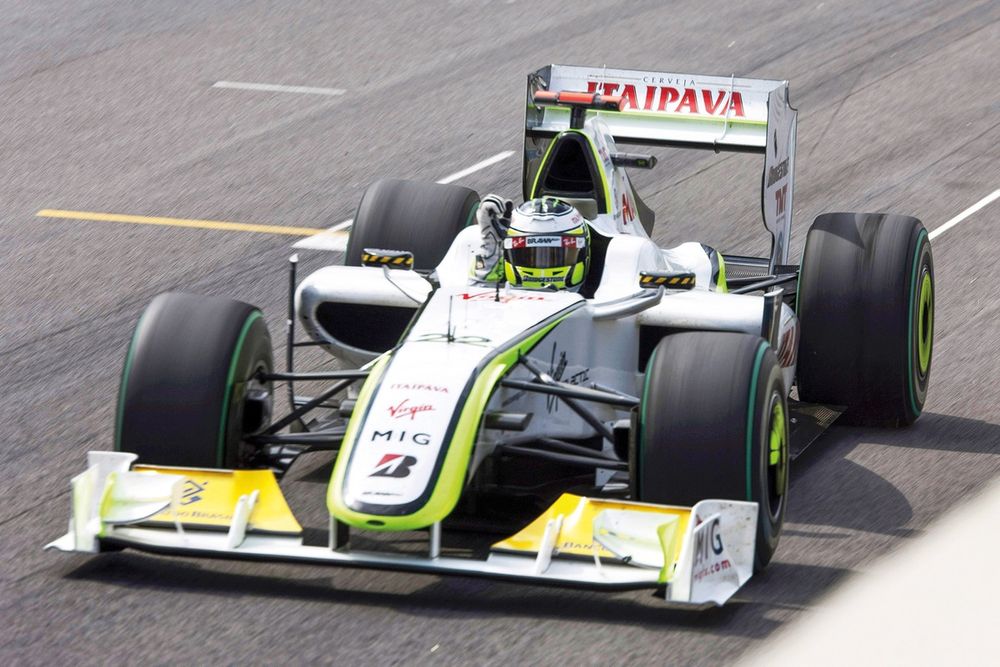
Why he’s here: A world champion whose career combined a spectacular title-winning peak with exceptional longevity: Button raced across 18 F1 seasons, making 309 grand prix starts and winning 15 races. The Brawn story can sometimes make his championship sound like a one-season miracle, but his career was much broader than that.
24. John Surtees

Why he’s here: Surtees was already one of motorsport's greats before establishing himself in Formula 1, but his F1 record stands on its own: he became world champion for Ferrari in 1964 and won six grands prix during his career. His rapid transition from racing motorcycles to cars was extraordinary in its own right: Surtees finished second in only his second world championship grand prix and took pole in his third.
23. Gilles Villeneuve

Why he’s here: Few drivers expose the weakness of judging greatness purely by championships and win totals better than Villeneuve. He won only six grands prix, yet Motorsport's retrospective describes him as one of F1's most respected, fearless and combative drivers. His career ended at just 32 after his fatal accident at Zolder in 1982.
22. Jochen Rindt
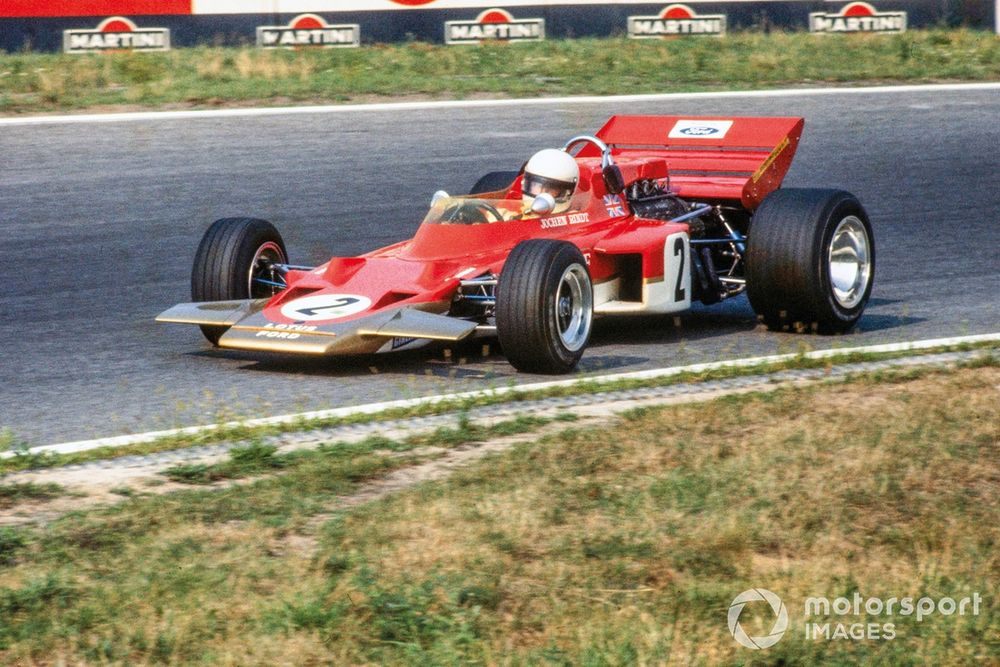
Why he’s here: Rindt's F1 career was brief, but by its end his raw speed had developed into championship-winning form. He made 60 world championship starts, won six grands prix and took 10 poles. His death during practice at Monza in 1970 left enough of a championship lead that he became — and remains — Formula 1's only posthumous world champion.
21. Mario Andretti

Why he’s here: Andretti's F1 reputation shouldn't be reduced to his enormous success elsewhere. At Lotus he helped turn a struggling team back into a winner and ultimately became the 1978 Formula 1 world champion. When the momentous ground-effect Lotus 79 arrived in 1978, Andretti converted that speed into the world championship.
20. Kimi Raikkonen
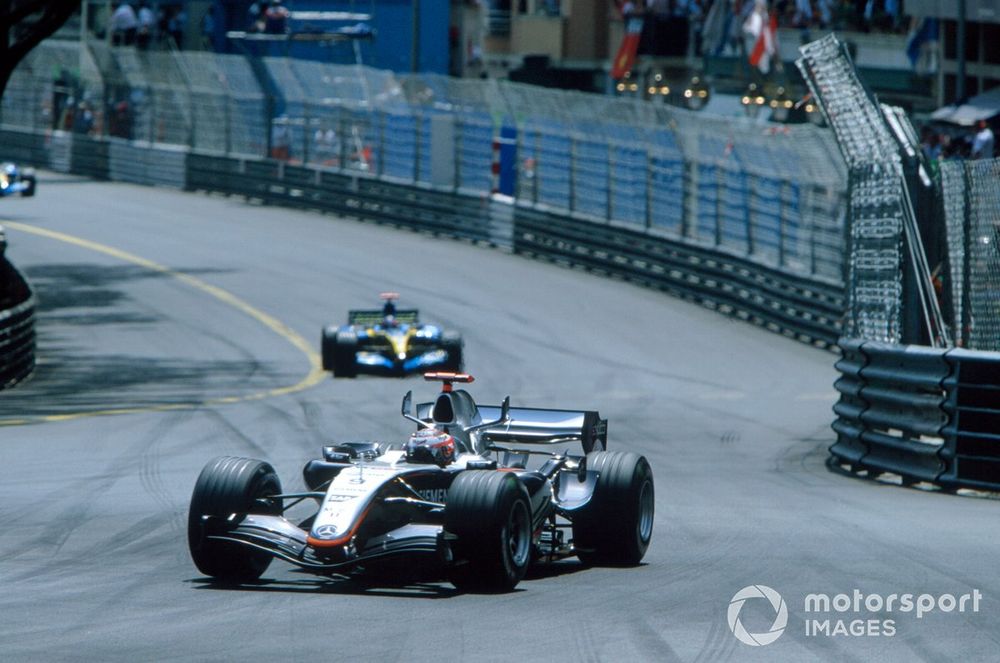
Why he’s here: At his peak, Raikkonen was one of the defining drivers of the 2000s, coming close to championships with McLaren before finally taking Ferrari to the drivers' title in 2007. Raikkonen and Andretti finished level on 63 points, with Raikkonen appearing on all 10 ballots compared with seven for Andretti. Editor Oleg Karpov cast the tiebreaking vote in Raikkonen's favour.
19. Nelson Piquet

Why he’s here: Piquet was one of the defining drivers of Formula 1's intensely competitive 1980s, winning three world championships across seven seasons with Brabham and Williams. His 23 victories included title campaigns in 1981 and 1983 with Brabham before he defeated Williams team-mate Nigel Mansell to claim his third crown in 1987.
18. Emerson Fittipaldi

Why he’s here: Fittipaldi's rise was remarkably quick, winning his first grand prix during his rookie season before becoming world champion with Lotus in 1972 and again with McLaren in 1974. Across 144 world championship starts he won 14 grands prix, while his second title also made him McLaren's first Formula 1 world champion.
17. Mika Hakkinen

Why he’s here: Hakkinen emerged from a career-threatening crash in Adelaide in 1995 to become the driver who ended Michael Schumacher's initial run at the top, winning consecutive world championships for McLaren in 1998 and 1999. The Finn finished his Formula 1 career with 20 grand prix victories and 26 pole positions, with his peak establishing him as Schumacher's defining rival at the end of the 1990s.
16. Nigel Mansell

Why he’s here: Mansell's single world championship understates how frequently he fought at the front across one of Formula 1's most competitive periods. He eventually converted years of near-misses into a dominant 1992 title with Williams, finishing his F1 career with 31 victories, 32 poles and 59 podiums.
15. Jack Brabham

Why he’s here: A three-time world champion whose greatest achievement remains unique in Formula 1 history, Brabham won the 1966 title driving a car bearing his own name. He had already claimed back-to-back championships with Cooper in 1959 and 1960, but his third, achieved after helping create both the team and the technical package behind it, made him the only driver to win the F1 world championship in his own machine.
14. Graham Hill

Why he’s here: Hill combined longevity with two very different championship peaks, winning his first world title for BRM in 1962 before doing it again with Lotus six years later. He won 14 grands prix across his Formula 1 career, while his 1962 campaign was built as much on relentless consistency as outright speed, finishing every race as rival Jim Clark was repeatedly hit by unreliability.
13. Stirling Moss

Why he’s here: Moss remains Formula 1's most successful driver never to win the world championship, with 16 grand prix victories and four consecutive runner-up finishes in the standings from 1955 to 1958. But reducing his case to the titles he never won misses the point: at his peak Moss could win in machinery that had little business beating the dominant factory teams, establishing a reputation for car control that endures.
12. Alberto Ascari

Why he’s here: Ascari was the one driver capable of matching Juan Manuel Fangio at the beginning of Formula 1's world championship era, taking 13 wins and 14 poles from just 32 starts. His back-to-back titles in 1952 and 1953 included a period of extraordinary dominance in which he won six consecutive championship grands prix during the 1952 season alone.
11. Sebastian Vettel

Why he’s here: Vettel's four consecutive championships with Red Bull from 2010 to 2013 made him the defining driver of Formula 1's early-2010s era, while his 53 victories still place him among the most successful grand prix drivers of all time. His championship streak culminated in a dominant 2013 campaign and, by retirement, Vettel had also accumulated 57 poles and 122 podium finishes across 299 starts.
10. Fernando Alonso

Why he’s here: Alonso's two world championships only tell part of the story of a career in which he repeatedly extracted more from his machinery than the standings suggested should have been possible. His remarkable 2012 Ferrari campaign may be the clearest example: driving what was on average only the fourth-fastest car, Alonso took the championship fight to the final race and lost to Vettel by just three points.
9. Jim Clark

Why he’s here: Few careers better combine outright speed and dominance than Clark's: the two-time world champion won 25 grands prix, while his 1963 title season included victories in seven of the 10 races. Even those numbers don't fully capture his advantage at his peak - Clark repeatedly overwhelmed highly accomplished team-mates in equal machinery before his career was cut short by his death in 1968.
8. Niki Lauda
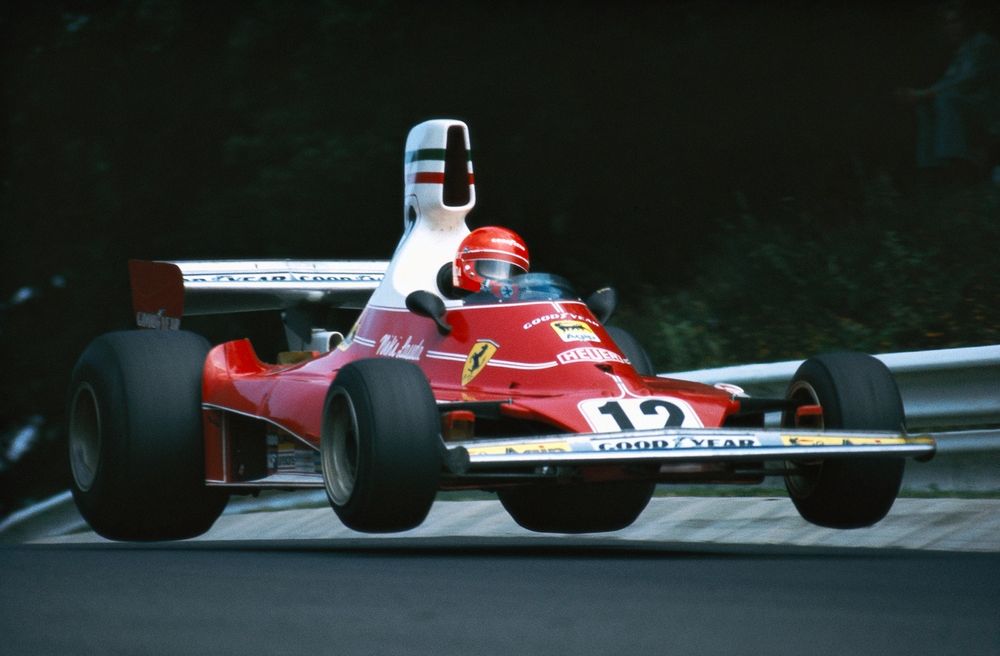
Why he’s here: Lauda combined speed, technical intelligence and extraordinary resilience across a career that produced three world championships and 25 victories. He won two titles with Ferrari in 1975 and 1977 before retiring, returning with McLaren and defeating team-mate Alain Prost by just half a point to claim a remarkable third championship in 1984. Our voters showed unusual agreement on his place among the greats: Lauda finished eighth despite nobody ranking him higher than sixth.
7. Jackie Stewart

Why he’s here: Stewart won three world championships and 27 grands prix during a Formula 1 career lasting just nine seasons, establishing himself as the dominant driver of the period between Jim Clark's death and the emergence of the next generation. His partnership with Ken Tyrrell produced all three of those titles and 25 victories, before Stewart retired as reigning world champion at the end of 1973. Every one of our 10 voters ranked him inside their top 10.
6. Max Verstappen

Why he’s here: Verstappen's place among Formula 1's all-time greats is secured, with four consecutive world championships from 2021 to 2024 and 71 grand prix victories by the summer of 2026. From becoming F1's youngest-ever starter at 17 to winning on his Red Bull debut, his career has been marked by records and periods of overwhelming dominance. All 10 voters ranked Verstappen ninth or higher — but none placed him first or second.
5. Alain Prost

Why he’s here: Prost's four championships and 51 victories made him Formula 1's statistical benchmark before the Schumacher era, but his reputation was built as much on precision and race intelligence as it was outright speed. He won titles with McLaren in 1985, 1986 and 1989, before returning after a year away to take a fourth title, with Williams in 1993. Remarkably, Prost finished fifth in our ranking without receiving a single first-place vote, with every voter instead placing him somewhere between second and ninth.
4. Juan Manuel Fangio
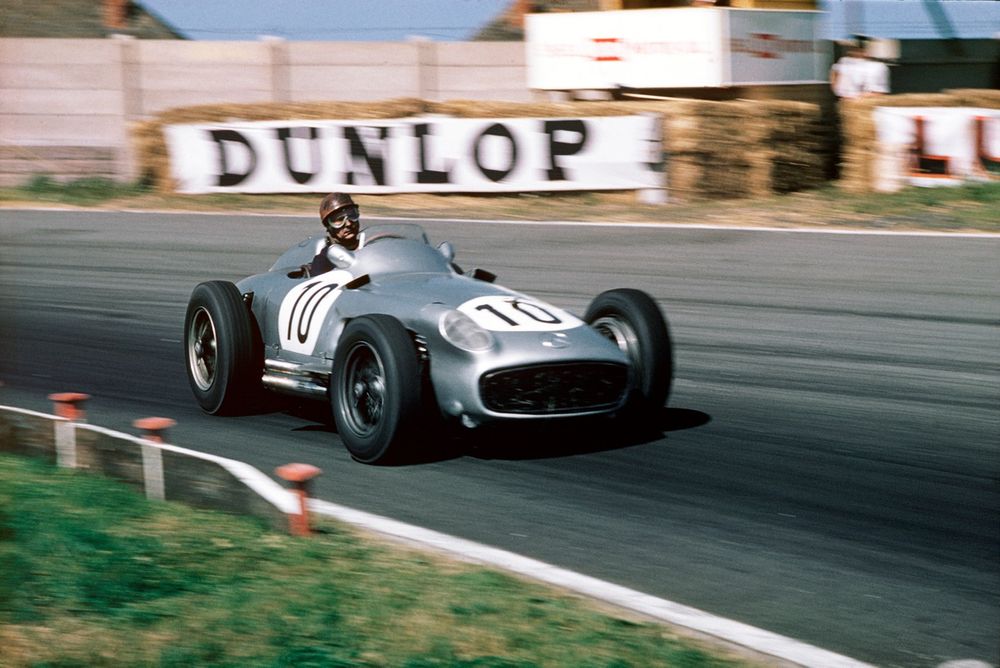
Why he’s here: Fangio set Formula 1’s first benchmark for greatness, winning five world championships in seven full seasons and doing so with four different teams. He took wins in 24 of the 51 world championship grands prix he started - a win rate of almost 50% - and was twice championship runner-up in the only other full seasons he contested. Two of our voters ranked Fangio first overall.
3. Ayrton Senna

Why he’s here: Senna combined extraordinary qualifying speed with the ability to produce some of Formula 1’s most enduring performances under pressure, winning three world championships, 41 grands prix and taking 65 pole positions from 161 starts. He finished only 12 points behind our two leaders, appearing in the top five on nine of the 10 ballots and never being ranked lower than seventh.
T-1. Michael Schumacher

Why he’s here: Schumacher transformed Formula 1’s record book, winning seven world championships and 91 grands prix across a career that included two titles with Benetton before an unprecedented run of five consecutive championships with Ferrari from 2000 to 2004. Our voters were similarly consistent: nine of the 10 ranked him inside their top three, and his combined score of 235 points left him level at the very top.
T-1. Lewis Hamilton
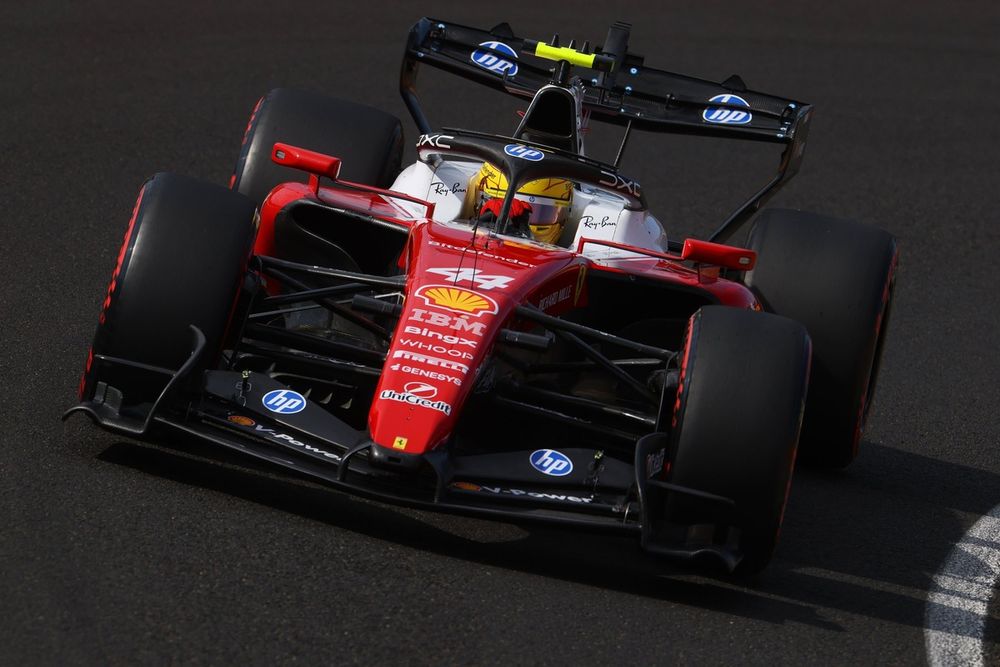
Why he’s here: Hamilton matched Schumacher’s seven world championships while surpassing him to become Formula 1’s all-time leader in both grand prix victories and pole positions - building a career that has spanned title-winning success with McLaren and Mercedes before adding a first Ferrari victory in 2026. Hamilton received more first-place votes than any other driver on our panel, four, but his final total of 235 points was exactly the same as Schumacher’s.
YOU DECIDE: HAMILTON OR SCHUMACHER?
Ten ballots. Two hundred and fifty selections. And after all of them, Formula 1's two seven-time world champions finished on exactly 235 points apiece.
Hamilton was ranked ahead of Schumacher on six of the 10 individual ballots, and received four first-place votes to Schumacher's two. But when every position on every ballot was scored, neither could separate himself from the other.
So we'll leave the final call to you.
PICK YOUR F1 MOUNT RUSHMORE
The vote for No. 1 isn't the only decision we're handing to readers. From the 25 drivers above, choose the four who belong on your personal Formula 1 Mount Rushmore.
And if you haven't already settled the question at the top, there's still one vote left to cast: