
In the rare event that your electric vehicle battery reaches 0% state of charge while road-tripping, rest assured that your car won’t suddenly come to a grinding halt in the middle of the road.
Like gas cars, which all have a built-in fuel buffer even when the fuel gauge reads empty, EVs also have a similar reserve in the “tank” when the displayed state of charge hits 0%.
As Kyle Conner of the Out Of Spec YouTube channel recently demonstrated in his 2026 Tesla Model 3 Premium—previously called the Long Range rear-wheel-drive trim—the reserve energy in some modern EVs is pretty impressive.

He took several steps before running the Model 3 until it died. He first preconditioned the battery to ensure it was nice and toasty, ready for a charge when it would die. Once that was done, he drove the EV on a closed circuit for safety, as running out of charge in the middle of a public road can be dangerous.
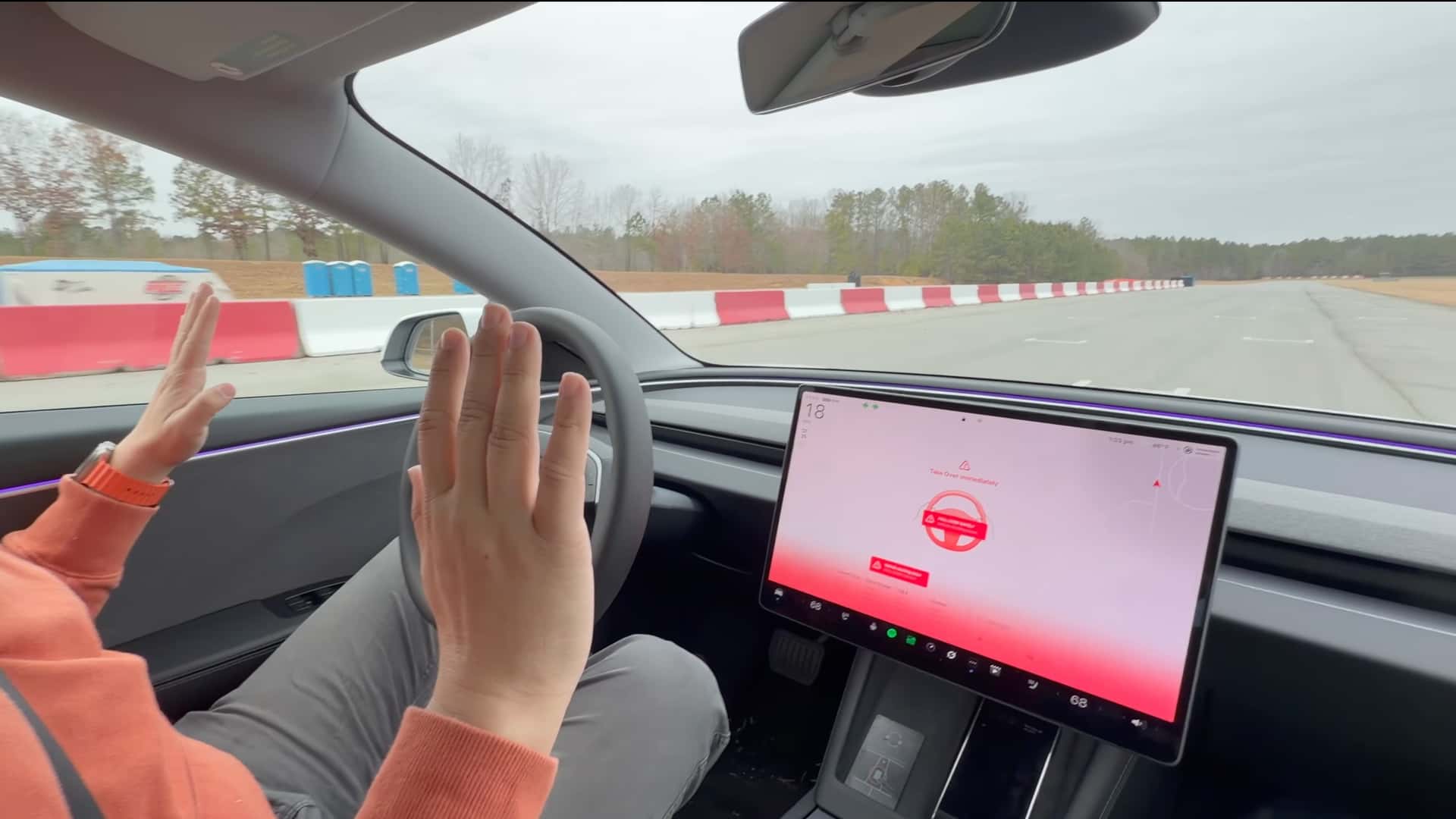
The test started at 5% state of charge, and the trip computer was reset when the indicated battery percentage reached 0% to find out exactly how far the EV would go below that threshold. And finally, the Model 3 was driven with Tesla’s Full Self-Driving (FSD) advanced driver assistance system activated, to see how it handles low-battery conditions such as this.
When the Model 3's screen showed a 0% state of charge, it still displayed 2 miles of range remaining. But here's the unexpected part: Once the displayed remaining range was 0 miles, the Model 3 continued driving for another 31 miles. After hitting 0%, the Model 3 consumed nearly 6 kilowatt-hours of electricity, proving that Tesla leaves a big buffer for emergencies.
The Premium trim is already one of the longest-range electric sedans money can buy, with 363 miles of EPA range.

It covered that distance with an impressive efficiency of 192.5 watt-hours per mile, which translates to approximately 5 miles per kWh. FSD then asked the driver to take over and gradually stopped the car, displaying warnings on the screen that the vehicle was about to shut down.
Not all EVs will have a similarly large buffer, but all automakers ensure there’s some energy remaining when the cluster reads 0% state of charge, giving owners a few extra miles of range to reach the next charging station.
Still, you should try not to rely on the reserve battery energy—in part because it's best practice for battery health not to discharge a car all the way to empty. Planning ahead and knowing your charging stops is always advisable. But in the rare event that you do find yourself in a sticky situation, know that the extra juice in the pack will have your back when you need it the most.
Contact the author: suvrat.kothari@insideevs.com