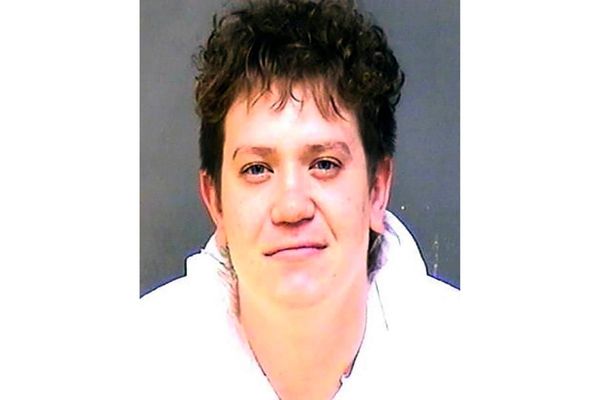
A series of portraits celebrating the "everyday heroes" in working class communities over the last 25 years, including in Moss Side and Salford, are currently on display in a major UK exhibition.
Now and Then by documentary photographer Daniel Meadows is on show at Bodleian Libraries, at the University of Oxford, captures everyday life through a lens.
Born in Gloucestershire in 1952, Daniel moved to Moss Side at just twenty years old in 1972 and rented a barber shop on Greame Street.
The barber shop was used as a ‘Free Photographic Shop’ for two months where people could come in and get their portrait taken for free.

“A long way from home and with 1960s counterculture still buzzing in the air, my curiosity was insatiable. I was a doer,” Daniel Meadows says in his latest book Now and Then: England 1970-2015, which accompanies the exhibition.
“Identifying strongly with those of my generation who were searching out alternative approaches to doing just about everything, I wanted to find a way of doing documentary work with people, not to them.
"Running free portrait sessions seemed to provide the solution.
“In Moss Side I found myself at the centre of a massive programme of urban regeneration.
"Ageing Victorian housing stock was being demolished wholesale.
"Homes were taken down and their occupants resettled. I wanted to document the people before they moved on.”

After two months, Daniel had to close the barber shop due to a lack of funds but he instantly had plans to up the ante.
Travelling 10,000 miles in a ‘Free Photographic Omnibus’, a converted double-decker bus, Daniel would set up in towns and cities across the country for impromptu portrait sessions.
“My rule of thumb when doing documentary work is always to try to treat people as individuals, not types,” Daniel says.
“I do it not to champion the values of others but because noticing, listening and savouring are in themselves things I value.”

The Bodleian Libraries exhibition includes a series of portrait photographs and digital stories made using materials from Daniel’s archive of journals, negatives, and newspaper cuttings.
Over his 45-year career, Daniel has become recognised for celebrating people and the work they did, including many long-forgotten trades such as an engineer for a steam driven cotton mill and the steeplejack.
Read more of today's top stories
In 1973, while studying at Manchester Polytechnic, Daniel teamed up with British documentary photographer Martin Parr after hearing that Coronation Street would soon stop filming on location.
Urban regeneration meant many of Salford's Victorian terraced housing were scheduled for demolition.

“Martin and I, our curiosity aroused, walked the streets of Salford in search of former ‘Street’ locations to document,” Daniel explained.
“The one we settled on, June Street in Ordsall, consisted of twenty houses that were still fully occupied.
“We decided to photograph each household, with the residents – adults, children, dogs, cats, the budgie and, in one case, a tortoise – all sitting together in their front rooms, before the bulldozers arrived.”

Bodleian Libraries Oxford says the exhibition of Daniel’s work “charts major social changes in work” and provides a unique perspective on British society.
Richard Ovenden, librarian at the Bodleian Library, said: “Daniel Meadows is one of Britain’s national treasures.
"He is one of our great documentary photographers.
"His work is both concerned and humane, and engages individuals and communities thoughtfully and sympathetically.”
The library has also been gifted Daniel’s archive which Richard says will become a “major resource for scholars, and an inspiration for photographers” for years to come.
Daniel Meadows: Now and Then is exhibited at Weston Library, Bodleian Libraries Oxford until November 24th.
The accompanying book, Daniel Meadows: Now and Then: England 1970-2015, is available now .