What is the smallest country in the world? Vatican City holds that title, a nation so tiny you can walk across it in an hour, yet it has its own army, currency, and postal system.
Monaco could fit inside New York City's Central Park. San Marino has been a sovereign nation for longer than most empires that tried to swallow it.
These are countries so small they barely register on maps. Some have populations smaller than a high school.
Some you've never heard of. All of them have something bizarre that makes them stand out. The combined land area of the 10 smallest countries in the world is barely larger than that of the state of Rhode Island, and yet they thrive.
If you think you know about countries, these 10 are about to change that.
#1 Malta
The flag of Malta is the only one in the world that carries a medal. The medal, which is The George’s Cross, was awarded to the nation by King George VI in 1942.
This medal was awarded to Malta in honor of its bravery during the Second World War. This is because during the war between 1940 and 1942, the country was estimated to have endured over 3,000 air raids.
During this period, the island's entire population of 270,000 refused to surrender and instead lived underground in unhealthy conditions. According to the BBC, Malta was regarded as one of the most heavily bombed places during WWII.
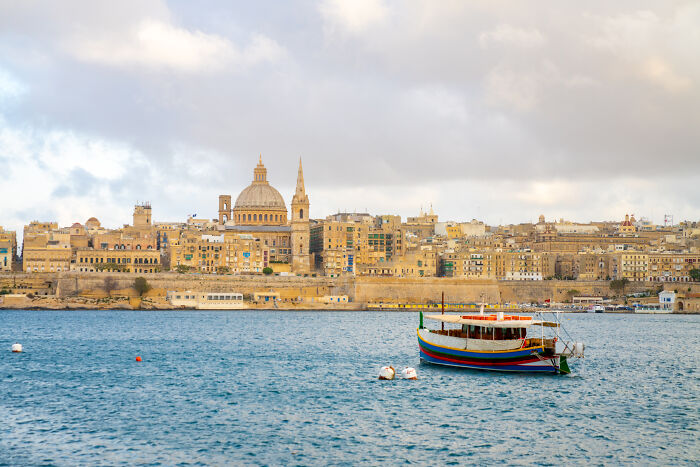
While about half the size of the city of Chicago, Malta's Ġgantija temples date back to around 3600 BC, predating the Pyramids of Giza and making them among the oldest man-made structures on Earth.
The nation has been ruled by the Phoenicians, Romans, Arabs, Normans, and Napoleon. The temples are home to some of the oldest man-made structures, with religion woven into their very fabric.
The country also has almost 360 churches within its fairly small land area. This is mostly because the archipelago is Roman Catholic by origin, and the majority of the population identifies as Catholic.
© Photo: wirestock / Magnific
#2 Vatican City
You can walk across the entire country of Vatican City in just about an hour. The entire country covers about 0.44 square kilometers, making it the world’s smallest nation. It also has a population of around 800 people, according to the World Population Review.
It is the only country to be designated a UNESCO World Heritage Site in its entirety because of its Christian history and remarkable infrastructure.
Vatican City officially became an independent state in 1929 and has since then been mostly self-sustaining, yet it doesn’t have a single prison.
According to Vanguard, there are only a few small jail cells for temporary detention for those awaiting trial. Any convict serving a long-term sentence is instead kept in an Italian prison.
This is ironic, given that the country also has one of the highest per-capita crime rates, largely due to year-round tourist activity.
Despite this, Vatican City is the spiritual home to billions of Catholics in the world because it is home to the Pope, who is the Head of the Church.
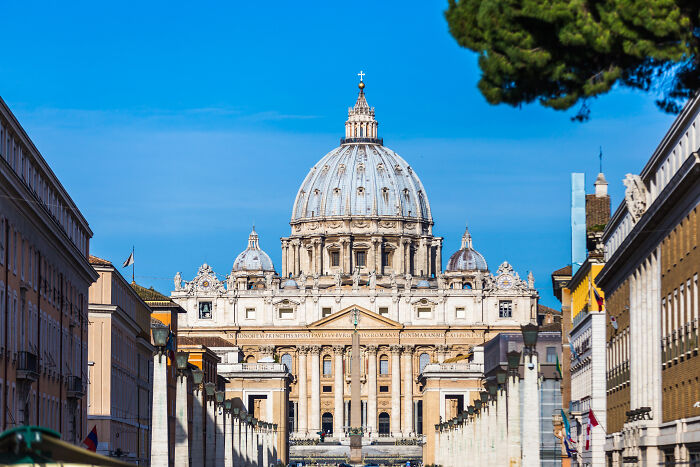
One of the largest churches in the world, St Peter's Basilica, is also one of the major tourist attractions in Vatican City. Does the little country of Vatican City hold a place in your faith or your memories?
© Photo: yanalya / Magnific
#3 Monaco
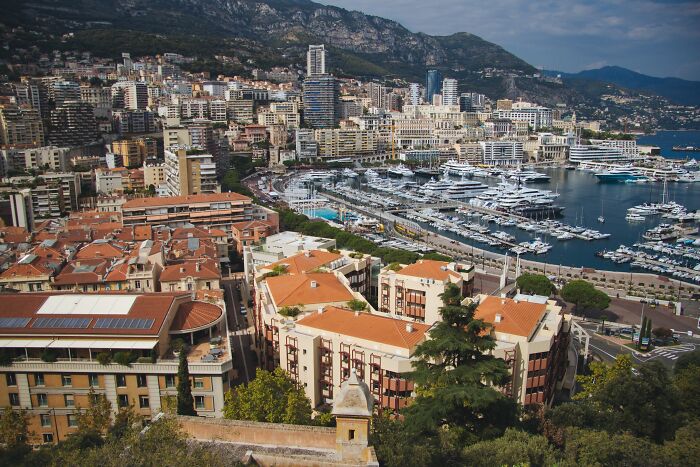
Monaco is home to Formula 1 and the world’s most famous casino, but it legally bans its citizens from entering.
With an area of 3.41 square kilometers, Monaco, situated along the French Riviera on the Mediterranean coastline, is the second-smallest country in the world.
The entire country can comfortably fit into New York City’s Central Park. Unlike Vatican City, though, the nation has a large population of about 38,000 people, making it one of the most densely populated in the world.
This small size clearly doesn’t limit the nation itself, as the Principality of Monaco is famous for its wealth and booming economy. The high class in Monaco is not by coincidence, but because of its no-income-tax laws, drawing the 1% to build their wealth there.
CNN Travel reports that almost 70% of residents are reportedly millionaires. Sports cars littering the roads and yachts sitting idle on the water are all you need to know you’re in Monaco.
This makes it even more ironic that these wealthy residents are not allowed to gamble or even work at casinos in Monaco.
Some Reddit users talk about their experience of being caught unawares at passport checkpoints, where they were asked whether they were Monégasque.
Is the government just protecting its own people from losing their money? How did you feel spending time in the city of the wealthy?
© Photo: wirestock / Magnific
#4 San Marino
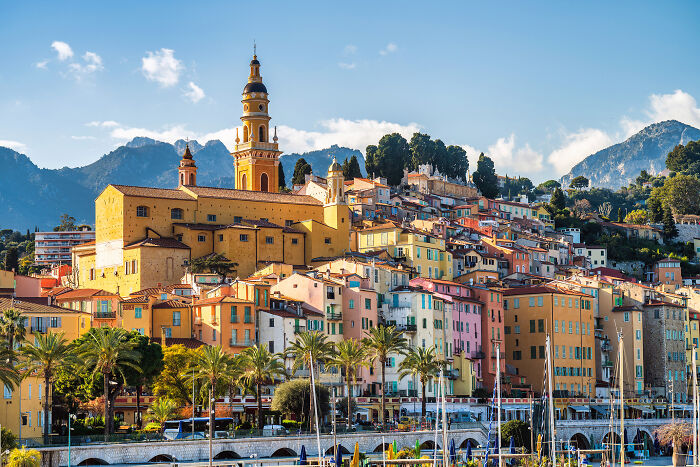
Referred to as the “stubborn old man of Europe” by Slate, San Marino is remarkable for having held on to its independence for centuries despite its location.
The world’s oldest surviving republic, surrounded by Italy, has outlasted the Roman Empire, two World Wars, and Italy's unification.
The nation is about 61 square kilometers in size, which is a huge jump from the previous two on this list, but still one of the smallest in the world.
San Marino has a rich heritage, with tourists from all over the world visiting its cultural sites and museums.
The little country is especially proud of a letter from Abraham Lincoln, who wrote to San Marino's Captains Regent in 1861, calling the republic "one of the most honored throughout history", a response to their offer of honorary citizenship to the then-President of the United States.
© Photo: frimufilms / Magnific
#5 Liechtensten
How would you like to rent a whole country for a day? Well, according to Wired, if you had $70,000 in 2011, you could have rented the entire nation of Liechtenstein on Airbnb.
The country is about 2.6 times the size of San Marino, with an area of about 160 square kilometers, yet it remains one of the smallest in the world. It is also one of only two countries in the world (alongside Uzbekistan) that are doubly landlocked.
This means the country is bordered by two other landlocked nations, so two borders must be crossed to reach the ocean. Air travel is also impossible, as the country has no airport.
According to The Atlantic, sometime in 2010, Rapper Snoop Dogg tried to rent out Liechtenstein for a music video, but was declined due to short notice.
The following year, the country was listed on Airbnb as available for rent. This unbelievable offer had strict rules but also allowed the renter to rename streets and print their own temporary currency.
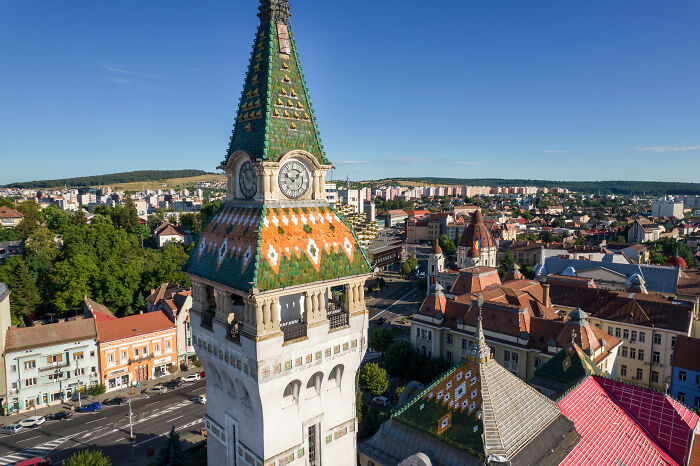
When they’re not putting their country up for rent, the people of Liechtenstein are gathering at the Vaduz Castle for their annual party.
On August 15, all residents and visitors come to the castle to celebrate National Day with the royal family. You might want to reschedule your next trip to meet up with the next party this year.
© Photo: frimufilms / Magnific
#6 Tuvalu
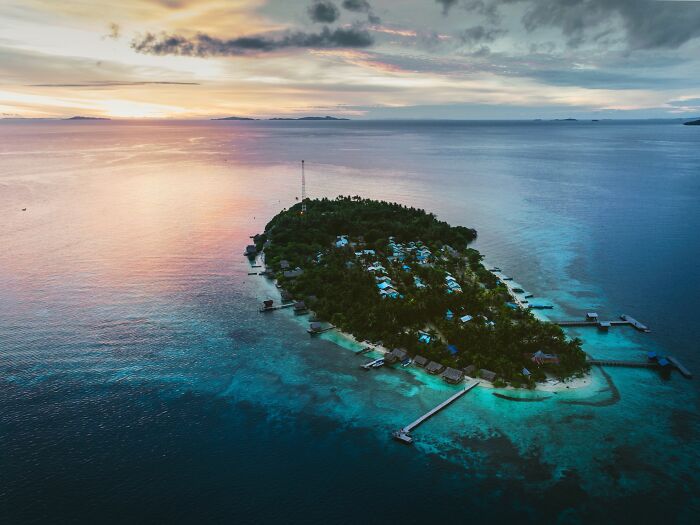
A sovereign nation the size of Washington, D.C.’s National Mall that owns one of the most valuable internet domains ever. Tuvalu and its capital atoll, Funafuti, hit the jackpot in the 1990s because of its name.
The country was assigned the domain “.tv” because that was already its country code. It wasn’t until later that the value of the internet domain was recognized, and Tuvalu began leasing the rights to corporations for revenue.
All of a sudden, a fairly poor nation at the time had money to install electricity and create scholarships. A Reddit post also notes that the money enabled Tuvalu to pay the United Nations entry fee and finally join the United Nations after many years.
According to The Guardian, in 2022, Tuvalu's Foreign Minister announced that the country was sinking due to climate change and rising sea levels.
And since it is an island nation, there would be nowhere to run to if the water around keeps rising. For this reason, the country plans to create a digital version of itself in the metaverse to preserve its history.
While it is sad news, Tuvalu now looks to become the world’s first digital nation. Exoticca lists Tuvalu as the least-visited country in the world, most likely owing to the island's remoteness. Are you looking to increase those numbers soon?
© Photo: wirestock / Magnific
#7 Maldives
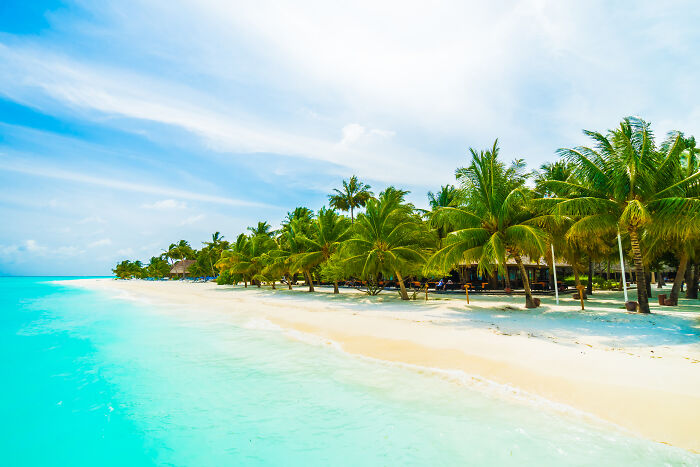
The Maldives, with an average ground elevation of 5 feet above sea level, is the world’s lowest-lying country.
The highest natural point in the entire country is only about 8 feet above sea level, according to the Center for South Asian and Middle Eastern Studies. With an area of only 298 square kilometers, this country is also the smallest in the Asian continent.
The archipelago is made up of about 1,200 islands, but only about 200 are occupied by its 540,000 residents and visitors.
These islands are famous travel destinations, especially for the beautiful beaches. The white sand on the beach is made mostly from the excreta of parrotfish on the beach that feed on coral reefs.
Like Tuvalu, the Maldives is also threatened by rising sea levels and severe cyclones driven by climate change.
According to the Asian Disaster Preparedness Center, about 80% of the country is estimated to be uninhabitable by 2050. This would mean overpopulation of the country's urban areas in the years to come due to the migration of island dwellers.
The Global Center on Adaptation reports that the Government has been developing an artificial island, Hulhumale, for relocation. Would this year’s vacation be the Maldives or Hulhumale for you?
© Photo: Lifeforstock / Magnific
#8 Nauru
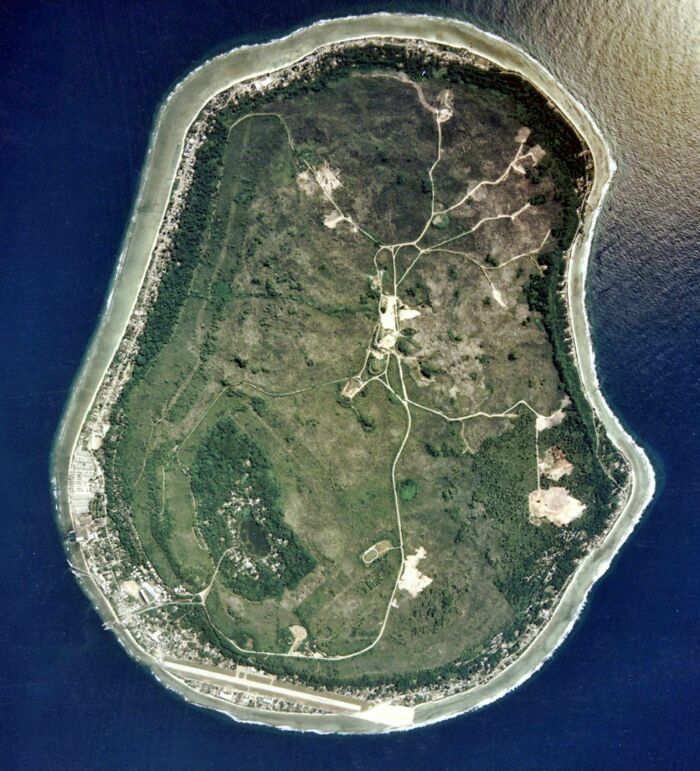
The world’s smallest island nation built wealth from bird droppings. Literally.
Over millions of years, seabirds roosting on Nauru from across the Pacific Ocean built up ‘guano’ that calcified the earth. This, in turn, created rocks rich in highly pure phosphate that could be used to make valuable fertilizer.
This discovery drew the attention of Germany and, after WW1, of the British, who began mining phosphate from the island.
The Dark Atlas reports that Nauru only got a measly 2% of the mining revenue from the British for years, and by then, almost 80% of the island’s surface had been mined.
This lasted until their independence in 1968 and until the buyback of extraction rights in 1970.
The Nauru Phosphate Corporation accrued up to $2.5 billion over the next decade. By 1980, this country, with a population of 4,000, was reported to have one of the highest GDP per capita in the world.
The Naurans ran through their wealth as soon as they found it, with a series of bad investments in real estate and, for some reason, theatre.
Yeah, they invested $4 million into a West End production. By 2001, Nauru was bankrupt. This massive economic failure is one for the history books, as the nation now relies on aid from Australia, fishing license fees, and the sale of citizenship.
© Photo: imgur.com
#9 Marshall Islands
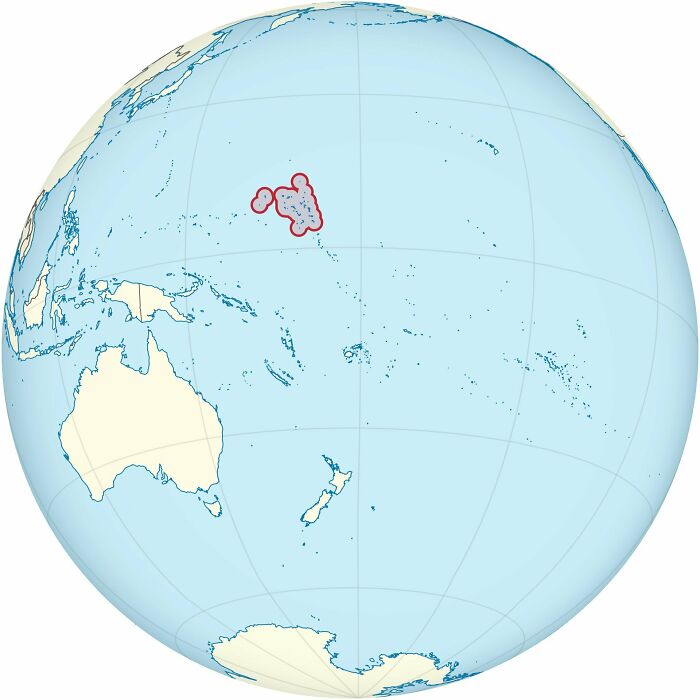
One of the smallest countries in the world, the Marshall Islands became the site of the United States' nuclear weapons testing program, at enormous cost to its land, environment, and people.
Between 1946 and 1958, the United States detonated 67 nuclear bombs in the Marshall Islands as performance tests. The Nuclear Museum reports that there were 23 detonations at Bikini Atoll and 44 at Enewetak Atoll, but the effects were widespread in the country.
By 1960, the US began cleaning up the contamination by placing a giant concrete dome called 'The Tomb' on Enewetak Atoll. This was used to cover up the enormous amount of radioactive soil and debris left behind by the tests.
For the sake of this testing, residents of both atolls were forced to relocate, and some never returned home. The radiation levels in the Bikini atoll were deemed too high to be habitable because of fallout. This place has now been designated a UNESCO World Heritage Site for its significance to US history.
Was the Marshallese sacrifice worth it for the United States' growth?
© Photo: @MyLatinLife / X
#10 Saint Kitts And Nevis
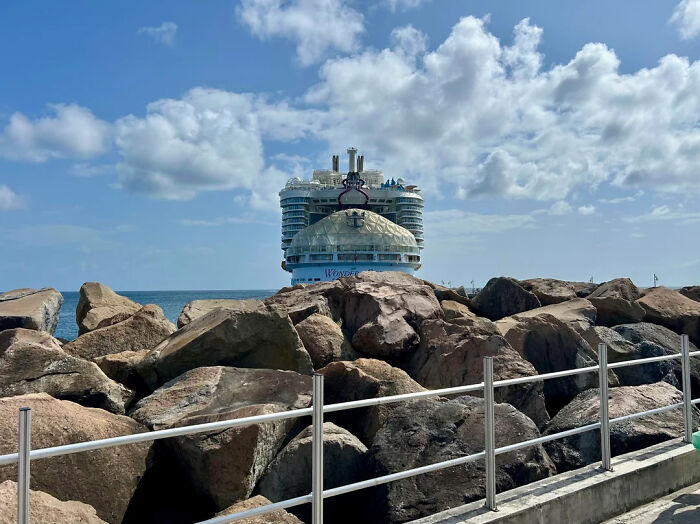
As the name suggests, the small country is a dual-island federation in the Caribbean.
The federation, with an area of about 261 square kilometers and a population of about 47,000, is the smallest sovereign microstate in the Americas.
Nevis is the birthplace of Alexander Hamilton, a United States Founding Father and the first US Treasury Secretary. Nevis is permanently covered with clouds, hence its name, which translates to “snow”.
Also for the same reason, the locals joke that the island is wearing a wig.
© Photo: rndmsmpls / Reddit
From a country you can walk across in an hour to islands quietly disappearing beneath rising seas, the world's smallest nations prove that size has nothing to do with significance.
Many have outlasted empires, funded revolutions, and hosted some of history's most dramatic moments, all from a few hundred square kilometers or less.
Whether you're planning a visit or simply adding them to your mental map of the world, these 10 countries are worth knowing.