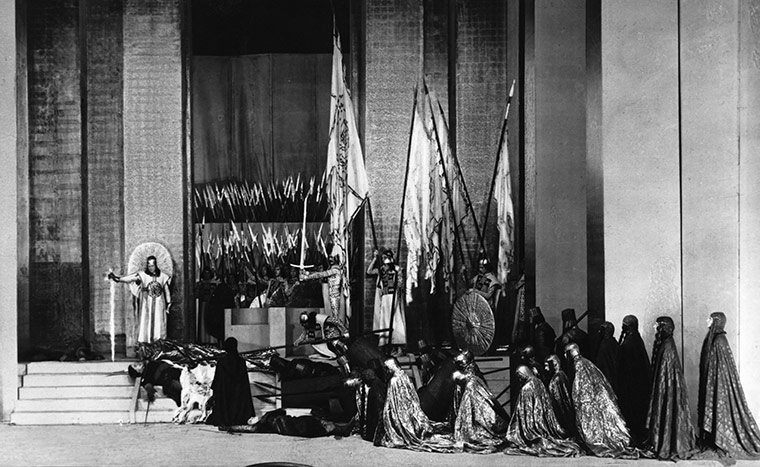
Edward Gordon Craig was a pioneer of modern theatre design who produced little on the stage. He became a “hermit visionary” whose belief in the imaginative power of lighting and the beauty of harmonious form greatly influenced Peter Brook. For Stanislavski’s 1912 production of Hamlet at the Moscow Art theatre, he planned to drape Claudius and Gertrude in a cloak that flowed over the entire stage; the sycophants of the court were to poke through the fabric, their golden mantles reflecting on gilt walls; sliding screens would effect scene changes. Brook called him “an inspiration and a warning” Photograph: Corbis
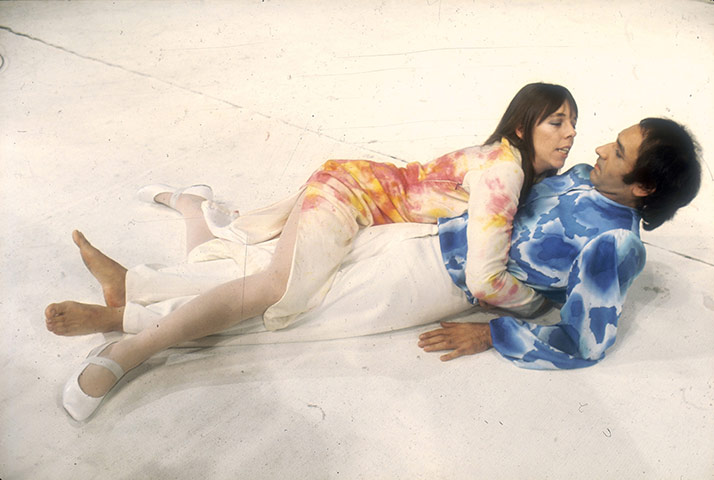
Peter Brook’s 1970 production of Shakespeare’s hitherto gauzy play was a design landmark. Jonathan Miller said it changed our minds about the way things could be staged: “It liberated us all from literal representation.” That freedom was largely visual. Sally Jacobs’s circus design was a plain white box illuminated by a fierce white light. The fairies swung in on trapezes and stalked on stilts; Puck’s love potion was a spinning plate on a rod. Huge wire coils sprang at the lovers, entrapping them in a forest which was more than ever a mental landscape Photograph: Reg Wilson/RCS

This was the design that remade a play. For Stephen Daldry’s 1992 production, influenced by expressionism and film noir, Ian MacNeil suggested the collision of eras and classes in Priestley’s drama, written towards the end of the second world war but set in 1912. The precarious home of a bourgeois family was perched on stilts; its walls swung open like those of a doll’s house; its proportions were skewed, its inhabitants seeming to bulge out of it. Outside, children played in a bombed-out street. A drama that had been regarded as a theatrical warhorse suddenly looked politically urgent Photograph: PR

Paul Brown brings the natural world lusciously on to the stage. He has carpeted the Gainsborough studios with grass and made a field of sunflowers grow in an old coach station. In 2000 he created a wonderfully watery landscape for Jonathan Kent’s production of The Tempest. A giant lake flooded the Almeida stage, bordered by rocks and debris; at the back, Prospero brooded over the action in his study. A hole was rent in the roof, which enabled Ariel (played by Aidan Gillen, above) to dangle from on high and never be earthbound. The action leapt from one fine image to another Photograph: Tristram Kenton
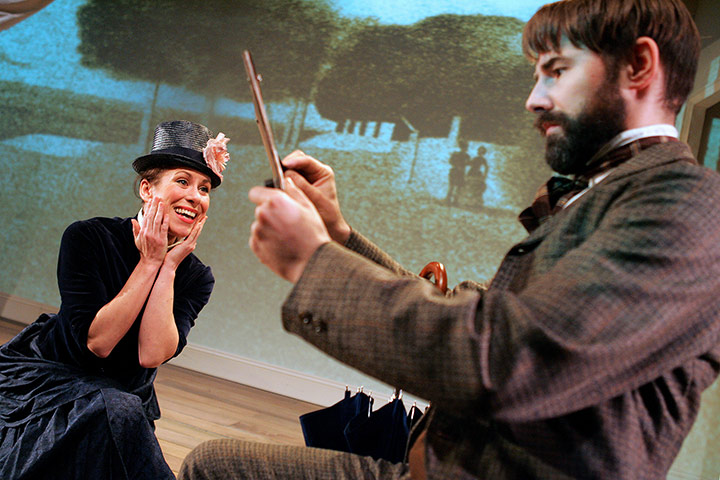
This was the first seamless blend of high and low tech. At the Menier Chocolate Factory in 2005, Sam Buntrock brought together David Farley (set and costumes) and Timothy Bird (projection) to realise Stephen Sondheim’s shimmering tribute to the pointillist Georges Seurat. Against an acid-green background, a white curtain was turned by video animation into a tree, washed with lime-coloured light, its branches picked out in dark strokes. Cartoon dogs capered on mini screens. Seurat’s painting came together as a background landscape, then as a framed object. The wit looked effortless Photograph: Tristram Kenton
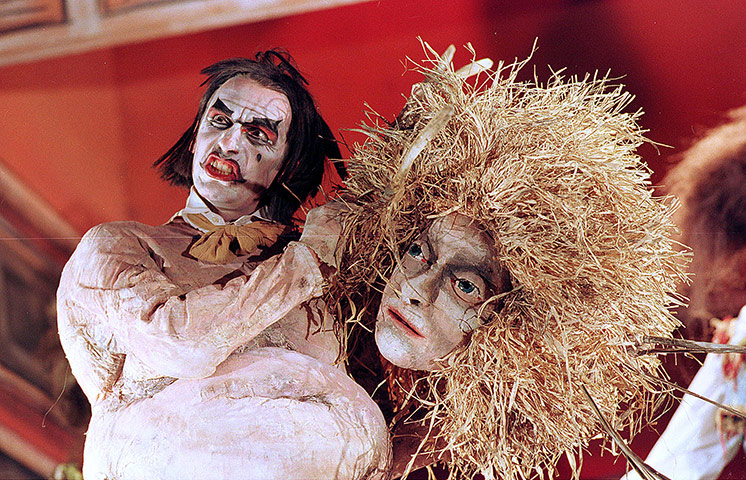
One of the most imaginative shows of the past 20 years was helped to grisly glory because its creators fused the roles of director and designer. In 1998 Julian Crouch and Phelim McDermott brought Heinrich Hoffmann’s cautionary tales to life in a toy-theatre set with painted flouncy curtains, cutout cardboard furniture and doors that required an adult to stoop. Fierce puppets towered above the actors; a bulging Struwwelpeter head goggled over the proscenium arch; the girl who played with matches and burnt to death wore layers of flame-coloured petticoats which frothed over her body Photograph: Tristram Kenton

This was the moment, in 2006, when immersive theatre took off. In a 1,500 sq ft warehouse in Wapping, Punchdrunk created an alternative world through which spectators wandered at will. Inspired by Goethe’s Faust and by the tranced interiors of Edward Hopper, the company brought necromancy to smalltown 50s America in an exquisite series of installations: a scented forest of Christmas trees; a motel with skimpy coverlets on the bed and fire instructions framed under cracked glass; a laboratory stacked with clouded vessels and peculiar roots; a diner, a cinema, a general store. The story was in the design Photograph: PR
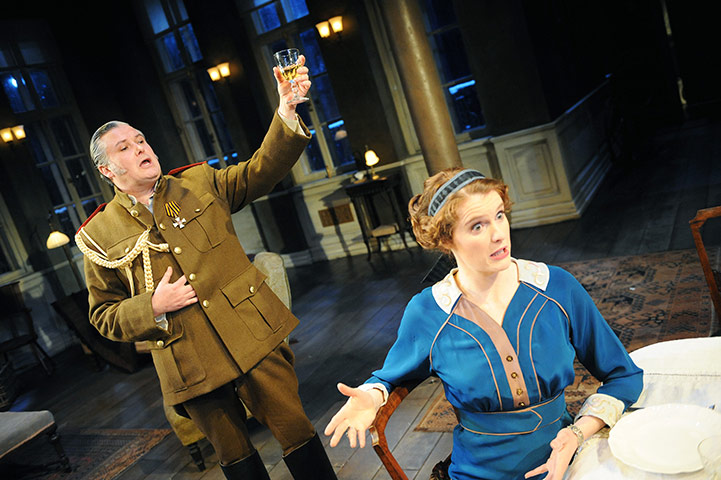
Bunny Christie’s designs are bold. She has specialised in sensationally split sets, layering the Lyttelton stage to make a Glasgow tenement and carving up the West Yorkshire Playhouse to suggest the two halves of a divided mind. Last year, for Howard Davies’s production of Mikhail Bulgakov’s The White Guard, she expressed the flux of the 1917 October revolution by a design that was in constant motion. When a drunk character toppled from piano to pillar, the audience caught his tipsiness: the entire stage receded. As a meticulously detailed sitting room glided into field headquarters, an entire way of life was made to dissolve Photograph: Tristram Kenton
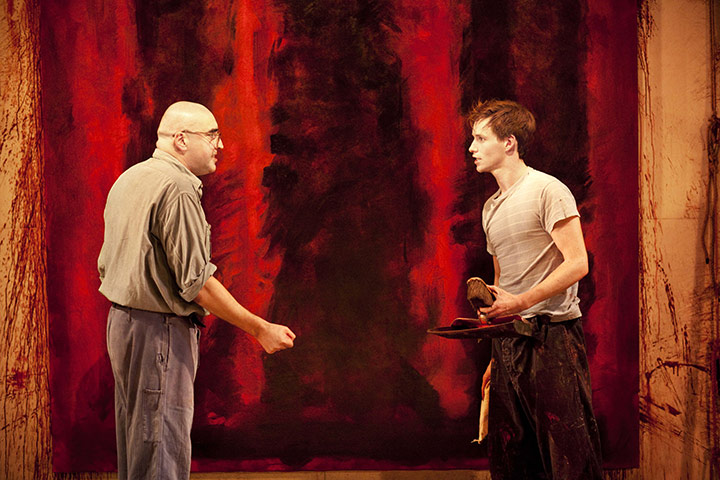
For John Logan’s 2009 play about Mark Rothko, Christopher Oram brilliantly realised the mind of the painter who said that big paintings were like dramas. At the back of the Donmar stage hung canvases: great slabs of red and black which glowed and faded under Neil Austin’s lighting. When these were taken away they revealed a white oblong framed on three sides by dripping scarlet: it looked like a blood-drenched proscenium arch. This is Oram’s great gift: to find out the heart of a play and enable its action. He is one of the great lights of modern stage design Photograph: Johan Persson/PR
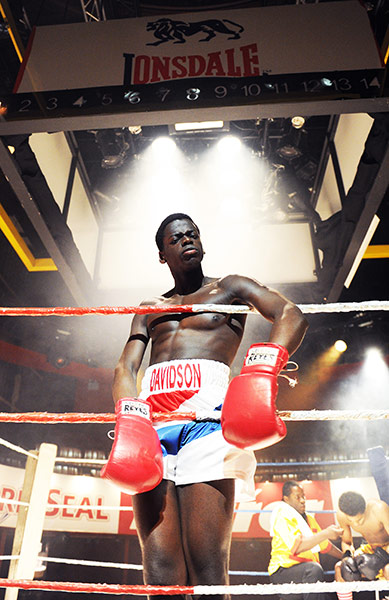
Miriam Buether is the designer of the big sweep, the grand statement. She has turned the Royal Court into a tube carriage, with audience and actors cheek to cheek; she has flooded the stage of the Young Vic, and split apart the Cottesloe to dramatise climate change. For Roy Williams’s 2010 boxing drama, she turned the Royal Court into a fighting ring. Giant punchbags dangled from the ceiling; sponsors’ adverts covered the walls; fluorescent tubes glared down on the fighters, whose every jab and punch was caught several times in the mirrors that were wrapped around the stage. It was a knockout Photograph: Tristram Kenton