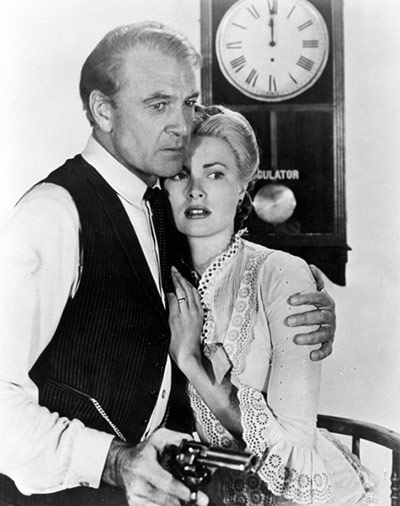
Born in Montana, Cooper became an authentic star in the first major sound western, The Virginian (1929), heir apparent to the great silent cowboy William S Hart. For the following 30 years, his rangy, laconic presence was a permanent feature of frontier movies including three DeMille epics. His greatest period was the 1950s when he won an Oscar in the anti-McCarthy allegory High Noon, co-starred with Burt Lancaster in Vera Cruz and made Man of the West. When he died in 1961, Corriere della Sera wrote: “Perhaps with him there has ended a certain America: that of the frontier and of innocence” Photograph: SNAP/Rex Features
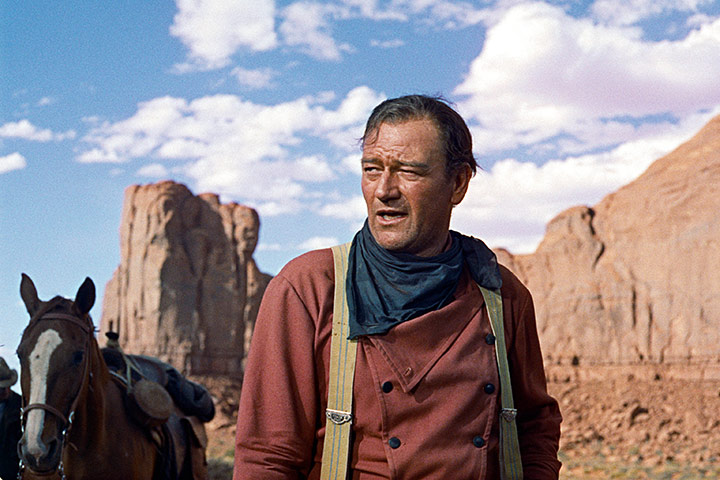
His first major movie, The Big Trail (1930), failed and he churned out B-movies for a decade until rescued by John Ford for the seminal Stagecoach (1939). Thereafter, he dominated the genre, his idiosyncratic walk, his oddly phrased diction and his right-wing politics affectionately imitated, though in the Oscar-winning True Grit (1969) he mocked himself. He was given a makeover for Red River (1948) as an arrogant, middle-aged rancher. His greatest films were The Searchers and Rio Bravo. His final screen appearance as an elderly marshal dying of cancer in The Shootist (1976) merged the man, the actor and the west itself Photograph: AP
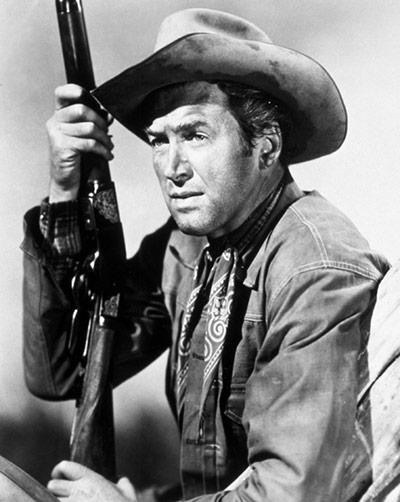
Tall, gangling, his “aw shucks” country-boy manner much influenced by Gary Cooper, Stewart made his western debut opposite Marlene Dietrich in the comic Destry Rides Again (1939). But it was his collaboration with Anthony Mann on Winchester 73 (1950) and four more intense westerns, invariably playing an obsessed avenger, that made him a key figure in the genre. When Mann cast Cooper in Man of the West (1958) Stewart never spoke to him again. He also played opposite Wayne in Ford’s subtle The Man Who Shot Liberty Valance, a fable about the western itself, and was Wayne’s doctor in The Shootist Photograph: SNAP / Rex Features/SNAP / Rex Features
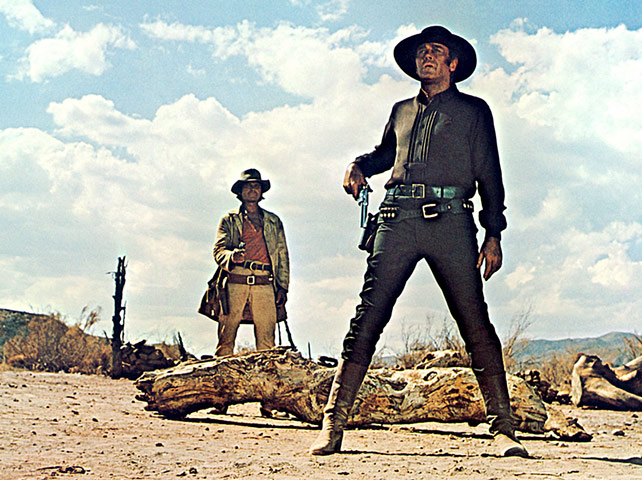
“I’m not really Henry Fonda, nobody could have that much integrity,” Fonda said of his screen persona, and his western role that first comes to mind is the upright Wyatt Earp in Ford’s My Darling Clementine (1946). But in his first two westerns, Jesse James (1939) and The Return of Frank James (1940), he played outlaws, albeit sympathetic ones; in his last important film, Sergio Leone’s Once Upon a Time in the West (1968), he was a cold-blooded killer. Leone, a life-long admirer, thought he looked best in extreme close-up and long shot. His son, Peter, and daughter, Jane, both made significant westerns Photograph: Everett Collection/Rex Features
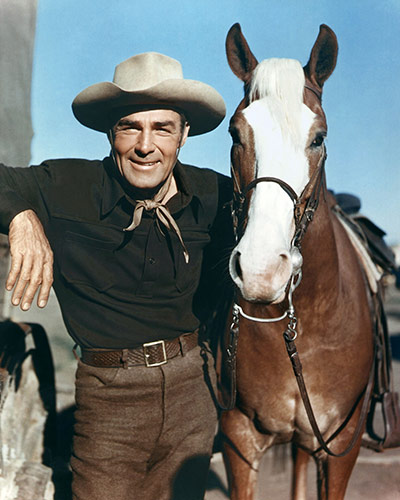
The lean, leathery, impassive Scott, a native of Virginia, was Gary Cooper’s dialect coach on The Virginian and then spent 30 years in westerns. Most were honest, run-of-the-range fare, but in the 1950s he co-produced and starred in seven stark, low-budget westerns directed by Budd Boetticher, shot on the same desert terrain. Four (Seven Men From Now, The Tall T, Ride Lonesome, Comanche Station) are touched with greatness. Before retiring in a blaze of glory, he co-starred with Joel McCrea in Sam Peckinpah’s elegiac masterwork Ride the High Country (1962) as ageing ex-lawmen on their final assignment Photograph: Allstar
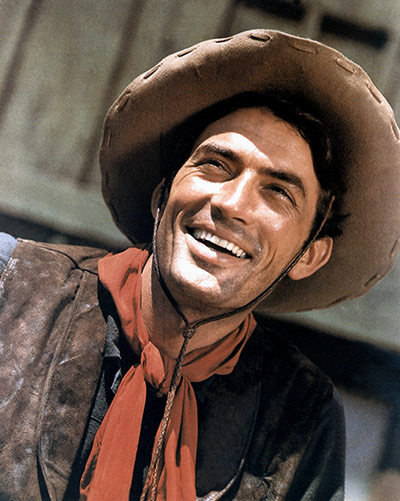
Peck, his sculptured features giving him the appearance of something carved on Mount Rushmore, was one of those stars (others were Burt Lancaster, Kirk Douglas, Robert Mitchum) who came to westerns in the last days of the big studio system. He started out playing a charming, despicable villain in Selznick’s blockbuster Duel in the Sun (1946) and was an equivocal protagonist in the seminal The Gunfighter (1950), before playing more conventional heroes, most notably in William Wyler’s cold war allegory The Big Country (1958), in which his famous protracted fist-fight with Charlton Heston demonstrated the futility of macho violence Photograph: Allstar
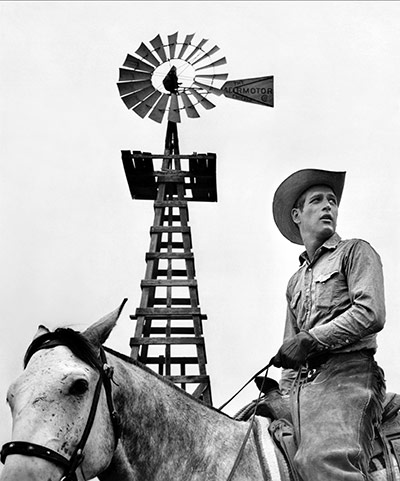
Westerns are traditionally thought of as Wasp-oriented. But there are strong black, Native American and Catholic claims to significant positions in the genre’s narrative, and the pioneer producer and great silent western star, “Broncho Billy” Anderson (born Max Aronson in 1880), was Jewish. Newman’s father was a Jew, his mother a Catholic, he identified himself as Jewish “because it’s more of a challenge”, and he played a variety of celebrated westerners including Butch Cassidy and Buffalo Bill. The finest of his western roles were the anti-hero of Hud (1963) and the honourable man living between opposed frontier cultures in Hombre (1967) Photograph: Allstar
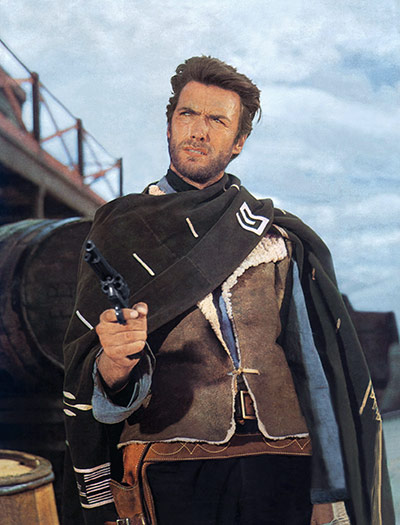
In 1964, Eastwood was snatched from the semi-obscurity of TV by Sergio Leone for his Dollar trilogy of spaghetti westerns and became the last American star to owe his reputation to cowboy movies. His semi-mystical “man with no name” persona clung to him, and he directed his first western, the Italianate High Plains Drifter, in 1973. After that he made only three more: The Outlaw Josey Wales (1976), Pale Rider (1985) and Unforgiven (1992). Following the comparable success of Kevin Costner’s Dances With Wolves, Unforgiven, which won Oscars for best film and direction, was wrongly hailed as the harbinger of a western renaissance Photograph: Allstar
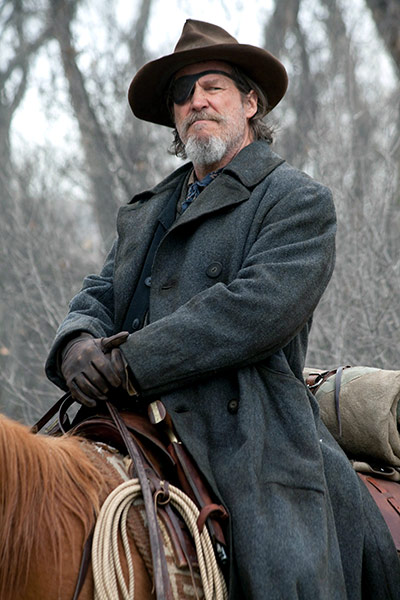
The son of Lloyd Bridges, Gary Cooper’s deputy in High Noon, Jeff Bridges has appeared in a fascinatingly varied string of westerns and western-related movies. His adult debut, The Last Picture Show (1971), ended with a screening of Red River at a Texas cinema. In Bad Company (1972), he’s a civil war draft dodger out west, in Rancho Deluxe (1975) a hippy outlaw in present-day Montana, in Hearts of the West an actor in low-budget Hollywood westerns of the 30s. His reward for appearing in two excellent westerns, Heaven’s Gate (1980) and Wild Bill (1995), both box-office disasters, is the role of a lifetime in the Coen brothers’ True Grit Photograph: Allstar
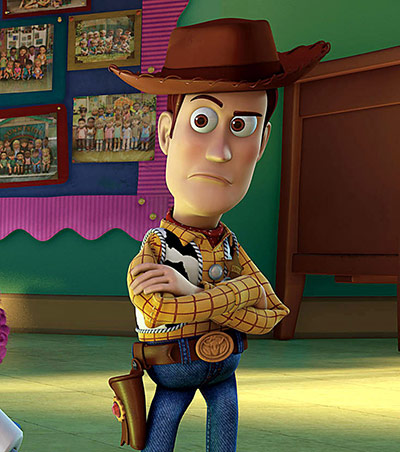
In 1954, US poet Horace Gregory and German futurologist Robert Jungk (Tomorrow Is Already Here) both predicted the imminent replacement of the cowboy hero by the spaceman. Fifty years later in the Toy Story trilogy, the dutiful, principled cowboy doll, Woody, is still competing for Andy’s affections with his rival, Buzz Lightyear, the vainglorious space ranger. The non-aggressive Woody has an empty holster and he’s voiced by Tom Hanks, who’s played an astronaut but hasn’t been nearer a western than running through Monument Valley in Forrest Gump Photograph: Rex Features