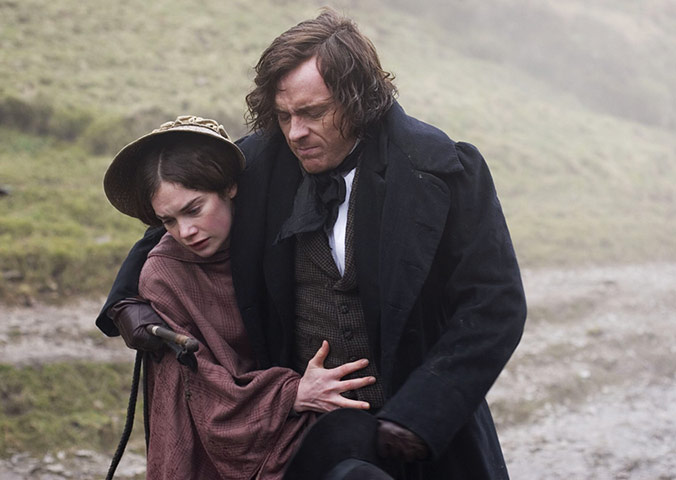
Jane Eyre by Charlotte Brontë
All the best love stories involve at least one obstacle. But Jane Eyre’s love for Mr Rochester seems fated not to be. The man is taciturn. He is, at one stage, her boss. He seems to be entirely smitten with another woman. He keeps a savagely mad wife in the attic. What’s more, Jane does not appear, superficially, to be a strong candidate for romance - a plain governess with no obvious sex appeal. No wonder nobody ever forgets the victorious economy of the line: “Reader, I married him” Photograph: BBC
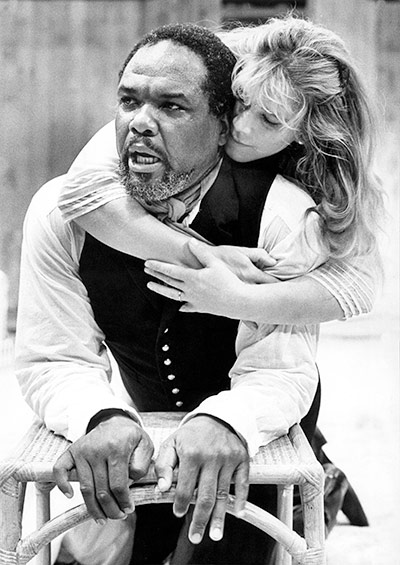
Othello by William Shakespeare
Everyone thinks of Othello as a play about jealousy. But the green-eyed monster blocks the view. The jealousy could not exist without the love that drives it. Othello and Desdemona’s love is at least as brave as Romeo and Juliet’s. It is a lonely enterprise that defies racist scorn. Othello is a lover with the gift of the gab and the noblest of chat-up lines. And Desdemona is so devoted that, even in the face of the terrible change in her husband’s amorous weather, she loves him to the last Photograph: Douglas H. Jeffery
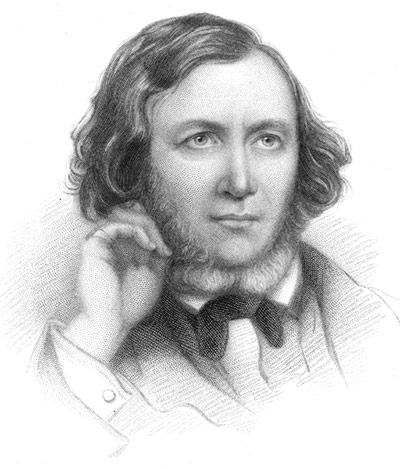
‘Two in the Campagna’ by Robert Browning
In this moving poem, Browning acknowledges the challenge of the romantic enterprise, the difficulty of trying to be all to one another: “No. I yearn upward – touch you close,/Then stand away. I kiss your cheek,/Catch your soul’s warmth, – I pluck the rose/And love it more than tongue can speak – Then the good moment goes.” He sums up the faultiness, the shifting balances that are part even of the greatest love stories: “Infinite passion and the pain/Of finite hearts that yearn” Photograph: Hulton Archive/Getty Images
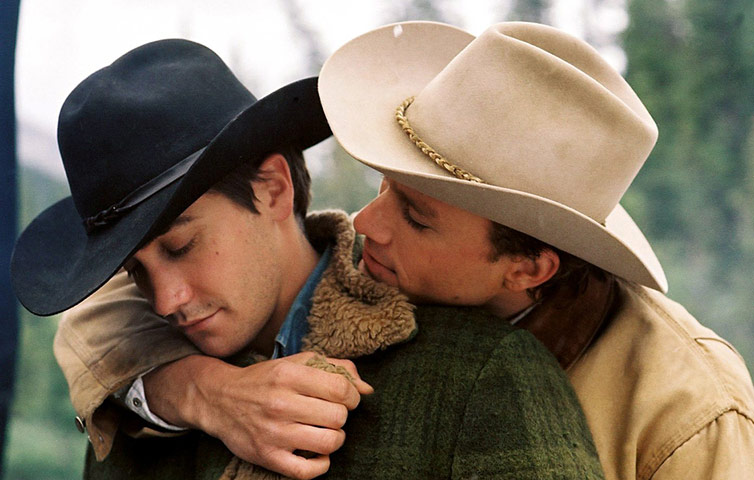
Brokeback Mountain, dir. Ang Lee
Annie Proulx’s short story, made into a film by Ang Lee, is about the love that dare not speak its name. In 1963, in the conservative American west, ranch hand Ennis del Mar (Heath Ledger) meets Jack Twist (Jake Gyllenhaal) and they are drawn together compulsively. What is wonderful is the sense of eroticism as a force of nature. The two men exist as if they were the last lovers alive and ride their horses through dazzling, blue-green hills. “It is nobody’s business but ours,” Jack Twist asserts Photograph: Rex Features
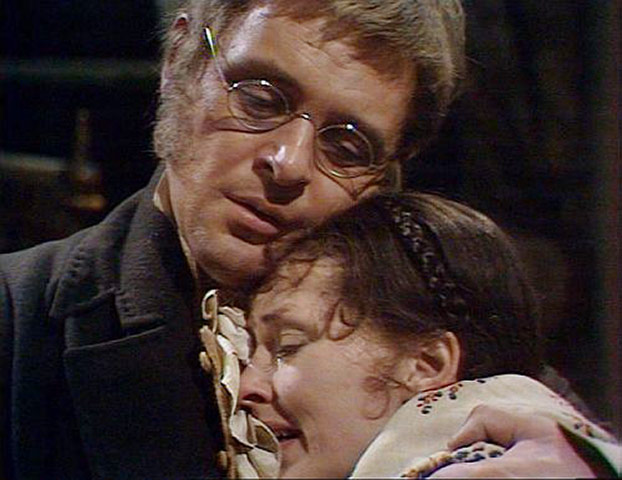
War and Peace by Leo Tolstoy
Pierre is the richest man in Russia but he is not available. He has a loveless marriage with a reprobate wife. What is wonderful about Pierre is that he is incapable of falsifying his affections. His love for Natasha is unconceited. Natasha is musical, elfin and flighty – she has made big mistakes in her love life too. Pierre lets her know that if he were free and worthy and handsome enough for her, he would ask her to marry him. She gives him a grateful backward glance. He witnesses, over Moscow, the comet of 1812 – a good sign. After great hardship, they marry Photograph: Public Domain
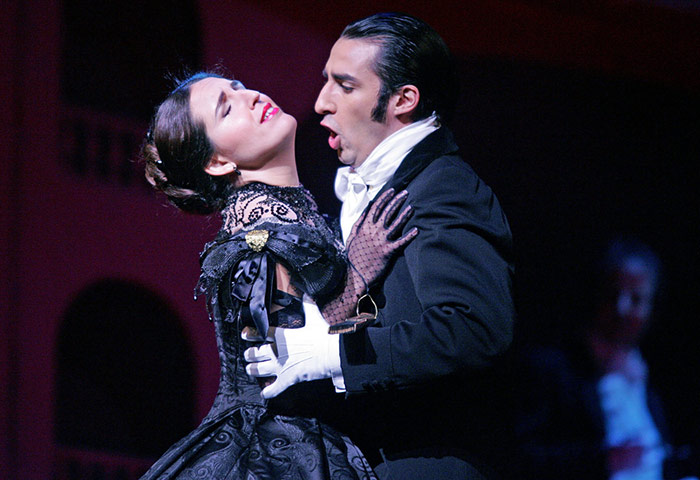
La Traviata by Giuseppe Verdi
La Traviata, based on Alexandre Dumas’s La Dame aux Camélias (1848), extends the idea of love as a sickness by having its heroine Violetta mortally ill. As long as you don’t take this too seriously, you can swoon along with Verdi’s ravishing music. La Traviata means a fallen woman and Violetta has fallen in every sense – in love, into sickness and finally into Alfredo’s arms to die. I still remember watching entranced, as a child, Violetta expiring at the Royal Opera House in her floaty white nightdress: romance incarnate Photograph: Tristram Kenton
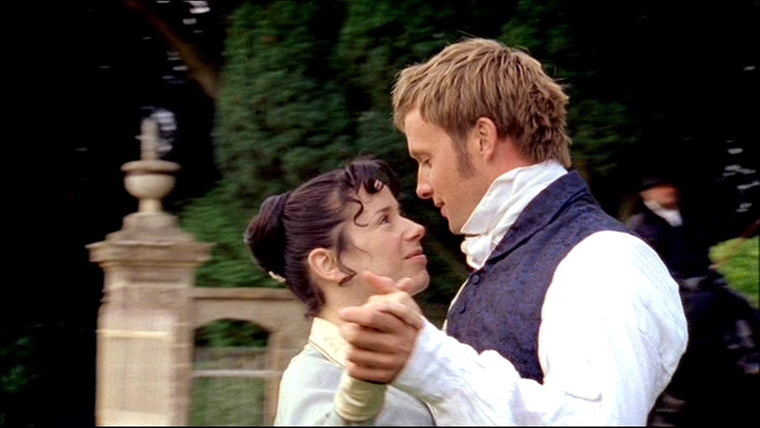
Persuasion by Jane Austen
This is the love of which good marriages are made. The satisfaction of this novel is that it describes an old flame sensibly rekindled. Anne Elliot is prevented from marrying the impecunious Frederick Wentworth seven years before the novel opens. But when he re-emerges in middle age as a well-heeled captain, she is given a marvellous second chance. I remember an English teacher describing Anne Elliot as being on the edge of the autumn of her life – which seems hilarious now. Anne is 27 Photograph: ITV
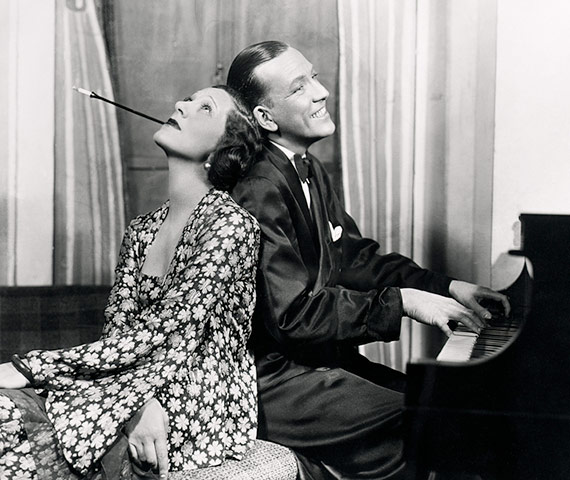
Private Lives by Noel Coward
“Very few people are completely normal really, deep down in their private lives. It all depends on a combination of circumstances. If all the various cosmic thingummys fuse at the same moment, and the right spark is struck, there’s no knowing what one mightn’t do.” What is so enjoyable about Coward’s take on the “cosmic thingummys” is that they bring Amanda and Elyot – each on honeymoon with a second spouse – illicitly back together again. The play delivers the chirpiest of warnings about divorce. Better the husband/wife you know... Photograph: Corbis
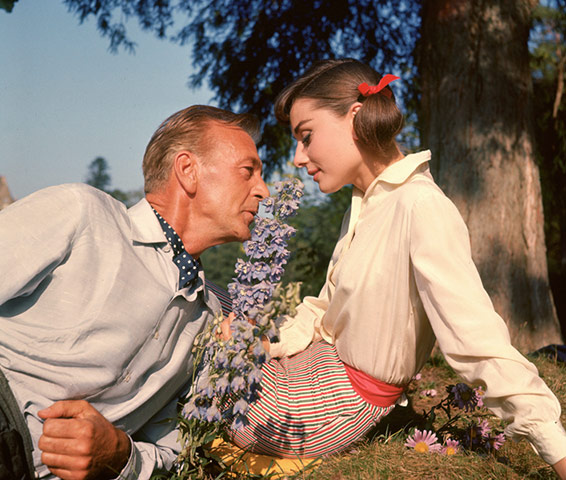
Love in the Afternoon, dir. Billy Wilder
Love is light on its feet in Billy Wilder’s 1957 film – a flirtatious classic. No wonder “love in the afternoon” has gone into the English language as if it described a popular sport. Audrey Hepburn stars as a cello-playing ingenue with a disingenuous agenda. To ensnare Flannagan, a serial lover, she invents an overpopulated romantic past for herself, commenting in her sweet, crystalline voice on the 20 or more men she has known until flabbergasted Flannagan takes the bait Photograph: George Konig/Rex Features

Ada by Vladimir Nabokov
“For supper Ada wore another dress, of crimson cotton, and when they met at night (in the old toolroom by the glow of a carbide lantern) he unzipped her with such impetuous force that he nearly tore it in two to expose her entire beauty…” Vladimir Nabokov specialises in forbidden fruit – think of Lolita – but perhaps his most erotic love story is about Ada and Van Veen who adore each other as cousins before discovering that they are actually brother and sister. It is a febrile, unsettling and unforgettable love story Photograph: Horst Tappe/Getty Images