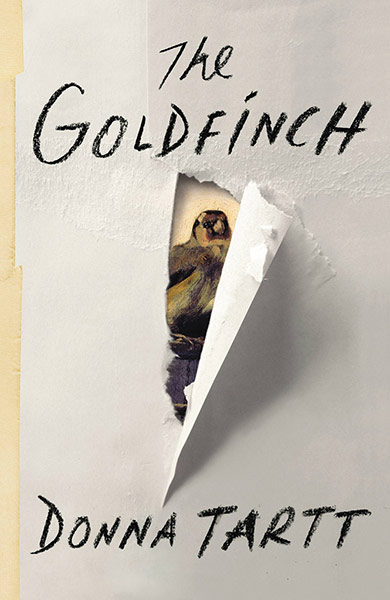
Donna Tartt, 2013
Tartt doesn’t really do small; her two previous novels, The Secret History and The Little Friend, were both hefty affairs. The Goldfinch, nearly 800 pages, turns on the adventures of Theo Decker, a teenager cast adrift when his beloved mother is killed in a terrorist attack on an art gallery. Theo’s adaptability – he is batted between a wealthy New York family, his deadbeat father and a humane elderly furniture restorer – is spiced up by his secret possession of the portrait of a goldfinch, stolen from the bombed gallery Photograph: PR

Eleanor Catton, 2013
At 28, Catton, a New Zealander, is the youngest novelist ever shortlisted for the Man Booker prize, the winner of which will be announced on 15 October. Her debut, The Rehearsal, was an ambitious but relatively compact affair, with no hint that her next would be a historical novel of more than 800 pages. Set in 1866, The Luminaries begins when Walter Moody, just arrived in New Zealand, chances upon a gathering of 12 men (each mirrors a sign of the zodiac), who have assembled to mull over a series of unsolved crimes. Photograph: Linda Nylind for the Guardian

Vikram Seth, 1993
It has been a somewhat turbulent year for Seth, 20 years after his 1,349-page saga of matchmaking in post-partition India was published to mammoth acclaim. This autumn should have seen publication of its sequel, A Suitable Girl – except it wasn’t finished in time. It’s now back on track, but we’ll have to wait until 2016; just enough time to refresh our memories as to what exactly happened to Lata, the young woman determined not to succumb too easily to her mother’s attempts to get her married off Photograph: Gary Calton for the Observer
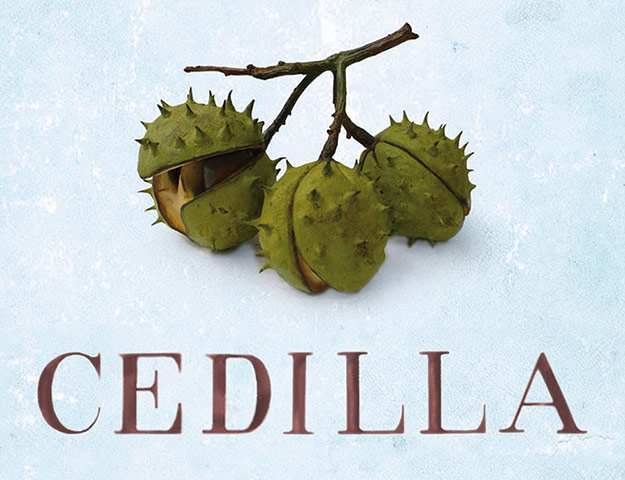
Adam Mars-Jones, 2011
This is the second (and by no means final) instalment of the adventures of John Cromer, one of recent fiction’s most unusual comic creations. Since his first outing in Pilcrow, John has become a teenager, determined to outsmart the severe physical constraints of the rheumatoid arthritis that has afflicted him since he was small. Cedilla, at 752 pages, sees him taking off in search of enlightenment on an Indian mountainside and swatting away all obstacles in the path that leads to Cambridge. We eagerly await more dispatches Photograph: PR
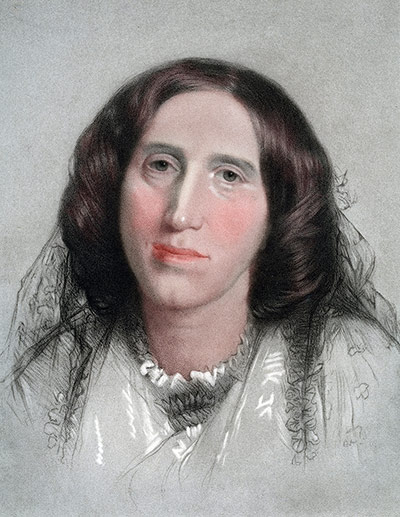
George Eliot, 1871-2; published serially
The interlocking fortunes of the Brooke sisters, Celia and Dorothea, idealistic young doctor Tertius Lydgate, the beautiful Rosamond and her heedless brother, Fred, and the coldly cerebral Edward Casaubon may sound like the stuff of a plodding Victorian social panorama, but Eliot took novelistic conventions – unhappy matches, frustrated ambitions, complicated inheritances, all playing out in a small-town setting – and animated them with a peerless intellectual intensity, weaving in philosophical and theological viewpoints and her first-hand understanding of the educational barriers women faced Photograph: The Print Collector/Corbis

Don DeLillo, 1997
Underworld, 832 pages, begins with what amounts to a short story, a description of the baseball game that took place on 3 October 1951 between the New York Giants and the Brooklyn Dodgers, during which a Giants player hit the ball out of the ground – The Shot Heard Round the World. Crucially, it is also the day the US learns that the Soviet Union has exploded an atomic bomb. From that tightly focused opening comes an enormous beast of a novel, its narrative reach extending to create an epic vision of the cold war and its aftermath Photograph: Jean-Christian Bourcart/Getty Images
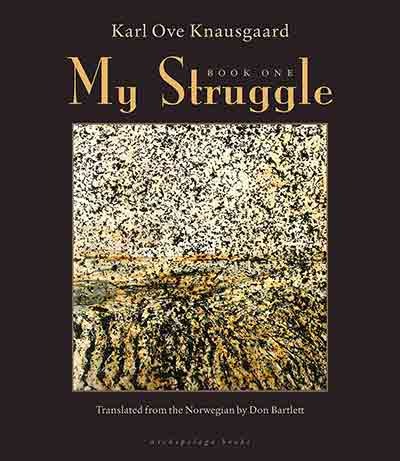
Karl Ove Knausgaard, 2009-2011
A slight cheat – or, at least, a tease. My Struggle (Min Kamp in its original Norwegian) is in fact six overtly autobiographical novels, currently appearing serially in English. Get started with A Death in the Family, in which Knausgaard relates his childhood and teenage years, and A Man in Love, in which he recounts his decision to leave his wife and relocate to Stockholm. It sounds like straightforward autobiography, but such is the power of its relentless comprehensiveness that it acquires an almost otherworldly quality Photograph: PR
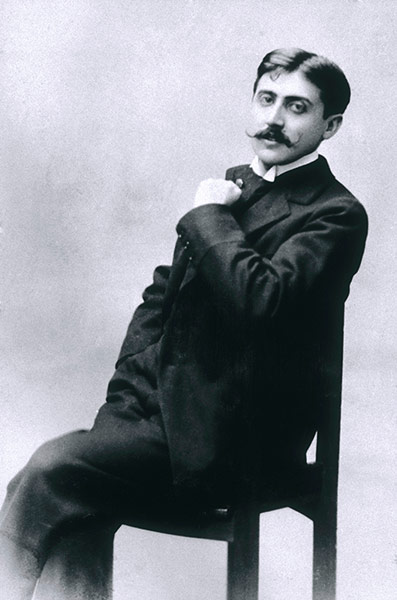
Marcel Proust, 1913
Perhaps the most oft-attempted of all long novels, Proust’s seven-volume series is arguably the most accomplished literary expression of the human desire to recapture and describe the past – a theme memorably encapsulated by the celebrated description of the evocative qualities of a madeleine biscuit. The first volume, Swann’s Way, begins with the narrator’s declaration that “for a long time, I went to bed early”, prompting a meditation on the nature of sleep… a lengthy spell lying down might be the best way to approach this roman-fleuve Photograph: Sygma/Corbis
Roberto Bolaño, 2004
Published after the Chilean novelist’s death in 2003, this vast novel – 912 pages – had critics salivating in anticipation. He envisaged that each of its five sections could be read separately – but they add up to something unclassifiably brilliant. The story begins with a literary puzzle – the whereabouts of German novelist Benno von Archimboldi. Four critics head to a Mexican border town on his trail, whereupon the novel switches focus to become a fictional recreation of the unexplained mass murders of young women in Ciudad Juárez Photograph: PR

David Foster Wallace, 1996
It is the nearish future. The US, Canada and Mexico have combined to form the Organization of North American Nations (ONAN) and there is in existence a film, entitled Infinite Jest, so utterly mesmerising that anyone who watches it will be able to do nothing else and, consequently, die. To guide us through these baffling waters are 388 endnotes. The late Foster Wallace’s masterwork, at 1,100 pages, has enough narrative tricks, twists and turns to sustain less imaginative writers through a dozen novels – and don’t skip the notes Photograph: Gary Hannabarger/Corbis