Vancouver
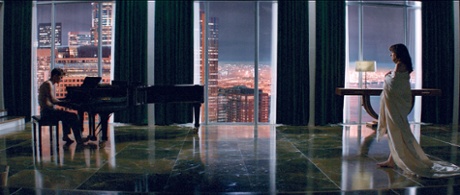
When did you last see a film set in Vancouver? You might struggle: the Canadian port city may be a lovely place to live, but it’s not exactly an exemplar of romance and adventure. When you last saw a film shot in Vancouver, however, is another question: so effectively (and economically) does it pose as a multitude of US cities in major productions that it’s come to be known as Hollywood North. Right now, it’s damply filling in for Seattle in Fifty Shades of Grey, and working overtime in the much-ballyhooed satire The Interview, multitasking as New York, rural China and Pyongyang. (It has not been released in Canadian cinemas.)
Morocco
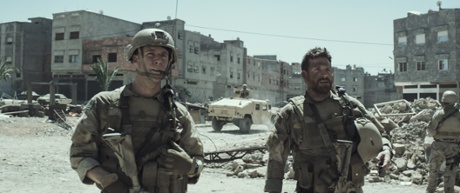
Kathryn Bigelow deemed it insufficiently authentic for The Hurt Locker (heading off to Jordan instead), but Morocco is currently the first choice of American film-makers seeking a safe stand-in for the Middle East — a common demand these days, with Iraq war films still in heavy supply. Clint Eastwood, efficient as ever, turned Rabat into a reasonable substitute for the shrapnel-strewn streets of Fallujah in American Sniper, following the likes of Body of Lies and Green Zone. Morocco has also successfully masqueraded as Somalia (Black Hawk Down), Tibet (Kundun), ancient Rome (Gladiator) and even Games of Thrones’s imaginary Westeros.
New Zealand
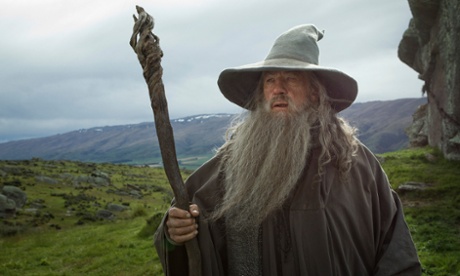
By shooting his then-risky Lord of the Rings trilogy in the imposing mountains of his home country, Peter Jackson knew he was giving the local film industry a leg-up. But he couldn’t have counted on giving the Kiwi tourism racket a whole new lease of life: with the country now forever branded as the real-life Middle-earth by global legions of Tolkienites, the number of themed tours of Queenstown, Matamata and the Southern Alps keeps growing. Neither is it just Hobbit country in the minds of cinemagoers: with the recent run of Narnia films having also rooted themselves here, New Zealand has become a one-stop geek mecca.
Cape Town
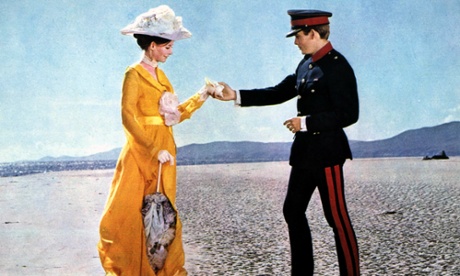
Admittedly, this South African writer’s eyes are more keenly peeled than most for the country’s many Hollywood cameo appearances, but it’s hardly a secret that its sunny shores and highly trained local craftspeople (thanks to a proliferation of local film academies) make for an attractive alternative to locations ranging from the Côte d’Azur to the Sahara. David Lean resorted to Cape Town when the drenched coastline of the west of Ireland served up too many logistical obstacles to completing Ryan’s Daughter, while Robert Towne (filming his largely forgotten Colin Farrell noir Ask the Dust) declared that “nothing could look more like southern California” than the country’s tourist capital.
Greystone Mansion, Los Angeles
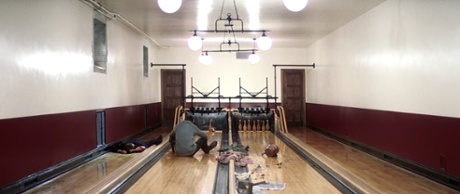
We could have filled this list with the stately English homes that have dutifully served as the backdrop to countless corset dramas, but for sheer versatility they’re arguably outdone by a gauche Beverly Hills pretender. Thanks largely to its immediately recognisable chequerboard floor and grandiose descending staircase, this 1928 Tudor revival sprawl has become a go-to symbol of American aristocracy, serving as the home of Jeffrey Lebowski Sr in The Big Lebowski, the older Daniel Plainview in There Will Be Blood (including that bowling alley) and even — briefly — Kermit the Frog in The Muppets.
Prague
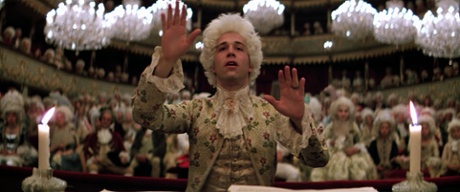
Though hardly an obscure spot, much less an indistinct one, the Czech capital has been sportingly posing as other cities for decades, even before the fall of communism ushered in a further wave of Hollywood opportunism. It certainly made for a lavish Vienna in Czech native Milos Forman’s 1984 Oscar-guzzler Amadeus, while Casino Royale called upon it to serve as Venice, London and even Miami. And the Mission: Impossible franchise has made repeat visits to Prague, occasionally allowing the city to play itself – though the last instalment took the liberty of dressing up Prague castle as the Kremlin.
London
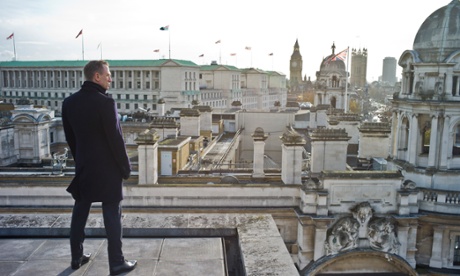
Needless to say, the Big Smoke gets an awful lot of screen time, usually as itself, though film-makers are endlessly repurposing its most iconic buildings. Greenwich’s Old Royal Naval College pops up in everything from The King’s Speech to The Dark Knight Rises, where it’s rather optimistically relocated to Florence. It’s in Skyfall too, though that’s hardly the greatest liberty the James Bond smash took with the capital’s architecture: the digitally altered backdrop may have had non-Londoners fooled, but no one even passingly acquainted with the Square Mile could have failed to recognise the distinctive glassy diagonals of Broadgate Tower posing as a Shanghai skyscraper.
Monument Valley, Utah
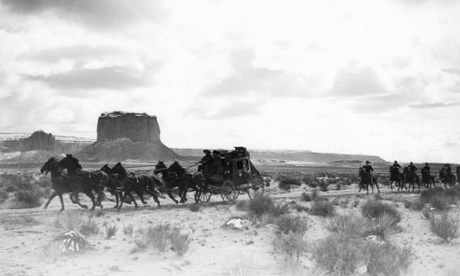
Sometimes the American west does a perfectly fine job of representing itself. Case in point: the vast, eerie sandstone buttes of Monument Valley on the Arizona-Utah state line, an iconic location first put on the Hollywood map by John Ford’s Stagecoach in 1939. Ford, after whom one of the region’s key lookout points is now named, would return there for nine more westerns, including The Searchers, while Easy Rider, Thelma & Louise and Forrest Gump are among the films to have followed his lead. No film-maker made more of the valley’s otherworldly potential than Stanley Kubrick; in 2001: A Space Odyssey, that’s the alien planet waiting at the end of the stargate sequence.
Griffith Park, Los Angeles
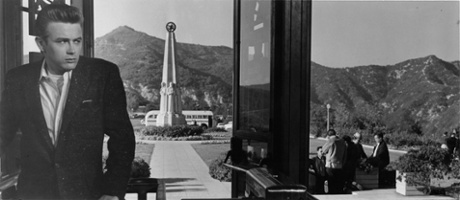
Yes, a second mention for the City of Angels, but it figures that Hollywood studios would exploit their own back yard. And few of its resources have been more exhaustively explored than this 4,310-acre municipal park in Santa Monica: with its caves, cedar groves, winding back roads, carousel and landmark conservatory, it’s an all-purpose godsend for travel-shy location scouts. DW Griffith used it for the battle scenes in The Birth of a Nation a century ago, John Ford (again) borrowed the caves for the climax of The Searchers, and the imposingly domed conservatory will forever be associated with Nicholas Ray’s Rebel Without a Cause.
Almería, Spain
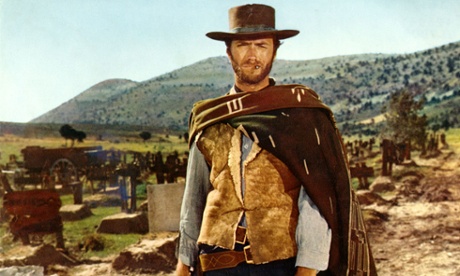
The spaghetti westerns with which Italian director Sergio Leone made his name may have earned their pasta credentials at Rome’s Cinecittà Studios, but the parched, sprawling, baked-clay landscape we associate with them came courtesy of Spain’s Andalucían flatlands: Almería, in particular, served repeatedly as one of the harshest incarnations of the wild west in film history. Hollywood, meanwhile, had already discovered the region as a location for turgid toga extravaganzas: El Cid, King of Kings and the infamously extravagant Cleopatra all passed through, while Ridley Scott recently revived that tradition with his biblical epic Exodus: Gods and Kings.