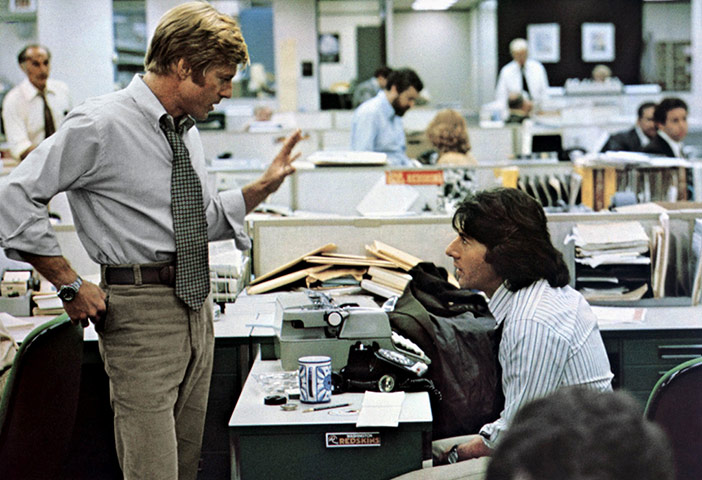
Robert Redford and Dustin Hoffman are a perfect pairing as crusading reporters Bob Woodward and Carl Bernstein, capturing the unfolding of a great story during their dogged investigation into the Watergate scandal. It maintains the suspense even though we know how it ends. Even now, despite its romantic portrayal of newspaper reporters as determined, hardworking people out to expose wrongdoing, it remains one of the most influential studies of the craft of journalism – no back stories, just a riveting snapshot of a working newsroom. As Aaron Sorkin put it: “All The President’s Men made journalists want to be rock stars.” Photograph: Allstar
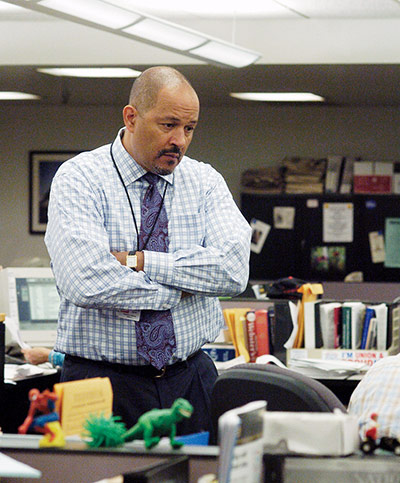
Season five of the labyrinthine series is set at a downsizing newspaper – the Baltimore Sun – and makes the point that without money, you can’t investigate properly. Gus Haynes is the principled editor battling to maintain quality reporting as he clashes with management over contracting budgets and lay-off announcements. In episode one he rails against the photographer who routinely positions a charred doll amid the debris: “I can see that cheatin’ motherfucker now, with his fucking harem of dolls, pouring lighter fluid on each one.” Creator David Simon’s time as a crime reporter on the Baltimore Sun gives the newsroom authenticity. Photograph: Blown Headline Productions
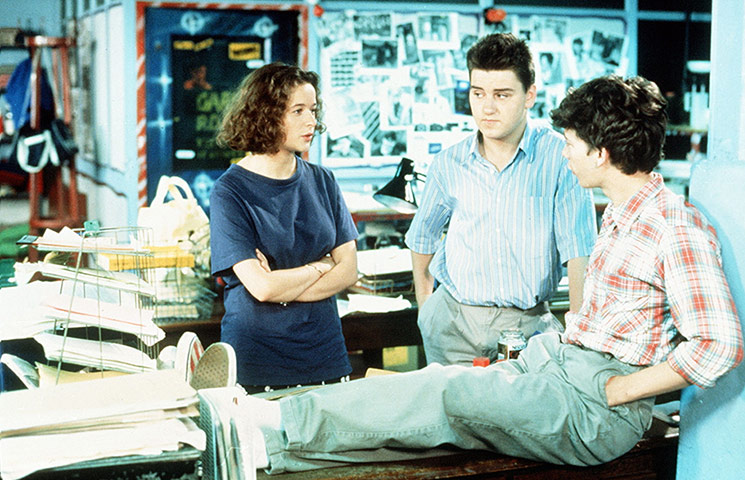
Created and written by Steven Moffat, Press Gang was a pioneering children’s TV show. Over five series from 1989, it followed comprehensive school kids as they produced the Junior Gazette, focusing on the tempestuous relationship of Spike Thomson (the “fake American”) and Lynda Day (the venomous editor played by Julia Sawalha). It won acclaim and awards for its ability to address both subjects of a modest scale, and surprisingly hard-hitting ones (drugs, suicide, child abuse). Frankly it was too good for kids. It was also responsible for Richard Herring creating his Julia Sawalha shrine on Fist of Fun. Photograph: ITV / Rex Features
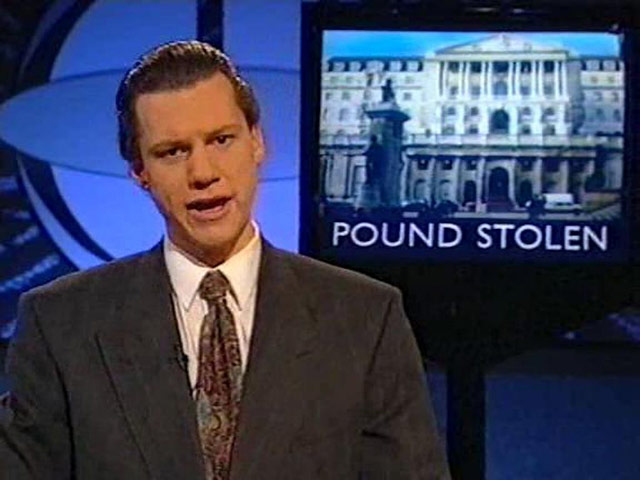
Wolves in store a “bad idea” admits Mothercare; bombdogs terrorise a local shopping centre; and where now for man raised by puffins? “These are the headlines. God I wish they weren’t.” A merciless satire of news programmes with their pointless flashy graphics, terrible puns and in-jokes between the presenters, The Day Today reinvented gag-centred news comedy. The show mocked weather reports, American news shows, business reports, soap operas, ‘vox pops’ and sports journalism. But it was Chris Morris, parodying the hectoring Paxman‑esque tone of journalism, who caught the attention, most memorably when, to get a newsworthy result, he cajoled two guests until war was declared. Photograph: BBC
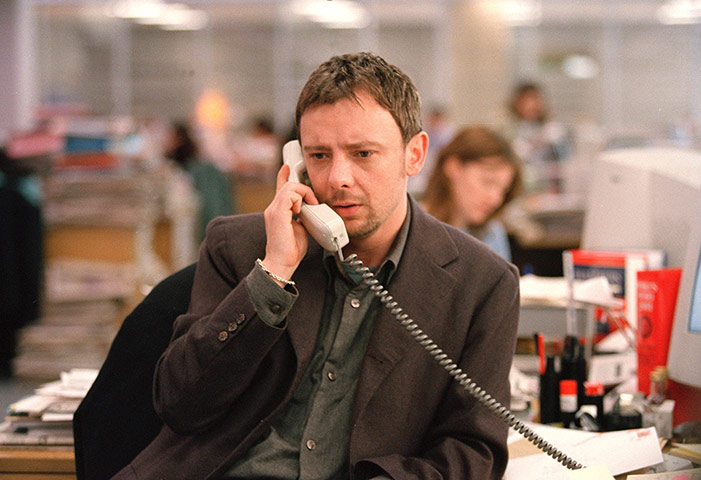
A gripping six-part TV series featuring John Simm as a chippy reporter (he keeps his UK Press Gazette award in his desk drawer) working alongside a detective investigating the death of a politician’s mistress. It becomes clear that the death is part of a complex conspiracy involving the government and a major energy conglomerate. Despite feeling older than 10 years (the paper is generously staffed and able to throw limitless cash at what seems at first to be a pretty sketchy story) it has stood the test of time. The cast is engaging, featuring a very young James McAvoy, and Bill Nighy as the exuberantly profane editor, but it’s Paul Abbot’s scripts that make the show.
Photograph: BBC
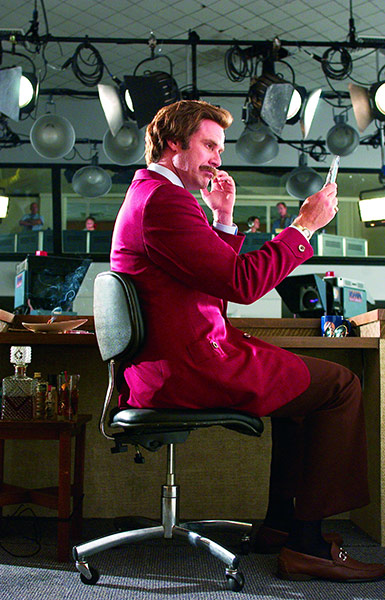
No list would be complete without helmet-haired alpha male Ron Burgundy and his crack team. A parody of local news shows, it featured an array of comedic talent - Will Ferrell, Paul Rudd, Steve Carell and Vince Vaughn among others. The hard-drinking anchor objectifies every woman he meets and is bewildered when they don’t see it as the greatest day of their lives. Devoid of self-awareness (“I don’t know how to put this but I’m kind of a big deal”), in Ron’s world, women have no place in the newsroom and rival men-only news teams rumble, West Side Story style (“rule number one, no touching of the hair or face!”). When Veronica Corningstone covers for Ron and the ratings soar, he is torn between his attraction to her and his need to undermine her professionally. Photograph: Rex Features
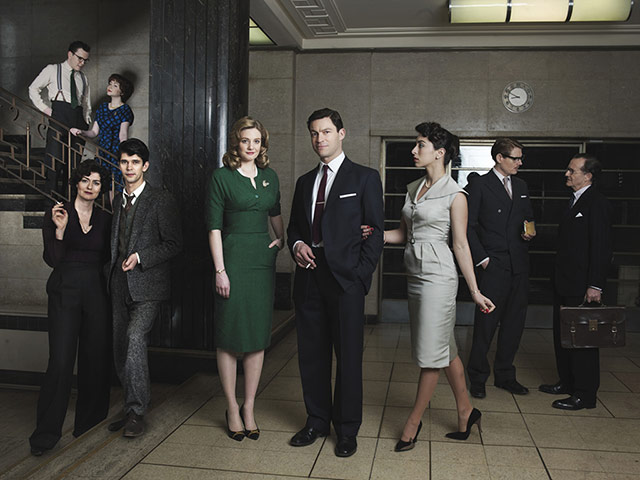
Written and created by Abi Morgan, the title refers to a BBC current affairs programme in the late 1950s. A tale of conspiracy and ambition – phone tapping and collusion between politicians and journalists give a sense of immediacy – the central love triangle provides the heart of the show. Ben Wishaw plays Freddie, a crusading, irascible reporter, disillusioned with banal news coverage: “Martial law may have been imposed in Poland, and we have footage of Prince Rainier on honeymoon with his showgirl.” Romola Garai plays Bel, a smart producer and Freddie’s best friend, and Dominic West plays the shallow but charming chief anchor who is all too aware of his limitations, but sees no reason for that to interfere with his climb to the top. Photograph: Amelia Troubridge/BBC
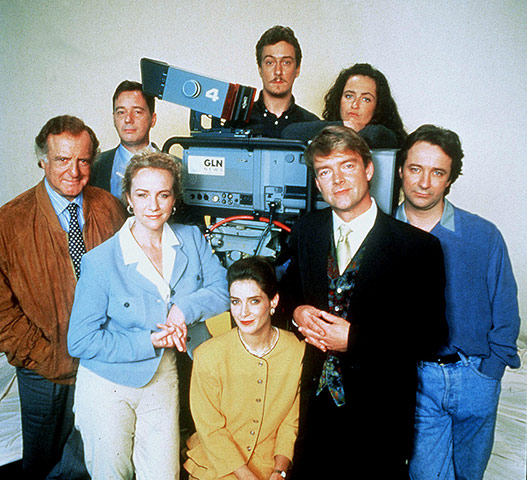
Long before The Newsroom, we had our own series that exposed the unethical behaviour of the TV news team and the clumsy mechanics of journalism – how some stories are given priority over others. The cynical staff at Globelink News invent stories and take a generally sensationalist stance at the behest of their new multimillionaire owner. The innovative comedy ran on C4 for six series and combined dark humour with topical references, some of which were filmed just hours before the show was aired. Robert Duncan as Gus Hedges had a nice line in management speak: “Could we interlock brain spaces in my work area?” Photograph: Allstar
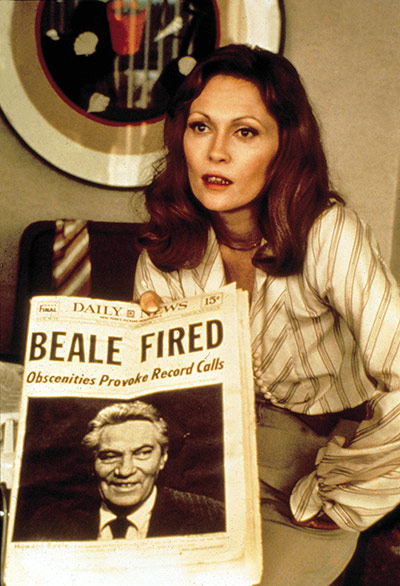
Network tells the story of Howard Beale (Peter Finch), news anchor at ailing TV network UBS. In an attempt to reverse its fortunes, UBS fires Beale. The next day he announces on air: “I’m going to blow my brains out right here on this programme…” so stay tuned! Bosses are torn between managing Beale’s breakdown and capitalising on soaring ratings. A disturbing yet funny film, it earned Faye Dunaway an Oscar for her portrayal of a smart, manipulative executive and Sidney Lumet one of his four best director Oscar nominations, as well as giving us the enduring line: “I’m as mad as hell and I’m not going to take this any more!” Photograph: Rex Features
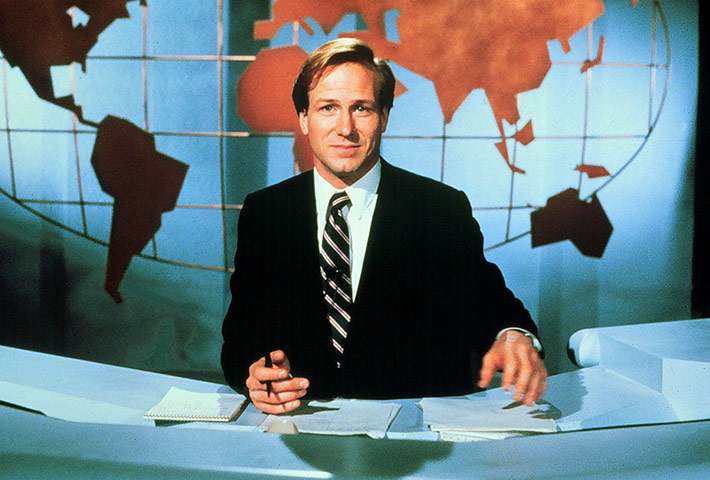
The crumbling standards of TV news as it morphs into infotainment are skewered in James L Brooks’s prescient 1987 film. Holly Hunter’s producer falls for William Hurt’s telegenic but incompetent anchorman, even though he represents everything she hates, while Albert Brooks plays a talented, but self-righteous reporter who’s in love with Holly. The script balances pathos and humour and romance is relegated to a sub-plot; given the choice between romance and work, work wins every time. Jack Nicholson has a role as the top anchorman; when he laments the budget cuts that will lead to sweeping redundancies, an underling suggests that jobs could be saved if Bill would cut his colossal salary. One baleful look from Nicholson and the idea is swiftly dropped. Photograph: Allstar