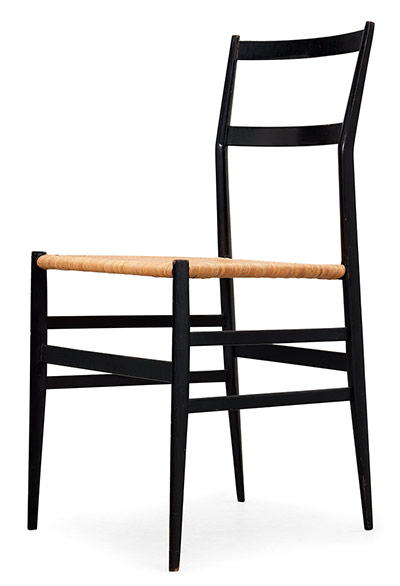
Superleggia (1957)
Gio Ponti was the playful, witty, charming, un-doctrinaire, polymathic genius of mid-century Italy – writer, editor, artist, designer, architect. His guiding principle was lightness, literal and metaphorical, the notion that things should not weigh heavily on the soul or on the ground. Superleggera encapsulates it; the result of years of refining and lightening the design, it can be lifted with one finger. Its legs are triangular in section and taper, to give them maximum structural efficiency, and its back kinks delicately to give a better seated posture. It is furniture and philosophy in one Photograph: bukowskis.com
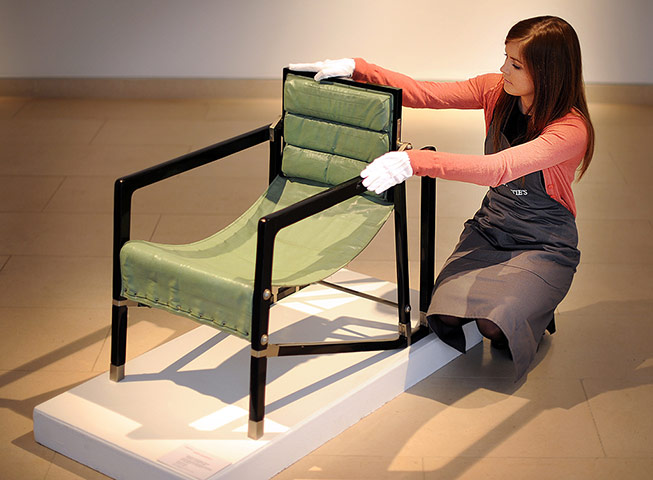
Transat (1925-30)
Eileen Gray’s Transat chair is from the late 1920s, when Marcel Breuer, Le Corbusier and Charlotte Perriand were forging in tubular steel assertive icons of the machine age. Transat, with its spare timber frame and graceful curve of fabric, had more subtle ambitions. Gray, as her collaborator Jean Badovici said, was concerned with the “new ways of feeling” that came with their times, rather than with mass production. Transat – which is short for “transatlantique” – translates a deckchair from an ocean liner into a piece of indoor furniture. It is poised but relaxing, and came in pony skin and patent leather versions, among others Photograph: Ben Stansall/AFP

Paulistano (1957)
The Paulistano, like the Transat, is a work that keeps pace with the most progressive aesthetics of its own time but is above all interested in civilising human life. Originally designed for São Paulo Athletic Club, its structure is a skinny bent steel bar that can be draped in leather or canvas. It’s the work of the architect Paulo Mendes da Rocha, and embodies his belief in “the humility of essential things”. At the same time it communicates a certain swagger and luxuriance that might be described as Brazilian, and – not unimportantly – is comfortable Photograph: objects.designapplause.com
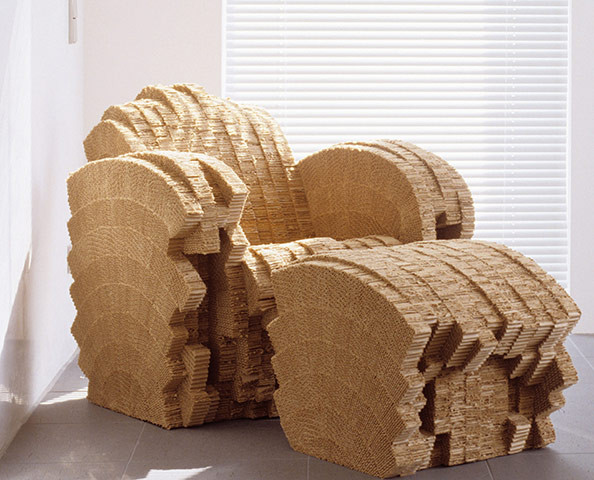
Experimental edges cardboard armchair (1979-82)
A chair made out of cardboard – to be precise, the corrugated stuff they put inside cheap hollow-core doors – is an idea both simple and unlikely. Chairs are supposed to last, while exposed cardboard does not. But Gehry’s multilayered use of the material creates shaggy, comfortable beasts that are improved by attrition (and now go for tens of thousands in auction rooms). It is also satisfying that they’re made entirely out of one material, as if hewn out of huge blocks of wood, without the fiddle of fixings and upholstery that goes with most armchairs Photograph: Andreas von Einsiedel/Alamy
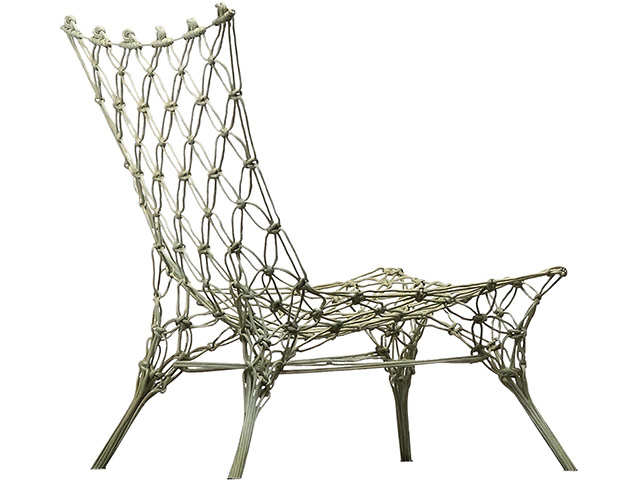
Knotted Chair (1996)
Knotted Chair, created by Marcel Wanders for the Dutch design company Droog, is a woven net of thread which is then impregnated with epoxy resin and hung up to dry. Its curves are therefore set by gravity, but also make it strong and light. It is partly handmade and archaic, partly manufactured, with the help of products of modern chemical industry, like aramid and carbon fibres. It is concisely surrealist, the opposite of a Dalí melting watch, with something you expect to be floppy becoming rigid. It’s a gimmick, if you like, but done with disarming grace Photograph: atomicinteriors.co.uk
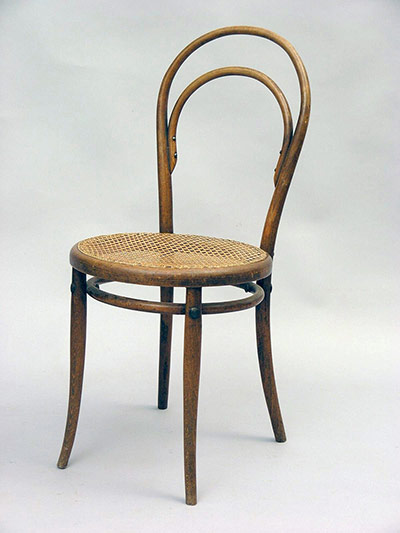
Chair No.14 (1859)
“Why re-design a chair?” is a question all furniture designers should answer, and usually fail to do. The basic requirement of sitting, and the structural requirements of the object, don’t change much over the centuries. Thonet, however, had a good reason – he had devised a new way of steam-bending wood such that chairs could be light, strong, comparatively cheap and producible in large numbers. They were also elegant, with simple, graceful lines that would inspire 20th-century modernists. He invented his most famous chair, the No 14, a century and a half ago, and it is still in production Photograph: PR
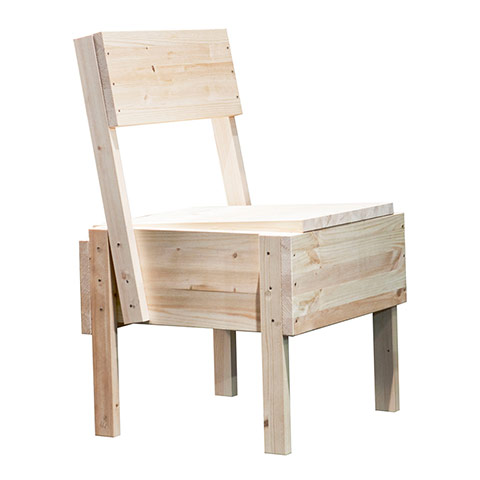
Sedia 1 (1974)
The idea that a chair might be politically radical should be treated with caution. Chairs are mostly consumer objects, selling them is a business, and design assists and lubricates that process. Enzo Mari, with Sedia 1, tried to cut through the priestly mysteries of design and manufacture – it is something almost anyone can make, using only a hammer, nails, standard-size pieces of untreated pine, and simple instructions. It might be seen as a revolutionary way of empowering the user, as Mari intended. Then again, it might also be seen as a clever way of marketing cheap wood, in which case the market always wins
Photograph: PR
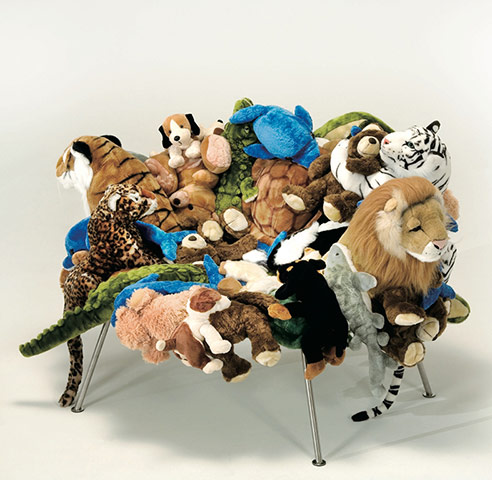
Banquete (2002)
Form follows function. The essence of good design is to do a lot with a little, to shun superfluity, to simplify – and to employ the manufacturing techniques of our time to achieve precision and refinement. Which is true, how very true. Except that sometimes designers ignore these principles, as when the brothers Humberto and Fernando Campana make chairs out of stacks of soft toys, crushing as they do so any possibility of good taste, and the result is joyous. It should also be pointed out that the factory-made toys are no less articles of mass production than tubular steel
Photograph: scandinavia-design.fr
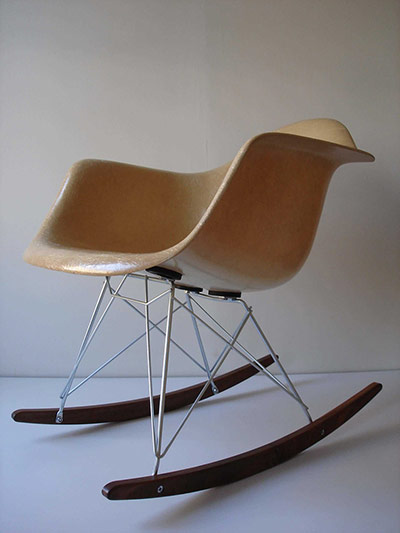
Fibreglass rocker (1948-50)
A confession: a list of the absolutely definitely all-time 10 best chairs would also be list of thoroughly exposed design classics, by the likes of Jacobsen, Aalto, Perriand, the Eameses, Mies van der Rohe, Breuer, Corbusier and Panton, so I am favouring (slightly) less obvious examples. It would probably also be possible to produce a list in which all the examples were by the highly celebrated Charles and Ray Eames, so they force their way on to the page. I have chosen their technological/folksy fibreglass rocker: it’s space age, but could sit on a dozy southern porch Photograph: rockettstgeorge.co.uk
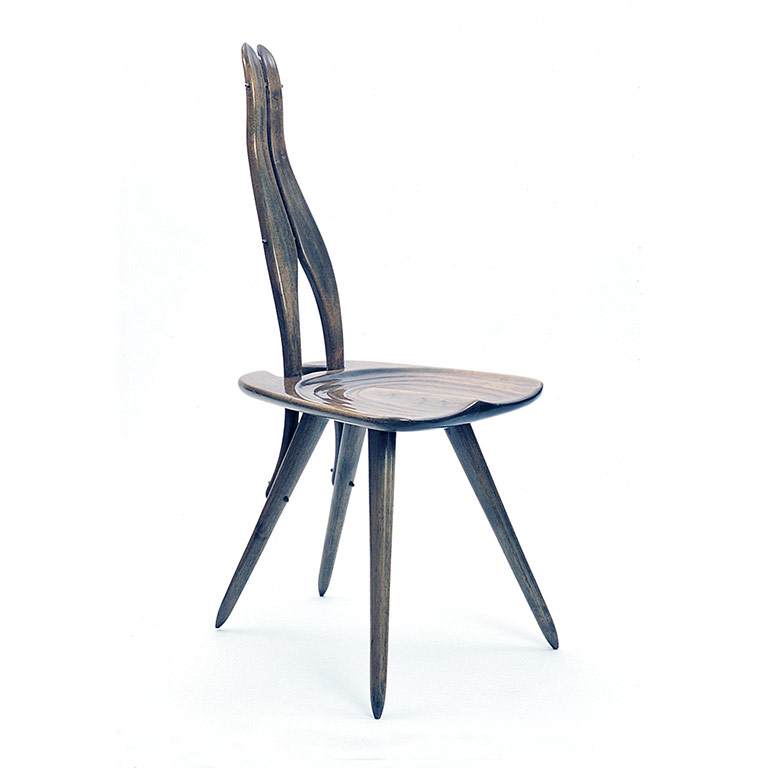
Untitled (1950s)
Carlo Mollino was a designer, architect, racing car driver, pilot, ski enthusiast, dandy, maniac and photographer with a fondness for taking artistically pornographic Polaroids. A kind of ultra-boy, in other words. Of independent means, he designed as much for his own amusement as for any other reason. If his chairs seem somehow suggestive, like a ruder if more subtle version of the sofa that Dalí based on Mae West’s lips, that is not unintentional. “Everything is permissible as long as it is fantastic,” said Mollino, and while it is not always a good idea to represent desire in chairs, he succeeded Photograph: serbagunamarine.com