Detroit, 1926-76
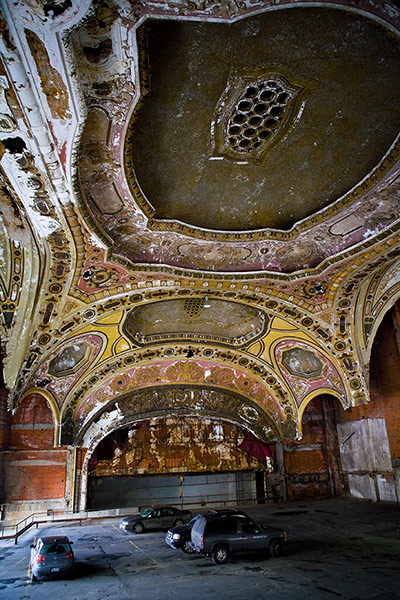
This is like the Roman Forum when cows grazed there: a relic of grandeur humbled, and all the more beautiful for that. Except the rise and fall of Detroit has been at automobile speed, in decades rather then centuries, so it was as recently as 1926 that the 4,000-seat Michigan theatre, pulsating with baroque opulence, opened. Built on the site of the workshop where Henry Ford built his first car, it solidified the wealth of the motor industry into columns and vaults. It closed in the 1970s, partly (paradoxically) because of insufficient parking Photograph: Timothy Fadek/Corbis
Miami, 2010
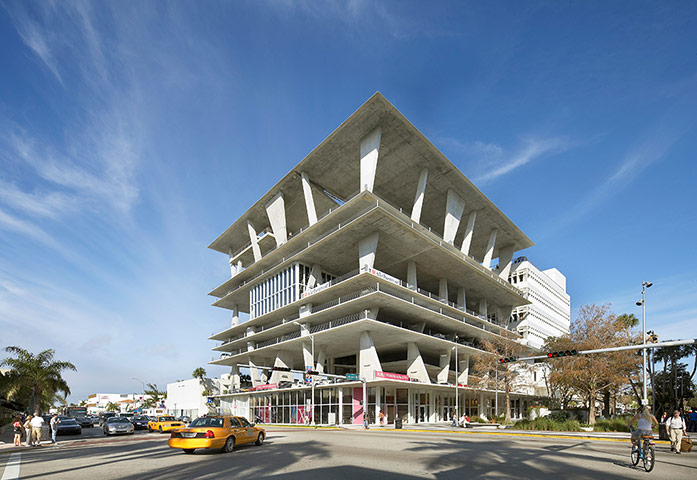
The parking garage as urban space, or cultural event, with a fashion store on the fifth floor and a restaurant on the top, as well as a penthouse for its developer cannily slipped in. Weddings, parties and film-shoots happen here. Even if you do indeed want to park your car here, it is a rewarding experience, with palatial ceiling heights and ocean views. The architects are Herzog and de Meuron, also responsible for Tate Modern and the Beijing bird’s nest stadium, and this is one of their most satisfying works, a petrified house of cards made with thin-edged concrete Photograph: Alamy
New Haven, Connecticut, 1963
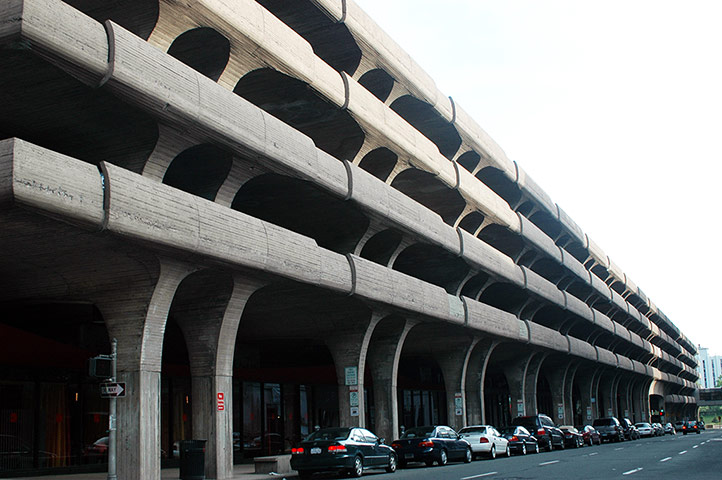
The Michigan theatre building and 1111 are examples of the joy of the hybrid – the transgressive pleasure that comes from putting cars in unexpected places. Paul Rudolph’s Temple St garage is, by contrast, a place for parking in that seizes the occasion for vigorous concrete expressionism. Even the light fixtures are concrete, ossified plumes of the eruption that seemingly formed the whole building. According to Simon Henley, author of the inspirational The Architecture of Parking, the rough, board-marked material has a hand-crafted, “haptic” quality, its textures “accentuated over time by weathering” Photograph: Kokyat Choong/Alamy
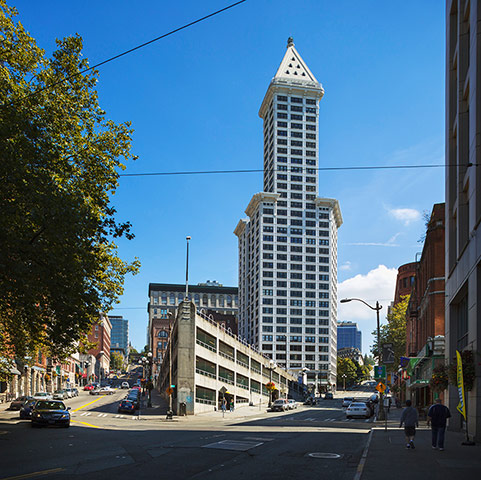
Seattle, early 1960s
This looks like a premonition of the work of Zaha Hadid, but is actually the practical outcome of the geometry of its site, which is a triangle, on a steep slope. By sloping its decks in the opposite direction to the hill, it efficiently makes it possible for the surrounding streets to double as access ramps. It stands impertinently in front of Seattle’s most famous historic landmark, the Smith Tower of 1914, and it controversially replaced the once-magnificent Hotel Seattle, but it is beautiful in its own right. This city, by the way, has several fine car parks, but the sinking ship is the most striking Photograph: Jon Hicks/Corbis
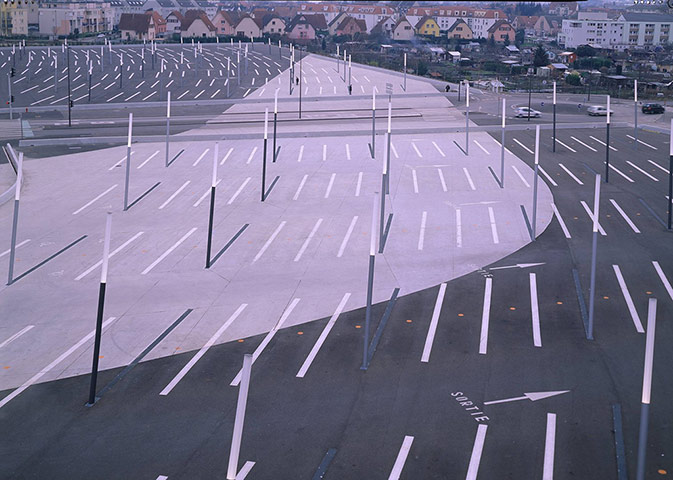
Strasbourg, 2001
This actually is the work of Zaha Hadid, a tram/car transport interchange that makes palpable the abstract forces of transport logistics. Its genius is that it does so much with the basic elements of car parking – asphalt, paint, lights, and tones of black, grey and white. With the simple, but unusual, idea of putting the parking bays on a slight curve, and applying bold swaths of light and dark, it creates what (almost) could be called land art. There is some three-dimensional construction as well, when the flat patterns fold themselves into a zig-zagging portico that is mostly for the benefit of the trams Photograph: Zaha Hadid architects
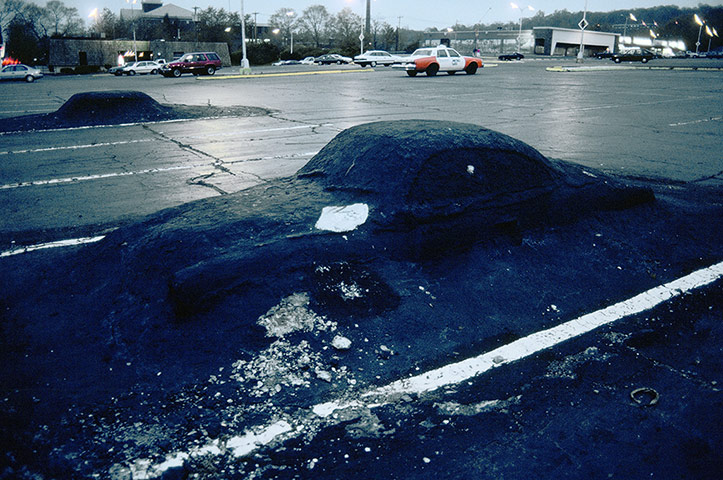
Hamden, Connecticut, 1978
More poetry in asphalt, this time by artist/architect James Wines, in which a Pompeian tide of dark stuff has poured itself over a row of cars. The idea, said Wines, was “to make a public space out of something that’s already inherently there”. Of course, Wines’s intervention makes it harder to park actual, still-working cars, which means it is really an anti-car park. Also, a second entry for Connecticut (along with Paul Rudolph’s Temple Street), which is not bad for the third-smallest American state Photograph: Francois Le Diascorn/Getty Images
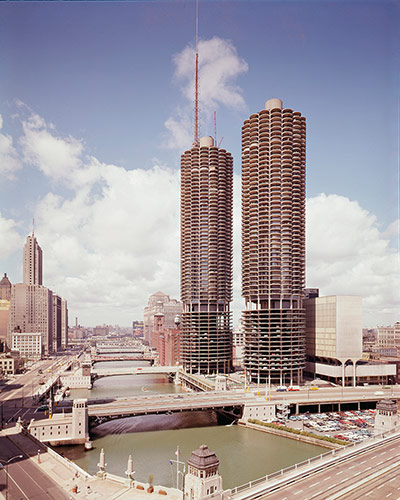
Chicago, 1964
Nowadays cars are usually a dirty secret in urban housing, to be made invisible or banned altogether. Bertrand Goldberg’s design for the Marina City towers in Chicago is a full-throated roar of celebration of the automobile that, by putting parking on a prime waterside location, breaks what is now thought good practice. The bottom 20 storeys of the twin towers consist of continuous spirals of parking, motorised Guggenheims, which echo the curved balconies of the apartments above. The image is of man and machine in harmony. Goldberg’s aim was to attract people back into cities from the suburbs, which might explain why he wanted to match the latter’s friendliness to cars Photograph: Chicago Historical Society/Getty Images
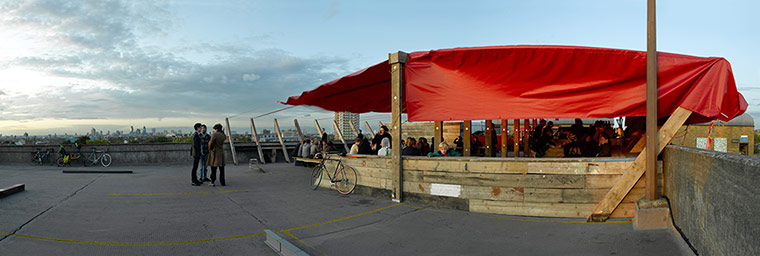
London, 1983/2007
The Michigan theatre in reverse: a car park made into arts and performance space, rather than the opposite. Also a poor person’s 1111: if the Miami car park can be a bit too swanky and corporate for its own good, the Bold Tendencies programme, which has been running here since 2007, is free. On the roof, Frank’s café offers cheap food and millionaire views of the London skyline. Architecturally, the car park is not bad, with some nice concrete structure and ramps, but not exceptional. It is the programming that makes it interesting. You can also still park a car here
Photograph: Arcaid Images/Alamy

Orestad, Copenhagen, 2008
A reprise of the Marina City idea of living above your car, in the less intense environment of a Copenhagen suburb. The joke – that this is an artificial mountain in a country short of such things – is reinforced by alpine images formed by perforations on the cladding of the parking. It is an effective way of making something where there was previously almost nothing. Inside the parking areas, a certain drama is achieved by the terracing of cars, luridly lit in red, orange and green. It was designed by Bjarke Ingels and Julian de Smedt, who once formed a precocious practice called Plot, but have now fissured into separate businesses Photograph: Alamy
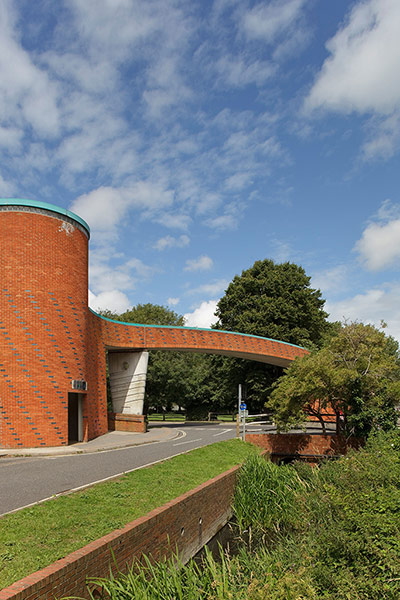
Chichester, 1991
It was a tough call, whether to include this or the beautiful, Paul-Rudolph-like parking above Preston bus station. The Avenue de Chartres car park, by Birds Portchmouth Russum makes it partly in the interest of variety, as a bold attempt to tame the beast of parking in the context of an historic city. It makes the access stairs into castle-like towers, arranged along something resembling a city wall, which also helps define one of the approach routes into the city. A brick footbridge then flies improbably (given that bricks don’t fly) across the road, in the direction of the city’s cathedral Photograph: Alamy