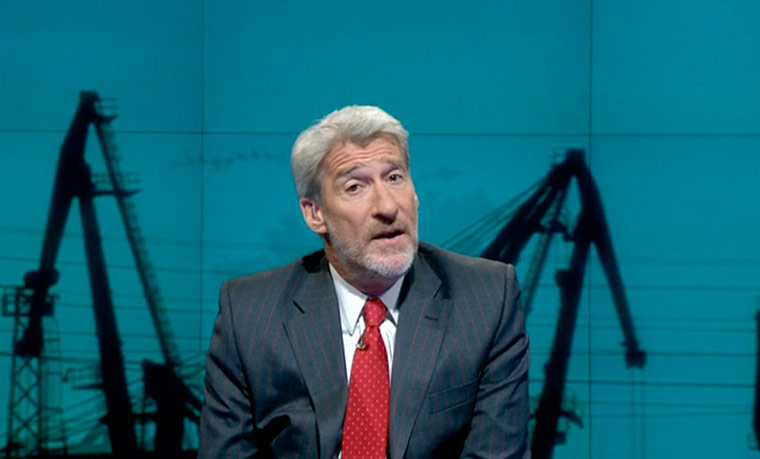
This year’s most talked-about beard was the silver foxy one on the face of the pitbullish TV presenter. Within minutes of Paxo returning to his Newsnight chair after a fortnight off in August, his new facial hair was trending on Twitter. By the next morning, the beard had its own account. “I’ve grown a beard for the last few summers and suddenly wondered whether I really needed to shave it off,” snorted Paxman, nonplussed by the fuss. “I may keep it or I may shave it off, but I’ll make my own decision.” “Right, that’s it,” added colleague Emily Maitlis. “I’m working on a moustache” Photograph: PR
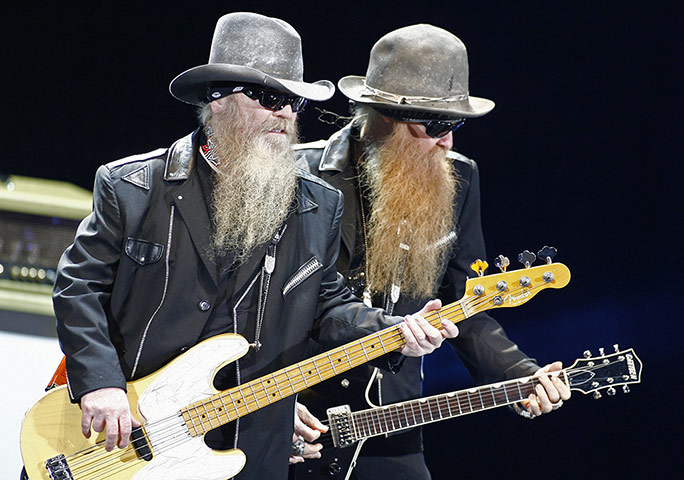
Eighties rock was all about big hair, and Texan “barrelhouse” power-blues trio ZZ Top were no exception – except their voluminous locks were located on their chins. Frontmen Billy Gibbons and Dusty Hill grew their chest-long beards without each other’s knowledge while the band were on a two-year hiatus in the late 70s. Their most commercially successful period followed soon afterwards, with 1983 album Eliminator spawning hit singles Gimme All Your Lovin’, Sharp Dressed Man and Legs, the videos for which were on heavy MTV rotation. In a notorious nugget of pop trivia, the only beardless band member is drummer Frank Beard. Oh, the delicious tonsorial irony Photograph: Trish Tokar/Getty Images
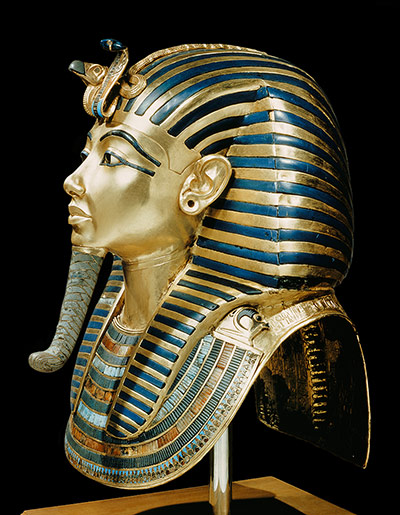
The Egyptian pharaoh caused a global sensation in 1922 when his nearly intact tomb was discovered by archaeologists Howard Carter and the Earl of Carnarvon. Tutankhamun’s golden burial mask remains the most popular symbol of ancient Egypt. It’s highly stylised and likely bears little resemblance to Toots himself, but has a long, narrow false beard, inlaid with blue glass and plaited like a pigtail, with the end jutting forward. The beard is thought to have been added to the 18-year-old’s image, as was traditional, to resemble the god Osiris and represent the boy ruler’s divine nature Photograph: Corbis
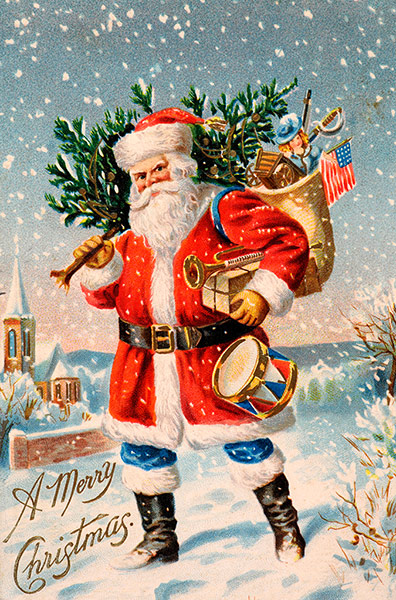
What with living at the North Pole and flying a sleigh at high altitudes, it’s easy to see why Father Christmas needs a thick beard to keep his kindly face warm. His white-whiskered look was popularised by US cartoonists and by Clement Clarke Moore’s 1823 poem, A Visit from St Nicholas, which opens with the line “’Twas the night before Christmas” and says “the beard on his chin was as white as the snow”. His appearance also absorbed elements of prodigiously bearded Norse god Odin. The beard is such a key part of Mr Claus’s look that children invariably give it a yank to test a Santa’s authenticity. Which must hurt the real one Photograph: Popperfoto/Getty Images
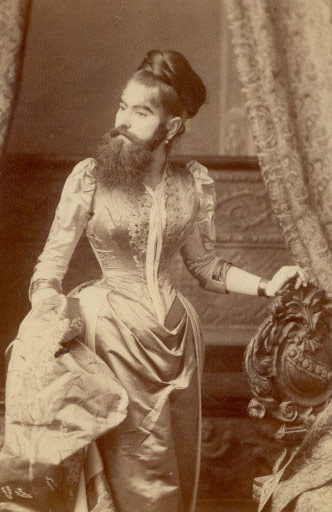
Annie Jones was born in 1865 with a hairy chin and joined PT Barnum’s circus aged nine months, in return for her parents being paid $150 a week, which they used to raise their other 11 children. She was initially billed as “the Infant Esau”; by the age of five, she had a bushy beard and became known as the Bearded Girl, later the Bearded Lady. Jones became Barnum’s most popular attraction, toured Europe and turned down Russian painters who asked her to pose as Jesus. Besides her famous beard, she had floor-length hair, married twice and died of tuberculosis aged 37. Her dying wish was to be buried with her whiskers uncut Photograph: PR

John Adams was a mid-1800s Californian mountain man who trapped and trained bears for zoos and circuses. Grizzly’s best furry friend was called Ben, after his hero Benjamin Franklin. Adams achieved further fame more than a century later, when his story was turned into a novel, The Life and Times of Grizzly Adams, then a feature film and NBC TV series. This starred animal handler-turned-actor Dan Haggerty, owner of a lustrous, Bee Gees-esque beard. The series was particularly huge in 70s Germany, where its theme song, Maybe, went to Number 1 and a city in Lower Saxony named its ice hockey team Wolfsburg Grizzly Adams Photograph: Alamy
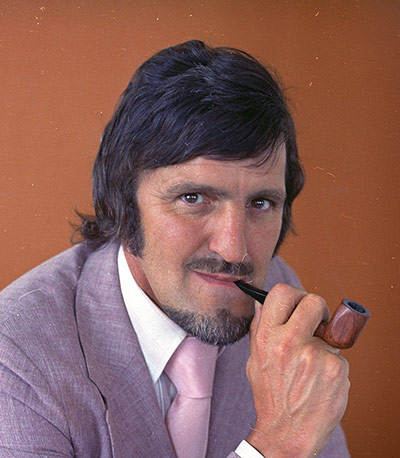
The football pundit is blessed with a prominent pointy chin, even more so than fellow 70s TV icon Sir Bruce Forsyth. In his cult hero heyday, James Hill OBE opted to cover it up with a tidily kept goatee – which, of course, only succeeded in drawing more attention. His beard helped make Hill a character in the BBC comedy Stella Street and led to appearances in Viz comic strips. No one quite knows why but “Jimmy Hill!”, “Itchy chin!” and “Chinny reckon!” became school playground slang to convey mocking disbelief, invariably accompanied by the exaggerated stroking of an imaginary, comically lengthened beard Photograph: Rex Features
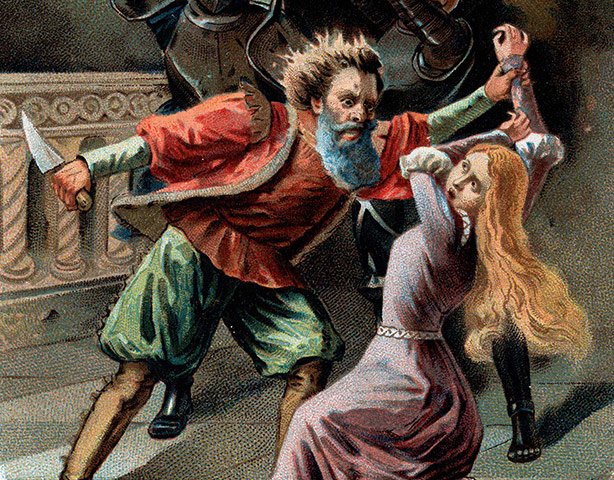
The star of a French folk tale was a wealthy nobleman with a nasty habit of murdering his wives and storing their bodies in the basement of his chateau. Bluebeard is thought to be based on Baron Gilles de Rais, a real-life 15th-century Breton aristocrat and self-confessed serial killer of more than 140 children. Charles Dickens, himself a notable beard-wearer, went one louder in his short story based on the myth: his bloodthirsty Bluebeard cannibalises each wife a month after marriage. The villain’s colourful beard is thought to be a symbol of his otherworldly origins. Either that or an early form of blue rinse Photograph: Stefano Bianchetti/Corbis
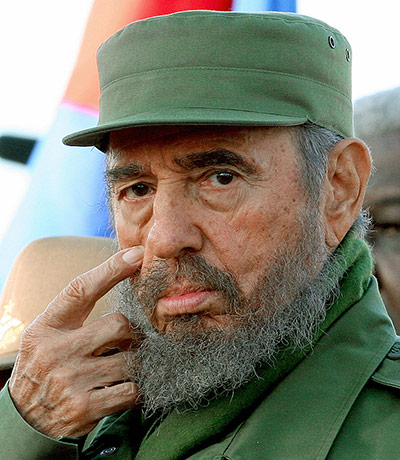
The Cuban communist revolutionary claims his beard isn’t a style choice but a matter of efficiency: he reckons he saves 10 working days a year by not shaving. He grew it in his youth as a guerrilla fighter without access to a razor. “It turned into a badge of identity,” Castro says. “We were los barbudos – the bearded ones. For a spy to infiltrate us, he had to start growing his beard six months ahead.” The Cuban Project – the CIA’s covert ops against his regime, authorised by President Kennedy – even included a plan to contaminate Castro’s clothing with thallium salts, a potent depilatory that would make his beard fall out Photograph: Adalberto Roque/AFP/Getty Images
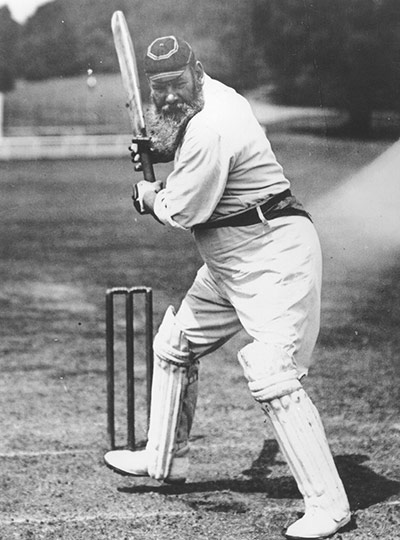
William Gilbert Grace (1848-1915) is not only considered by many to be the greatest cricketer of all time but was arguably the owner of the best-ever sporting beard. The Falstaffian all-rounder bestrode the Victorian cricket world like a colossus and is credited with dragging the sport into the professional era. Cricket historian Sir Derek Birley wrote that, in 1870, Grace “scorned the puny modern fashion of moustaches” and grew the “huge black beard” that made him so instantly recognisable, along with his red and yellow MCC cap and well-fed girth. Sixty years after his death, Grace’s image was used as the face of God in the film Monty Python and the Holy Grail Photograph: Hulton/Getty