More than 770,000 children have vanished from America's food-stamp rolls since Donald Trump rewrote the rules, even as the president keeps branding the collapse a record-setting win.
A ProPublica investigation published on 17 June 2026 found that at least 776,134 children stopped receiving Supplemental Nutrition Assistance Programme (SNAP) benefits in the year after Trump signed his sweeping domestic policy law.
The children make up nearly half of everyone cut from the programme in the 12 states that report participation by age. Republicans had promised the law would shield the most vulnerable, including children, from harm.
A Law Sold as Protection for the Vulnerable
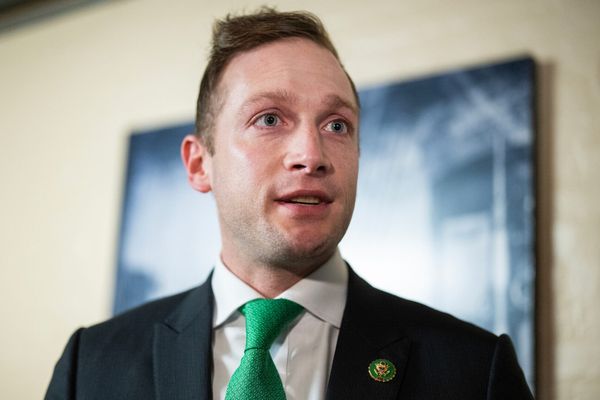
During the House debate over the bill last year, its Republican backers told colleagues that families and children had nothing to fear. Representative Glenn Thompson of Pennsylvania, who chairs the House Agriculture Committee, said the changes would 'restore integrity' to SNAP and serve the most vulnerable, including children.
Representative Dusty Johnson of South Dakota was blunter still, telling the chamber that pregnant women, parents of young children and disabled people would all be left untouched.
The reality has diverged sharply from those assurances. Trump signed the One Big Beautiful Bill Act into law on 4 July 2025, carving roughly £138 billion ($186 billion) from SNAP over a decade, the largest cut in the programme's history.
The law forced new work requirements onto older adults and parents of teenagers, while shifting billions in administrative and benefit costs onto the states. Those twin pressures, experts say, have made the programme harder to reach precisely when families need it.
Arizona has been hit hardest of all. Some 205,223 children there have lost the benefit since July 2025, a 55 percent fall, according to state figures compiled by ProPublica. Louisiana recorded the second-steepest child decline at 22 percent.
The President's Shifting Victory Lap
Trump has turned the shrinking caseload into a recurring applause line, though his numbers keep changing. His White House published an op-ed in April declaring that SNAP had 3.3 million fewer participants than when he took office, framing the drop as proof the government was working again.
In his State of the Union address on 24 February 2026, he told Congress, 'in one year we have lifted 2.4 million Americans, a record, off of food stamps,' a moment captured on the record by Common Dreams.
The claim has grown with each retelling. By May 2026 he was telling an audience the figure was nearly 5 million, months after citing 'over 600,000' the previous autumn. Independent fact-checkers have repeatedly flagged the framing.
The nonpartisan Congressional Budget Office and other analysts attribute the decline mainly to the law's new paperwork and work rules, not to families climbing out of poverty, as NBC News reported.
Inside a recent congressional hearing, the gap between the boast and the data turned tense. Representative Jim McGovern, a Massachusetts Democrat, pressed Agriculture Secretary Brooke Rollins on the loss of food aid for children.
Rollins dismissed the 700,000 figure as 'not correct' and argued that most people removed from SNAP were 'fraudulent', a characterisation ProPublica noted it had independently checked against the underlying data.
When Paperwork Becomes a Barrier to Food
Researchers say the children were never the target, yet they have become what one analyst called 'collateral damage'.
Katie Bergh, a senior policy analyst at the Center on Budget and Policy Priorities, told ProPublica that overstretched state agencies racing to comply with the law are not focused on keeping the programme accessible. Her organisation's own analysis reached the same broad conclusion, finding roughly 700,000 fewer children on the rolls.
The administrative strain is visible in the numbers. In Massachusetts, the share of SNAP applicants who phoned the state assistance line and could not reach a caseworker climbed from 61 percent in November to nearly 81 percent in March, per state scorecards.
Nationally, USDA data show 4.3 million fewer people on SNAP in February 2026 than a year earlier, leaving 37.8 million participants.
Hunger experts warn the savings are an illusion. Mariana Chilton, a child-hunger researcher at the University of Massachusetts Amherst, told ProPublica that cutting children off will cost far more later, calling it a 'public health crisis' in the making and likening early-childhood hunger to a brain injury.
Food banks are already absorbing the overflow, with Arizona's largest, St. Mary's, reporting a 15 percent jump in need this year.
In a Phoenix food-bank queue, Ana Alvarez, a single mother of five who works at a restaurant, still waits on a SNAP application she filed back in December. The record the White House celebrates looks, from her car window, like an empty cupboard.