
The '70s were the decade-long equivalent of March. It came in like a lion and went out with a mirrored disco ball.
In between was a national malaise and a long, national nightmare. It was the best time for movies and the worst time for fashion. And we were more concerned about the price of oil than the fact that, for two full years, we had both a president and a vice president who had not been elected to their positions.
We got out of Vietnam, but we got into polyester.
In the culinary world, though, things were not that bad. In the '70s, people began to think more seriously about eating for their health; the health-food fad began in earnest and has yet to fade away. Yogurt became popular, and so did granola.
Two culinary events in the '70s changed forever the way we look at food.
The iconic restaurant Chez Panisse opened in Berkeley, Calif., in 1971, eliminating the stuffiness previously associated with fine dining and igniting a revolution of cooking with the best possible, local ingredients.
The other cuisine-altering event was the 1977 publication of "Moosewood Cookbook." One of the best-selling American cookbooks of all time, "Moosewood Cookbook" moved vegetarian food from something of a punchline into a viable and even popular way to cook (though "Moosewood" author Mollie Katzen, who originally self-published "Moosewood" in 1974, gives more credit to Anna Thomas, who came out with "The Vegetarian Epicure" in 1972).
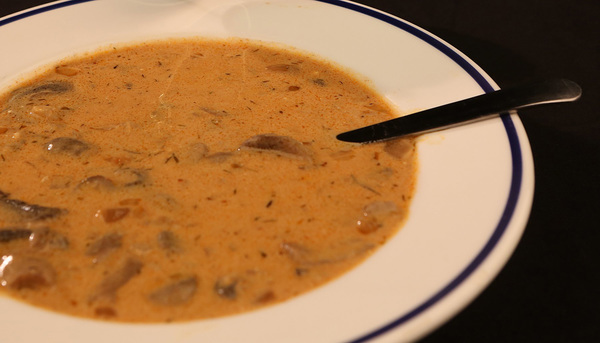
So for my culinary sojourn through the 1970s, I turned to my favorite recipe in "Moosewood Cookbook," Hungarian Mushroom Soup. I had remembered liking it, but I did not recall just how staggeringly rich and filling it was.
As the book's recipes often did, this one calls for tamari or soy sauce to create an earthy, umami flavor to make up for a lack of meat. A shot of lemon juice, too, brightens the taste.
The soup has the expected mushrooms, onion, stock and milk, plus a hefty dose of paprika and dill for that authentic Hungarian piquancy. It also has lots of butter and sour cream _ health food may have come into its own in the '70s, but plenty was still being served that wasn't healthy.
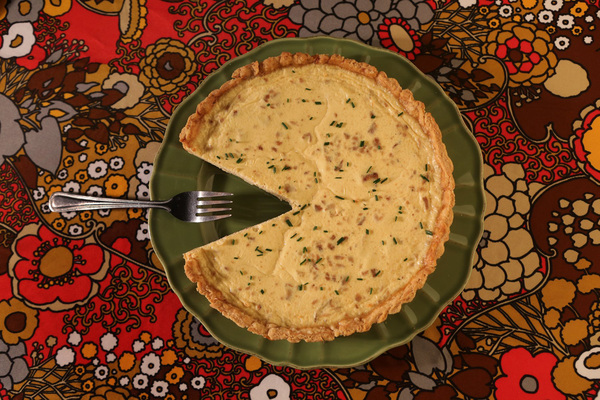
Like Quiche Lorraine. Quiche Lorraine was everywhere in the '70s; any luncheon was bound to have it. And why not? With a filling made from eggs, cream and shredded cheese, it is basically a custard set inside a tart shell _ with bacon.
Sales dipped dramatically after the 1982 publication of the book "Real Men Don't Eat Quiche," but maybe it is time to bring them back up again. It's hard to get any better than cheesy custard, crust and bacon.
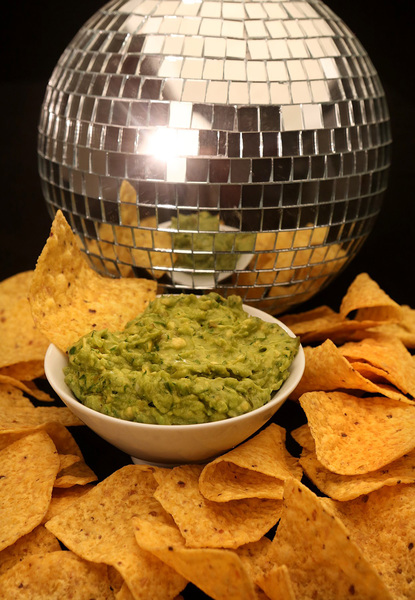
Every bit as ubiquitous as Quiche Lorraine in the '70s was, perhaps surprisingly, guacamole. Although it had been available in certain places for decades, when the country discovered it as a whole in the '70s it suddenly became a part of every summertime gathering.
Because everyone makes pretty much the same guacamole as everyone else (some use garlic powder and onion powder, some don't), I decided to go back to the basics with mine.
I made it without lime juice. That may not be the 1970s way to do it, but apparently it is the authentically Mexican way.
And I have to say I loved it, even though I am also a huge fan of limes. With just five ingredients (avocados, serrano chiles, cilantro, chopped onion and salt), this limeless version really lets the avocado flavor shine through. With guacamole, the avocado should always be the star.
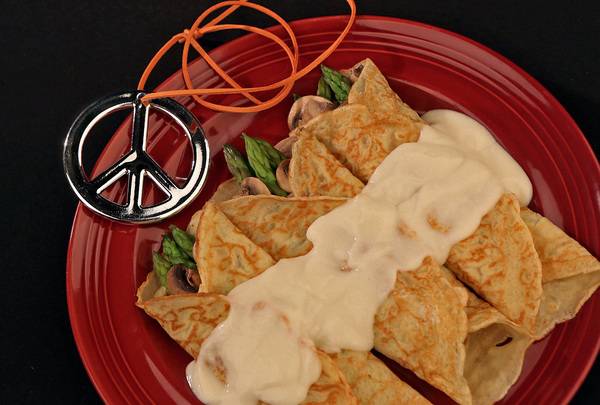
The '70s simply would not have been the '70s without crepes. Crepe restaurants sprang up all around the country, most notably the Magic Pan, a chain that was owned by Quaker Oats throughout the decade.
The great thing about crepes is you can use them for practically everything. Their popularity soared when people realized they could be used to make a fancy presentation of leftovers, but they are also great with vegetables, chicken or seafood _ try any of these with a simple white sauce. Just add a little sugar to the batter for dessert, and fill them with ice cream, whipped cream, or jam.
Or just eat them fresh off the pan, as I did. Well, some of them.
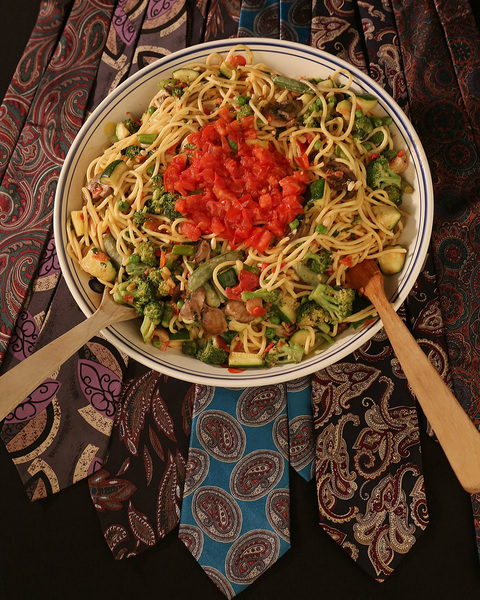
Finally, I made a big pot of pasta primavera, which, I was surprised to learn, was invented in the 1970s, in New York City. Its actual origin is a matter of some debate, but it is universally agreed that it came to prominence in 1976 with the opening of the famed Le Cirque restaurant in New York.
A 1977 recipe from Le Cirque in the New York Times sealed its popularity. It became the dish of the moment, the dish of the hour, the dish of the decade.
I made the version as originally printed in the Times, and it was so much better than any other version I've had that it was like eating a different dish. This one has the cascade of vegetables that you would expect (broccoli, zucchini, asparagus, green beans, mushrooms, tomatoes, peas and pea pods _ I used sugar snap peas) plus some ingredients that you might not.
Butter, for one, and heavy cream. Plus, Parmesan cheese, lots of olive oil and toasted pine nuts.
All this time, I have thought of pasta primavera as a healthy meal, but no. It may not be good for you, but it tastes amazing.