I had been in Vietnam a little over a year. I wasn’t drafted – my father passed away on my 16th birthday, and I joined the service a year later. I was a crew chief door gunner on the Huey helicopter. I hadn’t even heard of that position when I joined up; I was just looking to be an aircraft mechanic. While we were in the air, of course, everybody was a gunner.
Every day in Vietnam was pretty much the same: we went to war in the morning and came back at night. I didn’t feel traumatised at the time. My main concern was to not lose focus and get killed, because I wanted to come home to my mother. I suffered later in life – I had a very short fuse and would get into physical confrontations. Once I choked a guy at work for looking at my pay check.
In 2001, aged 52, I fell apart completely. I would not move from the recliner all day, I didn’t want anybody around me. Thank God for my wife, who recognised that I needed some help. She took me to the Veterans’ Association hospital. I was diagnosed with chronic PTSD.
In Vietnam, I missed my mother’s cooking. The food was rationed and from a can, but my mum sent whole salamis and cheeses. I would cut the green mould off when it arrived; it wouldn’t last long because I would share it with everybody.
I was so excited to fly home. I flew with other soldiers from Saigon to Hawaii to Travis air force base in California. We weren’t treated well when we landed; there was a lot of name-calling from anti-war protesters. We were labelled baby-killers. It’s why I never talked about the war for so many years; I didn’t feel anyone cared or liked me because I was a Vietnam vet.
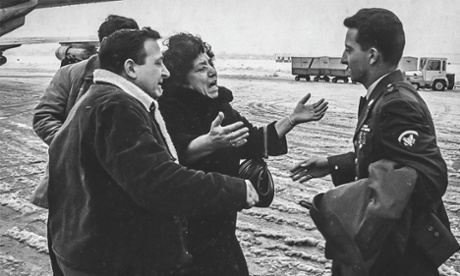
From California, I flew home alone to Boston. We had to circle the runway for almost an hour before we could land because of the snow. I wanted to get on the ground so badly because I knew my mum and my brothers John and Angelo were going to be there.
When I came out on the runway to see them, I was not cold at all. I just wanted to get to my mother; I hadn’t seen her for over a year. When I saw her there on the runway waiting for me, and I hugged her… well, along with the birth of my kids and marriage to my wife, coming home to my family was one of the greatest moments of my life.
I didn’t even realise the picture had been taken until I saw it on the front page of the Record American the next day. I picked up the paper and couldn’t believe it: “Mom, look! We made the newspaper!” It made the papers everywhere, even in Italy. People recognised me: “You’re the soldier from the paper!” My mother got phone calls from people – second world war and Korean war veterans – from everywhere, for years afterwards. She cherished that photo, and my brother had a copy hanging in his restaurant.
After the picture was taken, we went home. It was March, but when I walked into the house, there was a 7ft Christmas tree, decorated, with all the gifts under it. It was still green. My mother kept it alive until I came home. And we had Christmas, right then, and a big meal with all my family and nieces and nephews. I always cherish Christmas – my mother always made it great for us, and she did it then, too.
• Interview by Erica Buist
Are you in a famous photograph? Email thatsme@theguardian.com