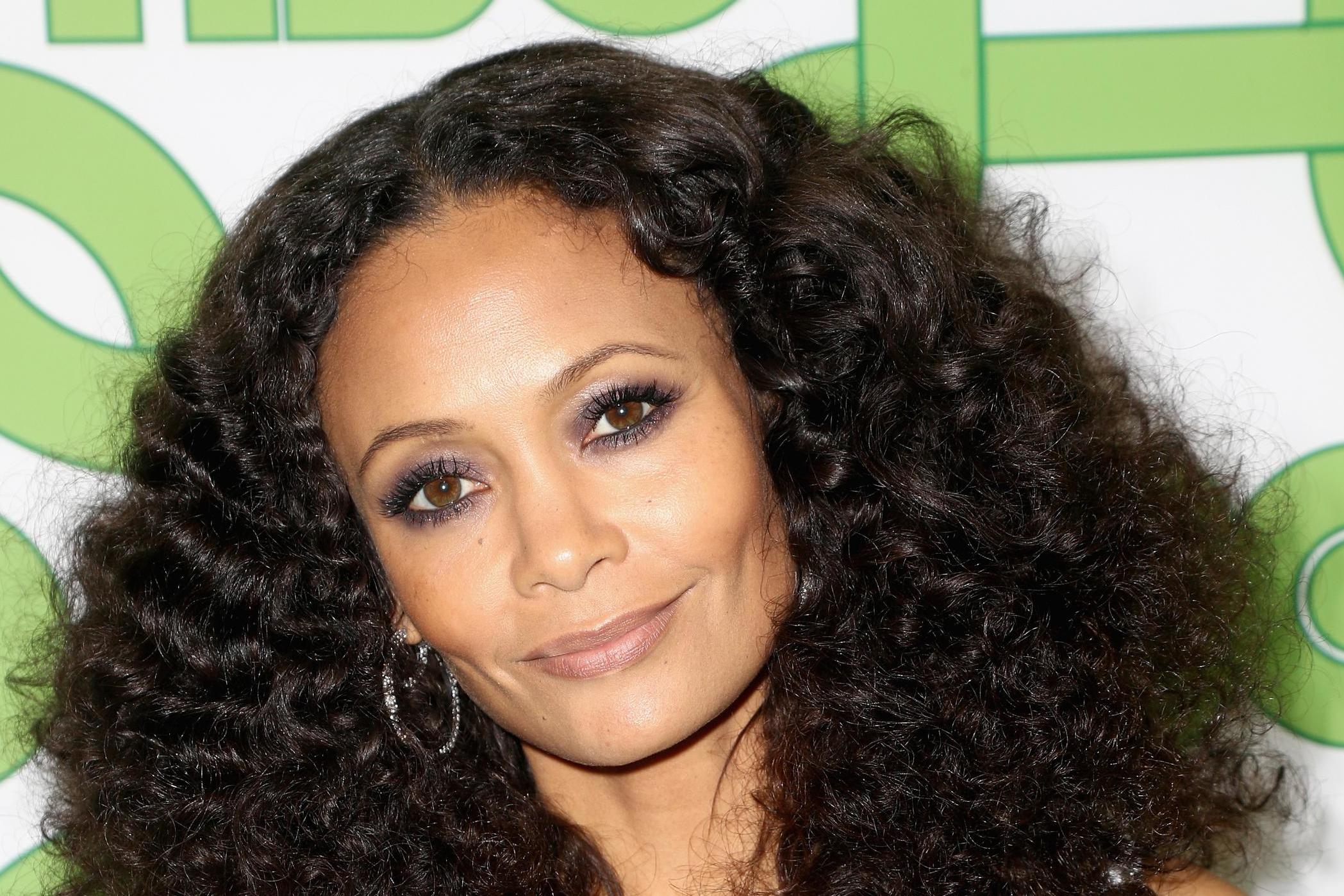
Thandie Newton has spoken out about the discrimination she faced as a child, claiming that she was not allowed to have her photograph taken at school because of her braids.
The British actor recalled the memory on Twitter after the news broke that hair discrimination would be made illegal in New York City, with punishable fines of up to $250,000 (£187,522), earlier this month.
“Woohoo!!!!!!!” she wrote in a tweet on Tuesday that has since garnered more than 1,700 likes.
“Take THAT the nuns at my primary school !! I wasn’t permitted to have my photo taken on School Photo Day because Mum had given me beautiful rows of braids the night before – specifically to make me look my best.
“Now hair descrimination is illegal in NYC. Bliss x [sic]”.
Newton’s tweet sparked a mixture of responses, with some social media users rejoicing in the news of the ban while others shared similar stories detailing discrimination they faced as a child because of their hair.
“Yesssssssss,” wrote one person. “(My brother was told to keep his Afro short at school when white boys were allowed then fashionable curtains. I was raging).”
Another added: “I am both incensed and sorry that this happened to you; am also sad that a LAW is required to be passed in order to stop such discrimination - but, given that it is: hurrah for NYC!”
The new guidelines state that hair discrimination will be considered racial discrimination in New York City.
According to The New York Times, the advised law applies to “natural hair, treated or untreated hairstyles such as locs, cornrows, twists, braids, Bantu knots, fades, Afros, and/or the right to keep hair in an uncut or untrimmed state” and is based on the “argument that hair is inherent to one’s race”.
Under the law, any discrimination against someone’s hair or hairstyle at work, school, or in public places will now be considered racial discrimination, and victims of such discrimination will be able to seek damages.