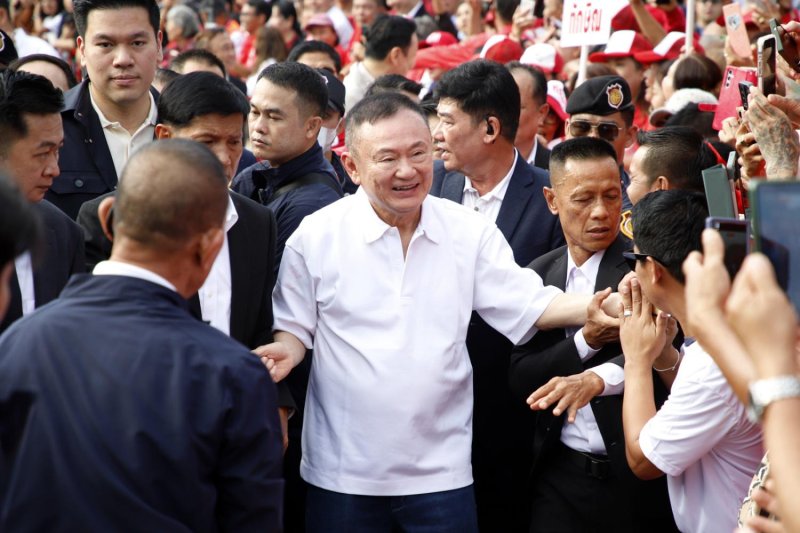
The royal pardon granted to former prime minister Thaksin Shinawatra on the occasion of Her Majesty the Queen’s birthday has formally closed a chapter in one of Thailand’s most contentious political sagas.
Having already secured parole earlier this year, Thaksin was due to remain on probation until Sept 9, with obligations including monthly reporting to probation authorities. The pardon removes those remaining conditions and effectively brings his sentence to an end.
Legally, the 76-year-old former premier is now a free man. Politically, however, his newfound freedom has reignited a question that has shadowed Thai politics for nearly two decades: Can Thaksin truly stay away from power?
The issue is not merely whether he will return to politics in any formal capacity. The more pertinent question is whether he will continue to wield influence behind the scenes, shaping government decisions and party strategy while remaining outside official office.
For critics, the answer appears self-evident.
Following his return to Thailand in August 2023 after 15 years in self-imposed exile, Thaksin repeatedly insisted he wished to spend his remaining years with his family and had no desire to re-enter politics. Yet critics argue that events since his return suggest otherwise.
Much of the controversy surrounding Thaksin’s return centred on the so-called “14th-floor saga” at Police General Hospital. Instead of serving time in a correctional facility after being sentenced for graft-related convictions, he was transferred to hospital on medical grounds and remained there throughout his imprisonment.
The arrangement fuelled accusations that he received preferential treatment unavailable to ordinary inmates and, more damningly, claims that he never spent a single night in prison.
The court ruled that his hospitalisation and the manner in which his sentence was enforced were unlawful and could not be counted as time served.
While investigations and legal disputes over the circumstances continue to reverberate through the political arena, opponents have consistently portrayed the episode as evidence that Thaksin remains a uniquely influential figure within the country’s power structure. Those suspicions only deepened during the administration of his daughter, Paetongtarn Shinawatra.
Throughout her premiership, Thaksin frequently appeared in public, delivered speeches on economic policy and met business groups, diplomats and local political networks. Although he held no official government position, critics claimed he acted as an unofficial adviser whose influence extended far beyond that of an ordinary political elder.
Several key policy initiatives were viewed through this lens, according to critics. Whether involving economic stimulus measures, debt-relief programmes or broader development strategies, opponents often alleged that major decisions bore the imprint of Thaksin’s thinking. Supporters countered that such claims were exaggerated and reflected his extensive experience rather than any direct control.
Nonetheless, perception often matters as much as reality in politics, an observer said.
The image of Thaksin as a political “back-seat driver” has long been embedded in Thailand’s political discourse. Successive governments linked to the Shinawatra family have faced accusations that real authority resided not with elected office-holders but with the party patriarch himself. That perception has proved difficult to dispel, even when party leaders have publicly rejected the notion.
The latest reassurance has come from Pheu Thai leader Julapun Amornvivat, who insists that Thaksin will not interfere in the party’s affairs, now that it is the second-largest party in the Bhumjaithai Party-led coalition government.
According to party figures, the former premier’s legal liberation should not be interpreted as a prelude to renewed political activism. Yet scepticism remains widespread, the observer noted.
Part of the reason lies in Thaksin’s unique position within politics. Few political figures have demonstrated comparable resilience.
Since being ousted in the 2006 coup, he has remained the central reference point around which much of the country’s political conflict has revolved. Political parties have risen and fallen, governments have changed, and constitutions have been rewritten, yet Thaksin’s influence has endured, the observer said.
His electoral legacy remains particularly significant. Many of the policy concepts associated with him — including populist welfare initiatives, village funds and grassroots economic programmes — continue to resonate with large segments of the electorate. Even opponents acknowledge his lasting impact on the country’s political landscape.
That reality creates a dilemma for both supporters and critics.
For supporters, Thaksin remains a valuable strategic asset. His experience, political instincts and extensive network could help guide the party through increasingly complex challenges. Thailand faces sluggish economic growth, rising public expectations and shifting coalition dynamics. In such an environment, some within Pheu Thai may find it difficult to ignore advice from the party’s most successful political strategist.
For critics, however, any visible role risks reinforcing concerns about democratic accountability. If unelected individuals are perceived to influence policy decisions through family connections, questions inevitably arise about transparency and responsibility.
The issue is not necessarily whether Thaksin offers advice, but whether that advice carries disproportionate weight because of his political stature and family ties, according to the observer. The broader political environment also deserves consideration.
Pheu Thai today faces a markedly different landscape from that which existed during Thaksin’s previous periods of dominance. Coalition politics is more fragmented, younger voters have shown growing support for alternative political movements, and public expectations of governance have evolved considerably.
As a result, direct intervention by Thaksin may not yield the same political benefits it once did. In fact, excessive visibility could become a liability by reinforcing opposition narratives that Pheu Thai remains overly dependent on one family, the observer said.
Now free of all remaining legal restrictions, Thaksin faces a choice, the observer added. He can retreat into the role of respected political elder, offering occasional observations while allowing the next generation to lead. Or he can remain an active participant in shaping political outcomes from behind the scenes.
History suggests politics has never been far from Thaksin’s interests. Yet the circumstances surrounding his freedom may also present an opportunity to redefine his legacy, according to the observer.
For now, the royal pardon has settled the legal question surrounding his sentence. The political question — whether Thaksin can truly step away from the centre of power — remains unanswered.
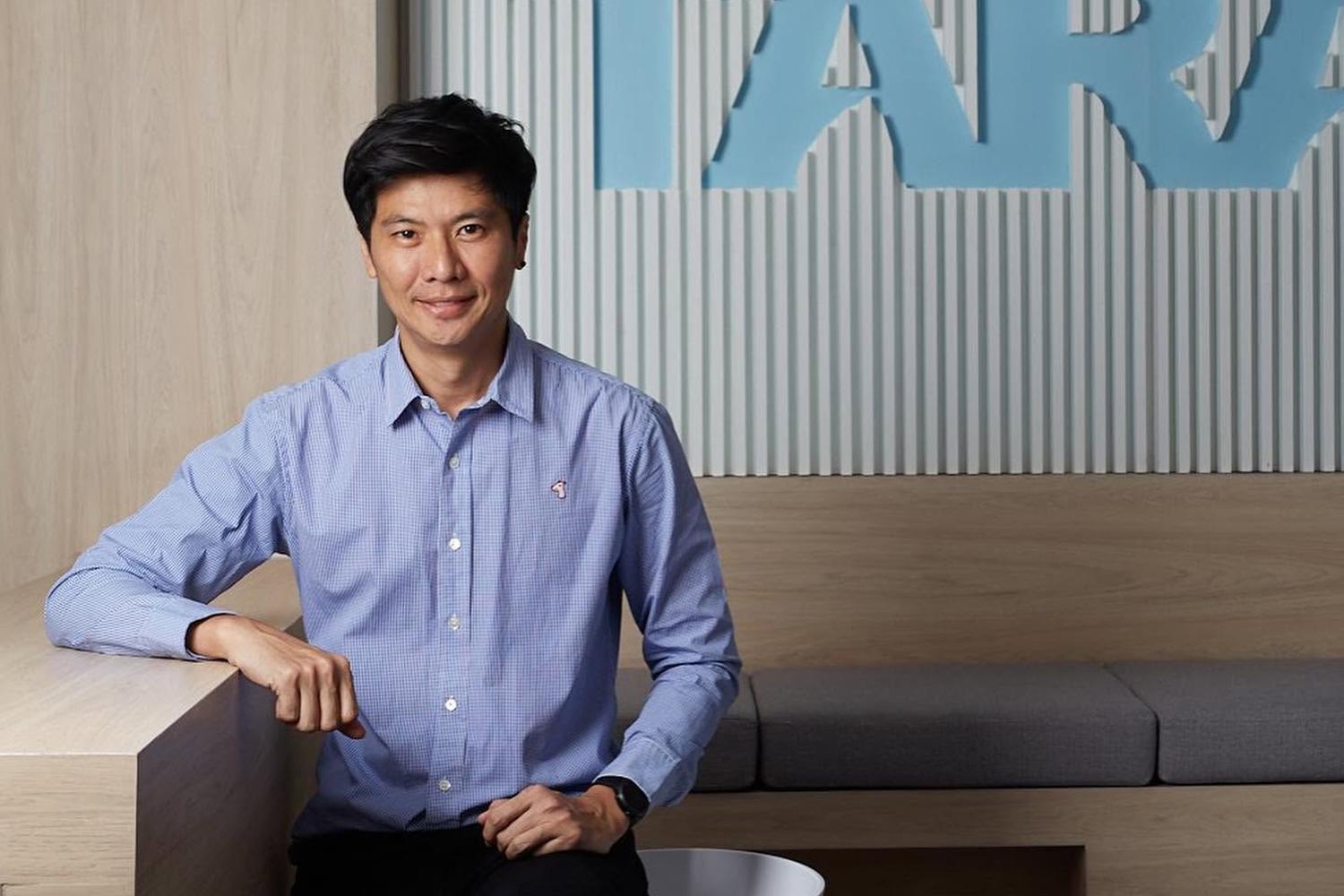
Spotlight falls on Pawoot
People’s Party list-MP Pawoot Pongvitayapanu is one of the leading critics of the government’s controversial TH-AI Passport project. However, scrutiny has now turned towards him.
A veteran of the e-commerce and information technology sectors, Mr Pawoot entered politics ahead of the Feb 8 general election and quickly established himself as one of the party’s leading voices on technology and digital policy. Many expected him to be among the candidates for a cabinet post had the People’s Party formed a government.
When the party came second in the general election and ended up in opposition again, he was named the party’s shadow minister for digital economy and society.
Mr Pawoot was among the first to criticise the 1.6-billion-baht TH-AI Passport project, a scheme overseen by the Ministry of Digital Economy and Society and aimed at expanding public access to artificial intelligence tools.
He raised questions about the procurement process, pricing and overall design of the scheme, arguing that it risked benefiting large business interests while failing to deliver meaningful benefits to the public.
His criticism led to a heated exchange with Digital Economy and Society Minister Chaichanok Chidchob, secretary-general of the ruling Bhumjaithai Party and son of party patriarch Newin Chidchob.
However, the political spotlight shifted after the Department of Special Investigation (DSI) revealed information linking Mr Pawoot to an investigation into an alleged forex investment scam.
According to the DSI, investigators uncovered financial transactions worth 28 million baht linked to brokers involved in unauthorised foreign exchange trading. The agency said it was preparing to issue a summons to Mr Pawoot as part of its investigation.
On Wednesday, the DSI formally accepted the forex investment fraud case as a special investigation, citing extensive online solicitation and evidence of widespread financial losses.
In response, Mr Pawoot said on his Facebook account that he was prepared to provide evidence and cooperate with investigators.
The issue has attracted widespread attention, with questions growing louder following Mr Pawoot’s apparent absence from parliamentary activities. Even the PP deputy leader, Sirikanya Tansakun, publicly called on him to explain the situation.
However, Ms Sirikanya herself came under criticism, with detractors arguing that she could have sought an explanation from Mr Pawoot directly through internal party channels rather than making a public appeal.
In his defence, Ms Sirikanya acknowledged that Mr Pawoot might need time to prepare documents and evidence for discussions with investigators, but said the public also deserved an explanation, provided it would not affect the legal process.
Ms Sirikanya also questioned why the DSI, after investigating the case for six months, had disclosed only the names of persons of interest without clarifying whether any charges were being considered. She said the timing of the disclosures could raise questions about possible political implications.
Not everyone agreed.
Thanaporn Sriyakul, director of the Political and Public Policy Analysis Institute, said the DSI would not publicly link an individual to a major criminal investigation without supporting information.
“Officials would not make such claims recklessly because they would have to take responsibility for them. There may be information that cannot yet be disclosed publicly as part of the investigation,” he said.
Mr Thanaporn also claimed that several high-profile political figures were among those allegedly affected by the investment scheme and had been encouraged to file complaints.
He said that while no charges had been filed against Mr Pawoot, investigators were expected to question him about financial transactions involving 28 million baht that allegedly passed through his account.
According to Mr Thanaporn, the money was transferred in 14 transactions of two million baht each into Mr Pawoot’s account before being transferred out again shortly afterwards.
“If the money came from gold trading, as Mr Pawoot explained, it would be unusual for the transfers to involve such consistent round figures,” he said.
Mr Thanaporn said investigators would decide whether to file charges after reviewing Mr Pawoot’s explanation and supporting evidence.
The analyst said the allegations are serious enough for his party to take action.
For years, the party has presented itself as an advocate of transparency, accountability and ethical standards in politics. It has repeatedly called on public officials facing serious allegations to step aside while investigations are under way.
He pointed to the case of Vorapak Tanyawong, who resigned as deputy finance minister in October last year after being accused of links to a scam network operating in Cambodia. He denied all allegations and said he had never been involved in fraud or illegal businesses.
Mr Thanaporn said the Pawoot case would test whether the People’s Party was prepared to apply to one of its own members the same standards it has demanded of political opponents.
He urged Mr Pawoot to consider stepping down from parliament while seeking to clear his name.