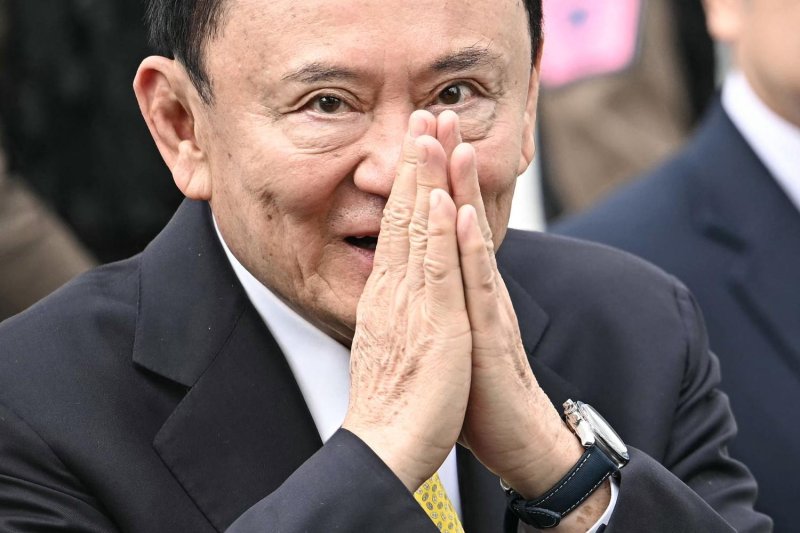
Nearly two decades after the September 2006 coup that toppled him, and 12 years after another putsch swept away the government of his sister, Thaksin Shinawatra has once again reached a defining political milestone.
This time, however, the story is not about a comeback. It is about an exit.
On the auspicious occasion of Her Majesty Queen Suthida's birthday and a national holiday on June 3, Thaksin received a royal pardon as part of a clemency initiative.
The decision immediately lifted the remaining legal consequences of his imprisonment. The electronic monitoring bracelet came off. The parole conditions disappeared. The former prime minister became, once again, a free man. And by all accounts, he has no intention of lingering in Bangkok.
Sources at his Chan Song La residence told the Bangkok Post Thaksin plans to leave for Dubai immediately, bringing to a close an extraordinary chapter that began with his return from exile in August 2023 and ended, less than three years later, with an act of royal grace.
For a politician whose name has dominated Thai politics for more than a quarter of a century, the decision to leave Bangkok so soon after regaining full freedom carries significance far beyond personal preference. It may also be one of the shrewdest political moves of his long career.
Indeed, few imagined then that his legal odyssey would end quite so swiftly.
His eight-year prison sentence had been successively reduced, first by royal clemency and later through parole arrangements, with most of his custodial period spent receiving treatment at Police General Hospital.
Now, with the latest royal pardon, all remaining constraints have disappeared.
For the 76-year-old billionaire, who in private conversations had already sounded more like a retired patriarch than a returning power broker -- lamenting the state of education, the quality of governance, the general condition of the country -- the timing closes a chapter that began with tanks rolling through Bangkok in 2006.
September will mark 20 years since that coup removed him from power while he was attending the United Nations General Assembly in New York. It is also 12 years since the military intervention that brought down the government of his sister, Yingluck Shinawatra.
Yet rather than using his regained freedom to reassert himself, Thaksin appears determined to put physical distance between himself and Thailand's daily political battles.
When teased in recent weeks about whether he intended to return to running the country, his response was immediate. "Phom mai ao laew," he said. I'm done with it. Dubai, he made clear, was where he intended to be.
No Birthday Spectacle
One of the clearest signals of that strategy is the decision to abandon any public celebration of his 77th birthday on July 26.
In previous years, birthdays at Ban Chan Song La -- the Mansion of Luminous Moon, his residence in Bang Phlat district of western Bangkok -- often evolved into informal political gatherings.
Ministers, MPs, business leaders, local powerbrokers, and loyal supporters would attend to pay their respects, creating images that inevitably fuelled speculation about his continuing influence.
This year will be different. Sources close to the family say there will be no major open-house reception, no political gathering. Thaksin is expected to leave Thailand for Dubai before then, making the annual birthday pilgrimage impossible. The absence of such an event removes one of the most visible reminders of his enduring political network.
That may be precisely the point.
A Changed Kingdom
Thaksin departs into freedom in a country that has changed dramatically since his political heyday.
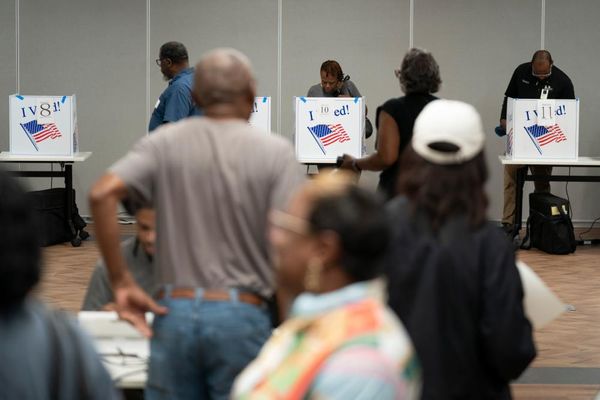
In the February 2026 snap election -- held while he was still behind bars -- his Pheu Thai Party suffered its worst result in history, winning only 74 seats, down from 141 in 2023. The conservative Bhumjaithai Party (BJT) under Prime Minister Anutin Charnvirakul swept 193 seats on a wave of nationalist sentiment stirred by tensions along the Thai-Cambodian border. Even Chiang Mai, Thaksin's home province and the symbolic heartland of red-shirt politics, returned not a single Pheu Thai MP.
Thaksin's daughter Paetongtarn, who became Thailand's youngest prime minister in 2024, was removed from office by the Constitutional Court last August following a leaked phone call with former Cambodian prime minister Hun Sen. Pheu Thai now sits in coalition as a junior partner to the very party that benefited from her downfall -- a deal that dismays many of the loyalists who camped outside Klong Prem on Thaksin's release day.
The relationship between Thaksin and Mr Anutin is complicated. Mr Anutin once served under the Thai Rak Thai banner before building Bhumjaithai into Thailand's dominant political force. Today, he leads the coalition that Pheu Thai depends upon for survival.
As long as Thaksin remains in Bangkok, every meeting, every dinner, every visitor to his residence risks becoming a political story. Rumours that he is directing government policy from behind the scenes have persisted throughout the coalition era. His critics portray him as the country's real power broker. His supporters often encourage the same perception.
Both narratives create problems for the current government.
Why Dubai Makes Political Sense
According to political scientist Boonyakiat Karavekphan of Ramkhamhaeng University, relocating to Dubai is not just a personal preference -- it serves a clear political purpose.
"Everyone believes Thaksin will never completely stay away from politics," Mr Boonyakiat observed.
"But by living overseas, he reduces the perception that he is interfering directly in the work of the current government."
The logic is straightforward. A Thaksin based in Bangkok remains a daily political presence. Television cameras follow him. Politicians seek audiences. Speculation intensifies whenever government decisions are announced. A Thaksin based in Dubai becomes something different: an elder statesman at a distance.
The move could also ease tensions within the coalition. For Mr Anutin, governing while sharing the capital city with Thailand's most influential political patriarch creates unavoidable sensitivities. Every public appearance by Thaksin risks overshadowing the elected leadership.
Mr Boonyakiat is direct about the stakes: Mr Anutin could at any time look for alternative coalition arrangements, including bringing in the Klatham Party -- which performed strongly in February -- to replace Pheu Thai entirely. One perceived slight, one front-page photograph of Thaksin commanding the room at the Mansion of the Luminous Moon, could be enough to rattle the coalition.
Distance helps everyone. It allows Mr Anutin to govern without constant comparisons. It allows Pheu Thai to demonstrate loyalty to the coalition arrangement. And it allows Thaksin to avoid becoming the focal point of every political controversy.
In that sense, Dubai may offer more political freedom than Bangkok ever could.
Another Reinvention?
Thaksin has long cultivated deep personal and business ties in the UAE, and Dubai served as one of his principal bases during the years of exile.
He has spoken warmly of the city -- the cool malls, the world-class infrastructure, the government's encouragement of commerce. Regional tensions? Not a concern, he has said: those who leave only leave temporarily, and they come back. His sister Yingluck, acquitted in absentia by the Supreme Court on the malfeasance charges that drove her into exile, is unlikely to return to Thailand either. Both Shinawatras appear to have made a private peace with living their lives at a distance.
Whether Dubai becomes a permanent home remains unclear. Those who know him well doubt he will retire completely. His interest in economics, technology and public policy remains as sharp as ever, and he is not a man who stares at the ceiling. Few expect him to stop commenting on Thailand's future.
Yet there is a difference between influence and control.
For much of the past 25 years, Thai politics revolved around Thaksin Shinawatra -- either in support of him or in fierce opposition. Now, for perhaps the first time, he appears willing to step away from the centre of the stage -- not because he has lost relevance, but because remaining visible may no longer serve either his interests or those of the political movement he created.
The irony is striking. Twenty years after a military coup forced him into exile, Thaksin is once again leaving Thailand. This time, however, he departs not as a fugitive, nor as a political exile, but as a free man -- cleared by royal grace on a June holiday, apparently at peace with what comes next.
The sharp wit remains intact. The instinct for political messaging has not dimmed. But beneath the humour lies a more profound recognition: time has changed both Thailand and Thaksin himself.
The man once accused of never letting go may finally be doing exactly that.
Or perhaps, true to form, he simply wants everyone to believe he is.