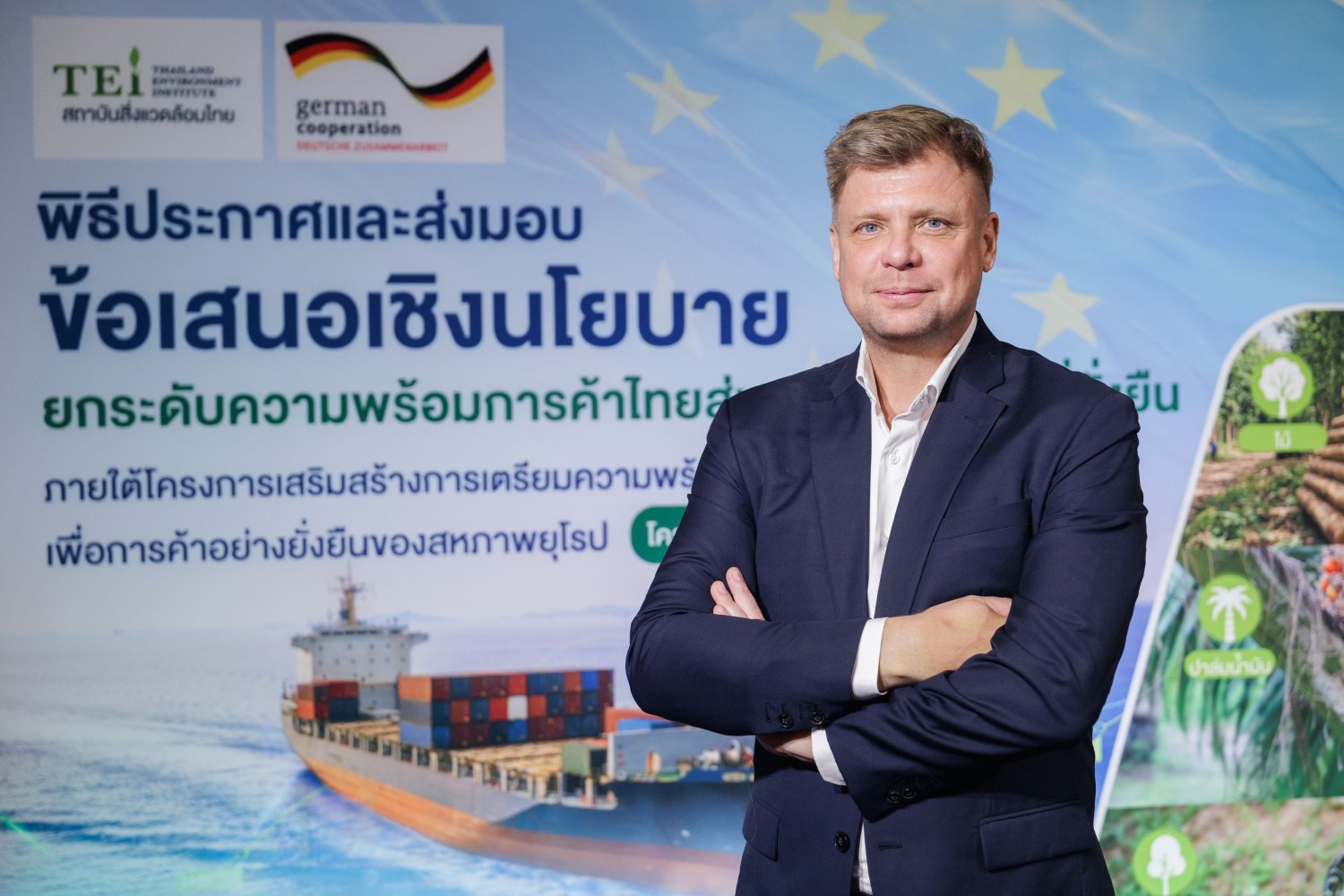
Bangkok, 28 May 2026 — Thailand has a significant opportunity to strengthen its position in global markets by preparing for emerging sustainability requirements, according to Timo Menniken, Country Director of GIZ Thailand, at the Policy Recommendation Announcement and Handover Ceremony of the FIT for FAIR Project in Bangkok.
Speaking at the event, Menniken emphasised that new European Union regulations on due diligence and sustainable supply chains should not be viewed solely as a compliance challenge. Instead, they represent an opportunity for Thailand to enhance competitiveness, improve transparency, and establish itself as a trusted partner in sustainable global trade.
“The direction is clear,” he said. “International markets increasingly expect products to come with credible information about where they originate, whether they are linked to deforestation, and whether human rights and labour standards are respected throughout the supply chain.”
The FIT for FAIR project has focused on helping Thailand strengthen policy readiness, traceability systems, and due diligence mechanisms in response to evolving sustainability expectations, particularly in sectors such as rubber, palm oil, and timber products that are closely connected to global and European supply chains.
Bridging the Gap Between Farmers and Global Markets
According to Menniken, one of the most important aspects of sustainability regulations is ensuring that all actors in the supply chain are involved in the transition. These include smallholder farmers, traders, exporters, government agencies, private companies, and consumers in international markets.
He noted that many farmers may find sustainability regulations complex and difficult to understand, especially when requirements originate from distant markets such as the European Union.
“Farmers have often been producing in the same way for many years,” he said. “Now they are being asked to provide additional information and adapt to new expectations. The challenge is to bridge the gap between local producers and international market requirements.”
Due diligence regulations aim to prevent environmental damage, including deforestation, while also protecting human rights and labour conditions. They seek to ensure that products entering international markets are not associated with illegal land conversion, child labour, or other social and environmental risks.
Progress Made, Challenges Remain
Thailand already has many strengths that can support compliance with sustainability requirements. Menniken pointed to existing data systems, technical expertise, government support, and sector-specific initiatives as evidence that the country is well positioned compared to many others in the region. However, challenges remain.
One of the most significant obstacles is the fragmentation of information systems. Data relevant to traceability and sustainability is often stored across different agencies and platforms, making it difficult to connect and verify information efficiently.
“Thailand has several strong information systems,” Menniken explained. “But they are not yet fully integrated. Improving interoperability between systems is an important next step.”
Traceability has become a central requirement under regulations such as the EU Deforestation Regulation (EUDR) which requires companies to identify the exact origin of commodities and demonstrate that production has not contributed to deforestation. This often involves geolocation data and detailed records that can trace products back to specific farms or plantations.
Despite these challenges, Menniken estimated that Thailand is already relatively advanced in its preparedness, describing the country as “seven to eight out of ten” in terms of readiness.
Supporting Farmers Through the Transition
GIZ has been working with Thai partners for several years to support farmers, institutions, and policymakers in preparing for these changes.
The organisation’s approach operates on three levels. First, it works directly with farmers through cooperatives and training programmes. Second, it supports capacity building within government institutions and ministries responsible for agricultural development and extension services. Third, it contributes to policy dialogue and regulatory development to create an enabling environment for sustainable trade.
A key partner in this effort has been the Thailand Environment Institute (TEI), which worked closely with GIZ to facilitate research, stakeholder consultations, thematic workshops, and policy discussions under the FIT for FAIR project.
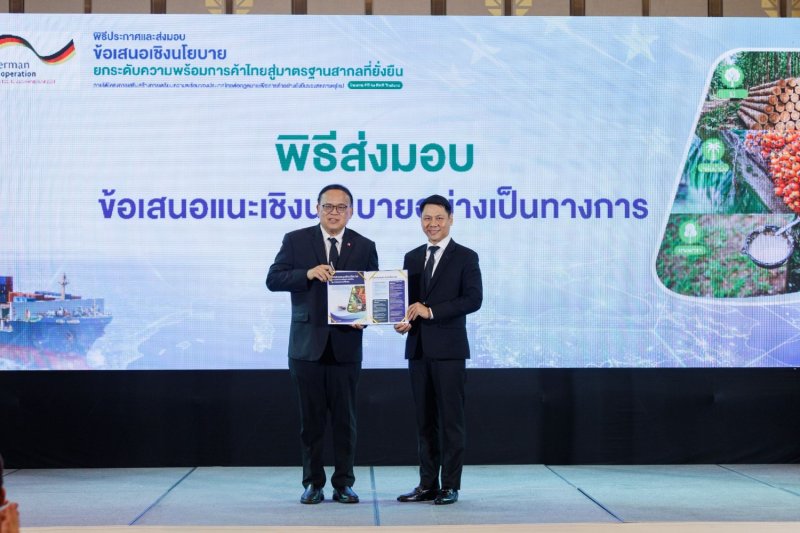
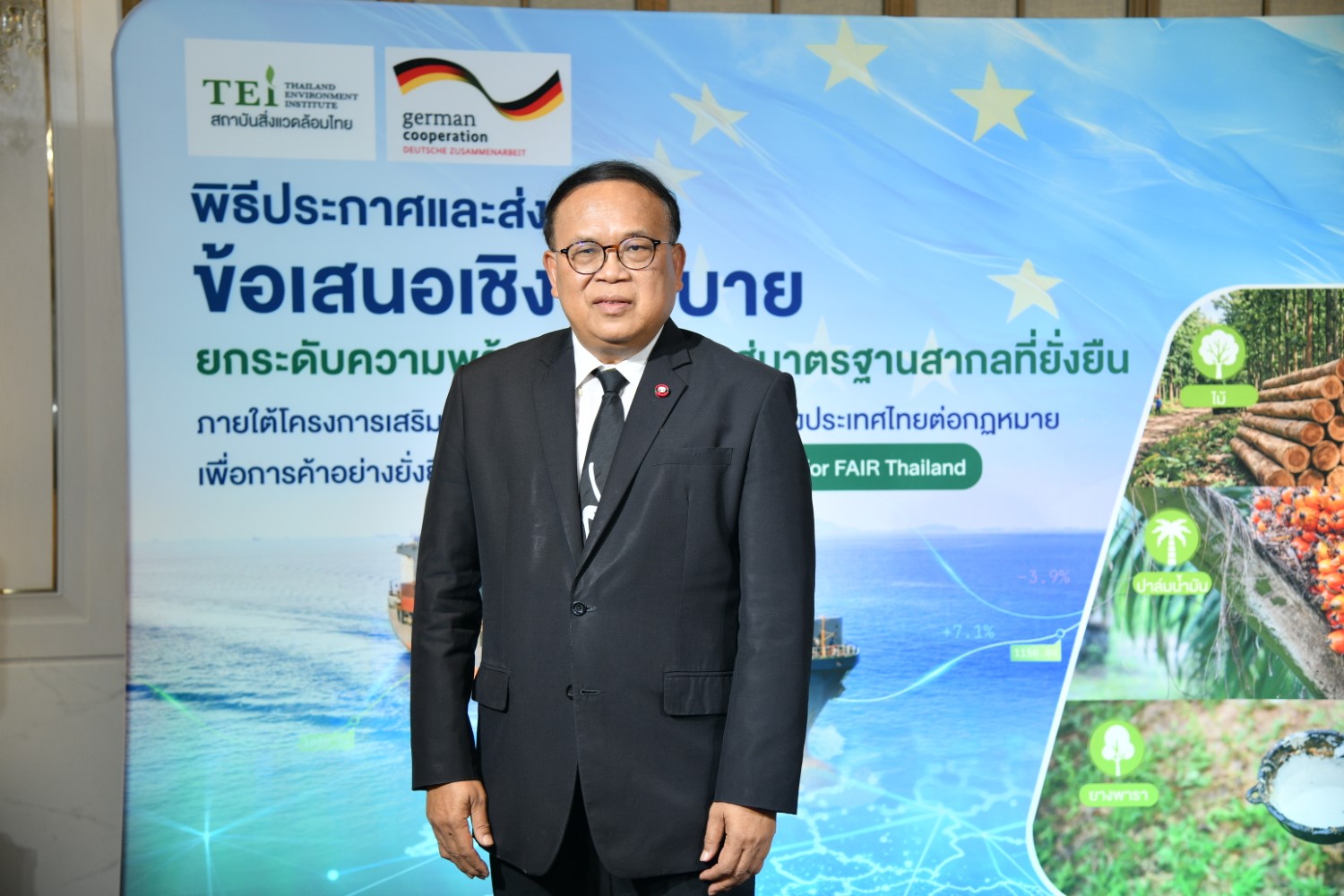
At the ceremony, Dr. Wijarn Simachaya, President of TEI, officially handed over the comprehensive policy recommendations to Mr. Kris Uttamavetin, Deputy Permanent Secretary of the Ministry of Agriculture and Cooperatives, to be integrated into the national policy framework.
Dr. Wijarn emphasised the urgency of this transition, stating, "If we do not adapt today, Thai exporters could permanently lose opportunities in the European market. These recommendations serve as a crucial bridge to create an enabling environment for Thai entrepreneurs, ensuring they can seamlessly adapt, retain their European customer base, and position Thailand as a global hub for sustainable and transparent trade."
For farmers who have not yet begun adapting to due diligence requirements, Menniken highlighted several important messages. He acknowledged that the transition may appear challenging but stressed that early adopters could gain a competitive advantage in international markets. He also emphasised that sustainability efforts must protect livelihoods and create economic opportunities rather than impose additional burdens on producers.
“This is not only about environmental protection,” he said. “It is also about protecting farmers’ incomes and ensuring that sustainable production remains economically viable.”
From Policy Recommendations to Implementation
The handover of policy recommendations marks a transition from analysis to implementation. The recommendations are intended to support ongoing policy development, strengthen coordination among government agencies, improve data interoperability, and help businesses and farmers adapt to evolving market expectations.
Menniken stressed that long-term success will depend on leadership from Thai institutions, businesses, and stakeholders.
“Implementation is now the key task,” he said. “The foundations have been laid, but the next step is turning recommendations into practical action.”
He also noted that while the EU Deforestation Regulation was postponed by one year, the overall direction of international trade policy has not changed. The regulation is expected to take effect in January 2027, giving businesses and producers additional time to prepare.
“Delays change the timeline, not the destination,” he said. “Companies and farmers that invest in traceability systems and sustainable sourcing practices today will be better positioned in the future.”
Looking ahead, Menniken expects sustainability requirements to expand beyond rubber, palm oil, and timber to include other agricultural sectors. GIZ is already supporting initiatives involving rice, coffee, coconuts, and climate-smart agriculture.
As global expectations continue to evolve, Thailand’s ability to adapt and demonstrate sustainable production practices could become a critical factor in maintaining access to international markets and strengthening its role in sustainable global trade.