Thailand's coronavirus medics feel strain even as cases decline
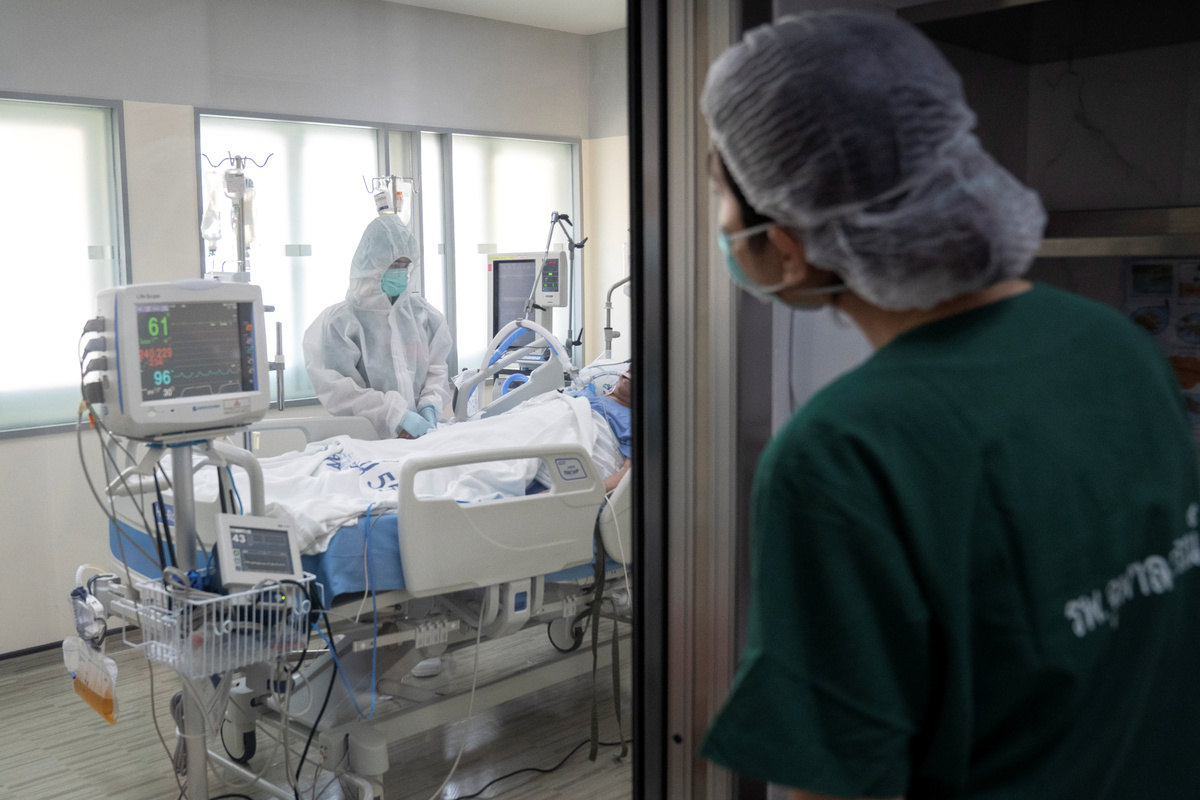
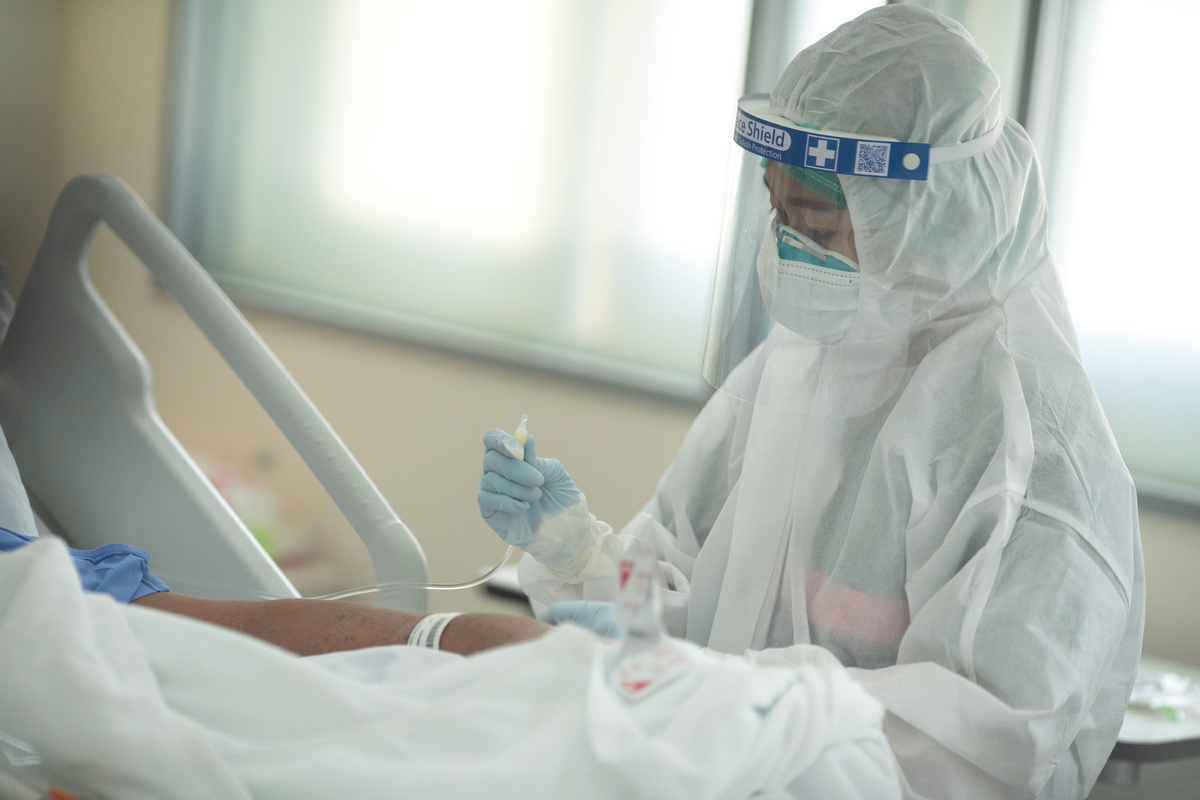
A nurse wearing personal protective equipment (PPE) attends to a COVID-19 patient in the Emerging Infectious Disease Clinic intensive care unit at King Chulalongkorn Memorial Hospital in Bangkok, Thailand, April 22, 2020. REUTERS/Athit Perawongmetha
For Bangkok nurse Kanjana Kamoun, the coronavirus Intensive Care Ward is not only where she works all day, it is where she thinks she is when she wakes up in the middle of the night, anxious and afraid.
Even as the number of new cases are slowing in Thailand - the first country outside of China to report a coronavirus infection - the strain is showing for the doctors and nurses who have worked for weeks to keep patients alive.
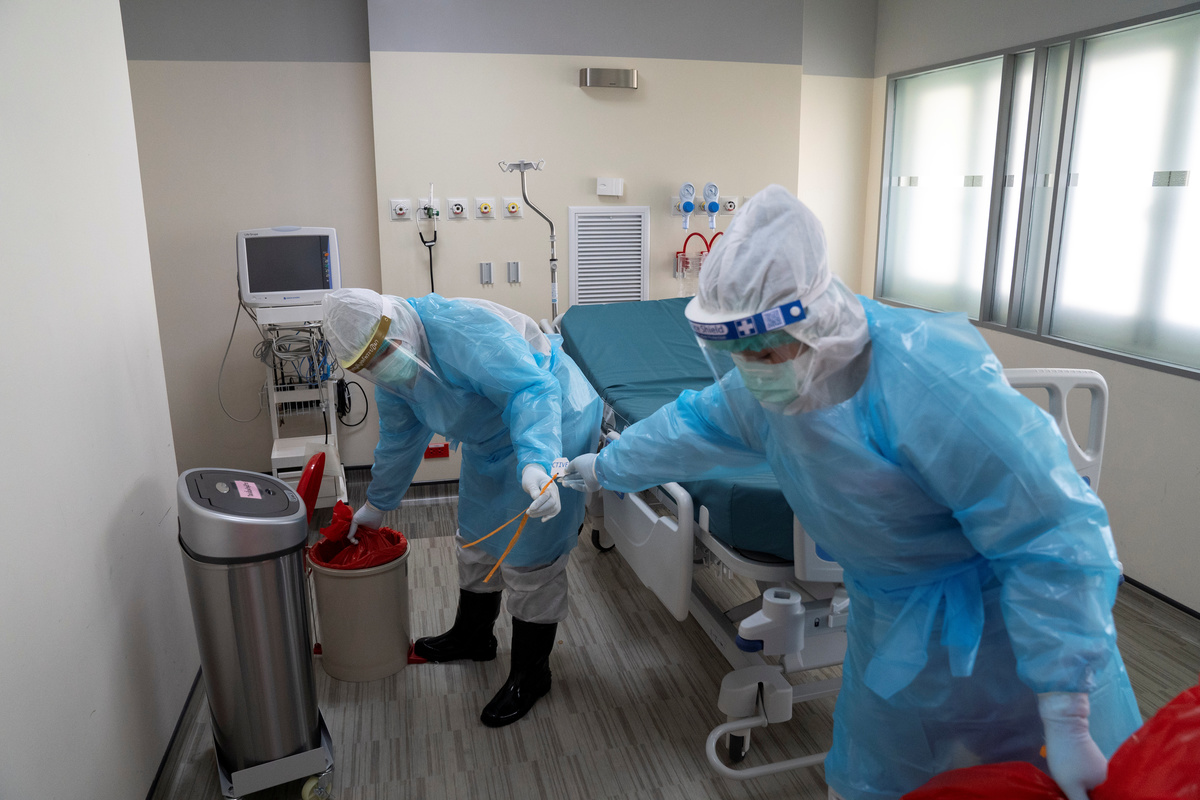
Housekeepers wearing personal protective equipment (PPE) clean a COVID-19 patient's room after they are discharged from the Emerging Infectious Disease Clinic intensive care unit (ICU) at King Chulalongkorn Memorial Hospital in Bangkok, Thailand, April 20, 2020. REUTERS/Athit Perawongmetha
"Sometimes when I wake and my throat hurts, I get worried and wonder if I made mistakes at work or not," Kanjana, 36, told Reuters. "All I can do is think that I did my best."
Since March 9, the King Chulalongkorn Memorial Hospital in Bangkok has treated nearly 200 coronavirus patients, and the medical staff there pride themselves on having not lost a single one.
"I don’t want anyone to die, I want them to only get better," said Tatsanee Onthong, one of the nurses from the Intensive Care Unit.
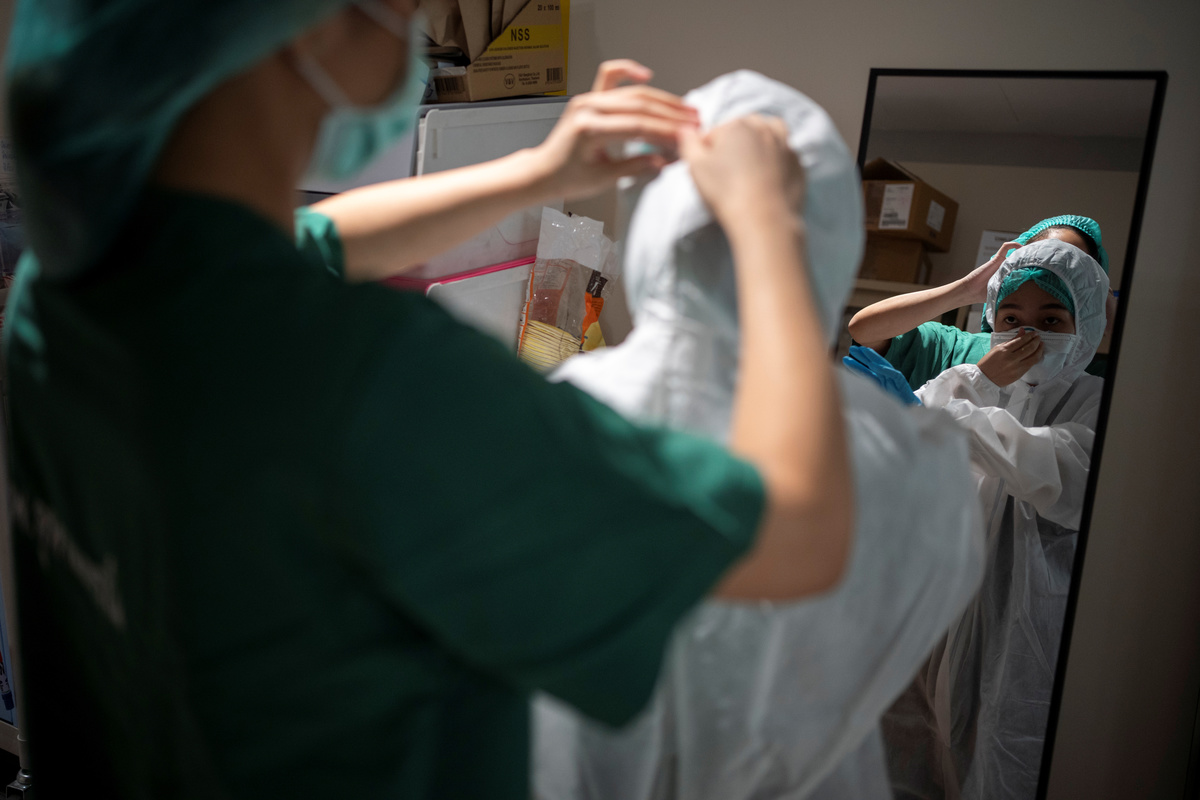
Nurses wearing personal protective equipment (PPE) before entering the room of a COVID-19 patient in the Intensive Care Unit (ICU) of the Emerging Infectious Disease Clinic at King Chulalongkorn Memorial Hospital in Bangkok, Thailand, April 15, 2020. REUTERS/Athit Perawongmetha
PRESSURE ON PERSONAL PROTECTIVE EQUIPMENT
The hospital pays close attention to preventing infections among staff.
Patients who arrive for the first time see the doctor only on a screen. Consultations are carried out remotely.
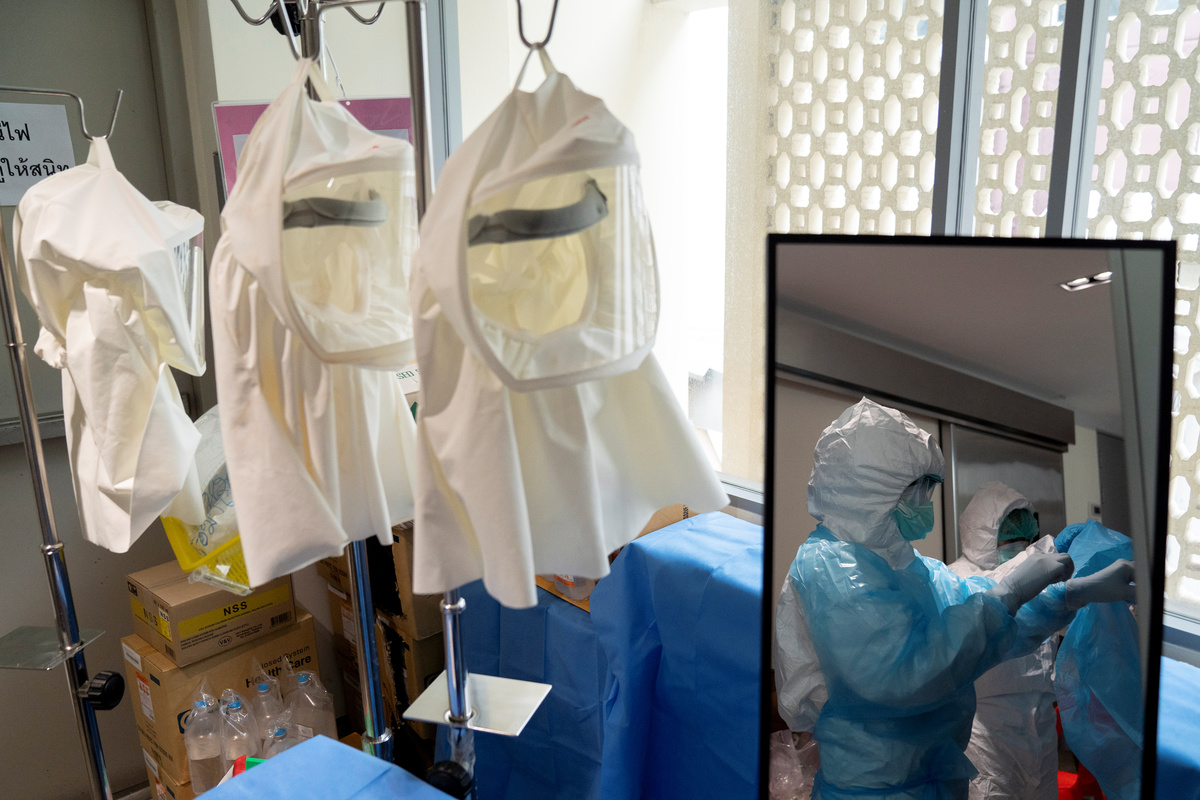
Nurse Tatsanee Onthong, 26, receives help from a colleague putting on her personal protective equipment (PPE) before attending to a COVID-19 patient in the Emerging Infectious Disease Clinic intensive care unit at King Chulalongkorn Memorial Hospital in Bangkok, Thailand, April 22, 2020. REUTERS/Athit Perawongmetha
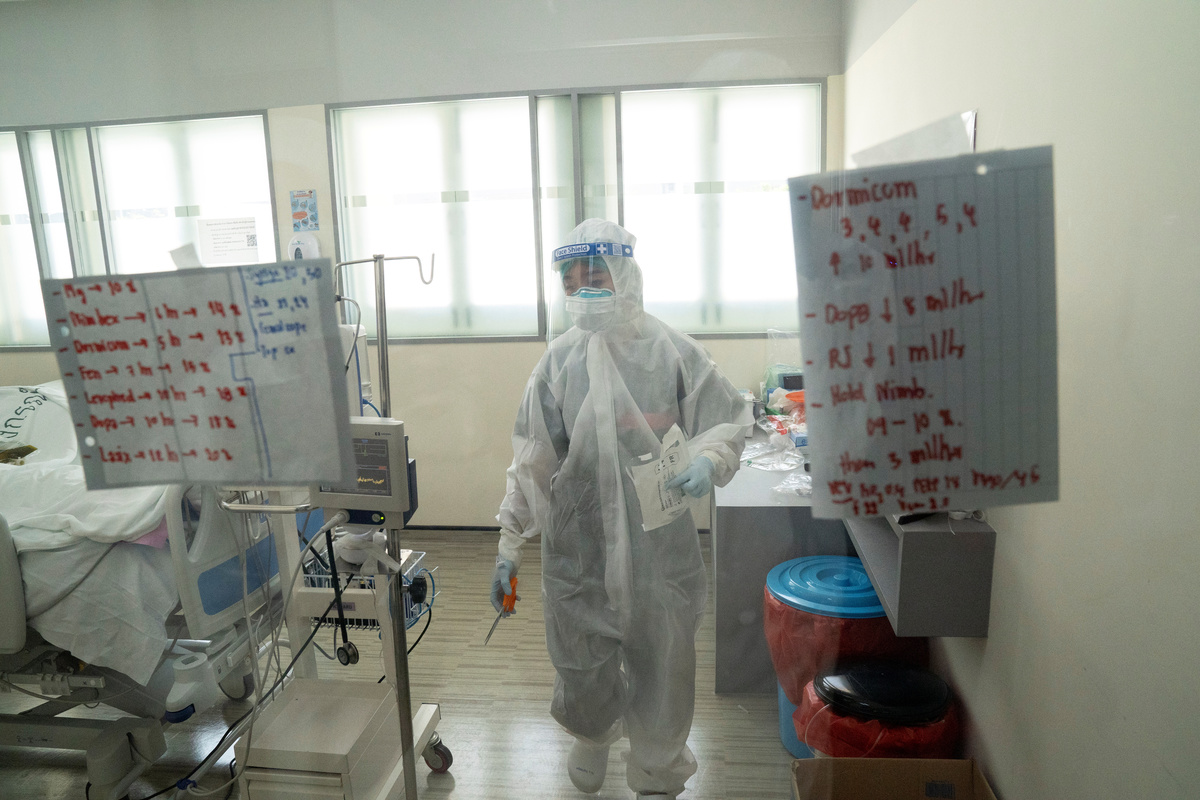
The Intensive Care Unit is behind double barriers of glass. Only those who absolutely have to enter the room ever do so. One patient is kept in each room.
"It requires five to six medical staff, which each time takes up a lot of personal protective equipment suits," said infectious diseases specialist Opass Putcharoen.
"It makes us worry that if we have a lot of severe cases we will use up a lot of resources and increase the chance of infection."
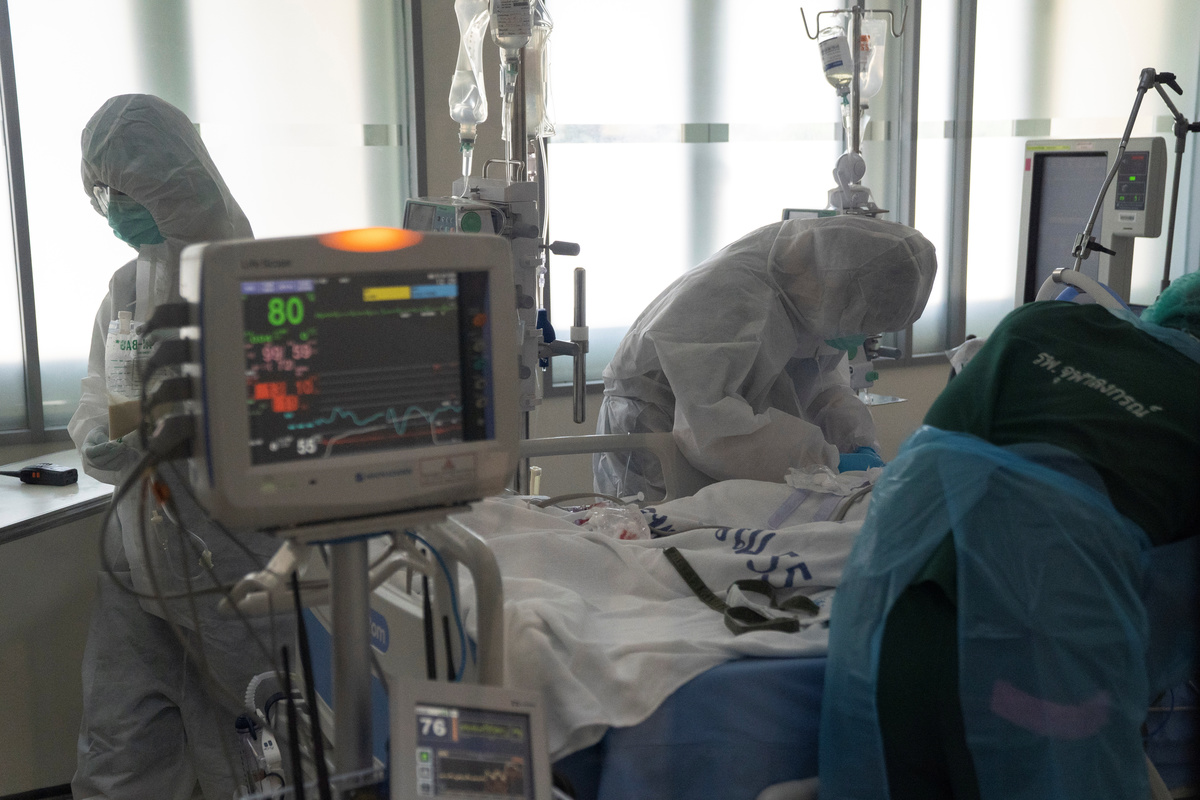
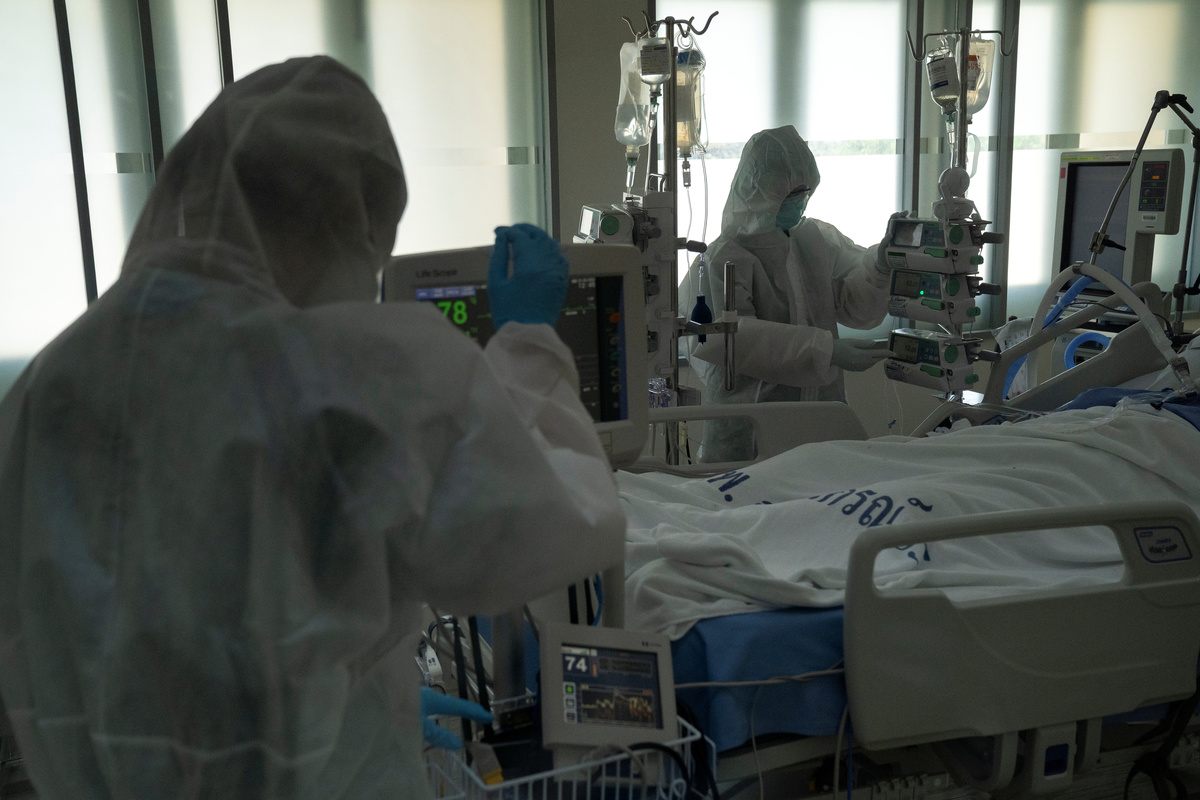
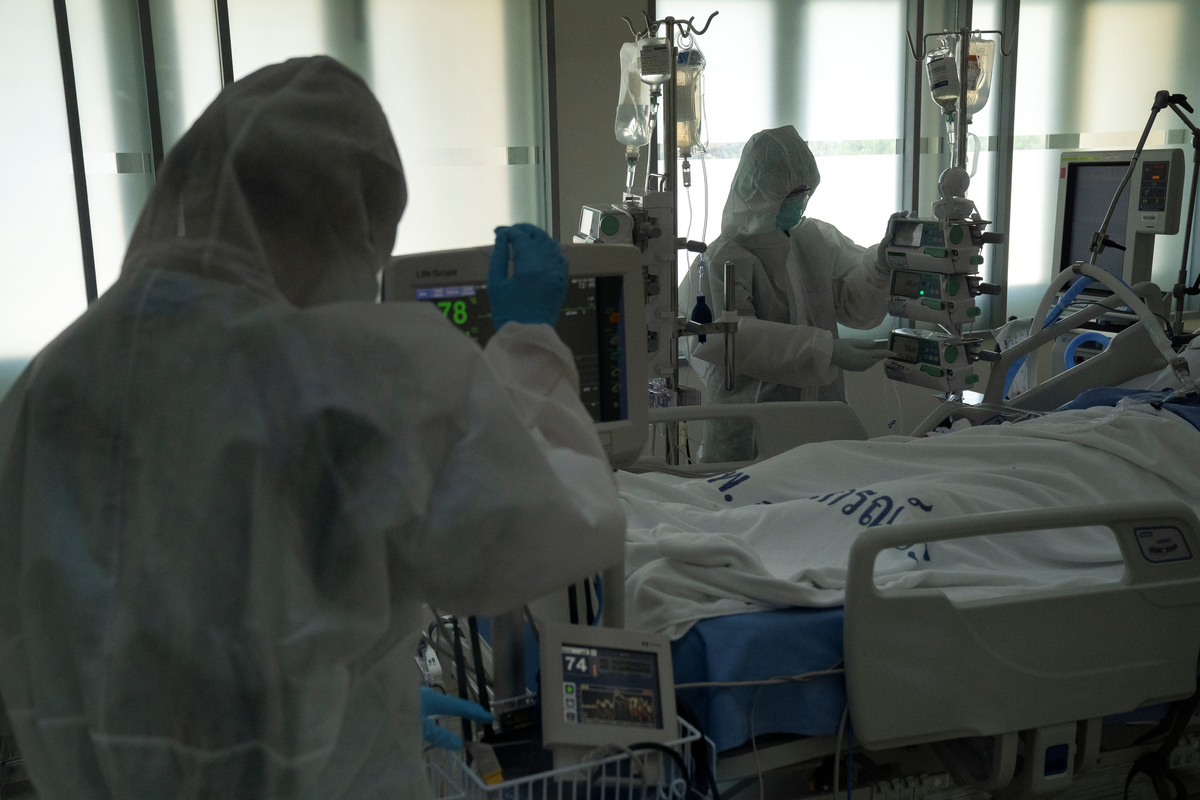
A doctor and nurses wearing personal protective equipment (PPE) take care of a COVID-19 patient in the Emerging Infectious Disease Clinic intensive care unit at King Chulalongkorn Memorial Hospital in Bangkok, Thailand, April 22, 2020. REUTERS/Athit Perawongmetha
But unlike in China or parts Europe and the United States, Thailand's emergency wards have never been overwhelmed with coronavirus patients.
And the number of cases reported has been slowing.
On Monday, Thailand reported nine new cases - the first time the number had fallen to single digits since March 14.
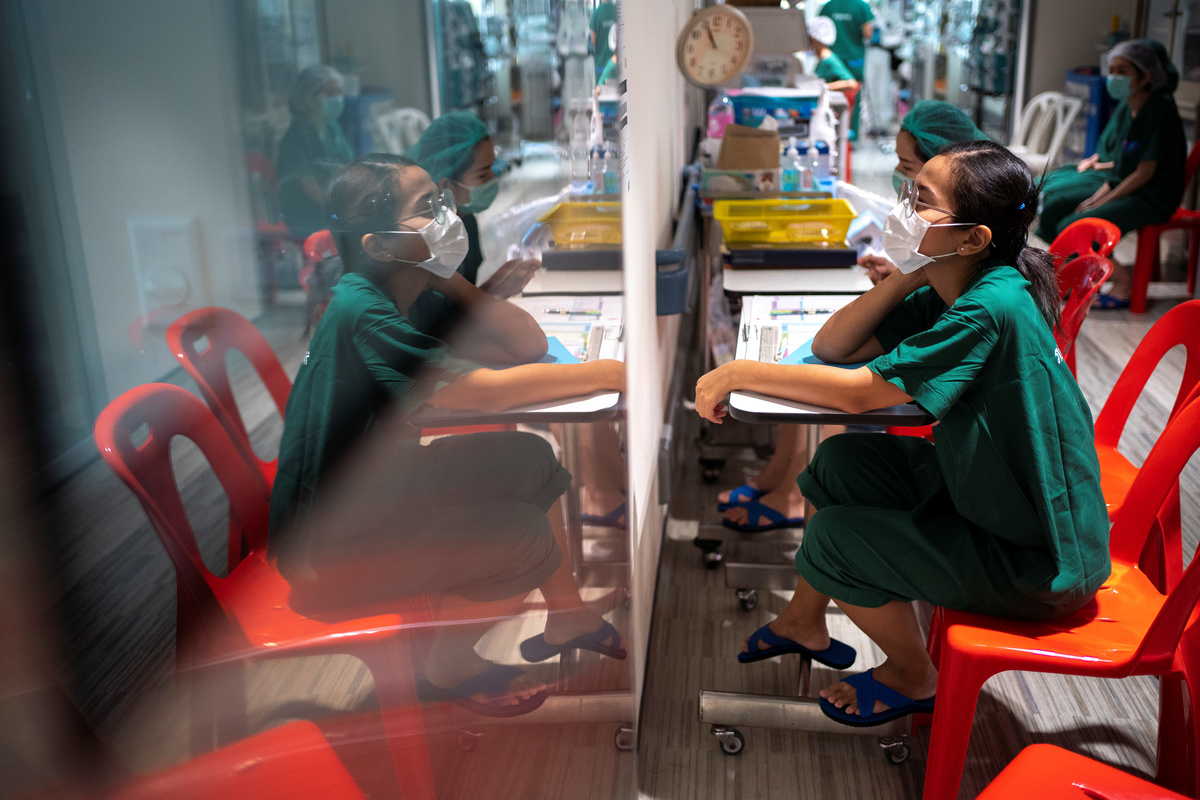
Nurses wearing face masks monitor COVID-19 patients in the ICU at the Emerging Infectious Disease Clinic in King Chulalongkorn Memorial Hospital in Bangkok, Thailand, April 22, 2020. REUTERS/Athit Perawongmetha
Despite having some of the earliest coronavirus cases, Thailand has reported only 2,931 cases in total - ranking 58th worldwide.
It has seen 52 deaths, while 2,609 patients have recovered.
Onthong recalled a patient who had arrived unconscious. Elderly and with another medical condition, the chances looked slim.
Nurse Tatsanee Onthong, 26, wears personal protective equipment (PPE) as she attends to a COVID-19 patient in the COVID-19 ICU in the Emerging Infectious Disease Clinic of King Chulalongkorn Memorial Hospital in Bangkok, Thailand, April 22, 2020. REUTERS/Athit Perawongmetha
"But later the patient got better and recovered," she said. "That lifted my spirit to keep on fighting."
(This story corrects title and name, paragraph 9)
Nurse Tatsanee Onthong, 26, wears personal protective equipment (PPE) as she attends to a COVID-19 in the Emerging Infectious Disease Clinic intensive care unit at King Chulalongkorn Memorial Hospital in Bangkok, Thailand, April 22, 2020. REUTERS/Athit Perawongmetha
(Editing by Matthew Tostevin)
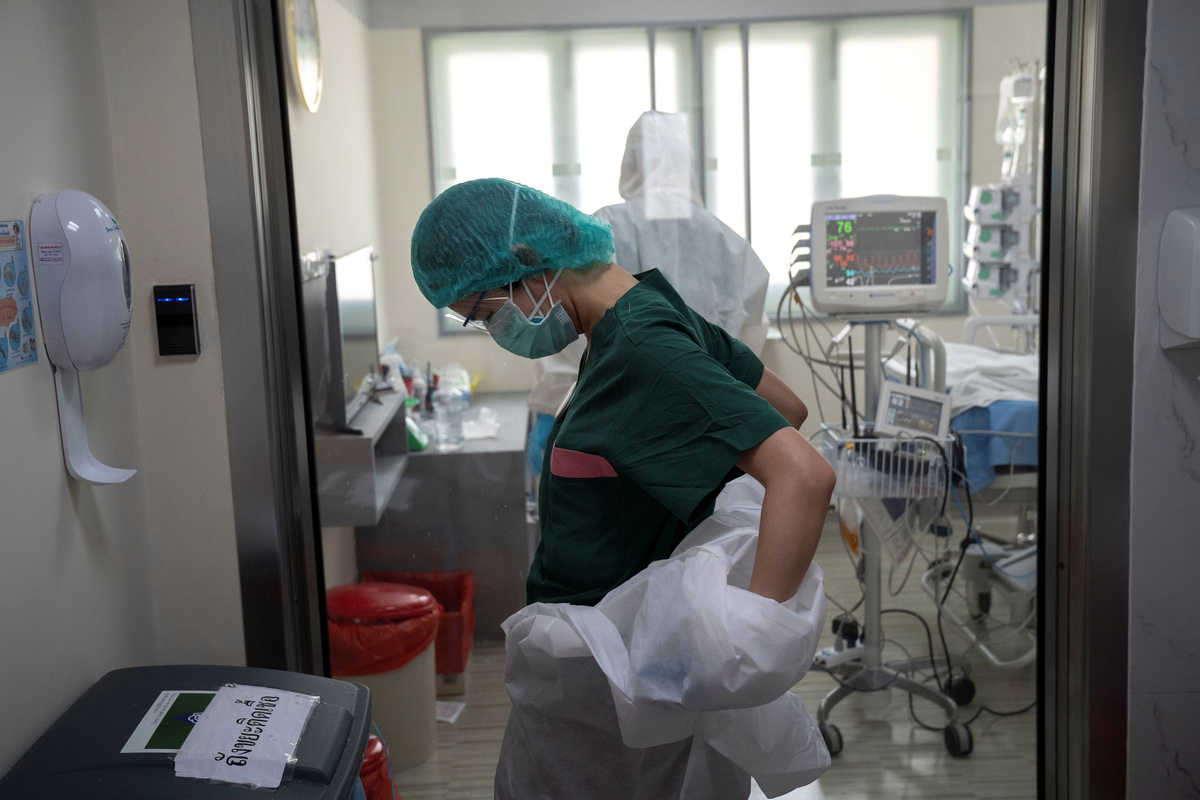
A nurse takes off her personal protective equipment (PPE) after treating a COVID-19 patient in the Emerging Infectious Disease Clinic intensive care unit at King Chulalongkorn Memorial Hospital in Bangkok, Thailand, April 22, 2020. REUTERS/Athit PerawongmethaNurses wearing personal protective equipment (PPE) attend to a COVID-19 patient in the Emerging Infectious Disease Clinic intensive care unit at King Chulalongkorn Memorial Hospital in Bangkok, Thailand, April 22, 2020. REUTERS/Athit PerawongmethaNurses wearing personal protective equipment (PPE) attend to a COVID-19 patient in the Emerging Infectious Disease Clinic intensive care unit at King Chulalongkorn Memorial Hospital in Bangkok, Thailand, April 22, 2020. REUTERS/Athit Perawongmetha
Sign up to read this article
Read news from 100’s of titles, curated specifically for you.