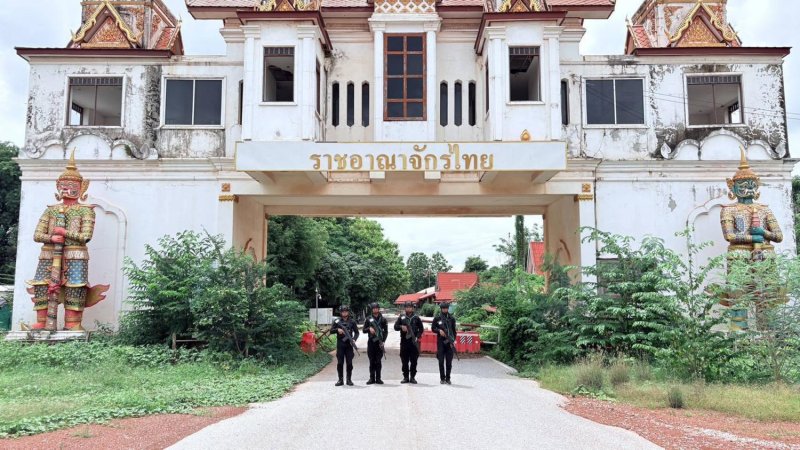
The Anutin government is reorganising and strengthening border security capacity like never before. It recently expanded the Border Security Integration Centre (BSIC), increasing military oversight of civilian border affairs, including economic, environmental and technological issues.
The Anutin I and II governments also removed some existing mechanisms for managing security along the Thai-Cambodian border following last year's August Constitutional Court ruling, which led to the dismissal of the Paetongtarn government.
This change has created a significant operational gap among various government agencies. For nearly three decades, border security management has evolved in response to perceived threats and conflicts along Thailand's borders with neighbouring countries.
Since Mr Anutin became prime minister last year, his administration has faced mounting challenges from transboundary threats such as scam centres, human trafficking, narcotics and arms smuggling, as well as environmental and disaster-related issues.
The National Security Council (NSC) has been tasked with developing new strategies to address these emerging threats in a coordinated manner. In the past, the NSC focused primarily on military and defence matters.
The BSIC was introduced under former prime minister Srettha Thavisin and reduced some of the armed forces' authority. The Anutin government has retained the BSIC, but placed the armed forces at its centre.
Under its new structure, the BSIC will operate under the control of the Supreme Commander of the Royal Thai Armed Forces. It will coordinate a network of 25 civilian and law enforcement agencies. These include the Interior Ministry, the Foreign Ministry, the National Broadcasting and Telecommunications Commission, the Anti-Money Laundering Office and the Narcotics Control Board, among others.
This comprehensive and strengthened inter-agency cooperation comes against the backdrop of last week's first anniversary of the Thai-Cambodian conflict.
Indeed, the creation of the BSIC reflects the changing nature of border issues. Thailand's land borders have become frontlines for transnational organised crime networks with sophisticated financial and logistical capabilities. These groups can operate from ungoverned spaces in neighbouring countries, particularly Myanmar. Despite constant pressure and suppression efforts, scam operators continue to thrive due to their highly adaptive and evasive capabilities.
Since Jan 28, Thailand has repatriated a total of 14,792 scam victims from 48 countries. The top five countries of origin are China, India, Indonesia, Ethiopia and Vietnam. Half of all rescued victims come from African countries.
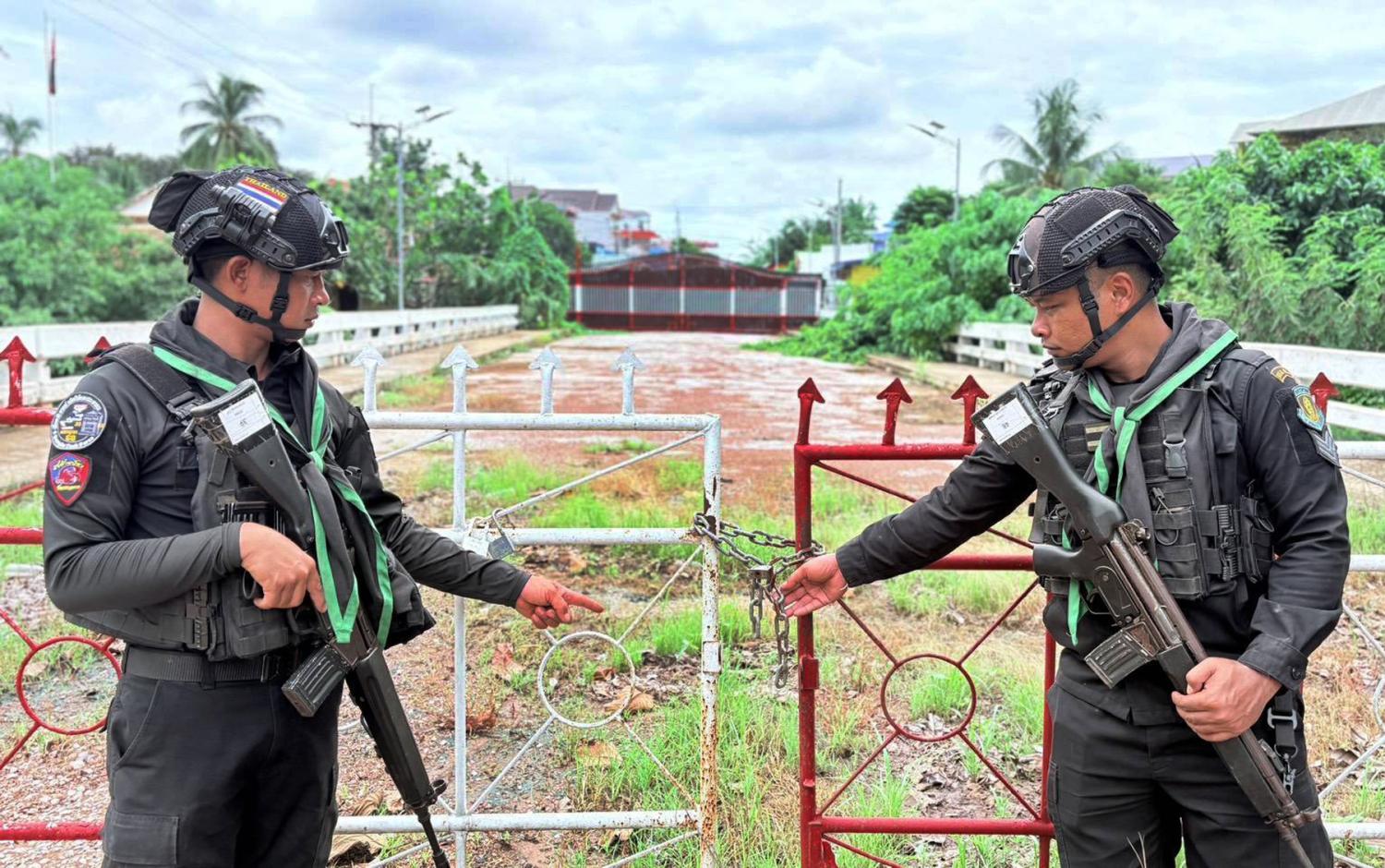
Thailand's security apparatus has learned a valuable lesson: border management coordination must be improved, or the country's sovereignty and territorial integrity could be undermined. Remaining idle could bring unexpected political and territorial consequences. Doubtless, there has been extensive soul-searching to determine what went wrong and to identify both weak and strong links in the search for more effective border management models.
Traditional bilateral frameworks involving military-to-military cooperation, such as the General Border Committee, the High-Level Committee and the Regional Border Committee, remain important. However, the latest conflict between Thailand and Cambodia speaks volumes about the fact that these channels alone are no longer sufficient to address emerging challenges. Clearly, the Anutin government has prioritised border security and national defence, both of which are important assets in strengthening its political base.
The BSIC has also established an inter-ministerial advisory board, including representatives from the Foreign Ministry's East Asia and Treaty departments, a move of considerable importance. It demonstrates that border security is increasingly intertwined with Thailand's foreign policy calculations. The most obvious examples relate to Myanmar's ongoing conflict and the political sensitivities surrounding enforcement actions against foreign-linked criminal networks.
Thailand is currently confronting a growing range of security challenges spanning domestic, bilateral and global dimensions. This helps explain why the Anutin government is seeking to manage border security through a more institutionalised and legally grounded framework than in the past. Under this arrangement, operational authority is largely concentrated within the military, with army regional commands and provincial border command centres exercising extensive control over border affairs.
For example, the Defence Ministry has reintroduced and expanded controlled zones across 11 key border provinces, while placing 72 categories of goods under special monitoring. Along the western frontier with Myanmar, these measures apply to Chiang Rai, Mae Hong Son, Kanchanaburi and Tak provinces. On the eastern border with Cambodia, the affected provinces are Trat, Chanthaburi, Sa Kaeo, Buri Ram, Surin, Si Sa Ket and Ubon Ratchathani.
While these measures are aimed at disrupting criminal networks, they could also negatively affect border communities that rely on daily trade and cross-border exchanges. On balance, however, the government has emphasised safety and public well-being through enhanced surveillance and recent changes to visa-free and immigration procedures.
It is too early to assess the effectiveness of a structure that places greater emphasis on military capabilities than socio-economic considerations. This new approach remains a work in progress. In the coming months, the BSIC must also demonstrate its ability to manage transboundary environmental and disaster-related challenges, which have increasingly dominated headlines. It must also engage with civil society organisations and scientific experts. One caveat is necessary: whatever initiatives it undertakes, local communities must be engaged and kept well informed.
The Anutin government's public support and political stability will depend heavily on how effectively it uses the new border security structure to enhance national security and improve border economies.
Kavi Chongkittavorn is a veteran journalist on regional affairs.