The Thai Raksa Chart Party has broken away from the Pheu Thai Party to beat new election rules designed to undermine major parties' chances of winning a majority of House seats, according to key Thai Raksa Chart figure Chaturon Chaisang.
He was responding to speculation that Thai Raksa Chart and other new parties, known as the "pro-democracy" camp, had developed a strategy to keep the pro-regime camp at bay.
The Pheu Thai Party decided to field only 250 candidates in the constituency system although there are 350 seats up for grabs, while Thai Raksa Chart expected to enter only 150 candidates in the constituency system.
Speculationhas been rife that Thai Raksa Chart will focus on bringing in party-list seats while Pheu Thai will work on capturing MPs in the constituency contest.
The new system, where even votes cast for losing MP candidates are counted toward their respective parties' list candidates, has been criticised for favouring small- and medium-sized parties at the expense of larger ones, like Pheu Thai.
In Bangkok where 30 seats are available, the former ruling party fielded candidates in 22 constituencies while Thai Raksa Chart is standing in the remaining eight.
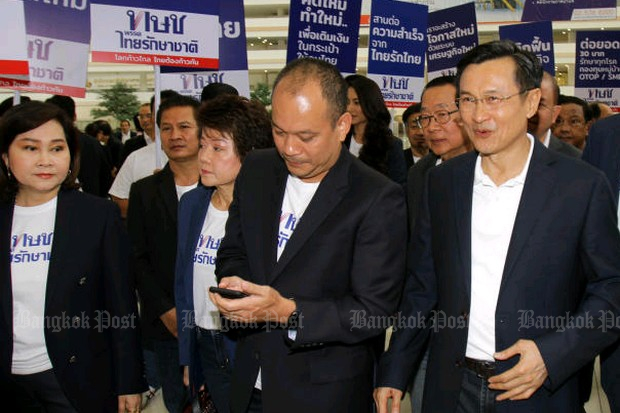
Mr Chaturon said Thai Raksa Chart was set up under another name long before the organic law on the election took effect late last year.
He explained that after his party separated from Pheu Thai, both parties faced the 90-day party membership rule, which forced them to quickly recruit members or renew existing memberships.
"About 70-80% of the Thai Raksa Chart members defected from Pheu Thai," he said. That left Pheu Thai with little time to find new members to stand as MP candidates.
According to Mr Chaturon who also switched from Pheu Thai, there was no plan for "pro-democracy" parties such as his own or the Future Forward Party to forge an alliance and form a government together after the election.
Meanwhile, former transport minister Chadchart Sittipunt is not among the Pheu Thai Party's party-list candidates, even though he is one of the party's prime ministerial candidates.
Mr Chadchart said he has informed the party's board that a lawmaking job is not his strong suit and he is interested in running to become Bangkok governor should he not become prime minister.
Pheu Thai on Tuesday submitted a list of 97 party-list candidates as well as its list of prime ministerial candidates to the EC.
As expected, Mr Chadchart, Khunying Sudarat Keyuraphan, and Chaikasem Nitisiri were nominated.
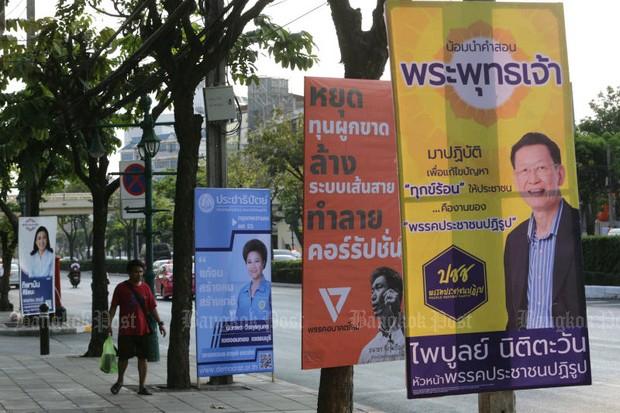
EC deputy secretary-general Nat Laosisawakul warned MP candidates to wait for the submission of the prime ministerial candidates to be completed before they use photos of these hopefuls in their election posters and signboards.
- City Hall: Take poster placement seriously