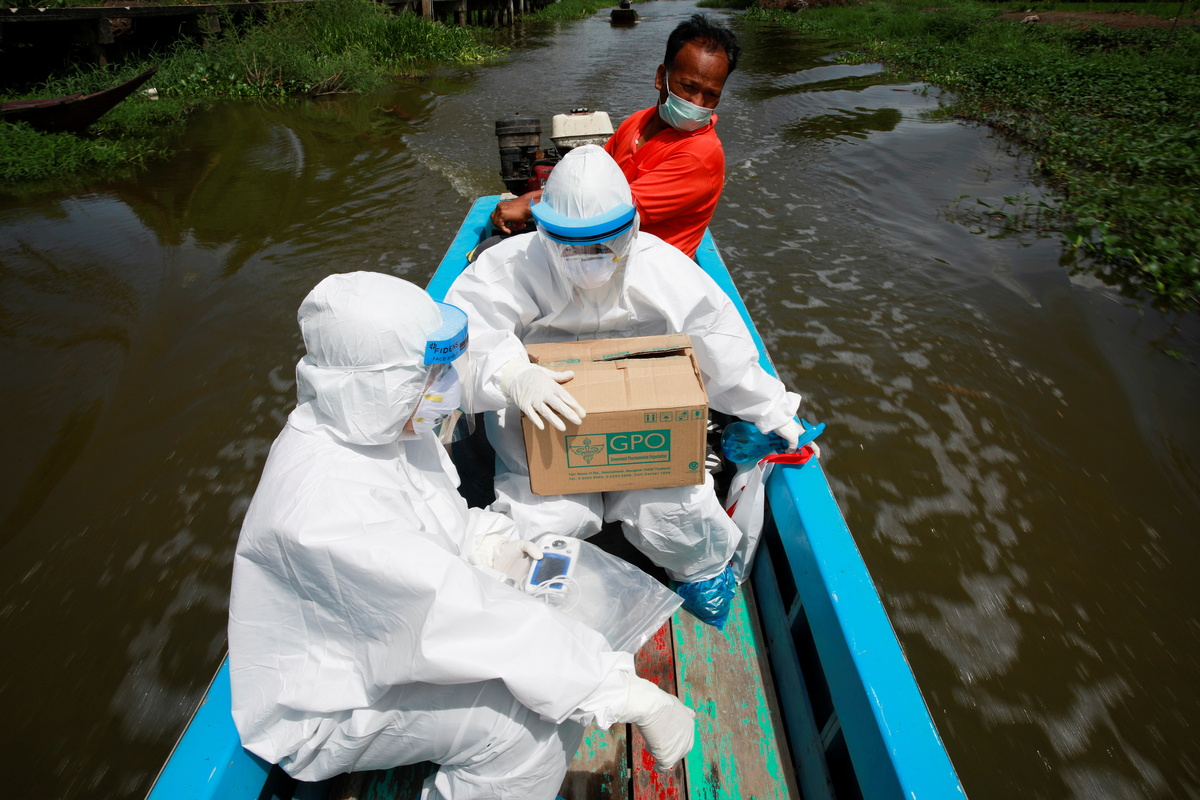
Two Thai health workers zip up their protective suits, put on masks and face shields and slowly climb aboard a small boat waiting in the reeds on the banks of a countryside canal.
This is the best way to ensure remote communities in Samut Prakan, a province on the fringes of the capital Bangkok, get some access to checkups as the country struggles to slow the spread of the coronavirus.
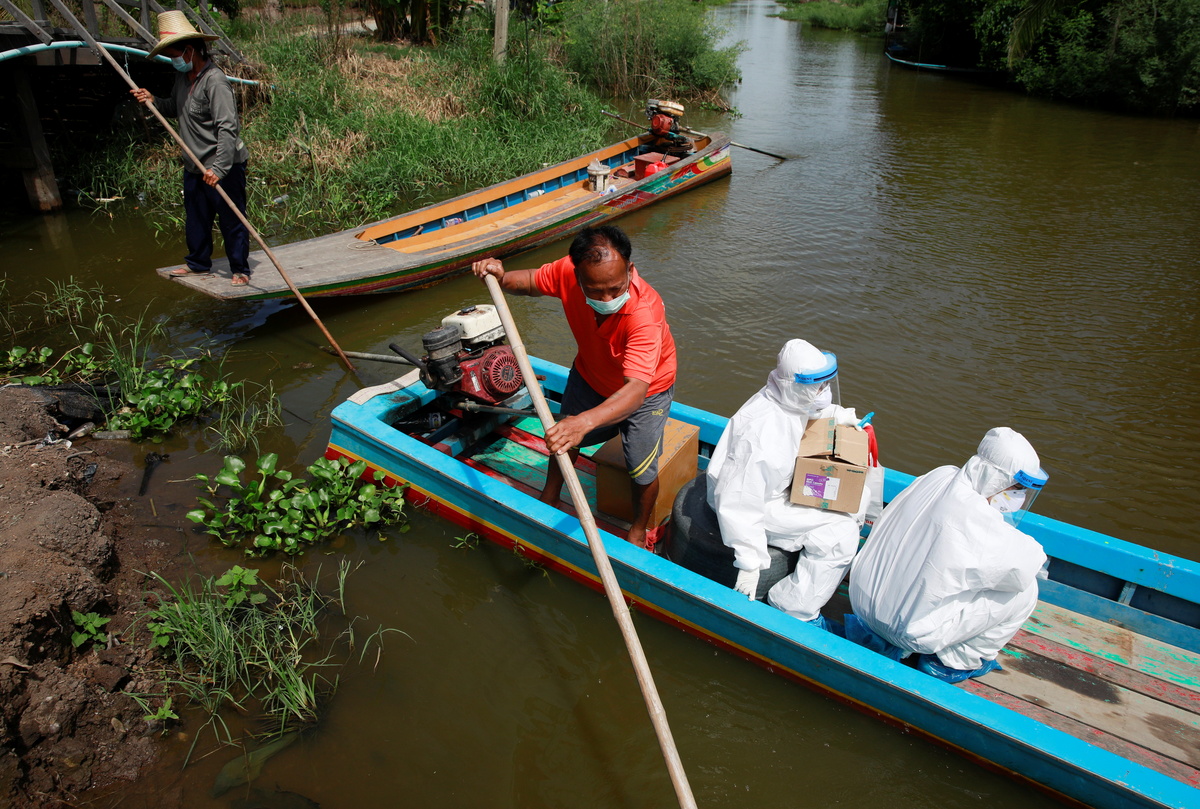
The workers navigate these small canals daily, carrying out checks on communities and nose and throat swab tests on the COVID-19 patients who are isolating themselves, in an already isolated village.
"Some areas of the village can't be accessed by land, so we need to travel by boat or raft to check on COVID-19 patients," said public health officer Charoenrat Chaibut.
About 10% of the 60 households in the village were infected with COVID-19, the health authority estimates.
Thailand reported 11,784 new COVID-19 cases on Monday, the fourth consecutive day of record infections, as it deals with its longest-running and most severe outbreak so far.
Local people help by providing the transport - a narrow wooden boat with a small engine and propeller
"I'm doing this for the patients as it is quite hard to travel and I'm glad the locals are accommodating us," Charoenrat said.
Though they are able to reach the patients for now, Charoenrat is concerned that the virus keeps spreading even in these remote areas.
"I'm worried because we don't have enough health officers to take care of patients," she said. "Case numbers and those awaiting to be cured keep rising."
(Writing by Jiraporn Kuhakan and Martin Petty; Editing by Paul Simao)