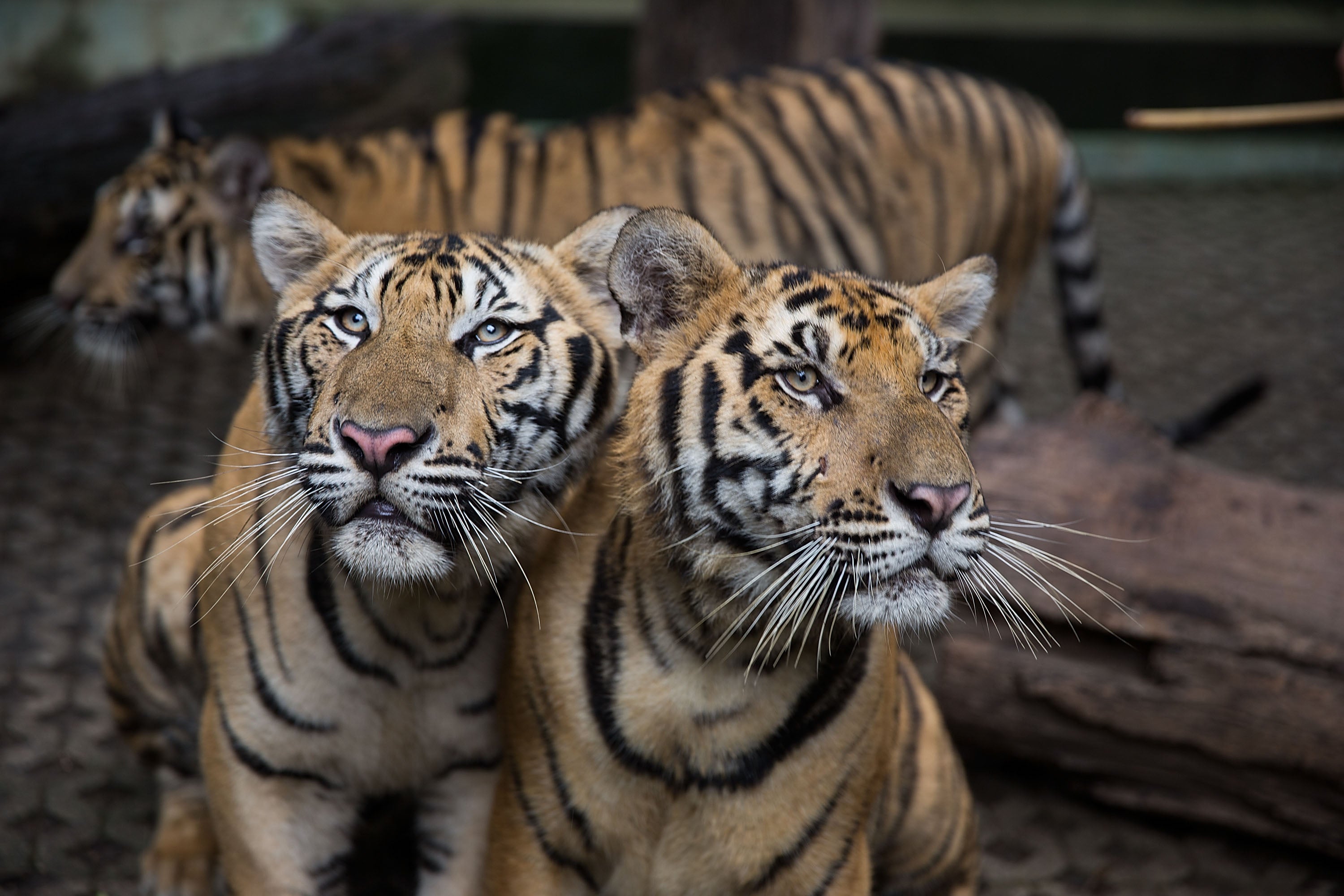
Authorities in Thailand have launched an investigation into a virus outbreak that killed 72 tigers at a popular tourist park that allows visitors to interact with big cats.
The fatalities occurred over less than a fortnight across the park’s two facilities in the northern province of Chiang Mai, which house over 240 tigers. The majority of the deaths were recorded at Tiger Kingdom Mae Taeng and Tiger Kingdom Mae Rim, two privately operated animal parks.
Authorities confirmed on Monday that the remains of 72 tigers that died at Tiger Kingdom Chiang Mai have been buried to prevent any risk of them entering the illegal wildlife trade.
The director of the Protected Area Regional Office 16, Kritsayam Kongsatree, explained that the tiger carcasses were first intended to be cremated, but due to the limited number of cremation facilities, the method was later switched to burial, according to The Bangkok Post.
He added that neither skins nor teeth were removed for sale, and each burial site was marked with the tiger’s identification number for future reference.
Preliminary tests identified the presence of canine distemper virus in the tigers, a highly contagious disease that attacks the respiratory, gastrointestinal, and nervous systems, the BBC reported.
Authorities have not yet confirmed how the outbreak started.
Although typically found in dogs, the virus can be deadly for big cats. Some samples also indicated bacterial infections linked to respiratory illness.
Between 8 and 19 February, 51 tigers died at Mae Taeng and 21 at Mae Rim.
Early reports had suggested possible infection from feline parvovirus or contaminated raw chicken, a food source that had previously contributed to a fatal bird flu outbreak at a tiger facility in 2004.
Despite the severity of the outbreak among the tigers, none of the veterinarians or staff working at the park has contracted the virus, authorities said.
However, health authorities have placed personnel under a 21-day observation period as a precaution.
The park has been temporarily closed for disinfection for two weeks, with officials conducting extensive sanitation measures.
“Treating sick tigers is very different from treating dogs and cats. Dogs and cats live closely with us, so when they show symptoms, we can respond and provide treatment right away. Tigers, however, aren’t living closely with humans. By the time we notice that something is wrong, the illness may already be advanced,” Somchuan Ratanamungklanon, director-general of Thailand’s department of livestock development, earlier told local media.
The department of livestock development also said earlier that inbreeding among captive tigers may have weakened the animals’ immune systems, which could have increased their susceptibility to infection and accelerated the spread of disease.
Animal welfare organisations have criticised the conditions at Tiger Kingdom Chiang Mai, highlighting the vulnerability of captive wildlife facilities to infectious diseases.
Groups such as Wildlife Friends Foundation Thailand and Peta Asia argued that interactions with tourists exacerbate risks.
“Tragedies like this would be far less likely to happen” if visitors “stayed away” from these attractions, Peta Asia told AFP.
Virus outbreak kills 72 captive tigers at Thailand tourist parks
Death of 14-year-old boy ‘struck by police’ sparks anger and shock in Indonesia
Duterte says too ‘old, tired and frail’ to appear in person as ICC starts trial
Thai court adds prison term for activist lawyer convicted of royal insult
Thai police go undercover as Lunar New Year lion dancers to catch thief
Philippines hit by deadly torrential rain and landslides as thousands evacuated