FORT WORTH, Texas _ As more and more Texans turn to mail-in ballots to cast their votes in presidential elections, concerns continue to grow over how secure the process is.
The ballots _ geared to make it possible for overseas residents, people in the military and senior citizens to make their vote count _ are now at the heart of a growing controversy about voter fraud, even prompting an "integrity tip hotline," because they allow people to vote from their homes without any ID or verification of identity.
State officials have been in Tarrant County investigating an issue with mail-in ballots from this year's primary election, but some say the problem with these ballots goes deeper than that. At issue are concerns about "vote harvesting," in which people fill out and return other people's ballots.
"Vote harvesting, a form of voting which is largely unwatched ... (has been) growing in the last few cycles," said Aaron Harris, a Republican political consultant from North Richland Hills who filed at least one complaint with the state citing election concerns in Tarrant County. "We are getting defeat handed to us in mail-in ballots and we aren't even paying attention to that."
Some say the ongoing investigation, and Harris's separate complaints, are politically motivated; others say it's addressing a practice that has been a problem for years.
Either way, Harris is promoting an "Election Integrity Tip Hotline" _ (817) 893-8502 _ through which he's offering up to a $5,000 reward for any election fraud-related tip that leads to a felony conviction, prompting concern among some Democrats who say such tips should instead go to election officials.
This is "a systematic and deliberate attempt to suppress votes in the Latino community, specifically attacking the elderly," said Democratic state Rep. Ramon Romero.
Mail-in ballots make up just a fraction of the ballots cast in recent presidential elections in Texas.
In the state's 15 largest counties, fewer than 220,000 of the 3.4 million votes cast in November 2012 were mailed in and fewer than 125,000 of the 2.4 million votes cast in November 2004 were mailed in, state election records show.
"This is not a Republican or Democratic issue," said Steve Maxwell, a former Tarrant County Democratic Party chairman. "Every single one of us has a duty to make sure voter fraud isn't taking place.
"There's a real question of whether fraud is going on," he said. "If there is, I'm going to be the first to help weed it out."
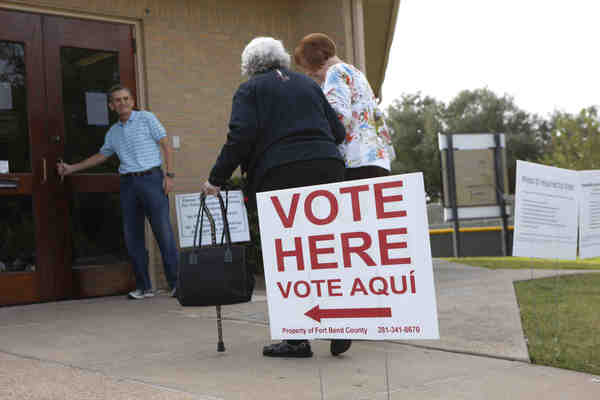
Early voting runs Oct. 24 to Nov. 4. Election Day is Nov. 8.
Some fear local complaints about mail-in ballots come at a time where they might intimidate some voters from casting ballots in this year's presidential election _ or just in time to lay the groundwork for the Legislature to enact more voting restrictions next year.
But voter fraud has become a common theme echoed even by Republican presidential nominee Donald Trump, who even tweeted this week that there is "large scale voter fraud happening on and before Election Day."
"They even want to try to rig the election at the polling booths and believe me there's a lot going on," he said during a recent Wisconsin rally. "Do you ever hear these people? They say 'there's nothing going on.' People that have died 10 years ago are still voting, illegal immigrants are voting _ I mean, where are the street smarts of some of these politicians?"
Others say these concerns are overrated.
"The fact is ... voter fraud is very rare, voter impersonation is nearly non-existent, and much of the problems associated with alleged fraud in elections relates to unintentional mistakes by voters or election administrators," said Jessica Lavariega-Monforti, a political science professor at Pace University in New York City.
"Most allegations of fraud turn out to be baseless _ and that of the few allegations remaining, most reveal election irregularities and other forms of election misconduct," she said research shows.
A 1917 Texas law allowed absentee voting, listing ways voters could qualify to vote other than on Election Day. Voting by mail came later, and demand for these ballots has grown through the years.
Many candidates legally reach out to these voters, often sending campaign fliers attached to mail-in ballot request forms that are already filled out. Voters can sign and mail these forms to have ballots sent directly to their home.
Harris, who worked with Dallas businessman Monty Bennett to campaign against directors on the Tarrant Regional Water District board, said he and his team sifted through thousands of mail-in ballots.
He claims they found cases where voter signatures on envelopes that contain ballots didn't match the signatures on requests for mail-in ballots. He referred to some campaign workers who allegedly removed ballots from voters' mailboxes and filled out the forms themselves.
And he referred to a Jan. 22, 2016, letter posted online in which the Texas secretary of state's office referred his "allegations of criminal activity in Tarrant County" to the Texas attorney general's office.
Among the "potential crimes" the SOS letter said might have been committed locally: failure to comply as a witness, improperly serving as a witness for multiple voters, forgery and tampering with a governmental record, unlawful possession of a carrier envelope and improper assistance, according to the letter.
Harris and others say the goal is not to eliminate mail-in ballots.
"But there are ways the system can be improved," Maxwell said. "We've got to tighten up the laws. Apparently it's very easy to get away with this.
"We need to put some tough criminal sanctions in the election code," he said. "The mail-in ballot program is extremely well intentioned and there is a real need for it. Surely we can find ways to build safeguards into the system so you're not having massive fraud committed."
County officials have said investigators with the Texas attorney general's office have been in Tarrant County looking into an issue with mail-in ballots from the primary election earlier this year.
The attorney general's office declined to "confirm or deny investigations" or comment on the situation. When asked for the complaints that started the local investigation, attorney general's workers declined to release them, expressing concern that doing so might hamper a criminal investigation.
"Absentee ballot fraud has been and remains the weakest link in Texas's efforts to safeguard its electoral system against election fraud," said Mark P. Jones, a political science professor at Rice University in Houston.