DALLAS _ Christy Zartler had practiced what to say, yet she was still nervous on the witness stand. She and her husband had always done what they believed was right for their autistic daughter, Kara. But now, the judge could decide they were criminals, or at least her husband was, and not allow him to be Kara's guardian.
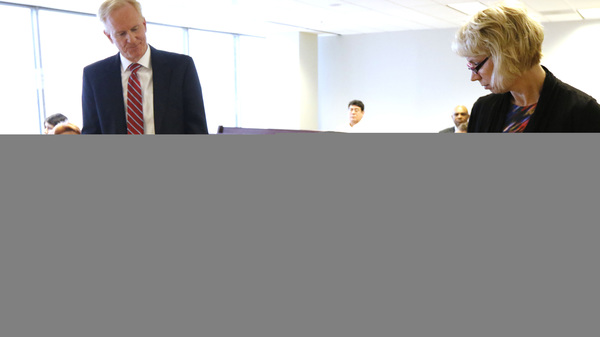
Christy leaned forward, her glasses perched atop blonde bangs, as she listened to her attorney's questions. She glanced at Kara, her 98-pound 18-year-old, seated in a wheelchair by her own attorney in the courtroom in downtown Dallas.
"Mark, your child's father, was investigated by Child Protective Services for having administered cannabis vapor to Kara," her lawyer said. "Do you recall that?"
"Yes," she said, her voice shaking.
"Why has he done that?" her lawyer asked.
"Kara is a severe case of autism with self-injurious behavior," said Christy, 50, a nurse practitioner. "She punches her head pretty significantly and she has caused brain damage. It prevents her from causing further head trauma and brain damage."

As his wife spoke, Mark Zartler shifted his eyes between her and Judge Brenda Hull Thompson, who sat solemn-faced. She alone would decide the family's fate.
If she ruled Mark Zartler "unsuitable" to be Kara's guardian, that could mean big changes for the family. Christy alone would be Kara's guardian, so if anything happened to her, Kara could become a ward of the state. To avoid that, the family would probably move to Colorado or somewhere marijuana is legal. They both have elderly parents to care for, and even so, they don't want to leave. Texas is home.
The lawyer's voice grew impassioned as he spoke of Mark having a child abuse record for trying to protect his daughter by using marijuana.
"In fact, paradoxically, it prevents abuse," he said. "It prevents self-abuse. Is that correct?"
"Correct," Christy said, nodding.
Christy's testimony ended. Their lawyer called Mark to the stand.
As Mark passed his wife, each extended an arm toward the other and they touched hands.